Hawaii Plantation Tokens Subseries
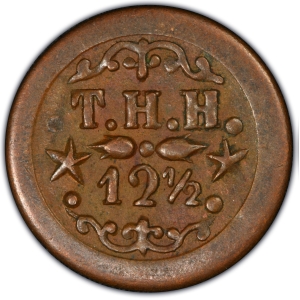
Obverse
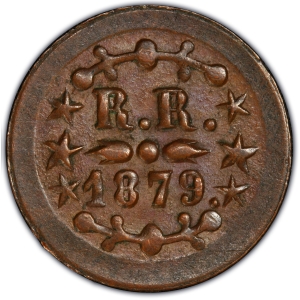
Reverse
Hawaiian Plantation Tokens represent a fascinating and crucial chapter in the economic history of the Hawaiian Kingdom, bridging the gap between a traditional barter economy and a standardized national coinage. Prior to widespread contact with the West, Hawaii had no metallic currency. The arrival of traders, missionaries, and sailors in the late 18th and early 19th centuries introduced a chaotic mix of foreign coins, primarily Spanish-American silver, which became the de facto currency. However, as the sugar and pineapple plantation economy boomed in the mid-19th century, this inconsistent supply of small-denomination coinage created a significant problem for commerce. Plantation owners, who employed large numbers of native Hawaiian and immigrant laborers, needed a reliable way to pay wages and facilitate transactions at their company stores ('truck system'). To solve this chronic shortage of small change, individual plantations and merchants began issuing their own private scrip, or tokens, starting around 1860. These were not legal tender but were redeemable for goods at the issuing company's store. This system served a dual purpose: it solved the logistical problem of payment and also ensured that a significant portion of laborers' wages was spent back at the plantation store. The denominations were often based on the Spanish Real system, with the 12.5 cent piece ('bit' or 'real') being a common wage for a day's labor. The tokens were often crudely produced by local blacksmiths on Maui, giving them a distinct, rustic character that sets them apart from official government coinage. Their circulation, though intended to be local, often spread throughout the islands. This era of private money gradually ended with the introduction of the official Kalākaua coinage in 1883 and the eventual annexation of Hawaii by the United States in 1898, which standardized the currency to U.S. coinage.
Assayer/MinterVarious sugar and pineapple plantations and merchants (e.g., Wailuku Plantation, Haiku Plantation, Thomas Horton, Grove Ranch).
Minter HistoryThe 'minters' were not singular entities but a collection of agricultural and commercial enterprises. Prominent issuers included the Wailuku Sugar Company on Maui, known for its iconic 'starfish' tokens; the Haiku Sugar Company; Grove Ranch Plantation; and merchants like Thomas Horton. These operations were the economic powerhouses of the islands, controlling vast tracts of land and employing thousands of workers. The tokens were a pragmatic solution to a logistical business problem, often struck by on-site blacksmiths or contracted artisans rather than professional mints, leading to their charmingly crude but functional designs.
Reason for MintingTo alleviate a chronic shortage of small-denomination circulating coinage for paying laborers and facilitating commerce at remote plantation company stores.
Historical SignificanceThese tokens are tangible artifacts of Hawaii's transition from a kingdom to a U.S. territory and the powerful, quasi-feudal economic system dominated by the plantations. They represent a solution to a real economic need in a pre-industrial society experiencing rapid change. For numismatists, they are a distinct and popular subset of 'Exonumia' or Territorial issues, offering a direct link to the daily lives of Hawaiian laborers and the economic forces that shaped the islands' history before and during the overthrow of the monarchy.
Geographic OriginKingdom of Hawaii (primarily Maui)
Designs are typically simple and utilitarian. Common motifs include the name of the plantation (e.g., 'WAILUKU'), the date, and the denomination. Some, like the famous Wailuku issues, feature a central design element such as a large starfish. Lettering is often crudely punched and irregularly spaced.
Obverse InscriptionTypically includes the plantation or merchant name, such as 'WAIKULU PLANTATION', 'HAIKU', 'THOMAS H. HORTON', or 'GROVE RANCH'. The date is prominently featured on many issues.
Reverse DescriptionReverses are often as simple as the obverses. They frequently state the value, either in cents or 'reals'. Some issues feature a large numeral indicating the denomination (e.g., '12 1/2') or a restatement of the issuer's name.
Reverse InscriptionCommon inscriptions include the denomination, such as '12 1/2', 'HAPAWALU' (Hawaiian for one-eighth, or 12.5 cents), or simply the value spelled out. The name of the island, 'MAUI', appears on some issues.
CompositionPrimarily Copper, Brass, or other base metal alloys. No precious metals were used.
DenominationRanges including 6.25 Cents, 12.5 Cents (or 1 Real), 25 Cents, and other merchant-specific values.
Stated FinenessNot applicable, as these were base metal tokens with no stated precious metal content.
Actual FinenessNot applicable.
Mintages were never recorded and are entirely unknown. Relative rarity is determined purely by surviving examples.
Survival EstimateSurvival rates are extremely low. These tokens saw heavy, prolonged circulation in a harsh, humid environment. They were utilitarian objects with no perceived long-term value, leading most to be lost, corroded, or discarded. When the official Kingdom and later U.S. coinage became plentiful, the tokens were obsolete and likely gathered and destroyed. All surviving examples are considered scarce to extremely rare.
Rarity ScaleThe rarity for the entire series ranges from R-5 (Very Scarce) to R-8 (Unique or Nearly So). Even the most 'common' types, like the Wailuku starfish tokens, are very scarce, and high-grade examples are truly rare. Many issues are known by only a handful of examples.
Hawaii Plantation Tokens are highly sought after for their historical charm, rustic beauty, and direct connection to the history of the Hawaiian Kingdom. They represent a popular and challenging niche within the broader field of U.S. territorials and exonumia.
Key VarietiesThe major varieties are defined by the issuing plantation. Key issuers include: Wailuku Plantation (known for the 'broad' and 'narrow' starfish varieties), Haiku Plantation, Grove Ranch Plantation, and the merchant tokens of Thomas H. Horton. The unusual 12.5 cent denomination is a signature feature of the series.
Reference #Not applicable; typically cataloged by Medcalf-Russell (e.g., 2TE-1 to 2TE-17)
Authentication TipsGenuine pieces exhibit characteristics of crude manufacture. Look for irregularly spaced, individually applied letter punches with a consistent (but not perfect) 'feel'. Planchets may be uneven and show file or adjustment marks. Cast counterfeits will have a soapy, low-relief appearance and may show a seam or casting bubbles. Struck fakes often have lettering that is too sharp, uniform, and modern in appearance. Comparing against known genuine examples is critical.
Shopping ConsiderationsFor this series, 'good value' often means a problem-free coin with clear, legible details, even if heavily circulated. Given their history, circulation wear is expected and accepted. A premium quality example is one that avoids significant corrosion, scratches, or other damage. Eye appeal is paramount. A well-centered strike with all key design elements visible (date, name, denomination) on a clean planchet will command a significant premium over a piece with comparable wear but poor surfaces or a weak strike.
A coin's grade is its condition, rated on a 1-70 scale. For rare coins, this is the most critical factor in determining value, as a tiny difference in preservation can mean a huge difference in price.
Relevant Grade TypesAll Hawaii Plantation Tokens were business strikes intended for circulation. No proofs, patterns (in the traditional sense), or presentation pieces are known to have been officially created. Grading focuses on the extent of wear and any surface impairments.
Mint State CharacteristicsUncirculated examples are virtually unheard of for most issues and would be of the highest rarity. A true Mint State token would exhibit original mint luster (if the planchet alloy was capable of it), sharp details on the highest points, and no evidence of circulation friction. However, due to the crude manufacturing process, even an uncirculated piece might show planchet flaws, a weak strike in areas, or adjustment marks, which must be distinguished from post-strike damage.
Circulated Wear PatternsWear typically first appears on the highest points of the central devices, such as the center of the starfish on Wailuku tokens, and on the numerals of the denomination. The lettering, being punched into the die, often remains legible even on well-worn examples. The rims, which are typically not raised, will show even wear and smoothing from handling.
Key Factors for ValueThe primary value drivers are: 1) Rarity of the specific issuer and type. 2) Grade (condition), with any piece avoiding severe damage being desirable. 3) Surface Quality and Eye Appeal – examples with smooth, chocolate-brown patina and minimal corrosion are heavily prized. 4) A clear, strong strike with all details legible. 5) Provenance, especially for high-grade or extremely rare varieties, can add a significant premium.