1875 G50C BG-946, PL (Regular Strike)
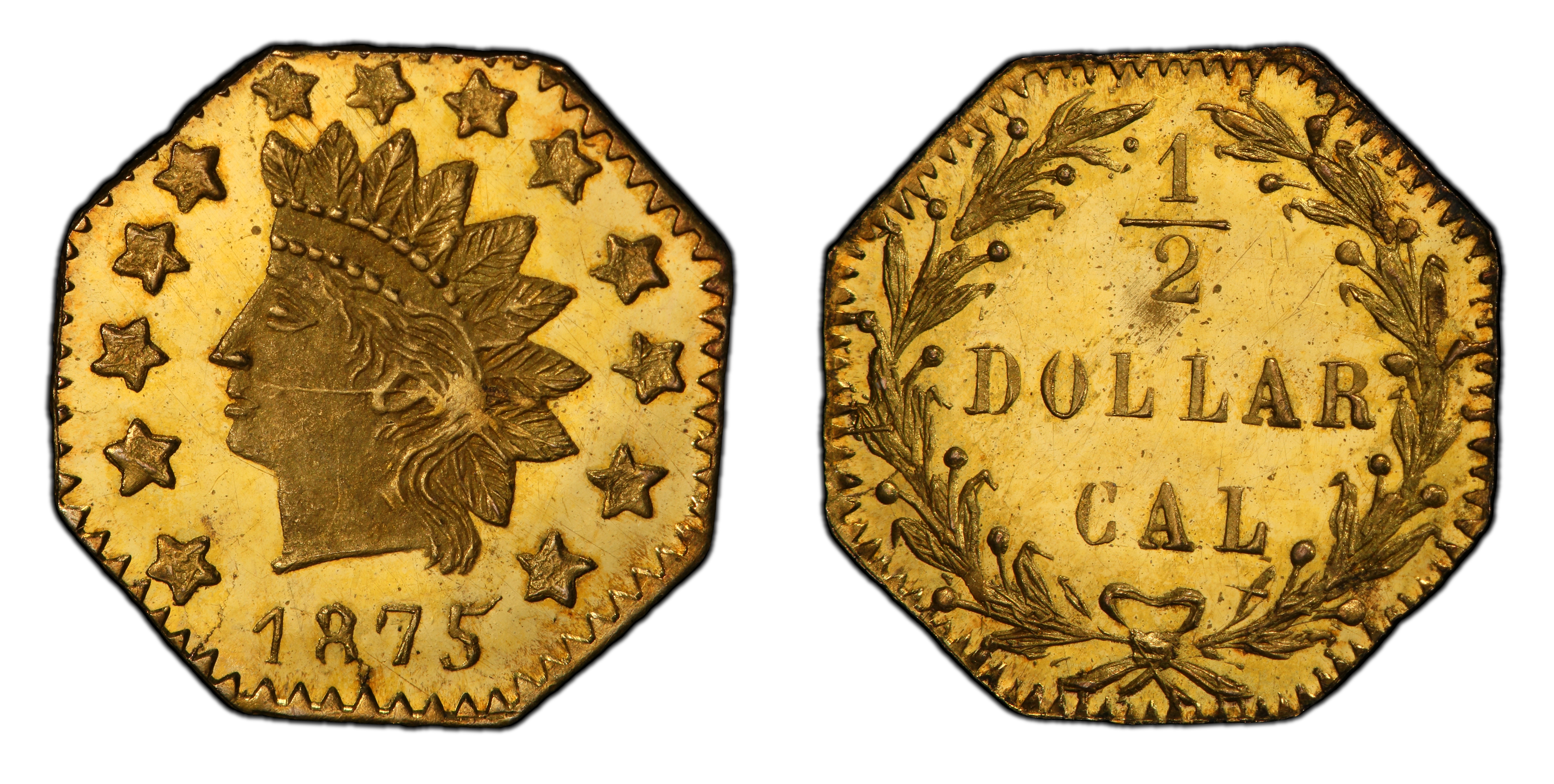
Obverse & Reverse
The 1875 50 Cents, cataloged as Breen-Gillio 946, is a quintessential example of a 'Period Two' California Fractional Gold piece. The story of these fascinating numismatic artifacts is bifurcated into two distinct eras. 'Period One' (1852-1857) saw the creation of tiny gold coins out of sheer necessity. The California Gold Rush had flooded the region with people and gold dust, but created an acute shortage of small-denomination coinage for daily transactions. Private minters stepped in to fill this void, producing pieces that, while often underweight, served a vital role in commerce. By the late 1850s, the San Francisco Mint was in full operation, alleviating the small-change crisis. This marked the beginning of 'Period Two' (1858-1882), during which the purpose of fractional gold transformed. The pieces were no longer primarily for circulation but became popular souvenirs and keepsakes. Jewelers, many of them French immigrants in San Francisco, recognized a burgeoning tourist market and a nostalgic demand for mementos of the Gold Rush. These 'jeweler's issues' were typically thinner, lighter, and often more ornate than their Period One predecessors. The BG-946 was struck deep into this period, long after the immediate need for fractional currency had passed. Its existence is owed entirely to this souvenir trade. The Coinage Act of 1864 had prohibited private coinage, but the law was not strictly enforced against these small tokens until the Secret Service cracked down in 1882-1883, effectively ending the era of California Fractional Gold. The BG-946, therefore, represents not a tool of a frontier economy, but a romanticized reflection of it, crafted for a generation looking back on the heady days of the '49ers. These pieces were sold in jewelry shops and curiosity cabinets, tangible links to an era that was already passing into legend.
Associated EventCalifornia Gold Rush Aftermath
Reason For MintingPrimarily produced as a souvenir or keepsake of the California Gold Rush for the tourist and nostalgia market, not for monetary circulation.
Minter HistoryThe specific minter of BG-946 is not definitively known, a common trait for many Period Two issues which were often produced anonymously or by jewelers who did not apply a distinctive maker's mark. Prominent jewelers of the era known to have produced fractional gold include Robert B. Gray & Co., Deriberpe & Nouizillet (D.N.), and Frontier & Deviercy (F.D.). However, the style of BG-946 does not allow for a conclusive attribution to any single known firm. It was likely produced by one of the many skilled jewelers operating in San Francisco who catered to the robust market for Gold Rush memorabilia.
Historical SignificanceThis coin is significant as an artifact of the post-Gold Rush souvenir trade in California. It demonstrates the transition of fractional gold from a necessary form of currency to a commercialized memento, reflecting the public's romantic fascination with the Gold Rush era long after its peak. It is a product of a numismatic cottage industry that thrived until federal legislation was finally enforced to halt it.
N/A
Denomination50 Cents
Minting Period1875
Assayer/MinterUnknown Jeweler
Geographic OriginSan Francisco, California
Obverse DescriptionFeatures a stylized Indian Head facing left, a design popular in the period. The portrait is somewhat crude, typical of jeweler's issues. The head is adorned with a feathered headdress. The field is surrounded by thirteen stars, representing the original colonies.
Obverse InscriptionNo inscriptions are present on the obverse.
Reverse DescriptionAn ornamental wreath, composed of two branches tied with a bow at the bottom, encircles the denomination. The date is placed within the wreath, below the denomination.
Reverse InscriptionCALIFORNIA GOLD / 1/2 / 1875
CompositionGold
Stated Fineness Actual FinenessTypically varied from 14 to 22 karats for Period Two issues, generally lower than Period One coins.
Weight0.24 grams
Diameter10.00 mm
EdgePlain
Unknown, but likely a few thousand pieces.
Survival Estimate30-50
Rarity ScaleR-5
The BG-946 appeals to collectors for its classic Indian Head design, octagonal shape, and its status as a representative 'jeweler's issue' from the latter period of fractional gold production. Prooflike (PL) examples, with their reflective surfaces, are particularly sought after for their superb eye appeal.
Key VarietiesThe primary variety is the regular business strike. The 'PL' (Prooflike) designation is not a separate variety but a desirable surface characteristic found on well-struck early impressions from fresh dies. No specific die states are widely collected, and no later-date restrikes are known to exist for this specific Breen-Gillio number.
Authentication TipsAuthentic examples have a characteristic strike style that is often sharp in some areas and slightly weak in others, a result of manual hammer striking. The lettering and numerals should match the die characteristics published in Breen-Gillio's reference. Be wary of modern replicas, which are common. Replicas often have a soapy, cast-like appearance, incorrect weight, and may lack the denomination '1/2' or have different wording to evade counterfeit laws. The gold color on genuine pieces is often a slightly brassy or reddish-yellow, consistent with native California gold alloyed with silver and copper.
Shopping ConsiderationsFor a premium quality BG-946, look for a sharp strike, particularly on the feathers of the headdress and the details of the wreath. The 'PL' designation is highly desirable and commands a significant premium; a buyer should seek coins with deeply reflective, mirror-like fields and minimal distracting marks. As these coins are tiny, even minor imperfections can be magnified. Avoid examples that have been harshly cleaned, which strips the original surface and luster. Also, watch for pieces that have been used in jewelry, looking for evidence of removed solder or rim damage. A smooth, attractive original surface with good luster defines a top-tier example.
A coin's grade is its condition, rated on a 1-70 scale. For rare coins, this is the most critical factor in determining value, as a tiny difference in preservation can mean a huge difference in price.
Relevant Grade TypesOriginal period issues were business strikes, many of which were sold as souvenirs and never circulated. They are found in both Circulated (1-58) and, more commonly, Mint State (MS, 60-70) grades. The 'PL' (Prooflike) designation is applied to qualifying Mint State coins and is highly sought. True Proof (PR/PF) strikings were not produced during the original minting period for this issue.
Mint State CharacteristicsUncirculated examples are defined by their luster. A typical MS BG-946 will have soft, satiny luster. High-end examples, especially those designated PL, will exhibit deep, mirror-like reflectivity in the fields. The strike can be inconsistent; a well-struck piece will show clear details in the feathers and wreath, but some central weakness is common. Due to their small size and handling as souvenirs, even high-grade specimens may show tiny contact marks or hairlines.
Circulated Wear PatternsFor the few examples that saw handling, wear will first appear on the high points of the design. On the obverse, check the cheek of the Indian and the highest feathers in the headdress. On the reverse, the high points of the wreath's leaves and the numerals of the date will show the first signs of friction and loss of detail.
Key Factors For ValueThe primary value driver for BG-946 is its grade and surface quality. A high-grade Mint State coin (e.g., MS-64 or higher) commands a significant premium over circulated examples. The 'PL' designation adds another substantial premium due to enhanced eye appeal. Strike sharpness is critical; a fully struck coin is rare and desirable. Finally, attractive, original skin without signs of cleaning or damage is paramount. A CAC sticker will add a further premium, confirming quality for the assigned grade.
PCGS Price Guide
| Grade | Price | Population |
|---|---|---|
| 62 | N/A | N/A |
| 63 | $700.00 | 4 |
| 63+ | $850.00 | N/A |
| 64 | $1,200.00 | 1 |
| 64+ | $1,450.00 | N/A |
| 65 | $1,900.00 | N/A |
| 65+ | $2,100.00 | N/A |
| 66 | $2,750.00 | 1 |