1873/2 G50C BG-1050, PL (Regular Strike)
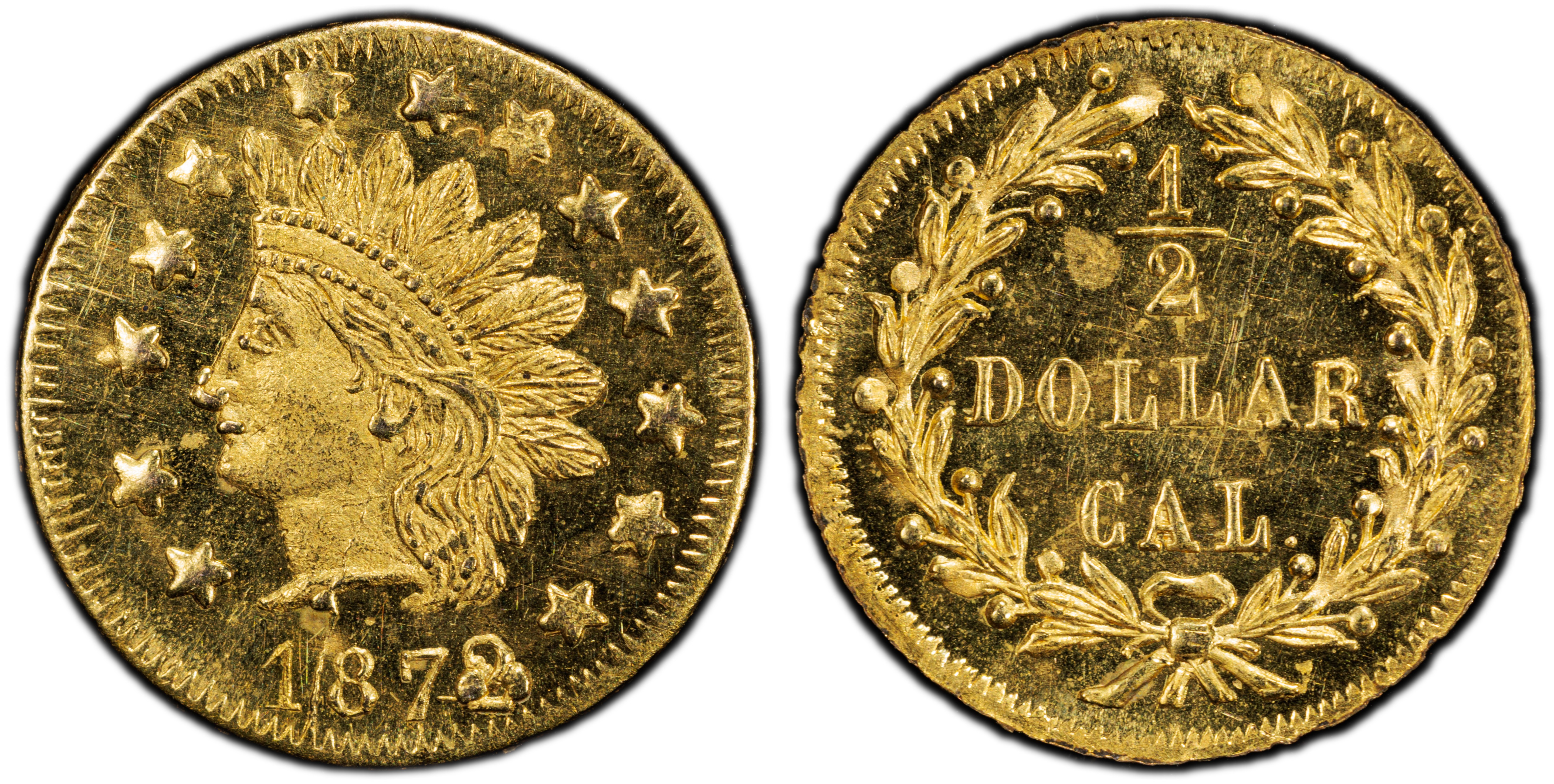
Obverse & Reverse
The 1873/2 G50C BG-1050 variety is a fascinating artifact from the second period (1859-1882) of California Fractional Gold production. This era, often termed the 'Jeweler's Period,' is distinct from the initial 'Period One' (1852-1856) issues that were struck with a more sincere, albeit often underweight, intent to alleviate the chronic shortage of small change during the California Gold Rush. By the 1870s, the initial impetus for fractional gold had waned. The San Francisco Mint was in full operation, producing ample federal silver and gold coinage for daily commerce. The need for private issues had evaporated, and their legal status was dubious following the Coinage Act of 1864, which prohibited private coinage. However, the law was not strictly enforced in the West until the early 1880s, leaving a window for continued production. The pieces struck during this second period were fundamentally different in purpose. They were no longer primarily instruments of commerce but were instead created by local jewelers as souvenirs, keepsakes, and novelty items for tourists and collectors fascinated by the romanticism of the Gold Rush. This shift is evident in their physical characteristics; Period Two issues are typically smaller, lighter, and of a more variable and often lower gold fineness than their predecessors. Their designs, however, became more varied and sometimes more intricate, with the Indian Head motif being a popular theme, echoing the design of the contemporary U.S. cent. The BG-1050 is a prime example of this genre. The clear 1873/2 overdate, a result of a die being re-punched for a new year, adds a layer of numismatic intrigue. These pieces were likely produced in very small quantities, struck on demand or in small batches within a jeweler's shop, using hand-operated presses. Their survival rate is consequently very low, and they stand today not as relics of circulation, but as mementos of a celebrated era in American history, purchased by those who wanted a tangible, golden link to the great California adventure.
Associated EventPost-Gold Rush California Economy
Reason For MintingPrimarily created as souvenirs and novelty items for tourists and collectors, not for general circulation, during a period of lax enforcement of anti-private coinage laws.
Minter HistoryThe specific minter or jeweler who produced the BG-1050 variety is unknown, a common trait for many Period Two California Fractional Gold issues. Dozens of private firms, often operated by French or German immigrant jewelers in San Francisco, engaged in this practice. They operated on a small scale, creating their own dies and striking pieces as a profitable sideline. Unlike the larger private minters of the 1850s (e.g., Wass, Molitor & Co.), these later producers were anonymous artisans whose identities are now largely lost to history. Their work is cataloged and identified by the die characteristics documented in the Breen-Gillio reference.
Historical SignificanceThe BG-1050 is significant not as a circulating coin but as a numismatic artifact representing the commercial capitalization of the Gold Rush legend. It marks the transition of fractional gold from a necessity of commerce to a collectible souvenir, embodying the romantic fascination with the West that captivated America in the latter half of the 19th century. The overdate feature also provides a tangible glimpse into the frugal and practical methods of the small-scale private minters of the day.
BG-1050
Denomination50 Cents
Minting Period1873
Assayer/MinterUnknown private minter
Geographic OriginSan Francisco, California
Obverse DescriptionThe obverse features a small, left-facing portrait of a Native American princess. She wears a feathered headdress, and her hair flows down her neck. The portrait is encircled by thirteen six-pointed stars, representing the original colonies. The date, 1873/2, is prominently displayed below the bust. On this variety, the numeral '3' is clearly punched over a '2'.
Obverse Inscription1873/2
Reverse DescriptionThe reverse design is dominated by a wreath composed of two branches tied together at the bottom with a ribbon. Within the wreath, the denomination is expressed on two lines: '50' on the top line and 'CENTS' on the bottom. The legend 'CALIFORNIA GOLD' appears in an arc along the upper rim, outside the wreath.
Reverse InscriptionCALIFORNIA GOLD 50 CENTS
CompositionGold
Stated Fineness Actual Fineness EdgePlain
Unknown, but extremely small.
Survival EstimateFewer than 30 believed to exist.
Rarity ScaleR-6- (Low R-6)
This variety is highly sought after due to the combination of its high rarity (R-6), the popular Indian Head design, and the clear 1873/2 overdate feature, which creates strong demand from both California Fractional Gold specialists and collectors of mint errors and die varieties.
Key VarietiesThe primary variety is the regular business strike. A Proof-Like (PL) designated variety also exists and is recognized by grading services; these specimens exhibit mirrored fields and frosted devices, commanding a significant premium. A known error variety includes a dramatic Double Strike, which is exceptionally rare.
Authentication TipsAuthentic BG-1050 specimens will show a clear overdate with remnants of the '2' visible under the '3', particularly at the top curve and lower-right corner of the numeral. Genuine pieces often exhibit a somewhat crude, hand-made appearance and may have areas of weak strike due to the manual minting process. Counterfeits are common in the Cal Gold series; many are brass or thinly gold-plated and often have a soapy, indistinct look. Fakes also tend to lack a specific denomination like 'CENTS' or 'DOLLAR', instead using generic phrases like 'CAL GOLD CHARM'. An authentic piece should match the die markers illustrated in the Breen-Gillio reference.
Shopping ConsiderationsFor a premium quality example, a potential buyer should seek out a specimen with a sharp, well-defined strike, especially on the fine details of the headdress feathers and the digits of the overdate. Original, undisturbed luster is paramount; many surviving examples have been cleaned or polished over the years, which significantly impairs their value and appeal. Look for coins with a pleasing, original reddish-gold or orange-gold patina. The Proof-Like (PL) version is the ultimate prize for this variety, but even on regular strikes, some reflectivity in the fields is a strong sign of an early strike from fresh dies. Carefully inspect for evidence of tooling, harsh cleaning, or removal from jewelry, as these were common fates for such pieces.
A coin's grade is its condition, rated on a 1-70 scale. For rare coins, this is the most critical factor in determining value, as a tiny difference in preservation can mean a huge difference in price.
Relevant Grade TypesOriginal period issues of BG-1050 were business strikes, intended as souvenirs rather than for circulation, and are found in both Circulated (1-58) and, more commonly, Mint State (MS, 60-70) grades. No true Proofs were struck during the original period. However, some pieces were struck on highly polished planchets with fresh dies, resulting in a Proof-Like (PL) appearance; these are designated as such by grading services and are considered a special category of business strike, not separate Proof coins.
Mint State CharacteristicsIn uncirculated grades, the BG-1050 typically exhibits a soft, satiny luster. The strike can be inconsistent; many examples show some weakness on the high points of the headdress feathers or the reverse wreath. The overdate is a key feature, and its clarity varies; well-struck examples will show it clearly. As these were made by jewelers from relatively soft gold, even high-grade Mint State examples may show minor handling marks or planchet imperfections that are considered characteristic for the issue.
Circulated Wear PatternsAlthough not intended for heavy circulation, wear on circulated examples first appears on the highest points of the design. On the obverse, look for friction and flattening on the cheek, the eyebrow, and the tips of the feathers in the headdress. On the reverse, the high points of the wreath's leaves and the numerals '50' will show the first signs of wear. In lower grades (VF and below), the finer details of the hair and the individual leaves in the wreath will begin to merge.
Key Factors For ValueThe primary drivers of value for this variety are grade and surface quality. An example with original, uncleaned surfaces and strong luster will always command a premium. The sharpness of the strike is critical, with collectors paying more for well-defined details, especially a bold overdate. Eye appeal, encompassing attractive original toning and a lack of distracting marks, plays a major role. Specimens designated as Proof-Like (PL) are exceptionally rare and valued far above standard Mint State examples. A CAC sticker for this issue provides a strong endorsement of quality for the grade and typically adds a significant premium.
PCGS Price Guide
| Grade | Price | Population |
|---|---|---|
| 62 | $1,250.00 | 1 |
| 62+ | $1,500.00 | N/A |
| 63 | $1,750.00 | 1 |
| 64 | N/A | 1 |
| 65 | N/A | N/A |
| 66 | N/A | N/A |