1876/5 G$1 BG-1128, PL (Regular Strike)
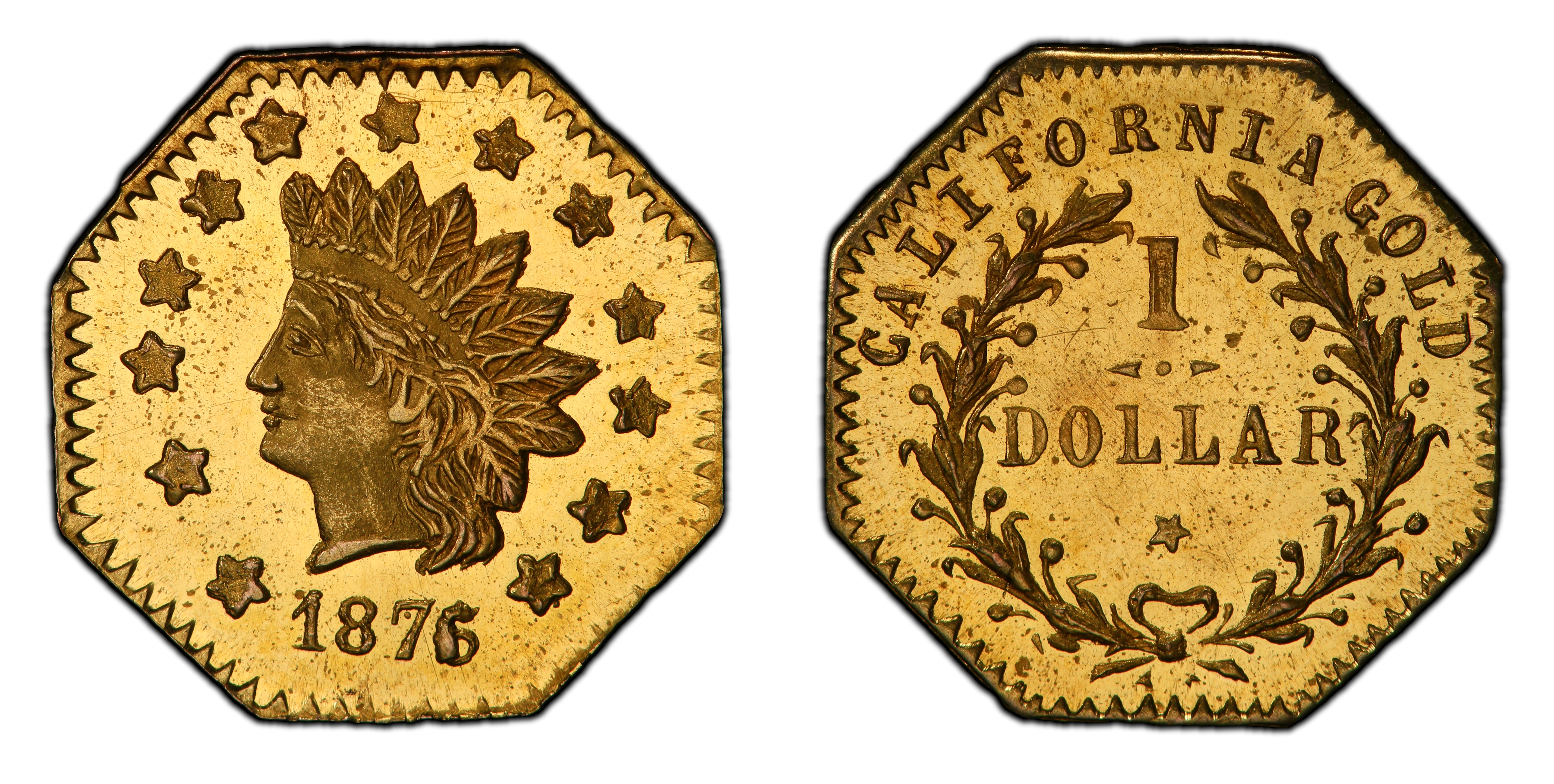
Obverse & Reverse
The California Fractional Gold series is a direct consequence of the immense societal and economic upheaval caused by the California Gold Rush, which began in 1848. The massive influx of over 300,000 people to the region created burgeoning boomtowns with an immediate and critical need for a medium of exchange for daily transactions. Gold dust, the primary form of wealth, was impractical for small purchases, leading to inconsistent and often unfair transactions, such as a 'pinch' of dust for a drink. The United States Mint in San Francisco, which did not become fully operational until 1856, initially focused on larger denominations, leaving a void for small-denomination coinage. Private jewelers and assayers in San Francisco stepped in to fill this gap, beginning in 1852, by minting their own quarter dollar, half dollar, and one-dollar gold pieces. These coins, now categorized by numismatists into distinct periods, served a vital commercial purpose. The 1876/5 G$1 BG-1128 belongs to 'Period Two' (1858-1882), a time when the initial necessity for circulating coinage had waned due to increased federal output. Coins from this era were produced less for circulation and more as souvenirs and keepsakes for tourists and residents captivated by the Gold Rush mystique. Despite the Coinage Act of 1864, which prohibited private coinage, enforcement was lax in the West, allowing production to continue and even increase into the 1870s. These 'jeweler's issues' often contained less gold than their face value, functioning more like tokens. The production of these pieces was eventually halted by stricter Secret Service enforcement around 1883. The BG-1128 variety, a prominent overdate, showcases the expedient methods of die preparation used by its minter, likely Robert B. Gray & Co. Today, these miniature gold pieces are treasured as tangible links to the romantic and tumultuous era of the Old West, with the BG-1128 being a popular and collectible example of a later souvenir issue.
Associated EventCalifornia Gold Rush
Reason For MintingInitially created to alleviate a severe shortage of small change for commerce, this later-period issue was primarily minted as a popular souvenir of the Gold Rush era.
Minter HistoryRobert B. Gray was a prominent San Francisco jeweler. Around 1859-60, his firm, Robert B. Gray & Co., acquired the business of another fractional gold minter, Antoine Nouizillet. Gray continued to produce fractional gold pieces using some of Nouizillet's old dies as well as new ones of his own design, often marked with a small letter 'G'. The firm was an active producer during the 'Period Two' era, capitalizing on the strong market for Gold Rush souvenirs. In 1871, Gray sold his interests to the California Jewelry Co.
Historical SignificanceAs a 'Period Two' issue, the BG-1128 represents the transition of California fractional gold from a necessary circulating medium to a commercial souvenir. Its existence highlights the lasting national fascination with the Gold Rush and the entrepreneurial spirit of the jewelers who met the public demand for mementos, even after the original economic need had passed.
BG-1128
Denomination$1
Minting Period1876
Assayer/MinterRobert B. Gray & Co.
Geographic OriginSan Francisco, California
Obverse DescriptionAn Indian Head design, facing left, is surrounded by thirteen stars. The prominent 1876 over 1875 date is below the bust. This is a clear overdate, with the underlying '5' clearly visible within and around the final '6' of the date.
Obverse Inscription1876/5
Reverse DescriptionThe denomination '1 DOLLAR' is enclosed within a wreath of leaves and berries. The wreath is open at the top.
Reverse Inscription1 DOLLAR
CompositionGold
Stated Fineness Actual FinenessVaries, typically 14 to 22 carats for Period Two issues.
EdgePlain
Unknown
Survival Estimate31-75
Rarity ScaleR-5
This variety is highly sought after due to its status as a clear and dramatic overdate (76/5). The octagonal shape and Indian Head design add to its classic Gold Rush appeal. The Prooflike (PL) designation indicates exceptional surface quality, making such specimens particularly desirable.
Key VarietiesThe primary variety is the 1876/5 overdate itself. The BG-1128 is one of two major overdate varieties for the year, the other being the BG-1129. No special collector restrikes or patterns are known for this specific variety from the original period of issue.
Authentication TipsGenuine pieces must have a denomination (e.g., 'DOLLAR'). Many modern replicas exist; a common diagnostic of fakes is the presence of a bear on the reverse. Genuine pieces often exhibit a somewhat crude, uneven strike due to the hammer-striking process, a characteristic often absent in modern fakes. The die characteristics of the overdate should be sharp and match known genuine examples. Authentication by a major third-party grading service (PCGS or NGC) is highly recommended for this series.
Shopping ConsiderationsA premium quality example for this variety will exhibit sharply reflective, prooflike fields, a strong strike on the high points of the Indian's hair and the wreath on the reverse, and minimal contact marks. The clarity and boldness of the underlying '5' in the overdate is a key factor in eye appeal. Avoid examples that have been harshly cleaned, which will show hairline scratches and impaired luster. Also, look out for any tooling or alterations, particularly around the date. Given their small size, any form of damage such as bends or rim bumps significantly impacts the value.
A coin's grade is its condition, rated on a 1-70 scale. For rare coins, this is the most critical factor in determining value, as a tiny difference in preservation can mean a huge difference in price.
Relevant Grade TypesOriginal period issues were business strikes, although their intended purpose was primarily as souvenirs rather than for circulation. They are found in both Circulated (1-58) and Mint State (MS, 60-70) grades. No true Proofs were struck during the original minting period. The 'PL' (Prooflike) and 'DPL' (Deep Prooflike) designations are applied to business strikes that have exceptionally reflective, mirror-like surfaces, and these are considered highly desirable for this issue.
Mint State CharacteristicsUncirculated examples of BG-1128 often display a full, vibrant luster, which can range from satiny to deeply prooflike. The strike can be uneven, a byproduct of the hammer-striking method. Weakness is sometimes seen on the stars or the details of the wreath. Contact marks are common due to the softness of the gold and handling over the years, but high-grade examples will be relatively free of distracting marks in prime focal areas like the Indian's cheek.
Circulated Wear PatternsWear first appears on the high points of the design. On the obverse, check the cheek, the details of the headdress feathers, and the hair above the eye. On the reverse, the highest points of the wreath leaves and the bow will show the first signs of friction and flattening. In lower circulated grades, the stars and legends will begin to weaken and merge with the fields.
Key Factors For ValueThe primary value driver is the grade, with a steep premium for Mint State examples, especially those designated PL or DPL. The second key factor is the surface quality; an example with original, undisturbed luster and attractive 'orange-peel' toning will command a significant premium over one that has been cleaned or polished. The strength and clarity of the overdate is also crucial for eye appeal. Finally, certification by PCGS or NGC is standard, and a CAC sticker for superior quality at the assigned grade will add a further premium.
PCGS Price Guide
| Grade | Price | Population |
|---|---|---|
| 62 | N/A | N/A |
| 63 | N/A | 1 |
| 64 | $2,750.00 | 1 |
| 64+ | $3,500.00 | N/A |
| 65 | $4,250.00 | 1 |
| 65+ | $5,500.00 | N/A |