1873 G50C BG-1051, PL (Regular Strike)
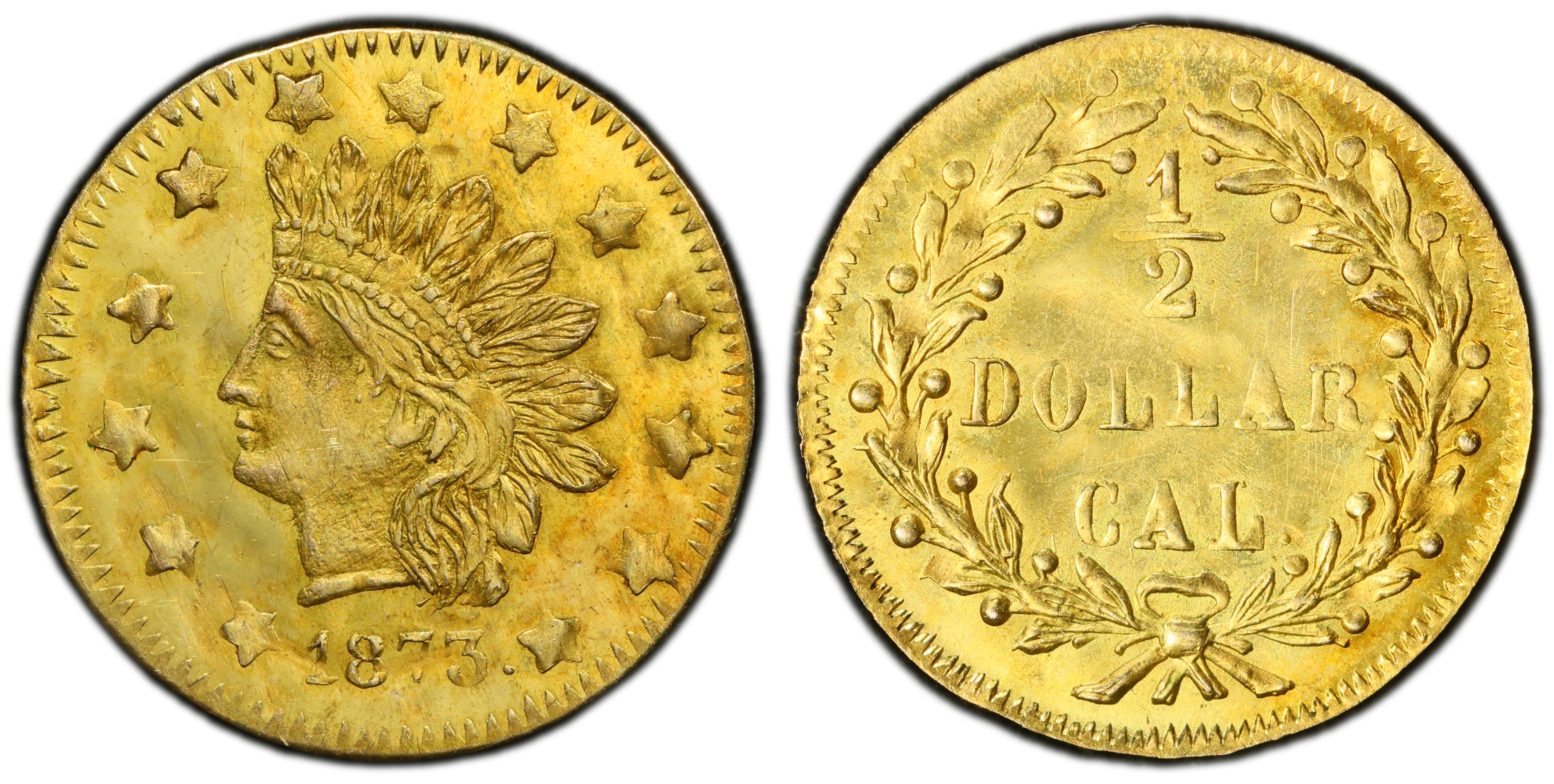
Obverse & Reverse
The 1873 BG-1051 50 Cents represents a fascinating chapter in the evolution of California's privately issued gold coinage, a story that began with the immense pressures of the Gold Rush. By the 1870s, the initial frantic need for any circulating medium had subsided, but the utility and novelty of small-denomination gold pieces persisted. This era, known to numismatists as 'Period Two' (1859-1882), was distinct from the earlier, more utilitarian 'Period One'. The coins of Period Two were no longer intended to be full-weight adjuncts to federal coinage; instead, they were underweight 'tokens' or souvenirs, often exquisitely crafted by jewelers. The Coinage Act of 1864 had officially outlawed private coinage, but enforcement was lax, allowing production to continue for nearly two more decades. These later pieces, including the BG-1051, were primarily made for the jewelry trade and as keepsakes for tourists and locals who remained captivated by the romance of gold. The makers were often French jewelers who had settled in San Francisco, bringing their artistic sensibilities to the craft. While not intended for robust circulation in the same way as their Period One predecessors, they did pass as small change and served a commercial purpose, albeit a limited one. Their small size and precious metal content made them popular, but also easy to lose, contributing to their present-day rarity. The BG-1051 variety, with its classic Indian Head motif, is a prime example of this later period's artistry and changed economic function, representing the transition of fractional gold from a circulating necessity to a cherished memento of California's golden age.
Associated EventPost-Gold Rush Economic Expansion
Reason For MintingPrimarily produced as souvenirs and for the jewelry trade during a period of lax enforcement of anti-private coinage laws.
Minter HistoryWhile definitive mint marks are absent, the style and workmanship of BG-1051 are characteristic of the firm Gaime, Guillemot & Co. This partnership of French jewelers was one of the most prolific producers of fractional gold during Period Two. They, along with other firms like Deriberpe & Nouizillet (D.N.) and Frontier & Deviercy (F.D.), dominated the market for these small, artistic gold pieces. Their background in fine jewelry is evident in the detailed die work and aesthetic quality of the coins they produced, which were often more ornate than the earlier, cruder issues from the 1850s.
Historical SignificanceThe BG-1051 is significant as a representative of 'Period Two' California Fractional Gold, illustrating the shift from utilitarian private coinage to commercial souvenir tokens. It showcases the high level of craftsmanship of San Francisco's jewelers and serves as a tangible link to the enduring cultural and economic legacy of the California Gold Rush long after its peak.
N/A
DenominationG50C (Gold 50 Cents)
Minting Period1873
Assayer/MinterProbably Gaime, Guillemot & Co.
Geographic OriginSan Francisco, California
Obverse DescriptionA well-defined bust of a female figure facing left, wearing a feathered headdress in the style of a Native American chief. She is surrounded by thirteen stars, representing the original colonies.
Obverse Inscription Reverse DescriptionThe denomination '1/2' is enclosed within a beaded circle, which is itself surrounded by a wreath of leaves. The date '1873' is located below the wreath, and the legend 'CALIFORNIA GOLD' is inscribed above it.
Reverse InscriptionCALIFORNIA GOLD 1/2 1873
CompositionGold
Stated Fineness Actual FinenessVariable, but significantly less than federal issues of the period, consistent with Period Two jeweler's issues.
Weight0.25 grams
Diameter10.00 mm
EdgePlain
Unknown, but very small.
Survival EstimateFewer than 75 believed to exist.
Rarity ScaleR-5 (Very Scarce)
This variety is sought after for its attractive Indian Head design, its status as a Period Two issue from a popular year, and its relative scarcity. The 'PL' (Prooflike) designation adds significant appeal, as the reflective surfaces highlight the design details.
Key VarietiesThe primary variety is the regular business strike. The Breen-Gillio reference also notes Prooflike (PL) and Deep Mirror Prooflike (DMPL) examples, which are not true proofs but are early strikes from fresh, polished dies that command a premium. There are no known official restrikes or patterns associated with this specific BG number.
Authentication TipsAuthentic pieces have a sharp, precise strike, especially on the feathers and stars. The font on the reverse should match known examples in the Breen-Gillio reference. Counterfeits are common and often have a soapy, weak appearance, incorrect weight, or a 'bear' on the reverse, which is a tell-tale sign of a modern replica. Period Two pieces are often of lower gold fineness, so color can vary, but the diagnostics of the die state (e.g., small cracks or polished areas) are key to authentication. Given the prevalence of fakes, third-party certification by PCGS or NGC is highly recommended for this series.
Shopping ConsiderationsA premium quality example for its grade will exhibit sharp details on the high points of the headdress and the wreath. For a PL-designated coin, look for deep, uninterrupted reflectivity in the fields. Common problems include cleaning (which dulls the luster and leaves hairlines), excessive contact marks (which are magnified by the reflective surfaces), and removal from jewelry, which may leave evidence of solder or tooling on the edge or rims. The Jay Roe pedigree is particularly desirable for this variety, as his collection contained many superb examples. A coin with original, undisturbed surfaces and strong eye appeal will always command a significant premium.
A coin's grade is its condition, rated on a 1-70 scale. For rare coins, this is the most critical factor in determining value, as a tiny difference in preservation can mean a huge difference in price.
Relevant Grade TypesOriginal period issues were business strikes intended for souvenir and limited commercial use, and are found in both Circulated (1-58) and Mint State (MS, 60-70) grades. No true Proofs were struck in 1873. The 'PL' (Prooflike) and 'DMPL' (Deep Mirror Prooflike) designations are applied to business strikes made with freshly polished dies that exhibit mirrored surfaces. These are not a separate issue but rather an early die state and are highly prized by collectors.
Mint State CharacteristicsUncirculated examples of BG-1051 often show a reasonably sharp strike, though weakness can sometimes be seen on the highest points of the feathers. Luster is typically bright and satiny, but on PL examples, it is highly reflective. Due to their small size and handling, even high-grade specimens can have tiny contact marks or 'ticks' in the fields, which are particularly noticeable on Prooflike surfaces.
Circulated Wear PatternsWear first appears on the high points of the design: the cheek and the front feathers of the headdress on the obverse, and the leaves of the wreath and the fraction '1/2' on the reverse. In lower grades (VF and below), the stars on the obverse and the letters in the legend will become soft and begin to merge with the fields.
Key Factors For ValueFor the BG-1051, value is driven by several key factors. First is grade and surface preservation; an MS-63 is worth significantly more than an AU-58. Second is the Prooflike designation; a coin with PL or DMPL surfaces commands a substantial premium over a standard business strike. Third is eye appeal, with coins exhibiting clean, reflective fields and a strong strike being most desirable. Finally, a CAC sticker, indicating premium quality for the grade, adds another layer of value for discerning collectors.
PCGS Price Guide
| Grade | Price | Population |
|---|---|---|
| 62 | N/A | 1 |
| 63 | $800.00 | 1 |
| 63+ | $950.00 | N/A |
| 64 | $1,500.00 | N/A |
| 64+ | $1,600.00 | N/A |
| 65 | $1,750.00 | N/A |
| 65+ | $2,250.00 | N/A |
| 66 | $3,000.00 | N/A |