1878/6 G50C BG-1066, PL (Regular Strike)
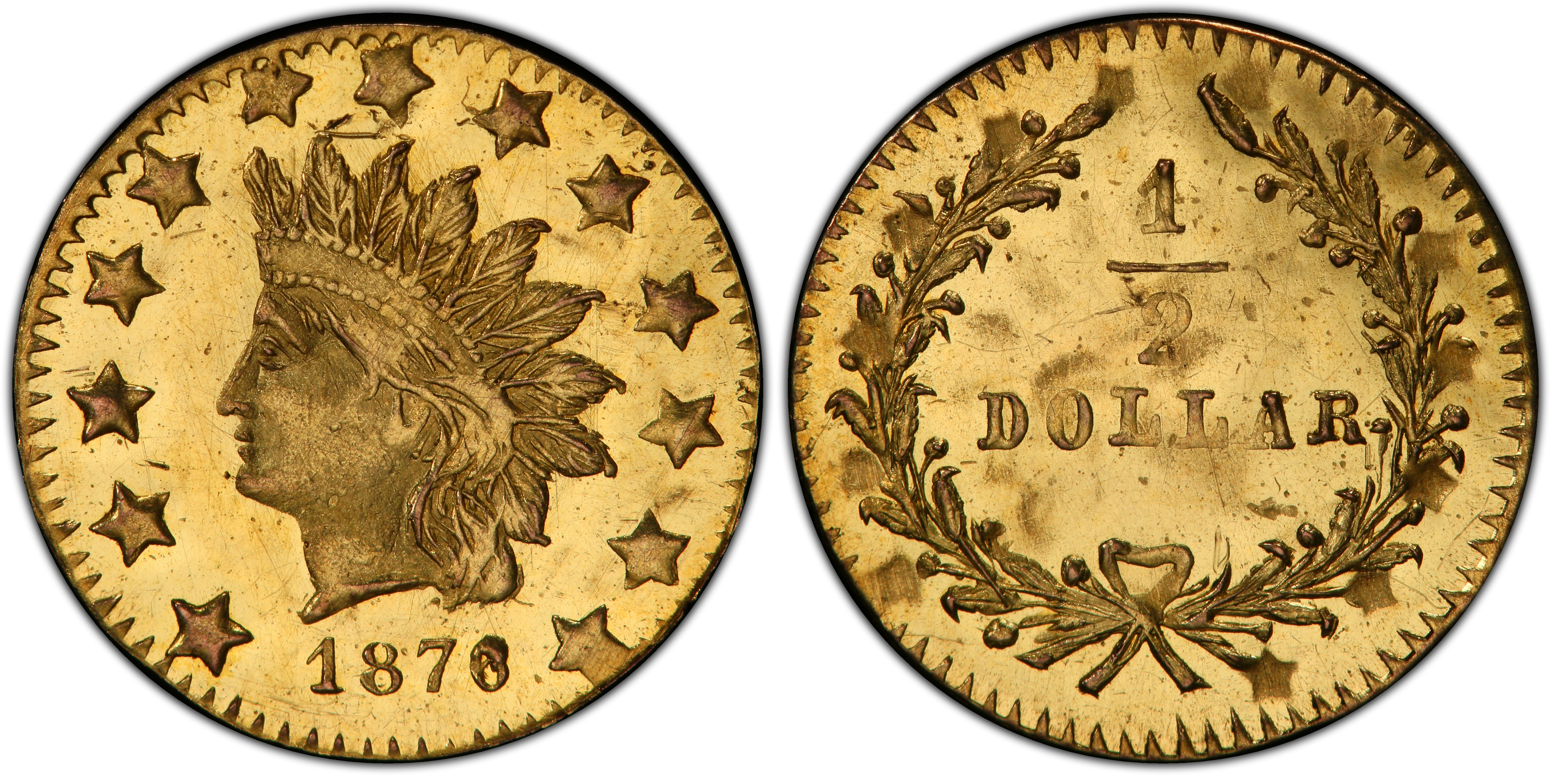
Obverse & Reverse
The 1878/6 G50C, cataloged as Breen-Gillio 1066, is a product of the second period of California Fractional Gold production (1859-1882). This era, often dubbed the 'jeweler's period,' saw a significant shift from the initial purpose of these small gold pieces. The first period (1852-1856) issues were struck out of a genuine necessity for small change in the gold fields, where the smallest circulating U.S. coin was often the silver dollar, and gold dust was an impractical medium for minor transactions. These early pieces were generally of good weight and fineness, intended to circulate. By the late 1850s and continuing through the 1870s, this dynamic had changed. The U.S. Mint in San Francisco was producing ample federal coinage, alleviating the initial shortage. However, the tiny gold coins had found a new and enduring market as souvenirs, keepsakes, and jewelry items. Tourists and residents alike were fascinated by these miniature symbols of the Gold Rush, and local jewelers met the demand by producing a wide variety of designs. These Period Two issues were notoriously underweight for their stated denomination and were not intended for circulation, but rather as mementos. The Coinage Act of 1864 had explicitly prohibited the private minting of coinage, but enforcement was lax, allowing jewelers to continue production. The 1878/6 BG-1066 is a classic example of this phenomenon. The prominent 8/6 overdate is not indicative of an error in the modern sense, but rather a deliberate and economical reuse of a die from a previous year (1876), a common practice among these private minters who operated on small margins. These pieces were struck not to serve the miners, but to charm the public, representing a tangible, albeit tiny, piece of California's golden allure.
Associated EventCalifornia Gold Rush (Later Souvenir Period)
Reason For MintingPrimarily produced as souvenirs and for use in jewelry rather than to alleviate a coin shortage, which was the purpose of earlier issues.
Minter HistoryThe specific minter for BG-1066 is unknown, which is typical for Period Two California Fractional Gold. Production was dominated by a handful of San Francisco-based jewelers, many of French origin, who created a wide array of designs to appeal to the robust tourist and souvenir market. These operations were small, often utilizing hand-presses or hammer striking, and dies were frequently altered, reused, and muled, leading to the vast number of varieties cataloged today.
Historical SignificanceThis coin is significant not as a circulating medium, but as a cultural artifact of post-Gold Rush California. It represents the commercialization of the Gold Rush legacy and the transition of fractional gold from a practical necessity to a popular collectible and souvenir item. The 1878/6 overdate provides direct physical evidence of the cost-saving and expedient methods used by the private jewelers who produced them.
N/A
DenominationG50C (Gold 50 Cents)
Minting Period1878
Assayer/MinterUnknown, likely a San Francisco jeweler
Geographic OriginSan Francisco, California
Obverse DescriptionA depiction of a female head facing left, commonly referred to as an Indian Head or 'Liberty,' though the design is a crude interpretation. The figure wears a feathered headdress. The portrait is surrounded by 13 six-pointed stars.
Obverse Inscription Reverse DescriptionThe denomination '1/2' is central, enclosed within a wreath of two olive branches tied with a bow at the bottom. The legend 'CALIFORNIA GOLD' appears above the wreath, arching along the upper rim.
Reverse InscriptionCALIFORNIA GOLD 1/2
CompositionGold
Stated Fineness Actual FinenessVariable, but typically lower than U.S. Mint standards for the period.
Weight0.25 grams
Diameter10.00 mm
EdgePlain
Unknown; likely very small, produced on demand.
Survival EstimateFewer than 30 believed to exist.
Rarity ScaleR-7 (4 to 12 known)
The BG-1066 is highly sought after due to its extreme rarity (R-7), the clear 1878/6 overdate, and its status as a Period Two issue. The Prooflike (PL) designation adds significant appeal, highlighting the flashy, reflective surfaces that were sometimes produced to enhance their use as jewelry or keepsakes.
Key VarietiesThe primary variety is the 1878/6 overdate itself, which defines the BG-1066 attribution. No major sub-varieties from the original minting period are known. As these were made for collectors and jewelers from the start, there are no known later-date restrikes or patterns; the original issues are the only ones available to collectors.
Authentication TipsAuthentication requires careful examination of the overdate; the underlying '6' should be clearly visible beneath the '8', particularly in the upper loop. The strike is often weak in the center of the obverse and reverse. The style of the lettering and the wreath is specific to this die pair. Counterfeits of California fractionals are common, but they often have incorrect weight, a soapy or cast appearance, incorrect design details, or are merely gold-plated base metal.
Shopping ConsiderationsA premium quality example for this variety will exhibit sharply prooflike or semi-prooflike fields. Given their purpose, many were handled or mounted as jewelry, so searching for an example free of scratches, rim damage, or evidence of mounting is crucial. The strike can be weak, especially on the '1/2' and the center of the wreath; examples with a stronger than average strike command a premium. The clarity and boldness of the 8/6 overdate are key value drivers. Original, lustrous surfaces with a light, reddish-gold toning are highly desirable.
A coin's grade is its condition, rated on a 1-70 scale. For rare coins, this is the most critical factor in determining value, as a tiny difference in preservation can mean a huge difference in price.
Relevant Grade TypesOriginal period issues were business strikes, often with prooflike surfaces, intended for sale to jewelers and the public, not for circulation. They are found in Circulated (1-58, though rare as they didn't circulate widely) and Mint State (MS, 60-70) grades. No official Proof (PR/PF) examples were struck during the original period. The 'PL' (Prooflike) or 'DMPL' (Deep Mirror Prooflike) designations are applied to business strikes that have highly reflective, mirror-like surfaces from polished dies and are highly prized.
Mint State CharacteristicsAn uncirculated BG-1066 is defined by its luster. High-quality examples have flashy, reflective fields, earning the Prooflike (PL) designation. The central strike is often a point of weakness; the feathers in the headdress and the numerals on the reverse may show softness even on a high-grade specimen. Due to the small size and immediate collector interest, contact marks can be minimal, but any significant or distracting marks will greatly impact the grade and value.
Circulated Wear PatternsWhile few circulated, any wear would first appear on the high points of the design: the cheek and feathers of the Indian Head, and the highest leaves and bow of the reverse wreath. On lower grade examples, the delicate stars on the obverse would begin to merge with the fields.
Key Factors For ValueFor the BG-1066, the primary value drivers are rarity and grade. The quality of the surface is paramount; a coin with deep, clean prooflike fields will command a significant premium over a standard mint state piece. The sharpness of the overdate feature is a key component of eye appeal. Any evidence of cleaning, polishing, or removal from jewelry will drastically reduce the value. A CAC sticker on this issue would provide a strong endorsement of surface quality and strike, adding a substantial premium.
PCGS Price Guide
| Grade | Price | Population |
|---|---|---|
| 62 | $550.00 | 1 |
| 62+ | $625.00 | N/A |
| 63 | $825.00 | N/A |
| 63+ | $950.00 | N/A |
| 64 | $1,250.00 | 1 |
| 64+ | $1,500.00 | N/A |
| 65 | $1,850.00 | 1 |