1870 G50C BG-1024, PL (Regular Strike)
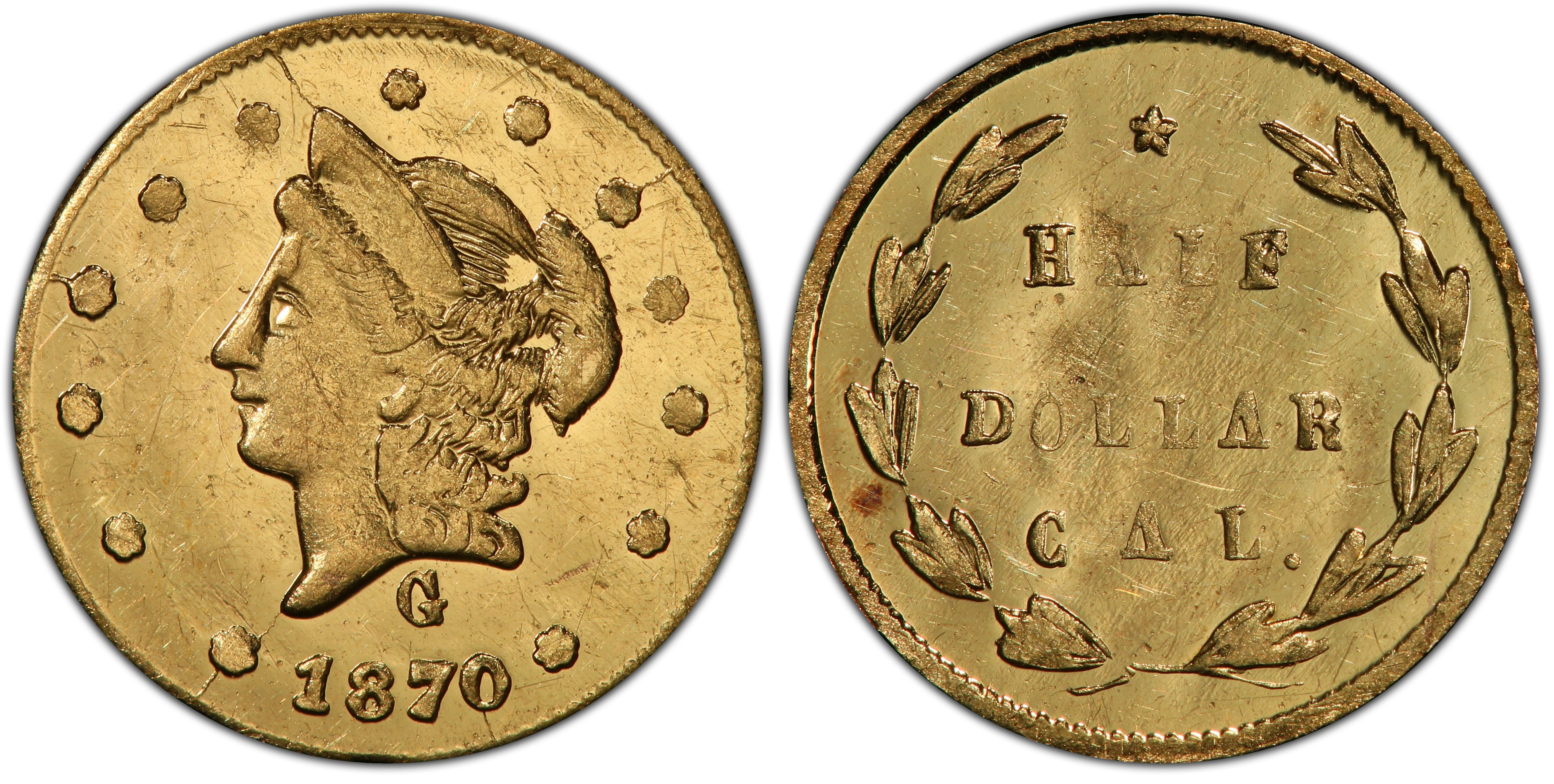
Obverse & Reverse
The 1870 BG-1024 50 Cent piece is a quintessential example from the second period of California Fractional Gold production (1859-1882). Following the initial Gold Rush boom, the acute shortage of small circulating coinage that had prompted the first wave of private issues (1852-1857) was largely resolved by the output of the San Francisco Mint, which opened in 1854. However, a new market emerged. These small, intricate gold tokens became highly popular as souvenirs, keepsakes, and jewelry items, both for locals and for tourists fascinated by the romance of the Golden State. Jewelers in San Francisco, many of French origin, stepped in to meet this demand, creating a vast and diverse array of quarter, half, and dollar gold tokens. Unlike the earlier 'Period One' issues that were struck with the primary intent to circulate, these 'Period Two' or 'jeweler's issues' often had a gold content worth less than their face value. Their production continued unabated despite the Private Coinage Act of 1864, which made such activities illegal. Federal authorities largely turned a blind eye to these tiny souvenir pieces, as they posed little real threat to the monetary system. Production flourished in the 1870s, a testament to their popularity. It wasn't until 1883, when Secret Service Chief James J. Brooks determined they represented a potential for fraud, that enforcement was finally stepped up, bringing the era of California Fractional Gold to a close. The BG-1024 variety, dated 1870, was part of this thriving souvenir trade, created not to pay for a shave or a drink, but to be tucked away as a memento of an extraordinary time and place in American history.
Associated EventPost-Gold Rush California Economy & Souvenir Trade
Reason For MintingPrimarily struck to be sold as popular souvenirs and keepsakes rather than to alleviate a shortage of circulating coinage.
Minter HistoryThe specific minter of the BG-1024 variety is unknown, which is common for many 'jeweler's issues' from Period Two. These pieces were produced by various jewelers and artisans in San Francisco who often did not sign their work. Firms known to be active during this period included Deriberpe & Nouizillet (D.N.) and Frontier & Deviercy (F.D.), among others. However, the die work for BG-1024 is not definitively attributed to any single known maker, representing the semi-anonymous cottage industry that produced these popular gold tokens.
Historical SignificanceThe BG-1024, like other Period Two fractionals, represents the commercial evolution of private minting in California from a necessity-driven enterprise to a market for popular souvenirs. It reflects the national fascination with the Gold Rush and the desire for tangible mementos of the West. Numismatically, it is part of one of the most complex and varied collecting specialties in United States coinage, with hundreds of distinct die varieties cataloged by Breen and Gillio (BG).
N/A
Denomination50 Cents
Minting Period1870
Assayer/MinterUnknown Private Minter
Geographic OriginSan Francisco, California
Obverse DescriptionA classic Liberty Head design facing left, reminiscent of the contemporary federal gold coinage but often of a more simplified or crude style. The portrait is encircled by 13 six-pointed stars.
Obverse Inscription Reverse DescriptionThe central design element is a wreath composed of two branches tied with a ribbon at the bottom. The denomination '1/2' and the word 'DOLLAR' are inscribed within the wreath. The date '1870' is positioned below the wreath, just inside the lower rim.
Reverse Inscription1/2 DOLLAR 1870
CompositionGold
Stated Fineness Actual FinenessVariable, often between .500 and .800 fine, and generally less than the intrinsic value of the denomination.
Weight0.25 grams
Diameter10.00 mm
EdgePlain
Unknown
Survival EstimateModerately scarce; likely a few hundred known. The NGC census, for example, lists several dozen graded examples, which represents only a fraction of the total surviving population.
Rarity ScaleR-4 (61-125 known)
The BG-1024 appeals to collectors due to its direct connection to the post-Gold Rush era, its affordability relative to rarer fractional varieties, and its classic Liberty Head design. It serves as an accessible entry point into the vast and fascinating world of California Fractional Gold, a series that boasts hundreds of die marriages.
Key VarietiesThe BG-1024 itself is a specific die variety. Within the broader 1870 G50C series, there are numerous other BG numbers, each representing a unique combination of obverse and reverse dies with subtle differences in star placement, date position, or lettering. No special collector issues like Proofs or restrikes are known for this variety; all are considered business strikes, though some may exhibit prooflike surfaces from polished dies.
Authentication TipsAuthentic Period Two fractionals like BG-1024 must have a stated denomination (e.g., 'DOLLAR' or 'DOL.'). Replicas and later souvenir charms often omit this, stating 'CAL GOLD' or having a bear on the reverse instead. Genuine pieces are typically very thin, almost wafer-like, a characteristic fakes often fail to replicate. The strike can be weak in areas, another trait of genuine pieces made with rudimentary presses. Familiarity with the specific die markers for BG-1024, such as the exact positioning of the date relative to the wreath, is the best defense, requiring comparison to known genuine examples or consultation of the Breen-Gillio reference work.
Shopping ConsiderationsA premium quality example of BG-1024 is one that is well-struck for the variety, showing clear details in Liberty's hair and the wreath's leaves. Look for original, undisturbed surfaces with some remaining mint luster; many have been cleaned or used in jewelry, so spotting and avoiding these is key. Attractive reddish-gold or deep yellow-gold toning is highly desirable. Check for planchet flaws, as these were common, but avoid examples with distracting scratches, rim bumps, or evidence of having been mounted. A coin certified by a major grading service (PCGS or NGC) is highly recommended for guaranteed authenticity and grade.
A coin's grade is its condition, rated on a 1-70 scale. For rare coins, this is the most critical factor in determining value, as a tiny difference in preservation can mean a huge difference in price.
Relevant Grade TypesAll original 1870 BG-1024 issues were business strikes intended for the souvenir market, not for heavy circulation. They are found in Circulated grades (AU-50 to AU-58 are common) and Mint State (MS, 60-70). No true Proofs were struck during the original period of issue. However, because they were made for collectors and jewelers, some were struck on highly polished planchets, resulting in a 'Prooflike' (PL) designation, which is distinct from a true Proof coin and adds a premium.
Mint State CharacteristicsUncirculated examples often exhibit a soft, satiny luster. The quality of the strike is a major factor; many are weakly struck, particularly on the highest points of Liberty's hair and the finer details of the wreath. Contact marks are common due to the softness of the low-karat gold and the rudimentary handling methods of the private minters. A truly choice Mint State example would combine a sharp strike with clean surfaces and vibrant luster.
Circulated Wear PatternsWear first appears on the highest points of the design: the hair above Liberty's eye and ear, and the leaves and ribbon bow of the wreath on the reverse. On lower-grade circulated examples (e.g., VF or XF), the stars on the obverse will begin to lose their sharp points and the finest lines of the hair will merge. The date and legends, being more protected, are usually among the last elements to show significant wear.
Key Factors For ValueThe primary drivers of value are grade and surface quality. An example with original, uncleaned surfaces will always command a significant premium over a cleaned or polished one of the same grade. Strike sharpness is critical; a well-struck coin is far more desirable than a weakly impressed one. Eye appeal, including attractive toning and lustrous fields, plays a major role. Finally, a CAC sticker, indicating premium quality for the grade, adds a substantial premium for this and other California Fractional Gold issues.
PCGS Price Guide
| Grade | Price | Population |
|---|---|---|
| 62 | N/A | 1 |
| 63 | $575.00 | 1 |
| 63+ | $650.00 | N/A |
| 64 | $850.00 | N/A |
| 64+ | $1,150.00 | N/A |
| 66 | N/A | N/A |