1880/70 G50C BG-1067, PL (Regular Strike)
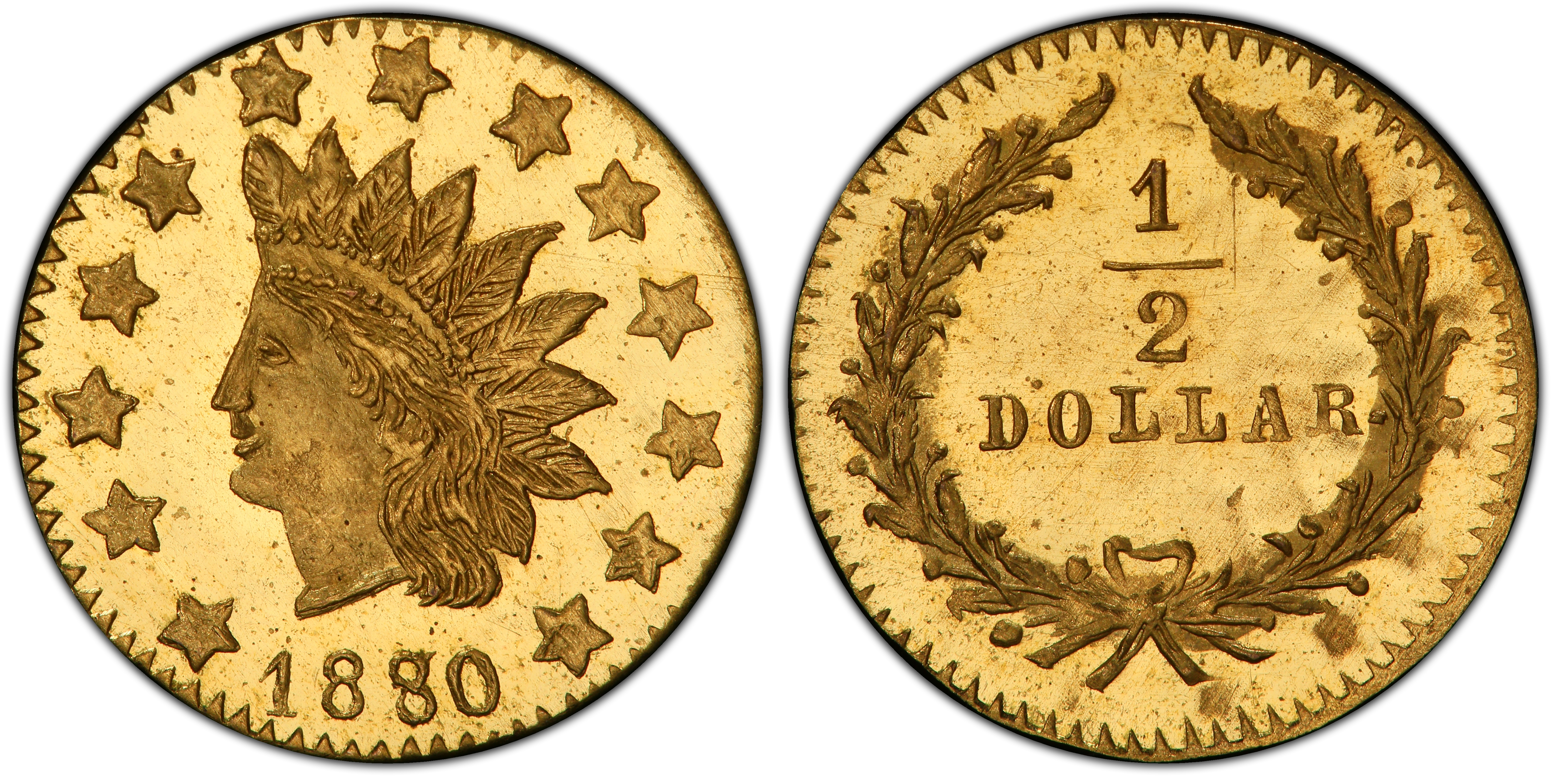
Obverse & Reverse
The 1880/70 BG-1067 50 Cents is a quintessential example of a 'Period Two' California Fractional Gold piece. The story of these fascinating numismatic items begins with the California Gold Rush of 1849. The massive influx of population and gold dust created a bustling economy that was severely hampered by a chronic shortage of circulating small-denomination coinage. To fill this commercial void, private jewelers and metallurgists began striking their own coins in 25-cent, 50-cent, and dollar denominations starting in 1852. These initial 'Period One' (1852-1857) issues were utilitarian, intended to and believed to have facilitated daily commerce. However, by the late 1850s, the United States Mint in San Francisco was producing enough federal coinage to alleviate the shortage. The nature of fractional gold production shifted; 'Period Two' pieces, struck from 1858 to 1882, were created not for circulation, but as souvenirs and keepsakes for tourists, merchants, and those nostalgic for the Gold Rush heyday. The BG-1067 falls squarely into this later category. Struck in 1880, long after the acute need for small change had passed, it was part of a cottage industry catering to a romanticized view of the 'Wild West.' The overdate feature, 1880 over 1870, is a result of the minter re-purposing an older, dated die by punching the new digits over the old, a common cost-saving measure for these private ventures. Despite the Coinage Act of 1864 making private coinage illegal, the law was not strictly enforced against these small, denominational tokens until 1883. This legal gray area allowed for their continued production. Today, these pieces are not just historical curiosities but are collected as a distinct and complex series, offering a tangible link to the entrepreneurial spirit and economic conditions of post-Gold Rush California.
Associated EventCalifornia Gold Rush Aftermath
Reason For MintingPrimarily struck as a souvenir or curio for the tourist and nostalgia market in post-Gold Rush California.
Minter HistoryThe specific minter of BG-1067, like many Period Two fractionals, is unrecorded. Production was often the work of various San Francisco jewelers and artisans, such as Robert B. Gray & Co., who created these small gold pieces as part of their regular business. They operated on a small scale, often using hand-operated presses or even hammer-striking methods, which resulted in significant variability among the coins. These minters were entrepreneurs filling a niche market, and their identities are often lost to history, with attribution today being based on diagnostics of the dies themselves.
Historical SignificanceAs a Period Two issue, the BG-1067's significance lies not in its role as emergency money, but as a cultural artifact of its time. It represents the commercialization of the Gold Rush legacy, demonstrating how the pioneering event had transitioned from a reality into a source of romantic folklore worthy of commemoration in souvenir form. The continued production into the 1880s, despite federal laws, highlights the lingering autonomy and unique economic character of the American West.
BG-1067
Denomination50 Cents
Minting Period1880
Assayer/MinterUnknown private minter, likely a San Francisco jeweler.
Geographic OriginSan Francisco, California
Obverse DescriptionFeatures a stylized Indian Head facing left, a popular motif on U.S. coinage of the era. The portrait is surrounded by thirteen stars, representing the original colonies.
Obverse Inscription[None]
Reverse DescriptionA simple wreath surrounds the denomination. The date '1880' is located within the wreath, below the denomination. This variety is distinguished by the clear remnants of a '70' under the '80' in the date.
Reverse Inscription1/2 DOLLAR CAL.
CompositionGold
Stated Fineness Actual FinenessVaries, but typically lower than federal coinage, often ranging from 14 to 22 karats. The gold value was intentionally less than the face value.
Diameter11.00 mm
EdgePlain
Unknown
Survival Estimate76-150 known
Rarity ScaleR-4
This variety is highly sought after due to the dramatic 1880/70 overdate, which is a significant and easily visible die variety. Its status as a 'Period Two' souvenir piece connects it directly to the romantic legacy of the Gold Rush. The 'PL' (Prooflike) designation adds significant appeal, indicating an early strike from fresh dies with reflective surfaces, a desirable and scarce characteristic for the series.
Key VarietiesThe primary variety is the 1880/70 overdate itself, which defines the BG-1067 attribution. There are no known major sub-varieties, patterns, or special collector restrikes for this specific Breen-Gillio number. The main distinction collectors seek is the quality of the strike and the surface preservation, with Prooflike (PL) and Deep Mirror Prooflike (DMPL) examples commanding significant premiums.
Authentication TipsAuthentic pieces must bear a denomination ('1/2 DOLLAR'). Post-1882 'charms' lack this feature. The strike is often uneven due to the crude manufacturing process; a perfectly struck coin should be viewed with suspicion. Check for the specific die markers of BG-1067, especially the positioning and appearance of the overdate. Counterfeits may be cast (showing pitting or a soft appearance) or struck from modern dies that lack the precise character of the originals. Many fakes are made of gilded base metals.
Shopping ConsiderationsFor a premium quality BG-1067, especially a PL example, look for sharp details on the highest points, particularly the feathers in the headdress and the elements of the wreath. The 'Prooflike' designation should be confirmed by strong reflectivity in the fields. A common issue with these pieces is harsh cleaning, which can strip the original surfaces and leave hairline scratches, diminishing the eye appeal and value. Seek examples with original, undisturbed luster and a pleasing reddish-gold patina. Avoid specimens with significant planchet flaws, edge damage, or signs of tooling in the fields.
A coin's grade is its condition, rated on a 1-70 scale. For rare coins, this is the most critical factor in determining value, as a tiny difference in preservation can mean a huge difference in price.
Relevant Grade TypesOriginal issues of BG-1067 were all regular business strikes, though produced as souvenirs rather than for circulation. They are found in Circulated (1-58) grades, though this is less common, and more frequently in Mint State (MS, 60-70) grades. No true Proofs were struck during the original period of issue. The 'PL' (Prooflike) and 'DMPL' (Deep Mirror Prooflike) designations are applied to Mint State coins that were struck with highly polished dies, creating a mirrored field and sometimes a frosted design, but they are not a separate striking method like true Proofs.
Mint State CharacteristicsIn uncirculated grades, BG-1067 often exhibits a variable strike quality characteristic of privately minted gold. Central details, like the Indian's cheek and the wreath, may be softly struck even on a high-grade piece. Luster is typically satiny and can be vibrant on choice examples. Prooflike (PL) specimens will have mirrored fields, though the reflectivity may not be as uniform as on a U.S. Mint product. Small planchet imperfections or die polish lines are common and should not be confused with post-strike damage.
Circulated Wear PatternsOn circulated examples, wear first appears on the high points of the design. For the obverse, this includes the Indian's cheekbone, the eyebrow, and the tips of the feathers. On the reverse, the highest points of the wreath's leaves and bow will show the first signs of friction and flattening. In lower grades (VF and below), the finer details of the feathers and the date will become indistinct.
Key Factors For ValueFor the BG-1067, the primary value driver is grade, followed closely by surface quality. A significant premium is attached to coins with a PL or DMPL designation from PCGS or NGC. Eye appeal is paramount; an example with original, uncleaned surfaces and attractive, coppery-gold toning will be worth substantially more than a cleaned or harshly polished coin of the same grade. The clarity and boldness of the 1880/70 overdate also contribute to value, with more dramatic examples being preferred. A CAC sticker, verifying premium quality for the grade, adds another layer of value for discerning collectors.
PCGS Price Guide
| Grade | Price | Population |
|---|---|---|
| 62 | N/A | N/A |
| 63 | $825.00 | 4 |
| 63+ | $950.00 | N/A |
| 64 | $1,575.00 | 1 |
| 64+ | $1,650.00 | N/A |
| 65 | $1,850.00 | 1 |
| 66 | N/A | 1 |