1872 G$1 BG-1120, DMPL (Regular Strike)
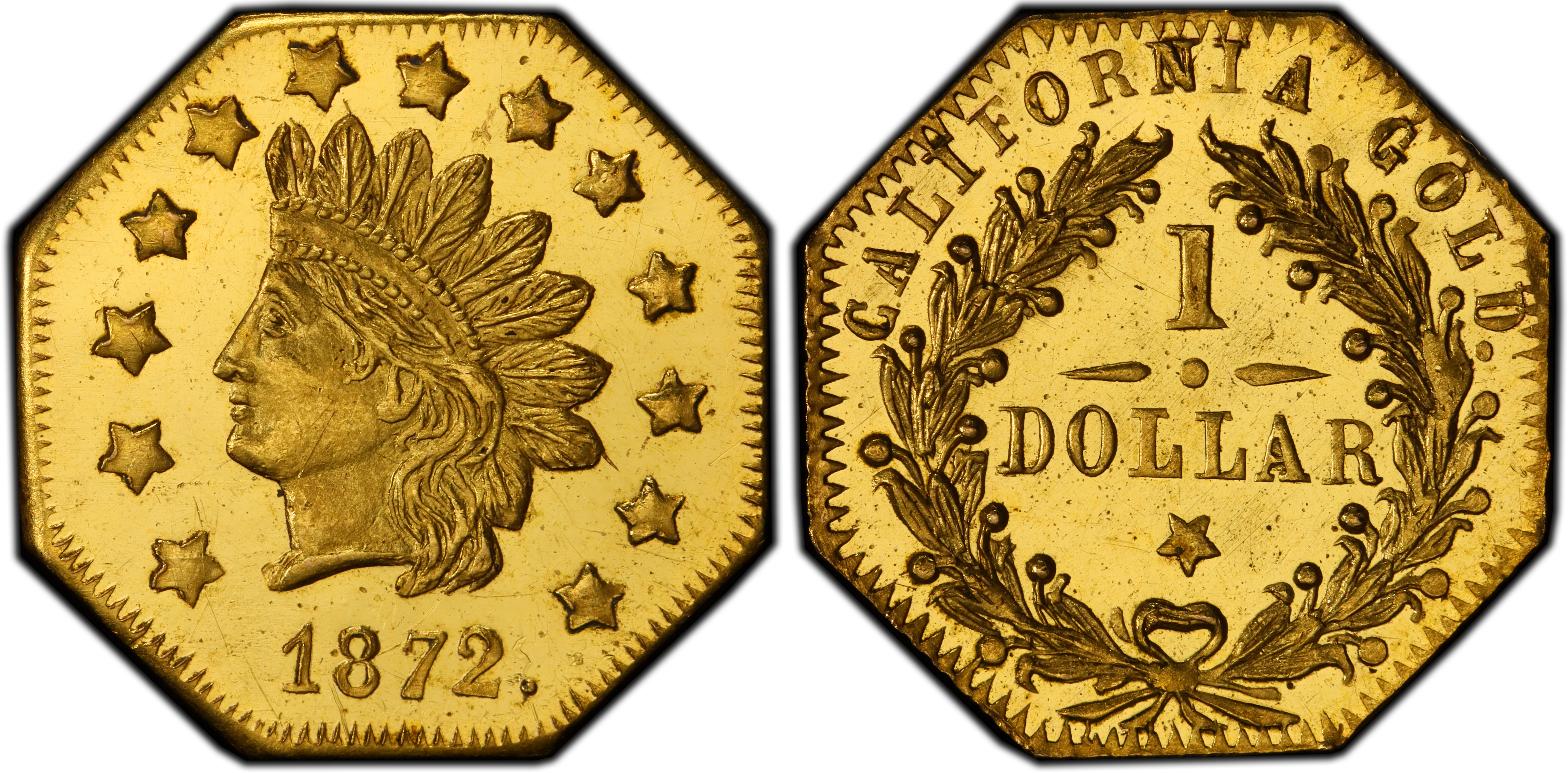
Obverse & Reverse
The 1872 G$1 BG-1120 is a quintessential example of a 'Period Two' California Fractional Gold piece, a fascinating series born from the entrepreneurial spirit of the California Gold Rush. The initial fractional gold issues, struck from 1852 to 1857 ('Period One'), arose from a genuine necessity for small-denomination coinage in the rapidly expanding, gold-rich economy of the West, where federally issued small change was critically scarce. These early pieces, though privately minted, were intended for and saw actual circulation. By the 1870s, however, the landscape had changed dramatically. The San Francisco Mint, opened in 1854, was producing ample federal coinage, obviating the commercial need for private issues. The motivation for producing fractional gold thus shifted from commerce to tourism and collectibles. These 'Period Two' issues (1858-1882), often termed 'Jewelers' Issues,' were created primarily as souvenirs and keepsakes. San Francisco had become a major tourist destination, and these diminutive gold pieces were popular, easily mailable mementos of a visit to the Golden State. Unlike their Period One predecessors, which generally contained gold value close to their face value, Period Two pieces were often underweight and made of lower fineness gold, functioning as tokens rather than true currency. Their production was technically illegal under the Coinage Act of 1864, but federal enforcement was lax until the early 1880s, allowing dozens of jewelers to produce a myriad of varieties. The BG-1120, with its crisp Indian Head design, was part of this later wave. Struck with polished dies to impart a flashy, mirrored surface, especially on DMPL (Deep Mirror Prooflike) examples, they were clearly intended to dazzle the buyer. The ultimate crackdown by the Secret Service in 1883 brought an end to this colorful chapter of private minting, solidifying the rarity and historical allure of the surviving pieces.
Associated EventPost-Gold Rush California Tourism Boom
Reason For MintingTo serve the burgeoning market for tourist souvenirs and collectible keepsakes from California.
Minter HistoryThe specific minter of BG-1120 is not definitively known, a common trait for many 'Period Two' issues. The pieces from this era were produced by numerous San Francisco jewelers who often created dies anonymously to avoid potential legal trouble. Prominent jewelers of the period known to have produced fractional gold include Robert B. Gray & Co. and the California Jewelry Co. (successors to Gray in 1871), among others. These craftsmen used die punches and hubbing techniques that sometimes allow for attribution, but many varieties like BG-1120 remain unattributed to a specific maker, representing the broader cottage industry of souvenir coinage that flourished in the city at the time.
Historical SignificanceThe BG-1120 is historically significant not as a circulating coin, but as a tangible artifact of California's economic and cultural transition after the Gold Rush. It represents a shift from a frontier economy of necessity to a more established society with a burgeoning tourism industry. Its existence highlights a period of ambiguous federal oversight on private coinage and the clever marketing of California's mystique to a national audience.
BG-1120
Denomination$1
Minting Period1872
Assayer/MinterUnknown San Francisco Jeweler
Geographic OriginSan Francisco, California
Obverse DescriptionAn Indian Head motif facing left, stylistically similar to the contemporary U.S. Indian Head cents, but with more pronounced and somewhat cruder features. The portrait is adorned with a feathered headdress. The date '1872' appears below the bust. The entire design is enclosed within a beaded border.
Obverse Inscription1872
Reverse DescriptionThe central device is the denomination '1' and the word 'DOLLAR' below it, contained within a wreath. The wreath is composed of two branches tied together at the bottom with a bow. The octagonal planchet has a beaded border following its eight sides.
Reverse Inscription1 DOLLAR
CompositionGold
Stated Fineness Actual FinenessVariable, often lower than US Mint standards of .900 fine.
EdgePlain
Unknown
Survival EstimateFewer than 75; possibly as few as 15-30.
Rarity ScaleR-6 (Very Rare) to High R-6
This coin is highly prized for its rarity, octagonal shape, and classic Indian Head design. The special appeal of a DMPL (Deep Mirror Prooflike) example is immense, as the deeply reflective fields create a stunning cameo contrast with the frosted devices, showcasing the coin's intended role as a beautiful souvenir. It represents one of the most visually impressive types within the popular and challenging California Fractional Gold series.
Key VarietiesThe primary variety is the regular strike BG-1120. Special collector issues are not restrikes in the traditional sense, but rather the original coins can be found with varying surface characteristics from the time of minting. These include: - **Regular Strike:** Exhibits normal mint luster. - **Prooflike (PL):** Has noticeably reflective fields, but may lack full clarity. - **Deep Mirror Prooflike (DMPL):** Possesses exceptionally clear, mirror-like fields, representing the highest quality of strike and die preparation. These are the rarest and most sought-after examples.
Authentication TipsAuthenticity is a major concern with fractional gold. For BG-1120, look for sharp, well-defined details, particularly in the feathers and the wreath, which are often weakly rendered on counterfeits. Genuine pieces are typically very thin. Weight and diameter, if known for a certified example, should be compared. Many fakes are cast, showing a porous or pimply surface under magnification, while genuine pieces are struck. The style of the numerals in the date and the lettering is also a key diagnostic; compare with high-resolution images of certified specimens. Third-party certification by a major service like PCGS or NGC is highly recommended.
Shopping ConsiderationsFor a premium quality DMPL example, the key is the quality and integrity of the mirrored fields. Look for a coin with minimal distracting chatter or hairlines in the open fields, as these are magnified by the reflectivity. A strong 'cameo' contrast between the mirrored fields and any frosty texture on the devices is highly desirable. Check for a sharp strike; the feathers of the headdress and the details of the bow on the reverse wreath should be as well-defined as possible for the issue. Avoid coins that have been harshly cleaned or polished, as this destroys the original mirrored surfaces and drastically reduces value. Original, reddish-gold toning can add to the eye appeal and is often preferred.
A coin's grade is its condition, rated on a 1-70 scale. For rare coins, this is the most critical factor in determining value, as a tiny difference in preservation can mean a huge difference in price.
Relevant Grade TypesOriginal period issues were business strikes, though many were produced with special care for souvenir sales. They are found in Circulated (1-58) grades, though this is less common, and Mint State (MS, 60-70) grades. No true Proofs were struck in 1872. The most important designations for this issue are Prooflike (PL) and Deep Mirror Prooflike (DMPL), which are assigned to Mint State coins that were struck using highly polished dies, creating a mirrored surface. These are not a different type of coin, but rather a special quality of the original business strikes and are highly prized by collectors.
Mint State CharacteristicsUncirculated examples of BG-1120 are defined by their luster and surface preservation. A typical strike can be slightly weak in the highest points of the Indian's hair and the wreath. Luster on non-PL examples is typically satiny. For DMPL specimens, the quality is judged by the clarity and depth of reflection in the fields. Due to the small size and handling, even high-grade Mint State coins can have minuscule ticks or planchet flaws; the fewer and less distracting these are, the higher the grade and value.
Circulated Wear PatternsWear first appears on the highest points of the design: the cheek and brow of the Indian Head, and the feathers in the headdress. On the reverse, the highest points of the wreath's leaves and the bow will show initial friction. On lower-grade circulated examples, the date and the word 'DOLLAR' will begin to weaken and merge with the fields.
Key Factors For ValueFor the BG-1120, value is driven by three main factors: 1) The Grade/Condition: A high Mint State grade (e.g., MS-64 or higher) is far more valuable than a circulated one. 2) The Surface Designation: A DMPL designation carries a significant premium over a PL coin, which in turn is worth more than a standard MS example. The quality of the mirrors and cameo contrast is paramount. 3) Eye Appeal and Surface Integrity: Coins with clean, original surfaces free of distracting marks, harsh cleaning, or scratches are highly sought after. A CAC sticker for this issue indicates premium quality for the grade and will command a substantial price increase.
PCGS Price Guide
| Grade | Price | Population |
|---|---|---|
| 65 | N/A | 1 |