1876 G50C BG-1063, PL (Regular Strike)
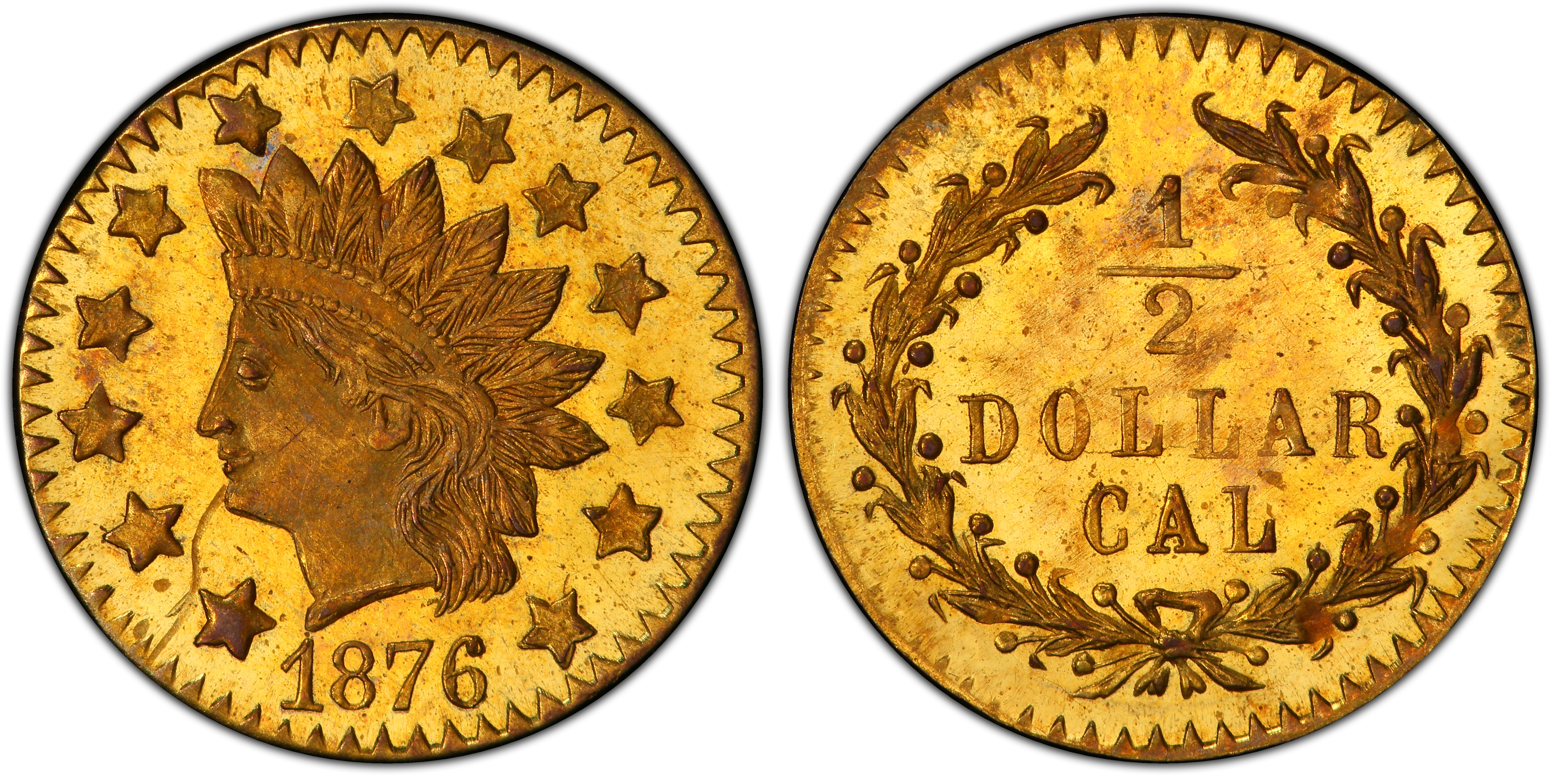
Obverse & Reverse
The 1876 BG-1063 50 Cents piece emerges from the second period (1859-1882) of California Fractional Gold production, a fascinating era that followed the initial gold rush fervor. By the mid-1870s, the United States had a more established federal coinage system, yet a persistent shortage of small change, particularly on the West Coast, kept the demand for these privately-issued gold pieces alive. Unlike the earlier 'Period One' issues which were genuinely intended to alleviate this coin shortage and circulated widely, the pieces from this later period, including the BG-1063, are often termed 'jeweler's issues.' These were primarily produced by jewelers and merchants in San Francisco not just for commerce, but increasingly as souvenirs and keepsakes for tourists and locals fascinated by the Gold Rush legacy. The Centennial Exposition in Philadelphia in 1876 fueled a nationwide interest in American history and unique artifacts, creating a ready market for these miniature gold coins. Production methods remained relatively crude, often employing a simple hammer-striking process which resulted in coins of varying strike quality. While the Coinage Act of 1864 had made private coinage illegal, enforcement was lax, allowing this practice to continue for nearly two more decades. These later issues were typically underweight for their stated value, functioning more as tokens with an intrinsic gold value rather than true circulating currency. Their existence is a testament to the lingering economic independence of the West and the romanticism of the gold-fueled prosperity that had defined California for a generation. Numismatically, they represent the twilight of private coinage in America, a final chapter before federal authority fully consolidated the nation's money supply.
Associated EventPost-Gold Rush Economic Growth & U.S. Centennial Year
Reason For MintingPrimarily created as popular souvenirs and for small-scale local commerce during a period of national nostalgia and continued shortage of small change in California.
Minter HistoryThe specific minter of BG-1063 is unknown, a common trait for many 'jeweler's issues' from this period. Production is attributed to various jewelers and metalworkers operating in San Francisco who had the skills to create dies and strike these small gold pieces. Firms like Deriberpe & Nouizillet (D.N.) and Frontier & Deviercy (F.D.) were known producers of similar items, but many varieties from this era remain anonymous, their makers lost to history.
Historical SignificanceThis coin is a tangible link to the post-Gold Rush era in California, illustrating the transition of fractional gold from a circulating medium of necessity to a popular collectible and souvenir, reflecting both a local economic need and a growing national fascination with the 'Wild West'.
N/A
Denomination50 Cents
Minting Period1876
Assayer/MinterUnknown, likely one of several San Francisco jewelers.
Geographic OriginSan Francisco, California
Obverse DescriptionA stylized Indian Head facing left, a design popular in the period. The portrait is surrounded by thirteen stars representing the original colonies.
Obverse Inscription1876
Reverse DescriptionThe denomination '1/2 DOLLAR' is enclosed within a wreath. The 'CAL' for California appears below the wreath.
Reverse Inscription1/2 DOLLAR CAL
CompositionGold
Stated Fineness Actual FinenessVaries, but generally lower than federal issues of the time.
Weight0.25 grams
Diameter10.00 mm
EdgePlain
Unknown, but very low.
Survival EstimateFewer than 75
Rarity ScaleR-6 (31-75 known)
The BG-1063 is highly sought after due to its status as a scarce 'Period Two' California Fractional Gold piece. Its appeal lies in its connection to the romanticized Gold Rush era, the charm of its miniature size, and its specific issuance during the U.S. Centennial year. Examples with prooflike (PL) surfaces are particularly prized for their visual appeal.
Key VarietiesThe primary variety is the regular business strike. No known patterns or official restrikes exist for this specific Breen-Gillio number. The key distinction for collectors is the surface characteristic, with Prooflike (PL) examples commanding a significant premium over those with typical satiny luster. Die states and evidence of die clashing can also be collected by specialists.
Authentication TipsAuthentic pieces exhibit sharp, albeit sometimes uneven, details from the hammer-striking process. Lettering and stars should be well-defined. Be wary of modern replicas which are often cast, showing a soapy or porous texture, or have incorrect weight and dimensions. Many counterfeits are gold-plated base metal. Genuine pieces have a specific 'feel' and luster that differs from modern copies. Comparing to certified examples is the best way to learn the characteristics of a genuine strike.
Shopping ConsiderationsA premium quality example for its grade will possess exceptionally sharp details, especially on the high points of the Indian's hair and the leaves of the wreath. Look for coins with bright, reflective prooflike fields, which are rare and desirable for this issue. Original, uncleaned surfaces with a hint of reddish-gold toning are highly valued. Common problems to avoid include jewelry mounting (solder marks, retooling on rims), harsh cleanings that strip the original luster, and excessive distracting marks in the fields. Given the prevalence of fakes, purchasing examples certified by major grading services like PCGS or NGC is strongly recommended.
A coin's grade is its condition, rated on a 1-70 scale. For rare coins, this is the most critical factor in determining value, as a tiny difference in preservation can mean a huge difference in price.
Relevant Grade TypesOriginal issues were business strikes intended for commerce or as souvenirs, and are found in Circulated (1-58) and Mint State (MS, 60-70) grades. No true Proofs were struck during the original period of issue. However, some dies were highly polished, resulting in business strikes with deeply mirrored fields and sometimes frosted devices; these are designated as 'Prooflike' (PL) by grading services and are considered a special category of business strike, not a separate Proof issue.
Mint State CharacteristicsUncirculated examples of BG-1063 are characterized by their luster, which can range from satiny to fully prooflike. The strike can be inconsistent due to the hammer-striking method; well-struck examples will show full detail in the hair feathers and wreath leaves. Because they were often handled as novelties, even MS examples can show minor contact marks. A key feature of premium examples is the quality of the fields; those with clean, reflective surfaces are rare and sought-after.
Circulated Wear PatternsWear first appears on the highest points of the design: the cheek and feathers of the Indian Head on the obverse, and the bow and high points of the wreath leaves on the reverse. As wear progresses, the stars and letters of the inscriptions will begin to lose their sharpness and merge towards the fields.
Key Factors For ValueFor the BG-1063, the single most important factor is the surface quality, specifically the presence of prooflike fields. A certified PL example can be worth several times more than a non-PL coin of the same numerical grade. Beyond that, a sharp strike, minimal contact marks, and original, uncleaned surfaces contribute significantly to eye appeal and value. Coins with a CAC sticker, indicating premium quality for the grade, are highly desirable and command strong premiums in the market.
PCGS Price Guide
| Grade | Price | Population |
|---|---|---|
| 61 | $500.00 | N/A |
| 62 | $550.00 | N/A |
| 62+ | $650.00 | N/A |
| 63 | $850.00 | N/A |
| 63+ | $1,000.00 | N/A |
| 64 | $1,450.00 | 2 |
| 64+ | $1,750.00 | N/A |
| 65 | $2,500.00 | N/A |