1870 G$1 BG-1202, PL (Regular Strike)
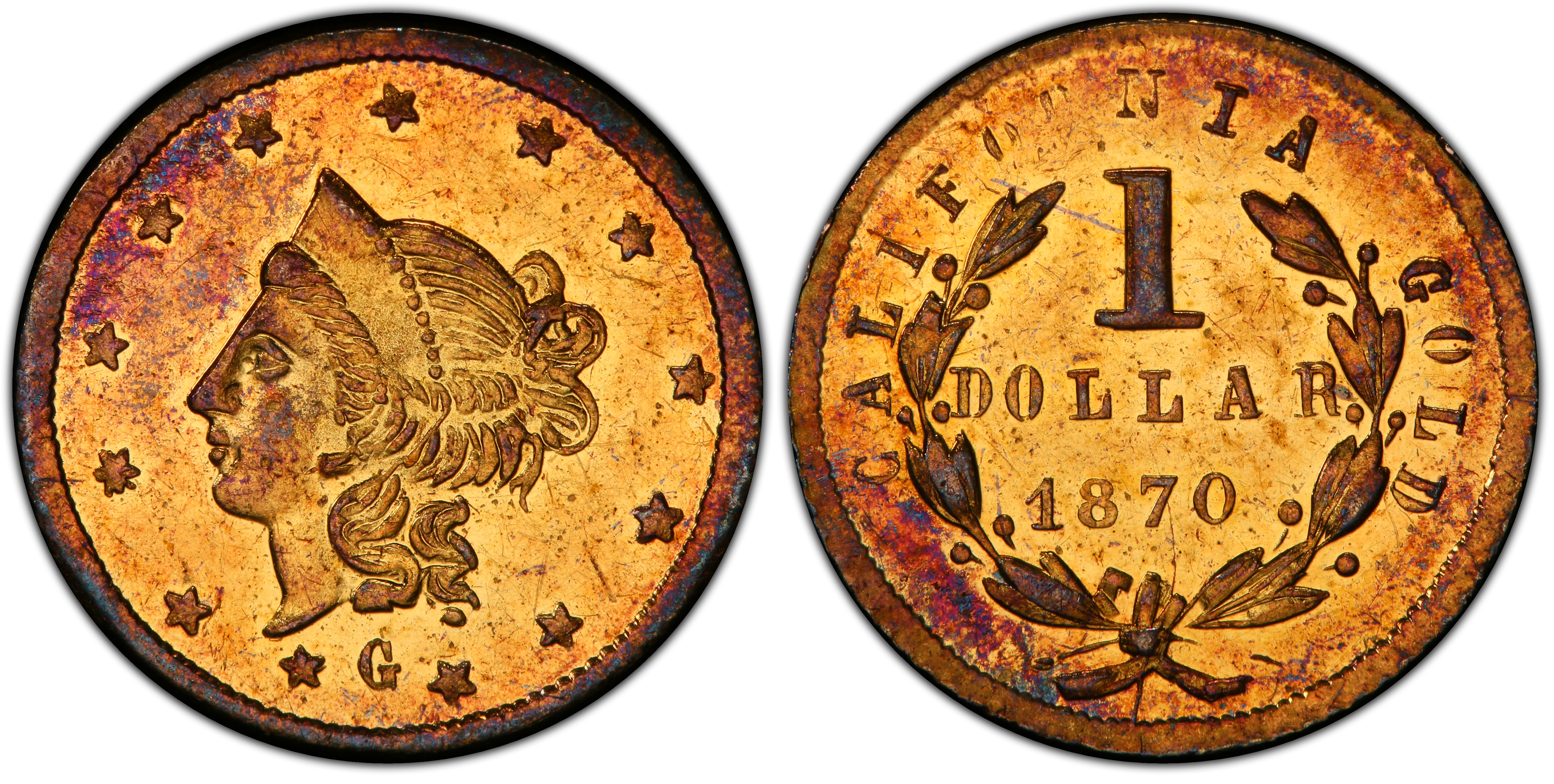
Obverse & Reverse
The 1870 G$1 BG-1202 is a product of the second period of California Fractional Gold production (1858-1882), often termed the 'Jeweler's Issues.' By 1870, the initial, acute shortage of small change that characterized the Gold Rush's peak had been largely resolved by the output of the San Francisco Mint, which opened in 1854. However, the demand for these tiny gold pieces persisted and even grew, not for circulation, but as souvenirs and keepsakes. The allure of the California Gold Rush was a national phenomenon, and these miniature gold dollars became popular mementos for tourists and gifts for those back East. Unlike the earlier 'Period One' issues (1852-1857) which were intended to and did function as circulating currency, the Period Two pieces were a commercial enterprise of a different sort. They were manufactured by various jewelers, often with less precious metal content than their stated face value, a fact that was largely overlooked by a public purchasing them as novelties. The Private Coinage Act of 1864 had officially made such private minting illegal, but federal authorities showed little interest in enforcing the law against these popular, low-value items. This federal ambivalence allowed production to flourish through the 1870s. The BG-1202, with its classic Liberty Head design mimicking federal coinage, was an archetypal example of these later issues. It was produced using the 'hammer method,' where dies were struck by hand, resulting in significant variation in strike quality. Finally, in the early 1880s, Secret Service Chief James J. Brooks cracked down on their production, deeming them a potential avenue for fraud, which brought the era of California Fractional Gold to a close by 1883.
Associated EventPost-Gold Rush California Economy & Tourism
Reason For MintingPrimarily minted to be sold as souvenirs and keepsakes of the California Gold Rush, rather than for general circulation.
Minter HistoryThe specific minter for BG-1202 is unknown, which is typical for many Period Two California Fractional Gold pieces. They were produced by a number of competing jewelers and private minters centered in San Francisco who capitalized on the souvenir market. These craftsmen often created their own dies and struck the coins on-site, leading to a wide array of styles and qualities. Notable producers of the era included Antoine Louis Nouzillet, M. Deriberpie, and the firm of Frontier, Deviercy & Co., although attribution of this specific variety to any single maker is not possible.
Historical SignificanceThe BG-1202 represents the transition of California Fractional Gold from utilitarian coinage of necessity to a popular collectible and souvenir. Its existence demonstrates the sustained national fascination with the Gold Rush long after its peak and highlights a period of lax federal oversight on private coinage, which allowed a vibrant and numismatically complex series to thrive for decades after its original purpose had ceased.
N/A
Denomination$1
Minting Period1870
Assayer/MinterUnknown, likely various San Francisco jewelers
Geographic OriginSan Francisco, California
Obverse DescriptionA Liberty Head, facing left, with 'LIBERTY' inscribed on her coronet. She is surrounded by 13 six-pointed stars, representing the original colonies.
Obverse InscriptionLIBERTY
Reverse DescriptionThe denomination '1' and 'DOLLAR' are enclosed within a decorative wreath. The date '1870' is positioned below the wreath.
Reverse Inscription1 DOLLAR 1870
CompositionGold
Stated Fineness Actual FinenessVaries, often between 14 to 22 karats. Generally lower than federal issues.
Weight0.50 grams
Diameter11.20 mm
EdgePlain
Unknown
Survival EstimateFewer than 75
Rarity ScaleR-5+
This variety is sought for its classic design, high rarity, and its status as a representative of the later 'souvenir' period of this popular series. High-grade and Prooflike (PL) examples are particularly prized for their aesthetic beauty, which contrasts with the often crude nature of fractional gold.
Key VarietiesThe BG-1202 is a specific die marriage and is considered a 'regular strike' business issue for the period. No known major varieties, patterns, or official restrikes exist from the original minting period. All examples are considered to be of the same variety. The primary distinction among surviving examples is condition, especially the presence of Prooflike surfaces.
Authentication TipsAuthentic examples should show a specific die state and strike characteristics. The stars on the obverse can be weak. Genuine pieces often have a slightly irregular, hand-made appearance due to hammer striking. Counterfeits may appear too perfect, have incorrect weight or diameter, or exhibit a soapy, cast-like surface. Modern replicas are common and are often made of brass or low-karat gold; they typically lack the denomination 'DOLLAR'. Comparison with high-resolution images of certified examples is essential.
Shopping ConsiderationsA premium quality BG-1202 will exhibit a sharp strike, particularly on Liberty's hair details and the numerals of the date. For a coin designated 'PL' (Prooflike), look for deeply mirrored fields that contrast with frosted devices. Surfaces should be clean and free of distracting marks, although tiny planchet flaws or strike-throughs are not uncommon given the manufacturing process. Avoid examples that have been harshly cleaned, which strips the original surface and luster, or those with evidence of being mounted in jewelry (solder marks, rim damage), a common fate for these pieces.
A coin's grade is its condition, rated on a 1-70 scale. For rare coins, this is the most critical factor in determining value, as a tiny difference in preservation can mean a huge difference in price.
Relevant Grade TypesAll original 1870 G$1 BG-1202 coins were struck as business strikes, intended for sale as souvenirs rather than circulation. They are found in Circulated grades (AU-50 and lower, typically from mishandling) and, more commonly, in Mint State (MS, 60-70) grades. No true Proofs were struck during the original period. The 'PL' (Prooflike) designation is given to business strikes that were made with freshly polished dies, resulting in mirror-like surfaces, and these are considered distinct collector items from standard Mint State strikes.
Mint State CharacteristicsIn Mint State, the BG-1202 often displays a soft, satiny luster. The strike can be inconsistent; central details on both the obverse and reverse may be fully struck up, while peripheral elements like the stars or wreath leaves can be soft. High-grade examples, especially those designated PL, will have reflective fields. Due to the softness of the gold and the manufacturing process, it's common to see minor planchet irregularities or handling marks, even on uncirculated specimens.
Circulated Wear PatternsAlthough not intended for circulation, wear on mishandled examples first appears on the highest points: Liberty's cheek, hair above the eye, and the coronet. On the reverse, the numerals of the date and the leaves at the top of the wreath will show the first signs of friction and flattening.
Key Factors For ValueThe primary value driver is the grade, with a steep premium for Gem (MS-65 and above) examples. The Prooflike (PL) designation adds a significant premium over a standard Mint State coin of the same numerical grade. Surface quality is paramount; coins with original, undisturbed luster and minimal contact marks are highly desirable. Eye appeal, including attractive original toning (often a coppery-gold hue), can also add to the value. A CAC sticker, indicating a premium quality coin for the grade, is highly sought after by discerning collectors and typically commands a strong price increase.
PCGS Price Guide
| Grade | Price | Population |
|---|---|---|
| 62 | $4,000.00 | 1 |