1874 G50C BG-1054, PL (Regular Strike)
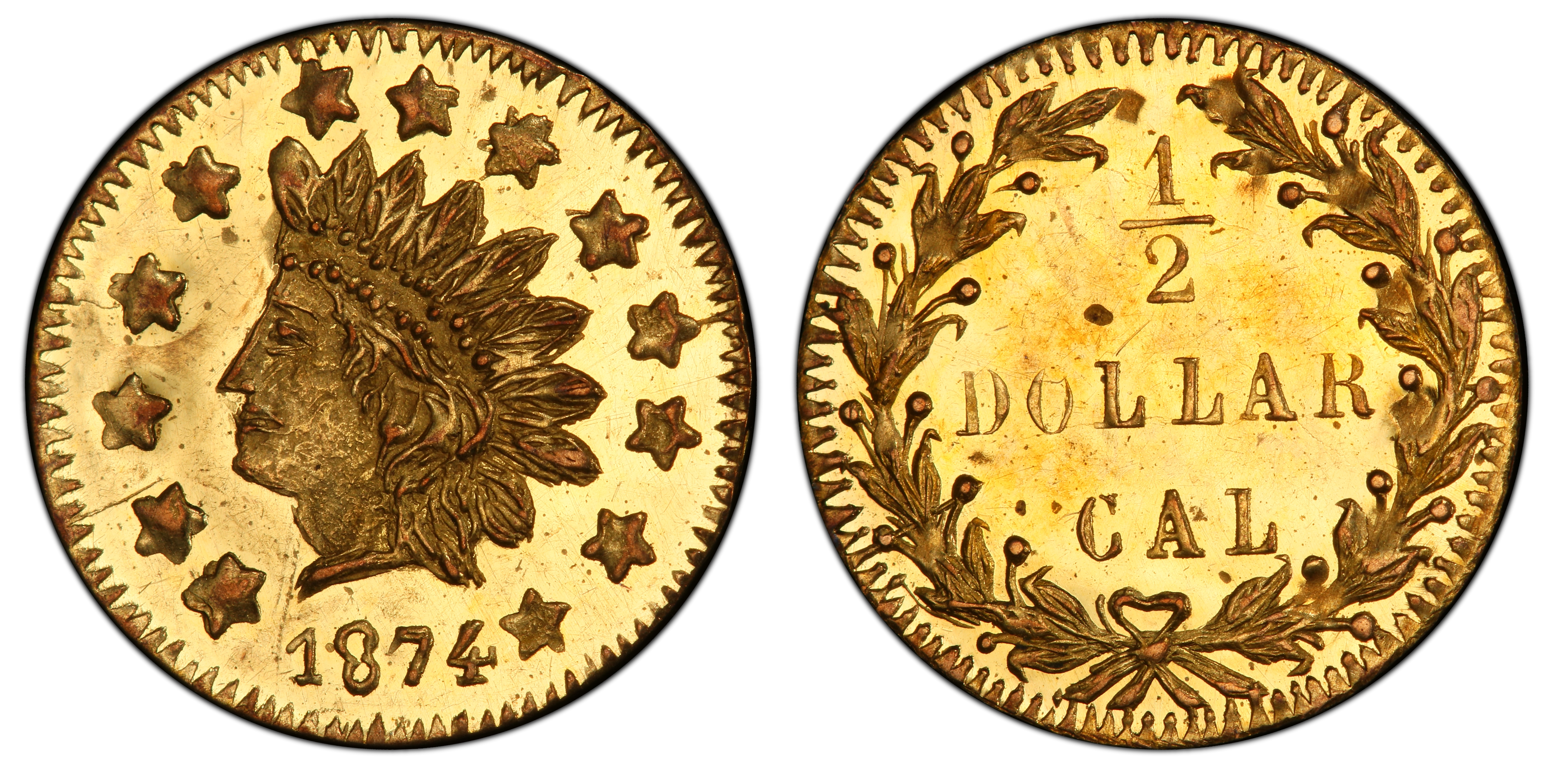
Obverse & Reverse
The 1874 BG-1054 50-cent piece emerges from the second major phase of California's private gold coinage, a period numismatically defined as 'Period Two' (1859-1882). Unlike the 'Period One' issues (1852-1857), which were struck out of genuine commercial necessity to alleviate a severe shortage of small change during the initial Gold Rush boom, the context for Period Two issues had evolved significantly. By the 1870s, the United States Mint in San Francisco was in full operation, supplying the region with ample federal coinage for daily transactions. The reason for minting fractional gold had shifted from commerce to curiosity. These later pieces, often called 'jeweler's issues,' were primarily created to satisfy a burgeoning tourist and souvenir market. San Francisco, having transformed from a chaotic boomtown into a major American metropolis, was a popular destination, and these miniature gold coins served as treasured keepsakes of the 'Golden State.' The makers of these coins were often jewelers and metalsmiths who leveraged the romantic allure of the Gold Rush. They were typically produced using the hammer-striking method, a primitive technique where a planchet was placed between two dies and struck with a sledgehammer, resulting in coins of varying strike quality. Legally, these pieces existed in a grey area. The Private Coinage Act of 1864 made all private coin making illegal, but the law was not aggressively enforced by the Secret Service until 1883. Minter-jewelers exploited this federal ambivalence, continuing production and, in some cases, even backdating coins to avoid scrutiny. The BG-1054, with its Indian Head motif—a popular and distinctly American design—was perfectly tailored to the tastes of the era. Its existence speaks less to the monetary needs of California and more to the commercial savvy of its producers who were capitalizing on the nation's fascination with the West. The crude yet charming artisanship, combined with the intrinsic value and historical association, ensured their popularity until federal enforcement finally suppressed their manufacture.
Associated EventCalifornia Gold Rush (Later Souvenir Period)
Reason For MintingPrimarily produced as souvenirs and keepsakes for the tourist trade, not for general circulation.
Minter HistoryThe specific minter or jeweler who created the dies for BG-1054 is not definitively known, a common trait for many Period Two issues. The work is attributed to the community of San Francisco jewelers who produced a wide variety of these souvenir pieces between 1859 and 1882. Prominent contemporary minters in this field included firms like Frontier, Deviercy & Co., but a direct link to this specific variety has not been established. These craftsmen often shared tools and design elements, making precise attribution a challenge for numismatic researchers.
Historical SignificanceThe BG-1054 is a tangible artifact of the post-Gold Rush era, representing the commercialization of the California dream. Its significance lies not as a circulating medium of exchange, but as an early example of numismatic memorabilia, demonstrating how the legacy of the Gold Rush was packaged and sold to a wider American audience.
BG-1054
DenominationG50C (50 Cents)
Minting Period1874
Assayer/MinterUnknown Private Minter
Geographic OriginSan Francisco, California
Obverse DescriptionA stylized head of a Native American princess facing left, often described as an Indian Head. She wears a feathered headdress. Thirteen stars encircle the portrait along the rim.
Obverse Inscription Reverse DescriptionThe denomination '1/2' is central, enclosed within a wreath of leaves and berries. The wreath is open at the top.
Reverse Inscription1/2
CompositionGold
Stated Fineness Actual FinenessPeriod Two issues are known to have variable fineness, often below the federal standard of .900, sometimes as low as 14-karat (.585), though specific analysis for BG-1054 is not widely published.
Weight0.25 grams
Diameter10.00 mm
EdgePlain
Unknown; likely very small.
Survival EstimateFewer than 20 believed to exist.
Rarity ScaleR-7 (7-9 known, per Breen-Gillio definition, though modern census data suggests it may be slightly more common)
This variety is sought after for its high rarity and classic Indian Head design. As a Period Two issue, it is a key component for specialists assembling a complete Breen-Gillio variety set. Its appeal lies in its connection to the romantic souvenir trade of 19th-century San Francisco.
Key VarietiesThe primary variety is the regular business strike, BG-1054. Some examples are designated 'PL' (Prooflike) by grading services due to reflective surfaces, which resulted from polished dies, not a special striking process. There are no known official patterns, restrikes, or trial pieces associated with this specific variety from the original period of manufacture.
Authentication TipsGenuine examples must have a clear denomination (e.g., '1/2') and will be listed in the Breen-Gillio reference. Be wary of pieces with a bear on the reverse, as these are modern fantasy tokens. The strike on genuine pieces can be weak in areas, particularly on the wreath or the high points of the headdress, a characteristic of hammer striking. Fakes are often sharply detailed but have a cast or soapy appearance. Any piece not matching the precise die characteristics illustrated in Breen-Gillio should be considered suspect.
Shopping ConsiderationsA premium quality example for this issue is defined by a strong, well-centered strike and minimal surface impairments. Look for sharpness on the feathers of the headdress and the details of the wreath. Original, lustrous surfaces are highly desirable and command significant premiums; many surviving examples have been cleaned or used in jewelry, so finding one with original 'skin' is a major value-add. Avoid examples that are bent, holed, or show signs of tooling or solder from jewelry mounting. Given their primitive manufacture, minor planchet flaws or adjustment marks can be acceptable if they do not detract from the overall eye appeal.
A coin's grade is its condition, rated on a 1-70 scale. For rare coins, this is the most critical factor in determining value, as a tiny difference in preservation can mean a huge difference in price.
Relevant Grade TypesAll original 1874 BG-1054 coins were struck as business strikes, intended for sale as souvenirs. They are found in Circulated grades (1-58) though this is less common, and Mint State (MS, 60-70) grades. No true Proofs were struck during the original period. The 'PL' (Prooflike) designation is sometimes applied to business strikes made with freshly polished dies, resulting in mirror-like fields, but they are not a distinct issue type like a true Proof coin.
Mint State CharacteristicsUncirculated examples of BG-1054 often exhibit a soft, satiny luster typical of gold coinage from this era. The strike is a key factor; many are softly struck, especially in the center of the obverse and on the wreath details. A coin with a sharp strike across all high points is considered premium quality. Due to the primitive minting and handling process, small planchet flaws or light contact marks are common and should be expected, even on high-grade specimens.
Circulated Wear PatternsOn circulated examples, wear first appears on the high points of the design. On the obverse, this includes the cheek and the upper feathers of the headdress. On the reverse, the highest points of the wreath leaves and the fraction will show initial friction and flattening. In lower grades (VF and below), the stars on the obverse may begin to merge with the rim and the finer details of the wreath become indistinct.
Key Factors For ValueThe primary value drivers for BG-1054 are rarity and grade. Surface quality is paramount; an example with original, undisturbed luster will always be worth more than a cleaned or polished coin of the same grade. Strike sharpness is the next critical factor; collectors pay a premium for well-struck examples where the design is fully rendered. Finally, eye appeal, which includes factors like attractive original toning (often a deep reddish-gold) and being well-centered on the planchet, can significantly influence value. A CAC sticker for this issue indicates superior quality for the grade and will typically result in a strong price premium.
PCGS Price Guide
| Grade | Price | Population |
|---|---|---|
| 63 | $2,350.00 | 2 |