1874 G50C BG-1034 (Regular Strike)
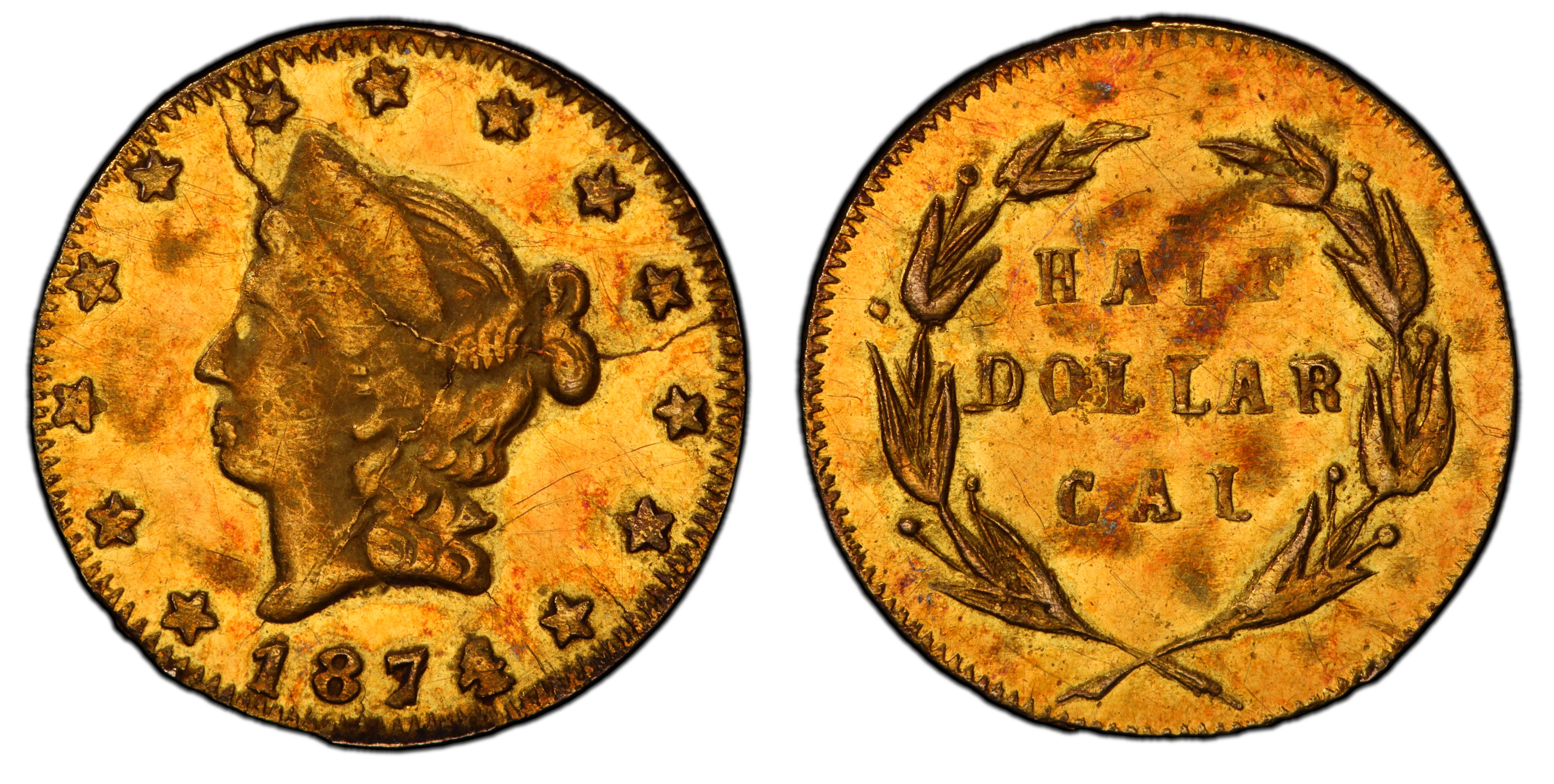
Obverse & Reverse
The 1874 G50C BG-1034 is a quintessential example of a 'Period Two' California Fractional Gold piece, a series born from the unique economic conditions of post-Gold Rush America. The initial wave of fractional gold, struck from 1852 to roughly 1857, arose from a genuine and severe shortage of small-denomination coinage in California. These early pieces, while privately issued, were intended to and did facilitate everyday commerce. By the 1870s, however, the landscape had changed dramatically. The San Francisco Mint was in full operation, producing ample federal coinage for the region. The original commercial need for fractional gold had vanished. Yet, production of these miniature gold pieces accelerated, driven by a new purpose: commerce of a different sort. These later issues, often termed 'jeweler's issues,' were manufactured primarily as souvenirs and keepsakes. The romance of the Gold Rush was a powerful marketing tool, and tourists, merchants, and citizens across the United States were eager to own a tiny piece of California's golden legacy. Unlike their Period One predecessors, these Period Two coins were notoriously underweight and their gold content was often less than their face value, a fact that was of little concern since they were not meant for circulation. Their production was a legal gray area; the Private Coinage Act of 1864 had made such private issues illegal, but the law was inconsistently enforced until the Secret Service finally cracked down in the early 1880s, bringing the era of fractional gold to a close. The BG-1034, struck in 1874, fits perfectly within this narrative of a souvenir-driven market. Its creation was not a response to a coin shortage, but a testament to the enduring allure of the California Gold Rush in the American imagination.
Associated EventPost-California Gold Rush Souvenir Trade
Reason For MintingPrimarily produced as a popular souvenir or keepsake, not to alleviate a shortage of circulating coinage.
Minter HistoryThe specific minter or jeweler responsible for the BG-1034 variety is unknown, which is common for many Period Two issues. Dozens of private firms and individuals, many of whom were jewelers by trade, struck these souvenir pieces in San Francisco and other cities. They operated anonymously to avoid legal repercussions following the Private Coinage Act of 1864. Their work is characterized by a wide variety of designs and often cruder die work compared to official U.S. Mint products. These minters capitalized on the national fascination with the Gold Rush, producing these miniature coins for a thriving collectibles and tourist market rather than for circulation.
Historical SignificanceThe BG-1034 represents the evolution of California Fractional Gold from a necessary medium of exchange to a commercial souvenir. It is a tangible artifact of 1870s American popular culture and the commercialization of the Gold Rush mythos, produced in a legally ambiguous environment just before federal authorities finally suppressed all private coinage.
N/A
Denomination50 Cents
Minting Period1874
Assayer/MinterUnknown Private Minter
Geographic OriginSan Francisco, California
Obverse DescriptionA head of Liberty facing left, her hair tied in the back with a portion in a bun. She wears a coronet or diadem. The portrait is surrounded by thirteen six-pointed stars, representing the original colonies.
Obverse Inscription[No Inscription]
Reverse DescriptionThe denomination '50 CENTS' is enclosed within a wreath composed of two branches tied with a ribbon at the bottom. The date '1874' is located at the top, outside of the wreath.
Reverse Inscription1874 50 CENTS
CompositionGold
Stated Fineness Actual FinenessVariable, but generally lower than official U.S. coinage of the era.
Diameter11.00 mm
EdgePlain
Unknown
Survival EstimateFewer than 10 known. Based on combined PCGS (7 graded) and NGC (3 graded) population reports as of late 2025, with an allowance for 1-2 raw examples.
Rarity ScaleHigh R-7
This variety is highly sought after due to its extreme rarity (High R-7). As a 'jeweler's issue' from the later period of fractional gold production, it tells a fascinating story about the souvenir trade and the enduring legacy of the Gold Rush. The simple, classic Liberty Head design appeals to type collectors, while its scarcity makes it a prize for specialists in the series.
Key VarietiesThere are no known major varieties, patterns, or official restrikes of BG-1034. The entire issue consists of the single business strike variety produced in 1874. Collectors should be aware that the broader California Fractional Gold series is rife with contemporary counterfeits and modern replicas, but BG-1034 itself is a distinct, cataloged variety from the original period of issue.
Authentication TipsAuthentic BG-1034 specimens are very thinly struck on small planchets, a key feature of Period Two issues. The strike is often somewhat soft, particularly on the highest points of Liberty's hair and the wreath. The surfaces may exhibit parallel striations or 'draw lines' from the planchet preparation process. Modern fakes are often thicker, have a soapy or cast-like appearance, incorrect weight, and may feature a bear motif, which is not found on any genuine historical issues. Comparison with high-resolution images from the major grading services is essential for die characteristic matching.
Shopping ConsiderationsFor a premium quality BG-1034, a buyer should prioritize problem-free surfaces and a sharp strike for the issue. Look for a bold date and clear legends. While luster is often subdued on these pieces, examples with some remaining original mint frost command a significant premium. Given the thinness of the planchets, look carefully for any bends, damage, or evidence of having been mounted in jewelry. Avoid examples that have been harshly cleaned, which will appear unnaturally bright and exhibit hairline scratches. Due to the high rarity and prevalence of counterfeits in the series, purchasing a specimen certified by a top-tier grading service like PCGS or NGC is strongly recommended.
A coin's grade is its condition, rated on a 1-70 scale. For rare coins, this is the most critical factor in determining value, as a tiny difference in preservation can mean a huge difference in price.
Relevant Grade TypesAll original BG-1034 coins were struck as business strikes, intended for sale as souvenirs rather than circulation. They are found in both Circulated (1-58) and, more commonly, Mint State (MS, 60-70) grades due to their nature as keepsakes. No proofs were struck during the original minting period, and there are no known later-date proof restrikes for this variety.
Mint State CharacteristicsUncirculated examples of BG-1034 are characterized by a soft, satiny luster rather than a hard, frosty one. The strike is a key determinant of quality; well-struck specimens will show detail in Liberty's hair strands and the individual leaves of the wreath. Due to the manufacturing process, it is common to see minor planchet flaws or faint adjustment marks, which may not detract from the grade if they are not distracting. Contact marks, while possible, are less common than on circulating coinage but can appear as small ticks or scuffs from handling over the years.
Circulated Wear PatternsOn circulated examples, wear first appears on the highest points: Liberty's cheek, the hair above the ear, and the coronet. On the reverse, the highest points of the wreath leaves and the bow ribbon will show friction first. As wear progresses, the stars on the obverse will begin to lose their sharpness and the finer details of the wreath will merge.
Key Factors For ValueRarity is the primary driver of value for this High R-7 variety. Beyond that, the key factors are surface preservation and eye appeal. A specimen with clean, original surfaces that have not been cleaned or repaired will always be worth more than a damaged or doctored coin of the same grade. Strike sharpness is critical; a fully struck piece is a rarity and highly prized. Finally, attractive, original reddish-gold toning can add a premium. A CAC sticker for this issue would be a significant value enhancer, confirming that the coin is of premium quality for its assigned grade.
PCGS Price Guide
| Grade | Price | Population |
|---|---|---|
| 55 | $500.00 | 1 |
| 55+ | $575.00 | N/A |
| 58 | $700.00 | 1 |
| 58+ | $875.00 | N/A |
| 60 | $1,150.00 | 1 |
| 61 | $1,500.00 | N/A |
| 62 | $2,000.00 | 5 |
| 62+ | $2,150.00 | N/A |
| 63 | $2,500.00 | 1 |
| 63+ | $2,750.00 | N/A |
| 64 | $3,250.00 | 1 |