1878/6 G50C BG-952, PL (Regular Strike)
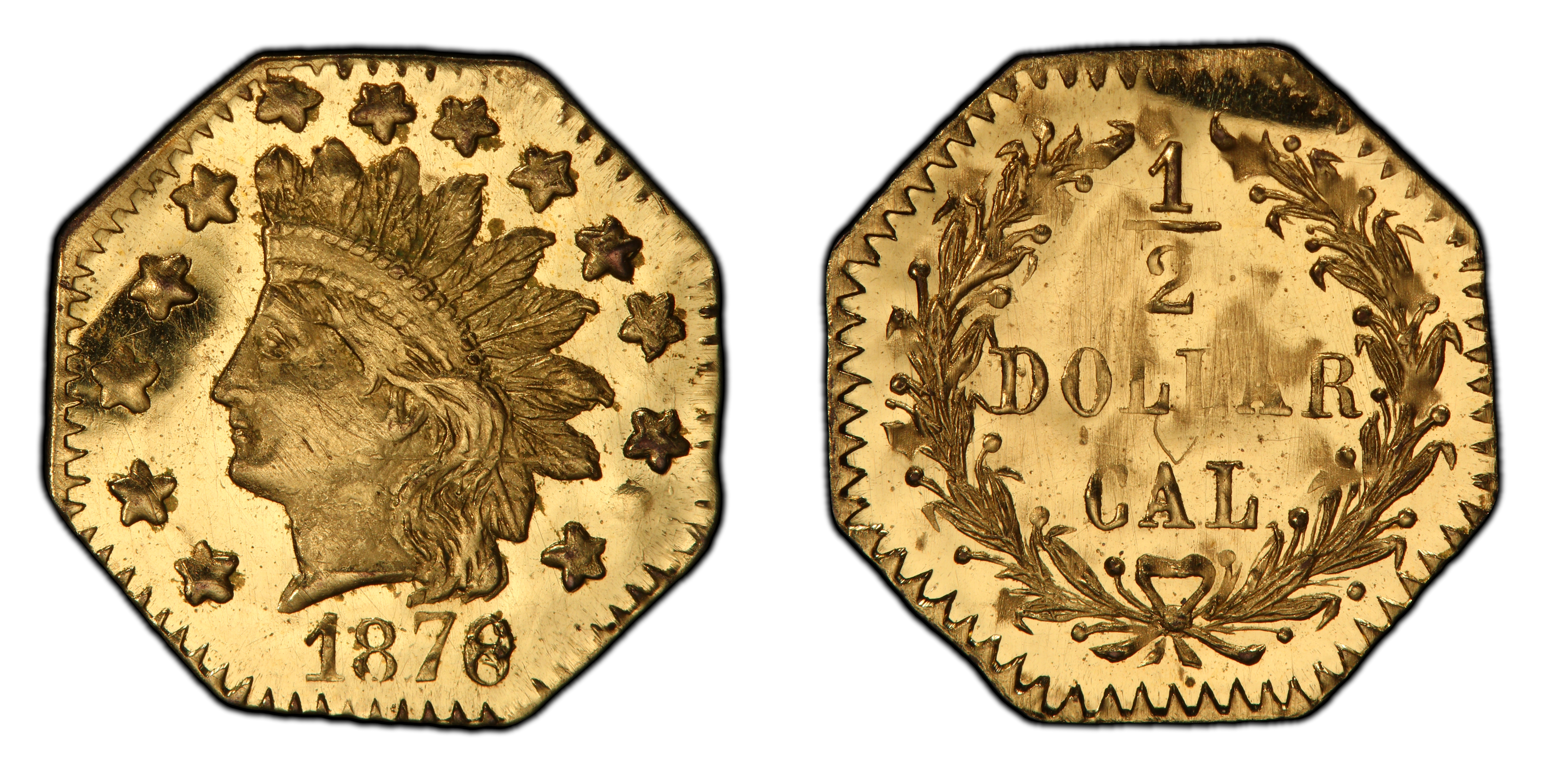
Obverse & Reverse
The 1878/6 BG-952 50 Cent piece emerges from the second major phase of California Fractional Gold production (1859-1882), a period numismatically distinct from the earlier, circulation-focused issues of 1852-1856. By the late 1870s, the acute shortage of small change that had plagued California during the Gold Rush had long been resolved by the steady output of the San Francisco Mint. Consequently, the impetus for producing these miniature gold pieces shifted entirely from commerce to souvenir sales. These later issues, often termed 'jeweler's pieces,' were crafted by various San Francisco artisans to be sold as keepsakes, charms, and mementos of the romanticized Gold Rush era. They were lighter and often of lower fineness than their stated value would imply, a fact well understood by purchasers who sought them not for their intrinsic worth but for their novelty. The BG-952 is a quintessential example of this phenomenon. Its creation involved a clear act of die thrift: an obverse die from 1876 was skillfully re-engraved to create the 1878 date, resulting in the prominent '8 over 6' overdate that defines the variety. This was a common cost-saving measure among private minters. These pieces were likely produced in very small batches using hand-operated screw presses, leading to frequent variations in strike quality. The existence of Prooflike (PL) specimens indicates that some planchets were intentionally polished before striking to create a more brilliant, eye-catching finish, further enhancing their appeal to tourists and collectors. While they never functioned as currency, their historical significance lies in their role as tangible artifacts of California's burgeoning tourism industry and the enduring mythology of the Gold Rush that persisted decades after its peak.
Associated EventPost-Gold Rush California Tourism
Reason For MintingTo serve the robust market for souvenirs and keepsakes related to the California Gold Rush, not for monetary circulation.
Minter HistoryThe specific minter or jeweler who produced the BG-952 variety is unrecorded. During this 'Period Two' of fractional gold production, numerous anonymous San Francisco jewelers and metalworkers struck these tokens. Unlike the earlier Period One assayers who often marked their work, these later producers typically left their pieces unattributed, focusing on the novelty and design rather than a maker's reputation.
Historical SignificanceThe BG-952 is significant as a representative of the 'jeweler's issue' or souvenir phase of California Fractional Gold. It demonstrates the evolution of private minting from a necessity of commerce to a commercial enterprise catering to tourism and nostalgia. The clear 1878/6 overdate also provides a valuable glimpse into the frugal and practical techniques employed by these small-scale private manufacturers.
BG-952
DenominationG50C (Gold 50 Cents)
Minting Period1878
Assayer/MinterUnknown Private Minter (Jeweler)
Geographic OriginSan Francisco, California
Obverse DescriptionAn octagonal planchet featuring a left-facing portrait of a Native American chief, colloquially referred to as an 'Indian Head.' The portrait is stylized, with prominent facial features and a feathered headdress. The portrait is encircled by thirteen five-pointed stars. The date, '1878', is positioned below the bust, with a clear repunching of the '8' over an underlying '6'.
Obverse Inscription1878
Reverse DescriptionA simple wreath composed of two olive branches tied with a ribbon at the bottom encircles the denomination. The wreath is open at the top.
Reverse Inscription1/2
CompositionGold
Stated Fineness Actual FinenessVariable, typical for Period Two issues, often between .500 and .800 fine.
Weight0.25 grams
Diameter10.00 mm
EdgePlain
Unknown, but presumed to be very small.
Survival Estimate31-45 (based on R-5+ rating)
Rarity ScaleR-5+ (Very Scarce)
This variety is highly sought after due to the clear and dramatic 1878/6 overdate, which is a significant and easily visible die variety. Its octagonal shape and Indian Head motif are also classic and popular design elements within the California Fractional Gold series. The availability of high-grade, Prooflike examples adds to its appeal for quality-conscious collectors.
Key VarietiesThe primary variety is the 1878/6 overdate itself. No other major varieties from the original minting period are known for BG-952. Unlike some territorial series, there are no known official restrikes, patterns, or trial pieces associated with this specific jeweler's issue.
Authentication TipsAuthentication requires careful examination of the overdate; the underlying '6' should be visible within the loops of the '8'. Genuine pieces are struck, not cast, and should exhibit sharp details, especially on the feathers and stars, unless weakly struck. The planchets are characteristically thin. Counterfeits are often thicker, have a soapy or soft appearance to the details, and may be made of gold-plated brass, which will have a different weight and surface characteristic. Compare the specific die markers of the portrait and wreath to high-resolution images of certified examples.
Shopping ConsiderationsA premium quality example for its grade will show a bold strike, particularly on the details of the headdress and the overdate. For Prooflike (PL) designated coins, look for deeply mirrored fields contrasted with frosted devices, with minimal handling marks or hairlines that would disrupt the reflectivity. The natural color should be a rich, original reddish-gold. Avoid examples that have been harshly cleaned, which will strip the original skin and often leave fine parallel scratches. Check the edges for signs of having been removed from jewelry, a common fate for these souvenir pieces.
A coin's grade is its condition, rated on a 1-70 scale. For rare coins, this is the most critical factor in determining value, as a tiny difference in preservation can mean a huge difference in price.
Relevant Grade TypesOriginal period issues were business strikes intended for souvenir sales, not circulation. They are found in Circulated (1-58, though rarely seen) and, more commonly, Mint State (MS, 60-70) grades. No true Proofs were struck during the original period of issue. However, specimens struck on highly polished planchets can receive a 'Prooflike' (PL) or 'Deep Prooflike' (DPL) designation from grading services, which are highly desirable but are considered a characteristic of a business strike, not a separate method of manufacture.
Mint State CharacteristicsUncirculated examples of BG-952 are defined by their luster. Standard strikes exhibit a soft, satiny luster. Prooflike (PL) examples feature reflective, mirror-like fields. Strike quality varies; many show some softness on the highest points of the chief's cheek and the feathers. The overdate area can sometimes be softly struck, and a bold impression adds to the appeal. Due to the softness of the low-karat gold, even high-grade Mint State examples will typically show small, scattered contact marks from handling over the years.
Circulated Wear PatternsAlthough not intended for circulation, any wear would first appear on the highest points of the design. On the obverse, this includes the cheekbone and the upper feathers of the headdress. On the reverse, the highest points of the wreath's leaves and the ribbon would show initial friction. In lower grades, the finer details of the feathers and the stars would begin to merge.
Key Factors For ValueFor the BG-952, the primary value driver is the grade, followed closely by the eye appeal. A sharp, well-centered strike that clearly delineates the overdate commands a significant premium. The quality of the surfaces is paramount; coins with original, undisturbed luster and a pleasing golden color are prized above those that are cleaned or exhibit distracting marks. A Prooflike (PL) or Deep Prooflike (DPL) designation will substantially increase the value. A CAC sticker for this issue confirms premium quality for the grade and will result in a higher market price.
PCGS Price Guide
| Grade | Price | Population |
|---|---|---|
| 63 | $875.00 | N/A |
| 63+ | $1,000.00 | N/A |
| 64 | $1,350.00 | 1 |
| 64+ | $1,500.00 | N/A |
| 65 | $1,750.00 | N/A |
| 65+ | $1,900.00 | N/A |
| 66 | $2,250.00 | 1 |