1870 G50C BG-1024 (Regular Strike)
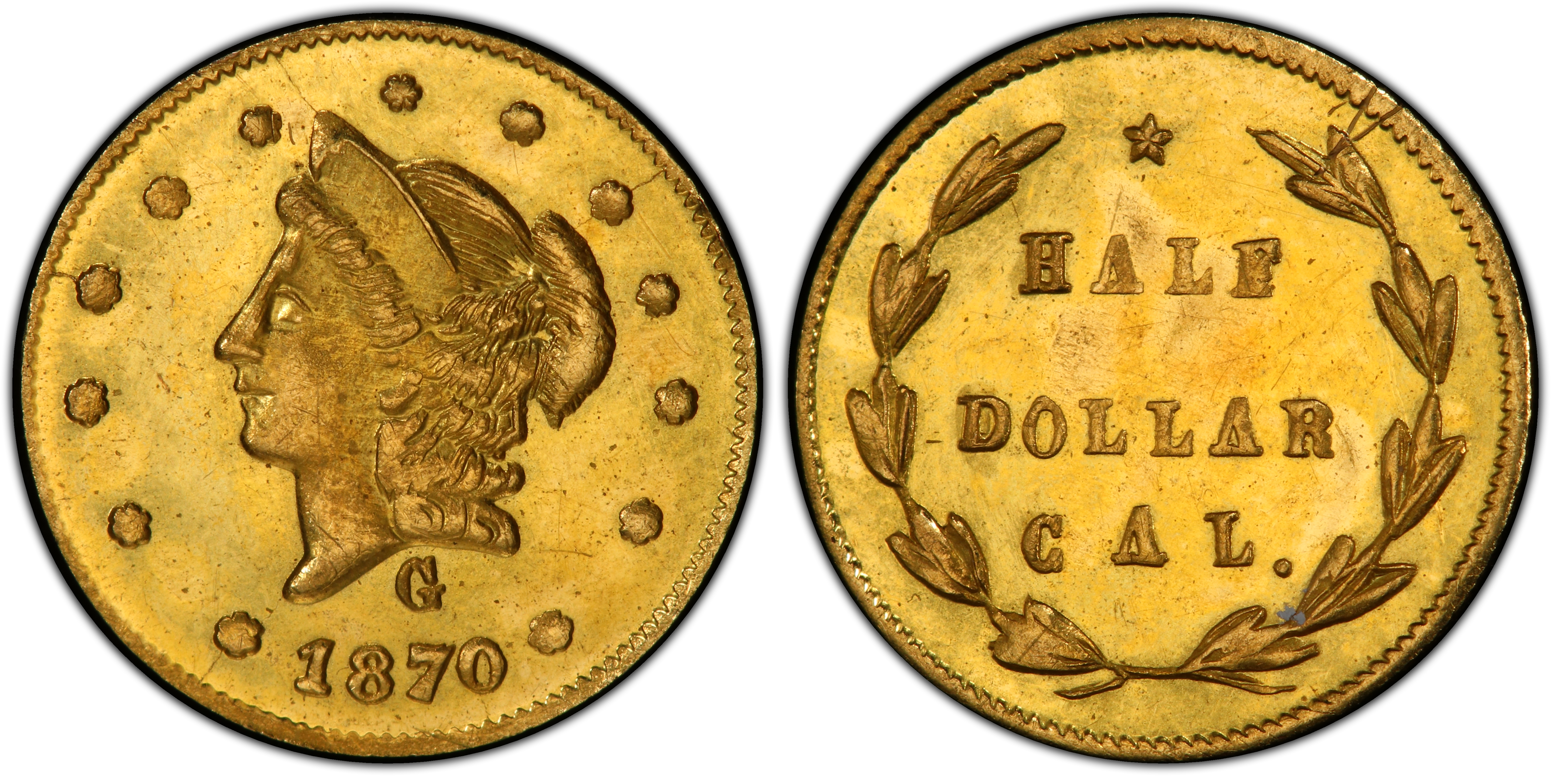
Obverse & Reverse
The 1870 BG-1024 Half Dollar is a product of the second period (1859-1882) of California Fractional Gold production, a fascinating chapter in American monetary history. The initial wave of fractional gold emerged in 1852 to satisfy a critical need for small-denomination coinage in Gold Rush-era California, where an influx of gold dust and large federal coins created immense difficulty for everyday transactions. By 1870, the economic landscape had evolved. The United States Mint in San Francisco was fully operational, and the acute shortage of small change had largely subsided. Consequently, the purpose of these diminutive gold pieces shifted. While they may have seen occasional limited circulation, their primary role became that of souvenirs, keepsakes, and jewelry items for locals and the growing tourist trade. This era is often called the 'jeweler's period,' as many pieces were produced by jewelers who possessed the requisite skills for die-sinking and striking. Legally, these pieces existed in a grey area. The Coinage Act of 1864 expressly forbade the private minting of currency, but federal enforcement was lax and sporadic, particularly in the West. It wasn't until a more public crackdown in the 1870s and early 1880s that production of denominated pieces ceased. The BG-1024 was struck in this environment, representing a continuation of a uniquely Californian tradition long after its original economic necessity had passed. These coins were typically made via the 'hammer method,' where a planchet was placed on an anvil die and struck with a hand-held obverse die and a sledgehammer, leading to variability in strike quality. Their gold content was also intentionally less than their face value, reflecting their new status as tokens rather than true circulating currency. The BG-1024 is a tangible link to this later, more commercialized phase of the Gold Rush legacy, a miniature artifact of an independent and resourceful frontier economy transitioning into a new identity.
Associated EventPost-California Gold Rush Economy
Reason For MintingPrimarily created as souvenirs and for use in jewelry, capitalizing on the romantic appeal of the Gold Rush, rather than for circulation.
Minter HistoryThe specific minter or jeweler responsible for the BG-1024 variety is unknown, which is common for many 'Period Two' California Fractional Gold pieces. Unlike the earlier, more organized private minters, the later issues were often the work of independent jewelers in San Francisco who did not place identifying marks or initials on their products. The style of the Liberty head and wreath are the primary means by which numismatists attribute them to a general time and place, but a specific maker's name for this variety has been lost to history.
Historical SignificanceThe BG-1024 represents the evolution of California Fractional Gold from a necessary medium of exchange to a commercial souvenir. It highlights the lasting cultural and economic impact of the Gold Rush and demonstrates a period of lax federal oversight on private coinage, allowing a unique numismatic specialty to flourish for over three decades.
BG-1024
Denomination50 Cents
Minting Period1870
Assayer/MinterUnknown Private Minter
Geographic OriginSan Francisco, California
Obverse DescriptionA Coronet-style bust of Liberty facing left, her hair tied in a bun. She is surrounded by thirteen stars, representing the original colonies. The date '1870' appears below the truncation of the neck.
Obverse Inscription1870
Reverse DescriptionA simple wreath composed of two branches tied with a bow at the bottom. Inside the wreath, the denomination '50 CENTS' is displayed on two lines.
Reverse Inscription50 CENTS
CompositionGold
Stated Fineness Actual FinenessVariable, often between .500 and .750 fine, as was typical for Period Two 'jeweler's issues' which were not intended to contain their full face value in gold.
Weight0.25 grams
Diameter10.00 mm
EdgePlain
Unknown
Survival Estimate76-200
Rarity ScaleR-4 (Very Scarce)
This coin is highly collectible due to its direct connection to the California Gold Rush era, its miniature size, and its status as a privately-minted gold piece. As an R-4 variety, its scarcity adds significantly to its appeal for specialists in the series.
Key VarietiesThe BG-1024 is a specific die marriage and represents a single variety. No major sub-varieties from the original minting period are widely recognized. No patterns, trial pieces, or official later-date restrikes are known to exist for this variety.
Authentication TipsGenuine examples are very thin and lightweight. Counterfeits are often thicker, heavier, and have a 'soapy' or cast appearance. The strike on genuine pieces can be uneven, with some areas sharp and others weak, a result of hammer striking. Be wary of specimens with a bear on the reverse, as this is a common motif on modern replicas, not on genuine 19th-century issues. The lettering and stars should be examined for the correct style and compared with known genuine examples.
Shopping ConsiderationsA premium quality example for its grade will exhibit a sharp, well-centered strike, particularly on Liberty's portrait and the date. Original, uncleaned surfaces with some remaining mint luster are highly desirable. Check for evidence of having been mounted in jewelry, such as rim damage, solder marks, or excessive polishing, which will significantly lower the value. Attractive reddish-gold or deep yellow-gold toning is a plus. Given the variability of the strike, a coin that is unusually well-struck for the variety will command a strong premium.
A coin's grade is its condition, rated on a 1-70 scale. For rare coins, this is the most critical factor in determining value, as a tiny difference in preservation can mean a huge difference in price.
Relevant Grade TypesAll original examples of BG-1024 are business strikes intended for commerce or sale as souvenirs and are found in Circulated (1-58) and Mint State (MS, 60-70) grades. No Proof (PR/PF) examples were struck during the original period of issue, and no later-date Proof restrikes are known to exist. Any piece described as a 'Proof' is likely a modern copy or has been misattributed.
Mint State CharacteristicsIn uncirculated grades, the BG-1024 typically shows a soft, satiny luster. The quality of the strike is a key determinant of grade; many examples are weakly struck in the centers, particularly on the highest points of Liberty's hair and the leaves of the wreath. A well-struck Mint State example is rare and highly valued. Small planchet flaws or adjustment marks are not uncommon and should be assessed for their impact on eye appeal.
Circulated Wear PatternsWear first becomes apparent on the high points of Liberty's hair, cheek, and the ear. The stars and the date are also susceptible to early wear. On the reverse, the leaves in the wreath and the bow will show the first signs of friction. On lower-grade examples (VG and below), the central details of the wreath will be flat, and the legends may become difficult to read.
Key Factors For ValueThe primary drivers of value are grade and surface quality. An example with original, undisturbed surfaces will always be worth more than a cleaned, polished, or damaged coin of the same grade. Strike sharpness is the next critical factor; a coin with a full strike is far more desirable than a weakly struck one. Finally, eye appeal, which includes factors like attractive toning and centering, plays a significant role. Certification by a major grading service (PCGS or NGC) is essential for market acceptance, and a CAC sticker for this issue would denote premium quality and add a significant price premium.