1875 G50C BG-948 (Regular Strike)
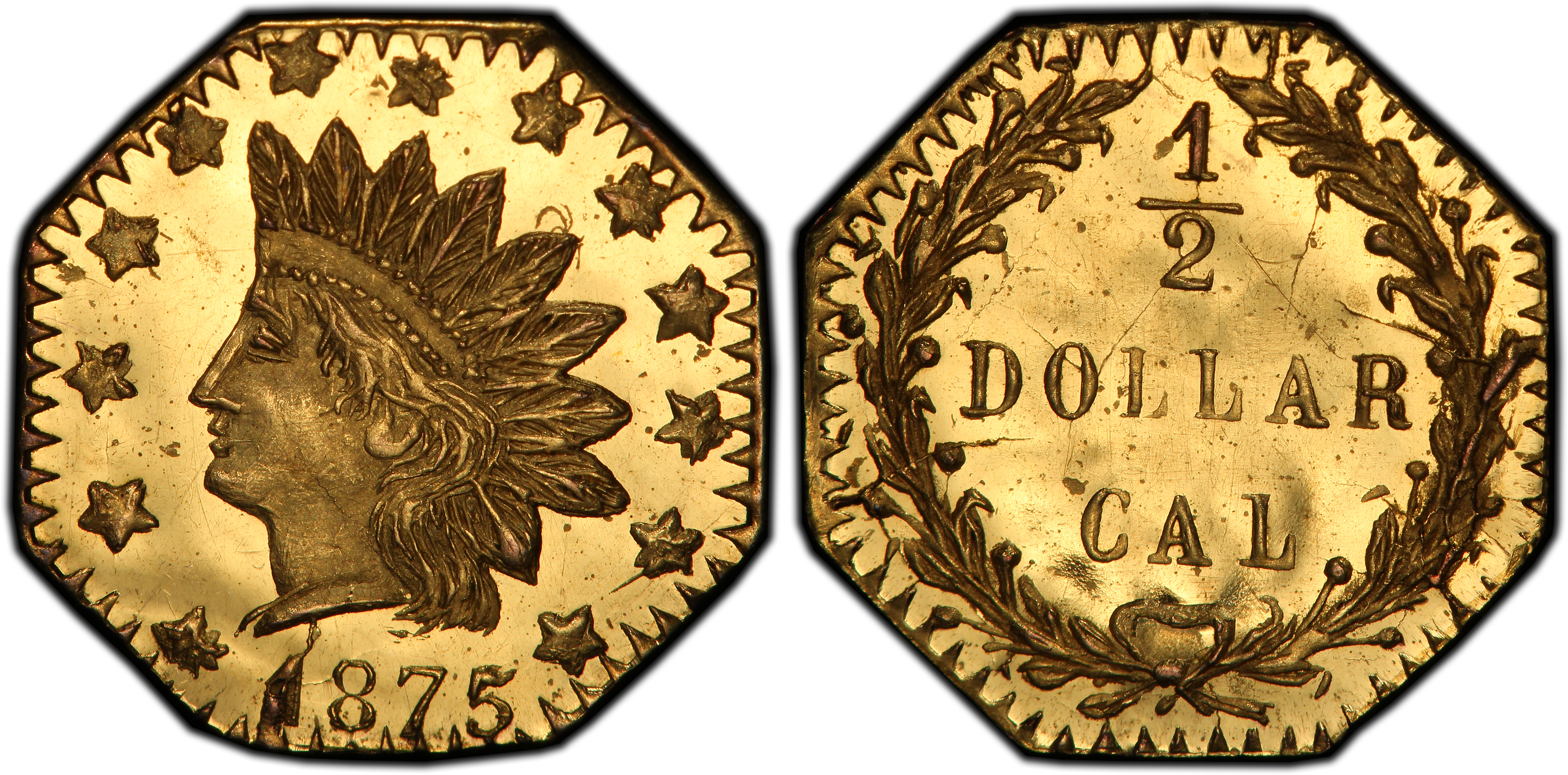
Obverse & Reverse
The 1875 G50C BG-948 represents a fascinating chapter in the evolution of California Fractional Gold. By the mid-1870s, the initial, desperate need for small circulating coinage that characterized the Gold Rush's peak in the early 1850s had largely subsided. The establishment of the San Francisco Mint in 1854 had supplied the region with official United States silver and gold coins, theoretically obviating the need for private issues. However, the production of fractional gold pieces continued, shifting in purpose from a necessary medium of exchange to commercial novelties, souvenirs for a burgeoning tourist trade, and jewelry items. This later period, often termed the 'Jeweler's Period,' saw minters, many of whom were jewelers by trade, creating a wide variety of attractive but often underweight pieces. The Coinage Act of 1864 had made private coinage illegal, yet enforcement was lax in the West, allowing production to persist. These later issues were not intended to compete with federal coinage but rather to satisfy a demand for charming mementos of the Gold Rush era. The BG-948 variety is a product of this environment. Attributed to San Francisco jeweler Herman J. Brand, it was struck using dies that apparently deteriorated quickly, contributing to its significant rarity. Most of these pieces were produced via the 'hammer method,' where dies were struck manually with a sledgehammer, leading to inconsistent strike quality even among examples from the same dies. This crude but effective method defined much of the fractional gold series. The legacy of these tiny gold pieces is their embodiment of the entrepreneurial and adaptable spirit of California, evolving from a vital economic necessity to a cherished collectible that captures the romance of the era.
Associated EventPost-Gold Rush Era Commerce & Tourism
Reason For MintingPrimarily created to serve as popular souvenirs and jewelry items during a period when the acute need for circulating small change had diminished.
Minter HistoryHerman J. Brand was a San Francisco manufacturing jeweler and watchmaker active during the period. While many fractional gold minters remain anonymous, research and die analysis have led numismatists to attribute the BG-948, among other varieties, to his workshop. These 'jeweler's issues' are characterized by their delicate designs and were often sold as keepsakes rather than being intended for rigorous daily circulation.
Historical SignificanceThe BG-948 is significant as an example of the later-period 'souvenir' phase of California Fractional Gold production. It illustrates the transition of these private issues from essential monetary instruments to commercial keepsakes, reflecting California's changing economy and the romantic fascination with the Gold Rush that persisted long after its peak.
N/A
Denomination$0.50
Minting Period1875
Assayer/MinterHerman J. Brand (Attributed)
Geographic OriginSan Francisco, California
Obverse DescriptionAn Indian Head design, facing left, wearing a feathered headdress. The portrait is surrounded by 13 stars, representing the original colonies.
Obverse Inscription Reverse DescriptionThe denomination '1/2' is centrally located within a wreath of leaves and berries. The date '1875' is positioned below the wreath.
Reverse Inscription1/2
CompositionGold
Stated Fineness Actual Fineness0.9
Weight0.25 grams
Diameter10.00 mm
EdgePlain
Unknown; very small
Survival Estimate13-30 pieces
Rarity ScaleR-6 (High)
This coin is highly sought after due to its extreme rarity (R-6), distinctive octagonal shape, and classic Indian Head design. Its attribution to a specific jeweler, Herman J. Brand, adds a layer of historical interest. Being a later-date issue, examples are often found in higher grades, appealing to collectors who prioritize condition.
Key VarietiesThe primary variety is the BG-948 regular business strike. No proof restrikes or special collector issues are known from the period or later. The key diagnostic is the die state; the dies used for BG-948 deteriorated rapidly, leading to variations in strike sharpness and the presence of die cracks on later strikes. Some pieces may be found with prooflike (PL) surfaces, which command a premium.
Authentication TipsGenuine examples exhibit a sharp, albeit sometimes uneven, strike from manually hammered dies. The details of the wreath and the feathers on the headdress are key areas to inspect. Counterfeits are common in the fractional gold series and are often either underweight, have a soapy or cast-like appearance, or display incorrect design details. The lettering and date style should match known genuine examples. Authentication by a major third-party grading service (PCGS or NGC) is highly recommended.
Shopping ConsiderationsA premium quality example for its grade will possess a sharp strike, especially on the high points of the Indian Head's feathers and the fine details of the reverse wreath. Original, lustrous surfaces are highly desirable and command significant premiums. Look for attractive, undisturbed 'skin' with reddish-gold toning. Avoid examples that have been harshly cleaned, polished, or used as jewelry, as evidenced by rim damage, solder marks, or excessive scratching. Given the rarity, even problem-free circulated examples in grades like AU-55 are considered choice acquisitions.
A coin's grade is its condition, rated on a 1-70 scale. For rare coins, this is the most critical factor in determining value, as a tiny difference in preservation can mean a huge difference in price.
Relevant Grade TypesOriginal period issues like the BG-948 were business strikes, technically intended for commerce but more often sold as novelties. They are found in Circulated (1-58) and, more commonly for this later period, Mint State (MS, 60-70) grades. No proofs were struck during the original minting period, and there are no known later-date proof restrikes for this specific variety.
Mint State CharacteristicsUncirculated examples of BG-948 often show some weakness in the strike due to the manual hammer-striking process. Luster is typically satiny rather than frosty. Because the dies deteriorated quickly, later strikes may show die cracks or a general softness. Contact marks can be present, but due to their souvenir nature, many were well-preserved. Prooflike (PL) surfaces are scarce and highly prized.
Circulated Wear PatternsWear first appears on the high points of the design: the cheek and feathers of the Indian Head on the obverse, and the leaves and bow of the wreath on the reverse. On lower-grade circulated examples, the stars and the date will begin to lose their sharpness and merge towards the fields.
Key Factors For ValueThe primary value drivers for BG-948 are rarity and grade. Surface quality is paramount; an example with original, uncleaned surfaces and attractive luster will be worth significantly more than a cleaned or polished coin of the same grade. Strike sharpness is a major consideration, with well-struck pieces commanding a premium. Eye appeal, enhanced by pleasant original toning, is also key. Given the prevalence of counterfeits in this series, certification by PCGS or NGC is nearly essential for market acceptance, and a CAC sticker will add a further premium for high-end examples.
PCGS Price Guide
| Grade | Price | Population |
|---|---|---|
| 55 | $300.00 | 3 |
| 55+ | $305.00 | N/A |
| 58 | $315.00 | 1 |
| 58+ | $320.00 | N/A |
| 60 | $325.00 | 1 |
| 61 | $350.00 | 2 |
| 62 | $450.00 | 6 |
| 62+ | $475.00 | N/A |
| 63 | $575.00 | 17 |
| 63+ | $625.00 | N/A |
| 64 | $800.00 | 4 |
| 64+ | $925.00 | N/A |
| 65 | $1,750.00 | 3 |
| 66 | N/A | N/A |