1871 G50C BG-1027 (Regular Strike)
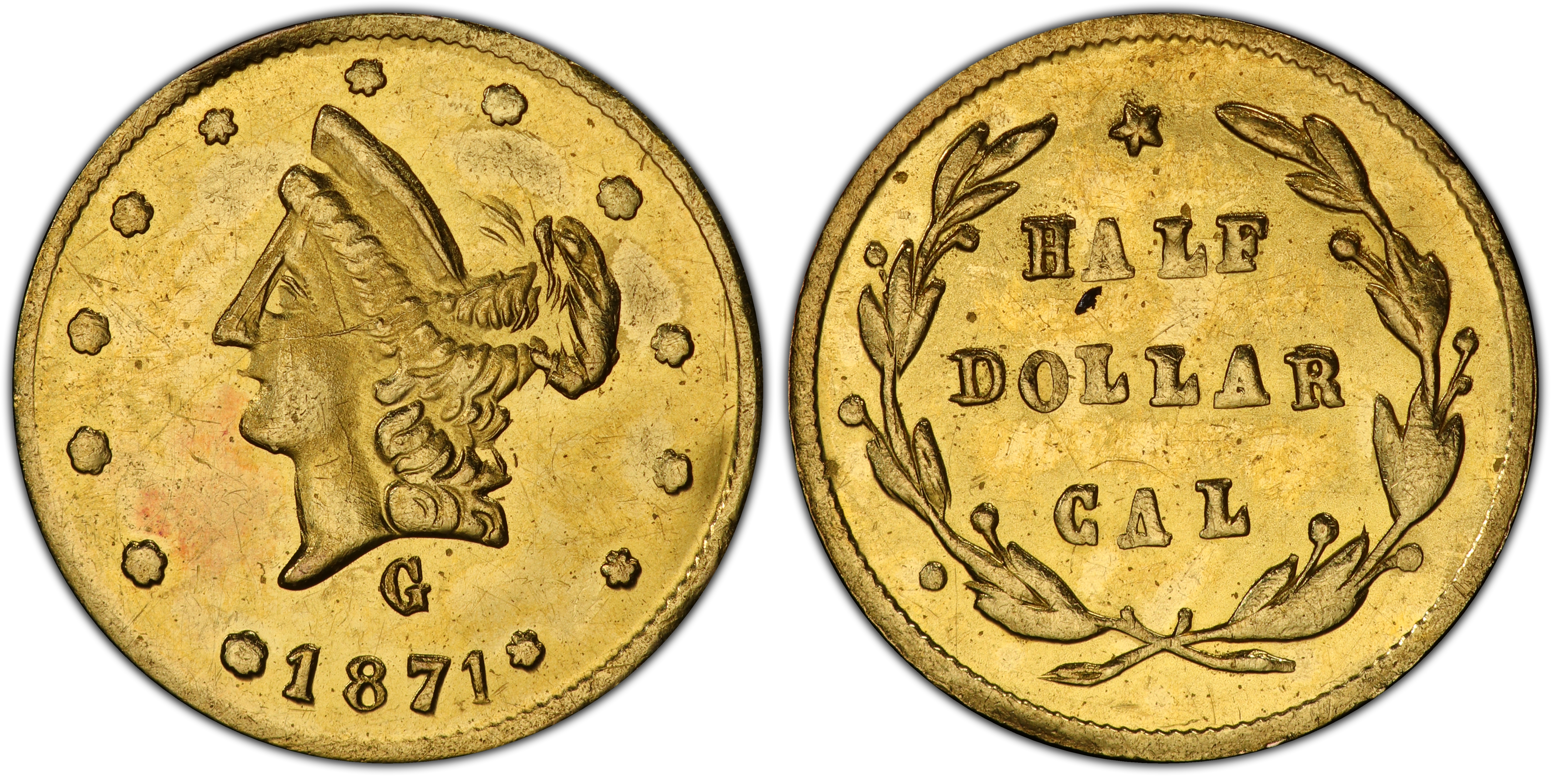
Obverse & Reverse
The 1871 BG-1027 fifty-cent piece emerges from the second period (1859-1882) of California Fractional Gold production, an era far removed from the initial frantic days of the Gold Rush. By the 1870s, the California economy had matured, and the acute shortage of small change that prompted the first private gold issues had been largely resolved by the output of the San Francisco Mint. However, the allure of gold and the romanticism of the "'49er" era persisted. Enterprising jewelers, primarily in San Francisco, recognized a burgeoning market for gold souvenirs. These small-denomination pieces, often meticulously crafted miniatures of official U.S. gold coinage, were no longer intended to be the primary medium of exchange. Instead, they were marketed as keepsakes, mementos for tourists, and affordable pieces of jewelry. The Coinage Act of 1864 had prohibited private coinage, but its enforcement was inconsistent. Many producers of this period, like Robert B. Gray & Co., operated in a legal gray area, creating pieces that were technically tokens but bore denominations. The BG-1027, with its classic Liberty Head design, was a quintessential example of this phenomenon. It was small, attractive, made of gold, and evoked the spirit of the Gold Rush, making it an ideal souvenir for a visitor to send back East. These "Period Two" pieces are often referred to as "jeweler's issues" and are characterized by their generally lower gold content relative to face value compared to the earlier, circulation-focused issues. Their survival in high grades is more common than Period One coins precisely because they were not subjected to the rigors of daily commerce, but were instead cherished and preserved from the time they were made.
Associated EventPost-California Gold Rush Economic Expansion
Reason For MintingPrimarily produced to be sold as souvenirs, keepsakes, and jewelry items rather than to alleviate a shortage of circulating currency.
Minter HistoryRobert B. Gray & Co. was a prominent San Francisco jewelry firm active in the production of California Fractional Gold during the second period. In the late 1850s, Gray purchased the business and equipment of another private minter, Antoine Louis Nouizillet, including dies and hubs. Gray's firm produced a variety of fractional gold denominations, typically marked with a small 'G' on the obverse, although this specific variety (BG-1027) does not bear that hallmark. His issues are known for their quality craftsmanship, emulating the designs of official U.S. coinage.
Historical SignificanceThe BG-1027 is significant as a tangible artifact of the commercialization of the Gold Rush legacy. It represents the shift in the purpose of fractional gold from a necessary medium of exchange to a popular souvenir item, reflecting California's evolving economy and its burgeoning identity as a tourist destination. Its existence highlights a unique chapter in American private minting history, operating on the fringes of federal coinage laws.
N/A
Denomination50 Cents
Minting Period1871
Assayer/MinterRobert B. Gray & Co.
Geographic OriginSan Francisco, California
Obverse DescriptionA classic head of Liberty facing left, her hair tied in a bun and adorned with a coronet. She is surrounded by thirteen stars, representing the original colonies.
Obverse InscriptionNo inscription, only the date 1871 below the bust and 13 surrounding stars.
Reverse DescriptionThe denomination '1/2' is enclosed within a wreath of leaves and berries, which is open at the top.
Reverse Inscription1/2
CompositionGold
Stated Fineness Actual FinenessVaries, but typically lower than official U.S. coinage of the era.
Diameter10.50 mm
EdgePlain
Unknown
Survival EstimateFewer than 200
Rarity ScaleR-5
This variety is sought after for its classic, federally-inspired design, its connection to the romanticized post-Gold Rush era, and its status as a product of a known San Francisco jeweler. As a "Period Two" issue, it is more available in high grades than earlier fractional gold, making it an accessible entry point for collectors seeking a Mint State example of this fascinating series.
Key VarietiesThe primary variety is the regular strike BG-1027. There are no known major varieties from the original minting period, nor are there any officially sanctioned later-date restrikes or pattern pieces associated with this specific die pairing. Collectors should be aware of other Breen-Gillio varieties from 1871 which may have slight differences in design, size, or the placement of stars and date.
Authentication TipsGenuine BG-1027 pieces have a specific die character. Pay close attention to the sharpness of the stars and the details in Liberty's hair. The reverse wreath should be well-defined. Period Two fractionals were generally well-struck. Common counterfeits are often cast, showing a porous or soapy texture under magnification. Others are gold-plated brass tokens, often with incorrect designs (such as a bear on the reverse) and should be immediately suspect. Weight and diameter should conform to known standards for the type. Third-party certification by PCGS or NGC is highly recommended for authentication.
Shopping ConsiderationsA premium quality example of BG-1027 will exhibit a sharp, well-centered strike. Look for full definition on the strands of Liberty's hair and the leaves of the reverse wreath. Original, frosty or prooflike luster is highly desirable and commands a significant premium; many surviving examples have been cleaned or used in jewelry, so finding one with original 'skin' is key. Check for hidden problems such as solder marks, tooling on the fields to hide scratches, or rim damage from being mounted in a bezel. An example with attractive, original reddish-gold toning is preferable to a harshly dipped or cleaned coin.
A coin's grade is its condition, rated on a 1-70 scale. For rare coins, this is the most critical factor in determining value, as a tiny difference in preservation can mean a huge difference in price.
Relevant Grade TypesOriginal issues of BG-1027 were business strikes, although not intended for widespread circulation. They are found in Circulated (1-58) and, more commonly, Mint State (MS, 60-70) grades. No true Proofs were struck during the original period of issue. However, some pieces were struck using polished dies on polished planchets, resulting in a mirrored, Prooflike (PL) or Deep Mirror Prooflike (DMPL) surface, which are highly prized by collectors and designated as such by grading services. These are not a separate issue but rather a special quality of the business strike.
Mint State CharacteristicsUncirculated examples of BG-1027 are characterized by their luster, which can range from satiny to deeply prooflike. The strike can be variable, but high-quality examples will show sharp details on Liberty's coronet and hair. Due to the softness of the gold and the production process, it is common to see minor planchet striations or handling marks, even on high-grade specimens. A truly choice Mint State coin will have minimal marks, strong luster, and excellent eye appeal.
Circulated Wear PatternsFor circulated examples, wear first appears on the highest points of the design: Liberty's cheek, the hair above her ear, and the coronet. On the reverse, the bow and the high points of the leaves in the wreath will show the first signs of friction. In lower grades (VF and below), the stars on the obverse will begin to lose their sharp points and the finer details of the wreath will merge.
Key Factors For ValueThe primary drivers of value for BG-1027 are grade and surface quality. A high-grade Mint State coin (e.g., MS-64) is worth substantially more than a circulated or low-end Mint State (e.g., MS-61) example. The presence of a Prooflike (PL) or Deep Mirror Prooflike (DMPL) designation dramatically increases value. Originality of the surfaces is paramount; coins that are cleaned, polished, or show evidence of jewelry use are heavily penalized in the market. Finally, coins with a CAC sticker, indicating premium quality for the grade, often realize higher prices at auction.
PCGS Price Guide
| Grade | Price | Population |
|---|---|---|
| 40 | $180.00 | 1 |
| 45 | $190.00 | 7 |
| 45+ | $200.00 | N/A |
| 50 | $210.00 | 13 |
| 50+ | $215.00 | N/A |
| 53 | $220.00 | 8 |
| 53+ | $225.00 | N/A |
| 55 | $230.00 | 30 |
| 55+ | $235.00 | N/A |
| 58 | $240.00 | 38 |
| 58+ | $260.00 | N/A |
| 60 | $315.00 | 9 |
| 61 | $350.00 | 32 |
| 62 | $425.00 | 62 |
| 62+ | $500.00 | N/A |
| 63 | $625.00 | 15 |
| 63+ | $750.00 | N/A |
| 64 | $1,000.00 | 3 |