1866 G50C BG-1017 (Regular Strike)
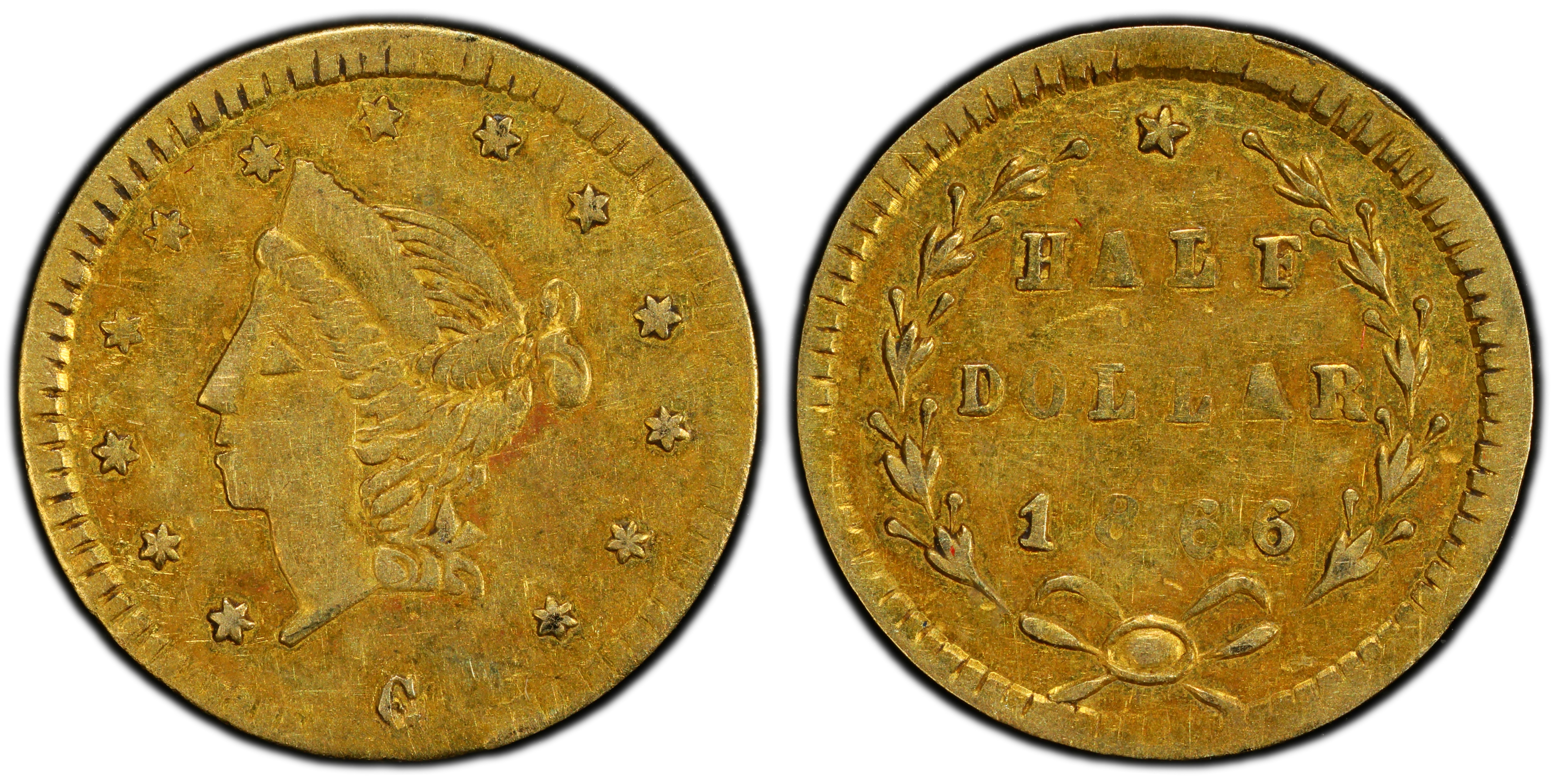
Obverse & Reverse
The 1866 Gold 50 Cents, cataloged as Breen-Gillio-1017, is a product of the second major phase of California's private gold coining era. The initial impetus for fractional gold coinage arose in 1852 from an acute shortage of small denomination coins to facilitate everyday commerce in the gold fields. Gold dust was impractical for minor transactions, and the output of the U.S. Mint was insufficient to meet the explosive economic growth. The first period of production (1852-1857) saw coins that, while often underweight, were generally intended to circulate. However, the BG-1017 emerged in a different context. By 1866, the San Francisco Branch Mint was in full operation, supplying the region with ample federal coinage. Furthermore, the Coinage Act of April 22, 1864, had explicitly outlawed the private issuance of coinage. This legislation, however, was not aggressively enforced by the Secret Service until 1883. This legal gray area gave rise to 'Period Two' issues (1859-1882), of which the BG-1017 is a prime example. These later pieces, often termed 'jeweler's issues,' were not primarily intended to fill a circulating medium void. Instead, they were produced by San Francisco jewelers and merchants as souvenirs, keepsakes for tourists, and novelty items that capitalized on the romantic allure of the Gold Rush. They were thinly veiled tokens, often underweight for their stated value, but denominated to mimic currency and evade immediate legal scrutiny. The production methods remained crude, typically involving a hand-operated screw press or even a simple hammer strike, resulting in inconsistent quality and frequent die breaks. The BG-1017, like its contemporaries, represents the commercial adaptation of a numismatic concept, shifting from a necessary monetary tool to a popular memento of a transformative era in American history.
Associated EventPost-Gold Rush California Economy
Reason For MintingPrimarily created as a souvenir or 'pocket piece' for the tourist and jewelry trade during a period of lax enforcement of private coinage laws.
Minter HistoryThe specific minter or jeweler responsible for the BG-1017 die pair is unknown, a common trait for many Period Two issues where makers often remained anonymous to avoid potential legal repercussions. These pieces are generally attributed to the community of jewelers operating in San Francisco during the mid-to-late 19th century.
Historical SignificanceThe BG-1017 is a tangible artifact of the transition from functional pioneer currency to romanticized Gold Rush memorabilia. It highlights a unique period in U.S. monetary history where private entities continued to strike coin-like objects despite federal prohibition, serving a commercial and nostalgic, rather than a monetary, need.
N/A
Denomination50 Cents
Minting Period1866
Assayer/MinterUnknown Private Minter
Geographic OriginSan Francisco, California
Obverse DescriptionA rendition of the Liberty Head, facing left. The portrait is somewhat crudely engraved, typical of jeweler's issues. The head is adorned with a coronet, and 13 stars encircle the periphery.
Obverse InscriptionNo textual inscription; design consists of Liberty Head and 13 stars.
Reverse DescriptionThe denomination '50 CENTS' is enclosed within a wreath of two olive branches tied with a bow at the bottom. The date '1866' appears below the wreath.
Reverse Inscription50 CENTS 1866
CompositionGold
Stated Fineness Actual FinenessFineness varies among Period Two issues but is generally lower than official U.S. coinage, often ranging from 14 to 22 karats.
Weight0.25 grams
Diameter10.50 mm
EdgePlain
Unknown
Survival EstimateFewer than 30
Rarity ScaleR-6 (13-30 known)
This variety is highly sought after due to its extreme rarity and its association with the romantic history of the California Gold Rush. As a Period Two issue, it tells the story of the commercialization of that history. The tiny size and intricate (though often crude) design make it a fascinating miniature.
Key VarietiesThe BG-1017 is a single, specific die marriage. No major varieties from the original minting period are known. No official restrikes, patterns, or trial pieces are known to exist for this specific variety.
Authentication TipsAuthentic Period Two pieces must have a denomination; fakes and later charms often omit it or use phrases like 'CAL GOLD'. The strike on genuine specimens is often weak in areas and may show die cracks or other imperfections. The style of engraving, while sometimes crude, should be consistent with known genuine examples. Modern counterfeits may appear too sharp or have a different luster. Weight and diameter should be close to the known specifications, although slight variations are common.
Shopping ConsiderationsFor a 'premium quality' BG-1017, a buyer should seek an example with a bold strike, particularly on the date and the word 'CENTS', which are often weak. Original, uncleaned surfaces with some remaining luster command a significant premium. Given the softness of the gold and the crude production, minor planchet flaws or adjustment marks are common and may not detract significantly unless they are severe. Look carefully for evidence of having been mounted in jewelry, such as rim filing or solder marks, which would drastically reduce the value. Given its rarity, any example, even in a lower grade, is significant, but surface preservation is paramount.
A coin's grade is its condition, rated on a 1-70 scale. For rare coins, this is the most critical factor in determining value, as a tiny difference in preservation can mean a huge difference in price.
Relevant Grade TypesAll original 1866 G50C BG-1017 coins were struck as business strikes, intended for sale as novelties rather than circulation. They are found in Circulated (1-58) and, more commonly for this souvenir-type issue, Mint State (MS, 60-70) grades. No Proofs were struck during the original period of issue, and there are no known later-date Proof restrikes.
Mint State CharacteristicsUncirculated examples of BG-1017 often exhibit a soft, satiny luster rather than a hard, frosty one. The strike is a key differentiator; many are weakly struck, especially on the highest points of Liberty's hair and the wreath on the reverse. A well-struck example with full detail is rare and desirable. Small planchet imperfections or adjustment marks made prior to striking are common and should be noted. Contact marks, even small ones, are very apparent on the tiny surfaces and can significantly impact the grade.
Circulated Wear PatternsOn circulated examples, wear first appears on the high points of Liberty's hair, cheek, and the coronet. On the reverse, the leaves of the wreath and the bow will show the first signs of friction. In lower grades (VF and below), the date and the denomination will begin to lose their sharpness and merge with the fields.
Key Factors For ValueRarity is the primary driver of value for this coin. After that, surface quality is paramount. An example with clean, original, undisturbed surfaces will be valued far higher than a cleaned or polished piece of the same grade. Strike sharpness is the next critical factor; a coin with a full, crisp strike can command a substantial premium over a weakly struck counterpart. Eye appeal, including attractive original gold toning, also contributes significantly to the value. A CAC sticker for this issue would indicate superior quality for the grade and would add a considerable premium.
PCGS Price Guide
| Grade | Price | Population |
|---|---|---|
| 50 | $850.00 | 1 |
| 50+ | $875.00 | N/A |
| 53 | $900.00 | 2 |
| 53+ | $925.00 | N/A |
| 55 | $950.00 | N/A |
| 55+ | $975.00 | N/A |
| 58 | $1,000.00 | 2 |
| 58+ | $1,050.00 | N/A |
| 60 | $1,200.00 | N/A |
| 61 | $1,450.00 | N/A |
| 62 | $1,650.00 | 3 |
| 62+ | $2,000.00 | N/A |
| 63 | $2,600.00 | 2 |