1872 G25C BG-814, PL (Regular Strike)
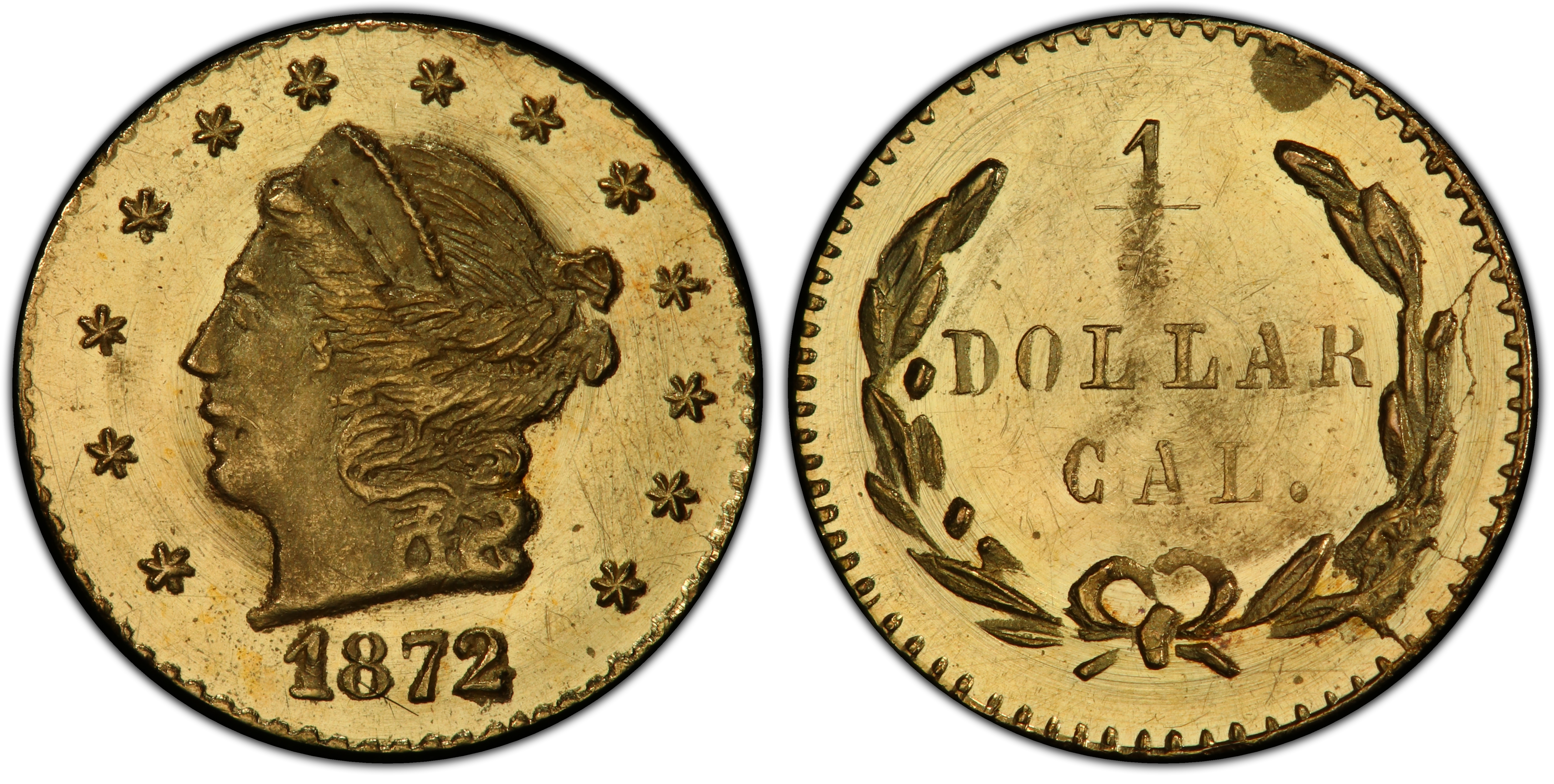
Obverse & Reverse
The 1872 G25C BG-814 is a product of the second period of California Fractional Gold production (1858-1882), a fascinating chapter in American numismatics born from the chaotic aftermath of the Gold Rush. While the initial 'Period One' pieces (1852-1857) were struck out of genuine necessity to alleviate a severe shortage of small change in the gold fields, these later 'Period Two' issues served a different purpose. By the 1870s, the U.S. Mint in San Francisco was in full operation, supplying the region with official federal coinage and obviating the need for private issues in commerce. Instead, these miniature gold pieces were primarily manufactured by jewelers as souvenirs, keepsakes, and novelty items for tourists and locals nostalgic for the heady days of the Gold Rush. They were intentionally struck with a gold content far below their face value, functioning more as tokens than true coinage. The Private Coinage Act of 1864 had officially outlawed such private issues, but enforcement by the Secret Service was lax until 1883, allowing a thriving cottage industry to persist. San Francisco jewelers, many of French origin, became the primary producers. The firm of Frontier & Bellemere, jewelers and watchmakers, is credited with striking the BG-814 variety. These pieces were often crudely made using hammer presses, resulting in inconsistent strike quality. Their diminutive size made them easily lost, and their non-essential role meant many were likely melted over time, contributing to the high rarity of most varieties today. The BG-814, with its simple Liberty Head motif mimicking federal designs, represents a classic example of this era—a tangible, albeit unofficial, relic of California's enduring identity as the 'Golden State.'
Associated EventPost-Gold Rush California Economy
Reason For MintingPrimarily created as a souvenir or 'pocket piece' for the tourist trade, not for general circulation.
Minter HistoryFrontier & Bellemere were San Francisco-based jewelers and watchmakers active during the latter half of the 19th century. Like many of their contemporaries, they participated in the lucrative business of producing California Fractional Gold pieces, which were popular souvenirs. Detailed biographical information about the partners, Pierre Frontier and L. Bellemere, is scarce, but their firm is recognized by numismatists as a confirmed producer of several Breen-Gillio varieties of these fascinating 'jeweler's issues.' Their work is characteristic of the Period Two emissions, which were generally underweight and intended for the souvenir market rather than circulation.
Historical SignificanceThis coin is significant not as a medium of exchange, but as a cultural artifact representing the commercialization of the Gold Rush legacy. It showcases how private entrepreneurs capitalized on California's romantic image long after the initial fever had subsided, creating a distinct and collectible numismatic series.
N/A
Denomination25 Cents
Minting Period1872
Assayer/MinterFrontier & Bellemere
Geographic OriginSan Francisco, California
Obverse DescriptionA simplified, somewhat crude depiction of a Liberty Head facing left, modeled after contemporary federal gold coinage. The portrait is surrounded by thirteen five-pointed stars. The date '1872' is positioned below the bust.
Obverse Inscription1872
Reverse DescriptionA wreath composed of two branches tied with a bow at the bottom. The wreath encircles the denomination '25 CENTS'. The legend 'CALIFORNIA GOLD' is inscribed outside the wreath along the upper periphery, though on many specimens this legend is partially or completely off the flan due to misalignment during striking.
Reverse InscriptionCALIFORNIA GOLD / 25 CENTS
CompositionGold
Stated Fineness Actual FinenessVariable, but significantly debased, typical for Period Two issues.
Weight0.25 grams
Diameter9.80 mm
EdgePlain
Unknown
Survival Estimate13-30 coins
Rarity ScaleR-6
The BG-814 appeals to specialists in the popular and complex California Fractional Gold series. Its high rarity (R-6), association with a known 19th-century San Francisco jeweler, and classic Liberty Head design make it a desirable type coin for advanced collectors seeking to represent the 'Period Two' issues.
Key VarietiesNo major varieties, restrikes, or patterns are widely documented for the BG-814. The primary variations among surviving examples are in die state and striking quality, which are inherent to the crude, hand-operated minting process. No special collector issues are known.
Authentication TipsAuthentic BG-814 pieces must have a stated denomination ('25 CENTS'); replicas often omit this or use phrases like 'CAL GOLD' without a value. Look for the characteristic soft, slightly mushy details of a genuine hammer-struck piece, as opposed to the sharp, modern look of many fakes. The reverse legend 'CALIFORNIA GOLD' is often weakly struck or runs off the edge of the planchet. Counterfeits may also have a suspicious, uniform gold-plated appearance; genuine pieces often have a slightly varied, mellowed gold patina. Any piece with a bear on the reverse is a modern fantasy piece. Certification by a major grading service (PCGS or NGC) is highly recommended due to the prevalence of forgeries.
Shopping ConsiderationsWhen acquiring an 1872 G25C BG-814, prioritize sharpness of the central devices—Liberty's portrait and the wreath. Even on high-grade examples, the peripheral legends can be weak, but a bold central strike adds significant eye appeal. Look for original, uncleaned surfaces with some remaining mint luster; these coins are often found with prooflike or semi-prooflike fields, which command a premium. Avoid examples that have been harshly cleaned, polished, or used as jewelry, as evidenced by rim damage, solder, or excessive hairlines. A 'premium quality' example would be well-centered, sharply struck from a relatively fresh die state, possess undisturbed luster, and exhibit an attractive original reddish-gold or greenish-gold patina.
A coin's grade is its condition, rated on a 1-70 scale. For rare coins, this is the most critical factor in determining value, as a tiny difference in preservation can mean a huge difference in price.
Relevant Grade TypesOriginal BG-814 specimens were business strikes, although not intended for widespread circulation. They are found in Circulated grades (1-58) and, more commonly for this souvenir issue, in Mint State (MS, 60-70). No true Proofs were struck during the original period of issue. The term 'PL' (Prooflike) is often applied to high-grade examples struck from polished dies, a common characteristic of these jeweler-made pieces, but this is a surface descriptor, not a separate issue type.
Mint State CharacteristicsIn uncirculated grades, the BG-814 typically exhibits a soft, satiny luster, often with prooflike, reflective fields. The strike is a key determinant of quality; many are weakly struck, especially on the peripheral stars and the 'CALIFORNIA GOLD' legend. A well-centered and sharply struck specimen is rare and desirable. Due to the softness of the gold and crude production, even Mint State examples will often show minor planchet flaws, die polishing lines, or tiny contact marks.
Circulated Wear PatternsWear first appears on the highest points of the design: Liberty's cheek, hair details above the ear, and the leaves and bow of the wreath on the reverse. On moderately worn examples, the stars will begin to lose their sharpness, and the finer details of the hair will merge. In lower grades (VF and below), the date and legends become difficult to read, and the portrait becomes flattened.
Key Factors For ValueFor the BG-814, value is driven primarily by rarity and grade. Surface quality is paramount; an example with original, undisturbed luster will command a significant premium over one that has been cleaned or polished. Strike quality is the next major factor; coins with a bold, centered strike on both sides are highly prized. Eye appeal, including attractive natural toning, contributes significantly. Given the rarity and value, certification by PCGS or NGC is virtually required for market acceptance, and a CAC sticker indicating premium quality for the grade would add a further substantial premium.
PCGS Price Guide
| Grade | Price | Population |
|---|---|---|
| 65 | $2,150.00 | 1 |