1875 G50C BG-934 (Regular Strike)
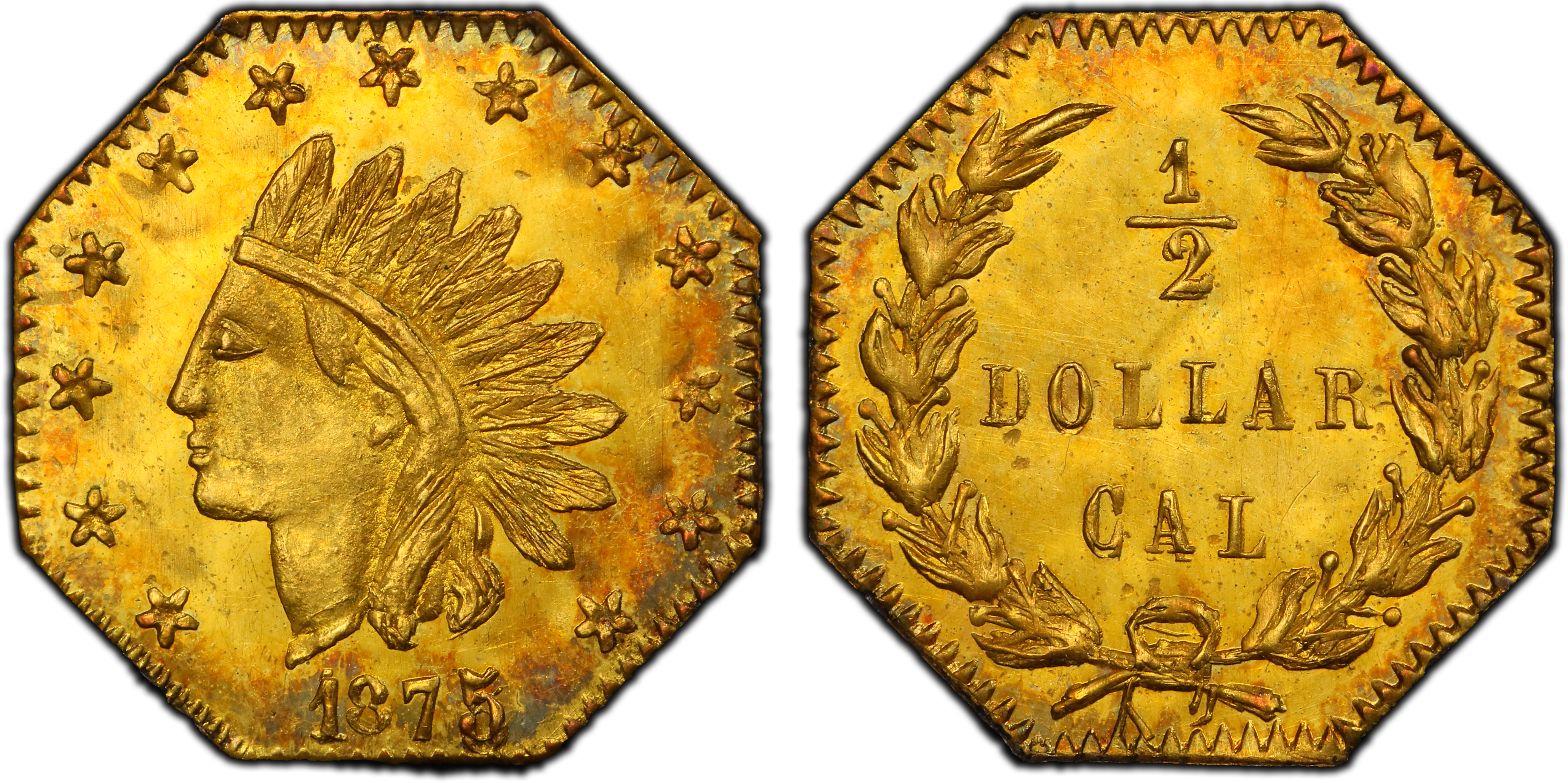
Obverse & Reverse
The 1875 G50C BG-934 is a quintessential example from the second period of California Fractional Gold production (1859-1882). Unlike the initial issues of the early 1850s, which were struck out of genuine commercial necessity to alleviate a severe shortage of small change during the Gold Rush, these later pieces served a different purpose. By the mid-1870s, the San Francisco Mint was in full operation, and the acute need for privately minted coinage had subsided. However, the romance and allure of the Gold Rush had captured the nation's imagination. Jewelers and private minters in San Francisco recognized a burgeoning market for gold souvenirs. These small, affordable gold pieces became popular keepsakes for tourists and tangible mementos that could be easily mailed to friends and family back East. These 'jeweler's issues,' as they are often called, were not intended to circulate as money in the same way the earlier Period One coins were. Their gold content was substantially less than their face value, making them essentially tokens. The minters, often French jewelers who had immigrated to California, produced a wide variety of designs, with the Indian Head motif being particularly popular, tapping into the romanticized imagery of the American West. The production method was typically crude, often employing a hammer-striking process where dies were struck by hand. This resulted in coins of varying strike quality, with some being sharply detailed while others are weak in areas. The Coinage Act of 1864 had made private coinage illegal, but the law was not strictly enforced against these small souvenir pieces until 1883, allowing for their continued production. Today, these pieces are not just collectibles but historical artifacts that represent the transition of the California gold phenomenon from a mad rush for wealth into a celebrated chapter of American history.
Associated EventPost-Gold Rush California Tourism
Reason For MintingPrimarily produced as souvenirs and jewelry items for a growing tourist trade, rather than for circulation.
Minter HistoryThe specific minters of most Period Two California Fractional Gold, including BG-934, are unknown. They were generally produced by various jewelers and artisans located in San Francisco who capitalized on the demand for gold souvenirs. Prominent names associated with the broader period, though not definitively with this specific variety, include Deriberpe & Nouizillet (D.N.) and Frontier & Deviercy (F.D.). These craftsmen used their skills to create attractive, miniature coin-like objects for a market that valued novelty and a connection to the Gold Rush legend.
Historical SignificanceThis coin is significant as it represents the commercial evolution of the California Gold Rush narrative. It marks the shift from creating private currency out of necessity to producing souvenir tokens that mythologized the era. Its existence highlights the sustained national fascination with California's gold and the entrepreneurial spirit of the artisans who met the demand for affordable keepsakes.
N/A
Denomination50 Cents
Minting Period1875
Assayer/MinterUnknown, likely various San Francisco jewelers
Geographic OriginSan Francisco, California
Obverse DescriptionA right-facing female head, often referred to as an 'Indian Head' or 'Indian Princess' design, though stylistically it resembles a Greco-Roman figure wearing a feathered headdress. The head is surrounded by 13 stars, representing the original colonies.
Obverse Inscription Reverse DescriptionThe denomination '1/2' is enclosed within a wreath of leaves and berries. Below the wreath, the word 'DOL.' or an abbreviation thereof is typically present. The design is simple and functional.
Reverse Inscription1/2 DOL.
CompositionGold
Stated FinenessNot stated on the coin.
Actual FinenessVaries, but generally ranges from 14 to 22 karats. The bullion value was intentionally less than the face value.
Weight0.25 grams
Diameter10.50 mm
EdgePlain
Unknown
Survival Estimate76-150 (Per Breen-Gillio)
Rarity ScaleR-4
The BG-934 is popular due to its classic Indian Head design, octagonal shape, and its direct connection to the romantic era of the American West. As a 'Period Two' issue, it is more affordable than the earlier, circulation-focused pieces, making it an accessible entry point into the fascinating world of California Fractional Gold.
Key VarietiesThe primary variety is the regular business strike. No proof or special collector issues are known from the original minting period. Modern replicas and fantasy pieces exist in abundance, often gold-plated and nearly worthless; genuine pieces are cataloged by their Breen-Gillio (BG) number. Collectors should focus on certified examples from reputable grading services like PCGS or NGC to ensure authenticity.
Authentication TipsAuthentic pieces have a characteristic fabric and strike that differs from modern copies. Look for sharp, albeit sometimes uneven, details consistent with hand-striking. Counterfeits often have a mushy or cast-like appearance, incorrect weight, or soapy luster. Many souvenir tokens made after 1882 were backdated, and fantasy pieces often feature a bear on the reverse—a telltale sign it is not a genuine fractional gold piece. Comparing a potential purchase to high-resolution images of certified examples is essential. The standard reference is Walter Breen and Ronald Gillio's 'California Pioneer Fractional Gold'.
Shopping ConsiderationsA premium quality example for its grade will exhibit a sharp strike, especially on the high points of the headdress feathers and the details within the wreath. Original, lustrous surfaces are highly desirable and command a significant premium; many surviving examples have been cleaned or used as jewelry. Look for coins with a pleasing, original reddish-gold or yellow-gold patina. Avoid pieces with scratches, rim bumps, or evidence of having been mounted in jewelry. Because they were often struck with inconsistent force, a coin that is well-struck on both the obverse and reverse is particularly sought after.
A coin's grade is its condition, rated on a 1-70 scale. For rare coins, this is the most critical factor in determining value, as a tiny difference in preservation can mean a huge difference in price.
Relevant Grade TypesAll original 1875 G50C BG-934 coins were business strikes intended for the souvenir market, not for general circulation. They are found in both Circulated (1-58) and Mint State (MS, 60-70) grades. Due to their nature as keepsakes, many survive in higher grades. No Proofs (PR/PF) were struck during the original period of issue, and there are no known official later-date restrikes.
Mint State CharacteristicsUncirculated examples of BG-934 often display a slightly reflective or prooflike surface from polished dies, a common characteristic of jeweler's issues. Luster is typically bright and flashy. Strike quality is a key determinant of grade; many are weakly struck on the stars or the wreath. A well-struck piece with full details will be designated as such and is more valuable. Due to the softness of the gold and the minting process, even Mint State examples may show minor planchet flaws or handling marks.
Circulated Wear PatternsWear first appears on the highest points of the design: the cheek and the feathers of the headdress on the obverse. On the reverse, the high points of the wreath's leaves and the numbers of the fraction '1/2' will show the first signs of friction. On lower-grade examples, the stars and lettering become soft and can merge with the fields.
Key Factors For ValueThe primary drivers of value are grade and surface preservation. An example with original, undisturbed luster and minimal contact marks is far more valuable than a cleaned or polished one of the same grade. Eye appeal is paramount; coins with a sharp strike and attractive, original color command significant premiums. Certification by a top-tier service (PCGS or NGC) is crucial for authenticity and market acceptance. A CAC sticker for this issue indicates superior quality for the grade and will add a further premium.
PCGS Price Guide
| Grade | Price | Population |
|---|---|---|
| 50 | $225.00 | 2 |
| 50+ | $230.00 | N/A |
| 53 | $245.00 | 1 |
| 53+ | $250.00 | N/A |
| 55 | $265.00 | 6 |
| 55+ | $270.00 | N/A |
| 58 | $280.00 | 10 |
| 58+ | $295.00 | N/A |
| 60 | $325.00 | 1 |
| 61 | $375.00 | 7 |
| 62 | $450.00 | 20 |
| 62+ | $485.00 | N/A |
| 63 | $575.00 | 18 |
| 63+ | $650.00 | 1 |
| 64 | $750.00 | 10 |
| 64+ | $900.00 | N/A |
| 65 | $1,750.00 | 2 |