1878/6 G25C BG-883, PL (Regular Strike)
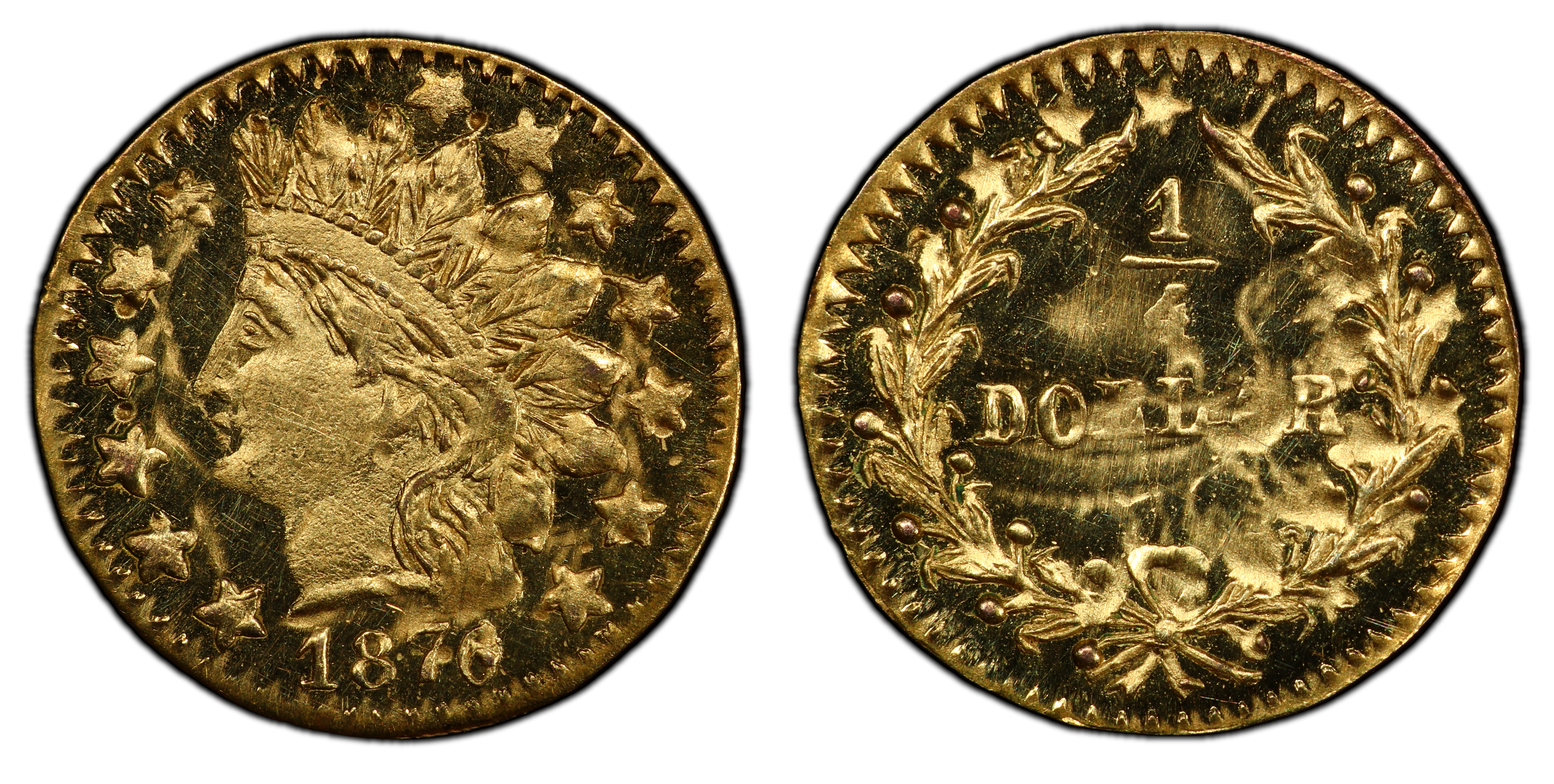
Obverse & Reverse
The 1878/6 G25C BG-883 is a product of the second major phase of California Fractional Gold production, often termed 'Period Two' by numismatists (roughly 1858-1882). Unlike the 'Period One' issues which were struck out of a genuine necessity for small change during the initial chaos of the Gold Rush, the Period Two pieces were created in a different economic climate. By the 1870s, the United States Mint in San Francisco was in full operation, and the acute shortage of circulating small-denomination coinage had largely subsided. The impetus for creating these tiny gold pieces had shifted from commerce to souvenir and novelty sales. Jewelers and private minters in San Francisco recognized a burgeoning market in tourism and the romantic allure of the Gold Rush. They produced these small, denominated gold pieces as keepsakes that visitors and locals alike could purchase and send to relatives in the East, tangible mementos of California's fabled goldfields. These later issues were often underweight and made from a lower fineness of gold compared to their Period One predecessors, functioning more as tokens than true circulating coins. The use of an overdated die (an 1876 die repunched to read 1878) for the BG-883 is typical of the cost-saving and expedient measures used by these private manufacturers. They were not held to federal mint standards and often used dies until they were completely worn out, sometimes altering them to create new 'dated' issues. The Coinage Act of 1864 had made private coinage illegal, but the law was not strictly enforced against these small souvenir pieces until 1883, allowing for a vibrant period of production that catered to nostalgia and the tourist trade, a legacy captured in the BG-883.
Associated EventPost-Gold Rush California Tourism
Reason For MintingPrimarily created to be sold as souvenirs and keepsakes, capitalizing on the romanticism of the California Gold Rush for the tourist trade.
Minter HistoryThe specific minters of most Period Two California Fractionals, including BG-883, are unknown. They were generally produced by various San Francisco jewelers and artisans who had the equipment and skill to strike small gold pieces. These operations were typically small-scale and did not brand their work with identifiable mintmarks, unlike some of the larger private minters of the 1850s. Their business model was based on creating affordable, attractive gold novelties rather than establishing a reputation as a formal mint.
Historical SignificanceThe BG-883 is significant not as a circulating coin but as a numismatic artifact representing the commercialization of the Gold Rush legend. It marks the transition of fractional gold from a necessary medium of exchange to a nostalgic souvenir, reflecting California's evolving economy and its burgeoning identity as a tourist destination. The overdate feature also provides a tangible lesson in the minting practices of small, private enterprises of the era.
N/A
Denomination25 Cents (G25C)
Minting Period1878 (using an altered 1876 die)
Assayer/MinterUnknown private minter, often attributed to jewelers in San Francisco.
Geographic OriginSan Francisco, California
Obverse DescriptionA right-facing bust of a female figure representing Liberty, wearing a Native American-style feathered headdress. The portrait is somewhat crude in execution, typical of jeweler's issues. Thirteen stars encircle the portrait along the rim.
Obverse InscriptionNo textual inscription; features a Liberty/Indian Head portrait and 13 stars.
Reverse DescriptionA simple wreath composed of two branches tied with a ribbon at the bottom. The denomination '25' and 'CENTS' are in the center, and the date '1878/6' is positioned below the wreath. The overdate is visible as a clear remnant of the digit '6' underneath the final '8' of the date.
Reverse Inscription25 CENTS 1878
CompositionGold
Stated FinenessNot explicitly stated on the coin.
Actual FinenessTypically varies, but generally lower than federal standards, often in the 14 to 20 karat range.
Weight0.25 grams
Diameter9.70 mm
EdgePlain
Unknown; likely a few thousand pieces.
Survival Estimate300-500
Rarity ScaleR-4+
This variety appeals to collectors for several reasons: it is an affordable entry point into the California Fractional Gold series, it features a clear and dramatic 1878/6 overdate, and it tells the story of the post-Gold Rush souvenir market. The availability of high-grade, Prooflike (PL) examples adds to its desirability for type collectors.
Key VarietiesThe primary variety is the BG-883 regular strike. A distinct and sought-after sub-variety is the BG-883 designated as Prooflike (PL) by grading services, struck from freshly polished dies, resulting in mirrored fields. There are no known official restrikes or patterns, but collectors must be aware of a vast number of contemporary and modern replica/token issues that are not considered genuine denominated fractionals.
Authentication TipsGenuine BG-883 pieces have specific die characteristics. Check for the precise location and shape of the underlying '6' in the overdate. The strike is often weak in areas, particularly on the stars and wreath details, which can look 'soft' compared to the sharp, tool-marked look of many modern fakes. Genuine pieces are struck in gold, not gold-plated base metal; fakes with a visible copper core are common. The standard reference, 'California Pioneer Fractional Gold' by Breen and Gillio, is essential for die diagnostics. Certification by a major grading service (PCGS or NGC) is highly recommended.
Shopping ConsiderationsA premium quality example for this variety, especially one with a PL designation, will exhibit deeply mirrored fields with significant reflective flash. Look for a sharp strike on the central digits '25' and the overdate. Weakness on the peripheral stars and wreath is common and acceptable, but a strong central strike is key. Original, uninterrupted luster is paramount. Avoid examples that have been cleaned, whizzed, or polished, as this destroys the delicate original surfaces and significantly lowers the value. Small, unobtrusive planchet flaws or 'craters' from an imperfect strike are common and part of the coin's character, but large, distracting marks or scratches should be avoided.
A coin's grade is its condition, rated on a 1-70 scale. For rare coins, this is the most critical factor in determining value, as a tiny difference in preservation can mean a huge difference in price.
Relevant Grade TypesOriginal period issues like the BG-883 were business strikes, although many were sold as souvenirs and never circulated. They are found in Circulated grades (About Good-3 to About Uncirculated-58) and, more commonly, in Mint State grades (MS-60 to MS-70). No true Proofs were struck during the original period of issue. However, because freshly polished dies were used to create flashy, eye-catching souvenirs, many examples exist with reflective surfaces and are designated 'Prooflike' (PL) by grading services. These PL coins are a subset of business strikes and are not a separate issue type like a true Proof coin.
Mint State CharacteristicsAn uncirculated BG-883 is defined by its luster. Base-level Mint State coins may have somewhat subdued luster, but higher-grade examples, particularly those designated PL, will have flashy, mirrored fields. The strike is a key differentiator; many are softly struck, so a coin with sharp details on the headdress feathers and the wreath's leaves commands a premium. Due to the way they were made and handled, even high-grade specimens often have minor planchet irregularities or small, scattered contact marks.
Circulated Wear PatternsFor circulated examples, wear first appears on the high points of the design. On the obverse, check the cheek of the Indian Head and the highest feathers in the headdress. On the reverse, the highest points of the wreath's leaves and the bow of the ribbon will show the first signs of friction and flattening. In lower grades (VF and below), the finer details of the feathers and leaves will merge, and the stars will begin to lose their definition.
Key Factors For ValueFor the BG-883, the most significant value drivers are grade, surface quality, and the Prooflike designation. A high-grade (MS-64 or better) PL example is worth substantially more than a regular MS-62. Originality of the surfaces is crucial; coins with a natural, 'greasy' gold luster are highly prized over those that have been cleaned or stripped. The clarity and boldness of the 8/6 overdate can also add a small premium. Eye appeal, which combines luster, strike, and surface preservation, is paramount. A CAC sticker on a certified coin indicates premium quality for the grade and will result in a significant price premium in the market.
PCGS Price Guide
| Grade | Price | Population |
|---|---|---|
| 62 | N/A | N/A |
| 65 | $1,350.00 | 1 |
| 66 | N/A | N/A |