1873 G50C BG-1032 (Regular Strike)
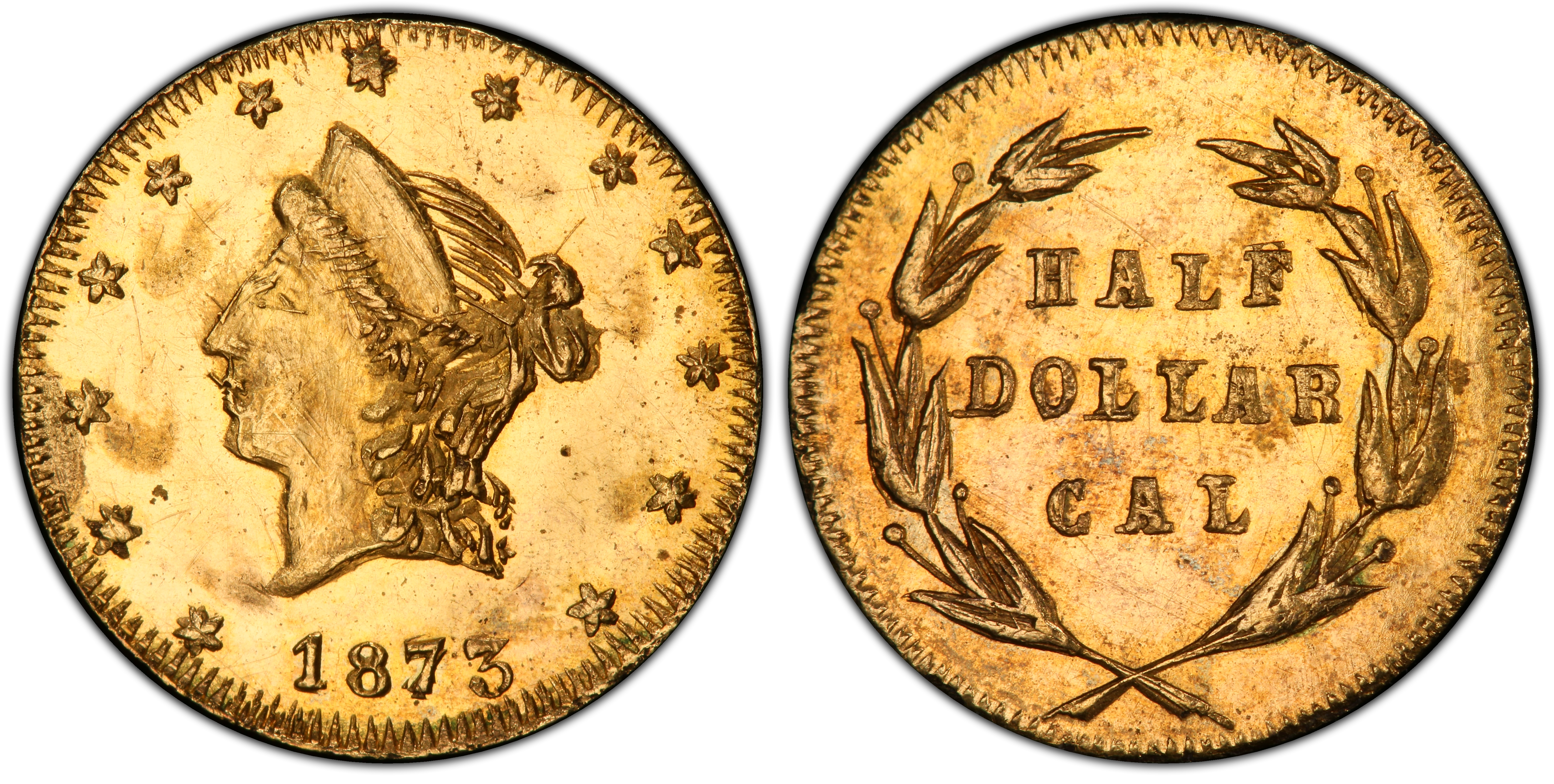
Obverse & Reverse
The 1873 G50C BG-1032 is a product of the second period of California Fractional Gold production (1859-1882), a fascinating and complex era in American numismatics. Unlike the 'Period One' (1852-1856) issues struck out of commercial necessity to alleviate a dire shortage of small change during the initial Gold Rush, these later 'jeweler's issues' served a different purpose. By the 1870s, the San Francisco Mint was in full operation, and the acute need for private coinage had subsided. The economic landscape of California had matured, and San Francisco was transforming into a major metropolis and a tourist destination. Enterprising jewelers and minting firms, such as Robert B. Gray & Co. and the Levison Brothers (operating as the California Jewelry Co.), recognized a burgeoning market for gold souvenirs. These tiny gold coins became popular keepsakes for tourists, charms for jewelry, and novelties for collectors back East and even in Europe. The BG-1032 was struck within this context. While denominated as 50 cents, its intrinsic gold value was typically much lower, a common characteristic of Period Two issues that was of little concern to buyers seeking a memento of the Golden State. These pieces were often produced with less care than their circulating predecessors, using hand-operated presses, leading to frequent weak strikes and die imperfections. The Coinage Act of 1864 had technically outlawed private coinage, but enforcement by the Secret Service was lax until a crackdown in 1883 finally halted production. This legal gray area allowed dozens of different jewelers to produce a multitude of varieties, creating the rich and challenging collecting field cataloged by Walter Breen and Ronald Gillio. The BG-1032 variety represents one of these many small, privately struck issues intended not for the gold fields, but for the burgeoning souvenir trade of a post-Gold Rush California.
Associated EventPost-Gold Rush California Commerce and Tourism
Reason For MintingPrimarily struck to be sold as souvenirs, jewelry charms, and curiosities rather than to circulate as money.
Minter HistoryThe specific minter for BG-1032 is not definitively known, a common trait for many Period Two varieties. Production was decentralized among various San Francisco jewelers who often operated anonymously or with simple initials. Prominent makers of fractional gold during this period included Robert B. Gray & Co. and the California Jewelry Co. (Levison Brothers), but attributing this specific die marriage to a known firm is not possible with current research.
Historical SignificanceThis coin is a tangible artifact of the transition of California from a raw frontier society to a more established and romanticized tourist destination. It represents the commercial ingenuity of private entrepreneurs who adapted a product—the gold coin—from a tool of necessity to an object of sentiment and memorabilia, capitalizing on the enduring allure of the Gold Rush.
BG-1032
Denomination50 Cents
Minting Period1873
Assayer/MinterUnknown Jeweler
Geographic OriginSan Francisco, California
Obverse DescriptionLiberty Head facing left, coronet inscribed with 'LIBERTY'. Surrounded by thirteen stars representing the original colonies. The date '1873' is below the bust. Specific die characteristics and star placement for BG-1032 are not widely documented.
Obverse InscriptionLIBERTY 1873
Reverse DescriptionA wreath encircles the denomination. The specific wreath style (number of leaves, berries, bow type) for BG-1032 is a key diagnostic but detailed information is not readily available in public references.
Reverse Inscription1/2 DOLLAR CAL.
CompositionGold
Stated Fineness Actual FinenessVariable, but often lower than Period One issues, sometimes as low as 14-20 Karat.
Weight0.25 grams
Diameter10.00 mm
EdgePlain
Unknown
Survival EstimateVery Low; Likely 31-75 known
Rarity ScaleR-5 (Very Scarce)
Sought after by specialists in the extensive California Fractional Gold series. Its appeal lies in its 1873 date, connection to San Francisco's jeweler-minters, and the challenge of acquiring a specific, scarce Breen-Gillio variety. The tiny size and Gold Rush association make it a perennially popular collecting area.
Key VarietiesThis is a specific die-marriage variety (BG-1032). There are no known major variations or special collector issues like restrikes for this particular variety. The broader 1873 G50C series includes multiple BG numbers, each defined by different dies and subtle design elements.
Authentication TipsAuthentic Period Two pieces should have a denomination (e.g., 'DOLLAR'). Replicas often say 'CALIFORNIA GOLD' without a specific value or may feature a bear on the reverse, a design never used on genuine 19th-century issues. Look for characteristics of manual striking, such as slight die misalignments or softness in certain areas. The fabric of the coin should exhibit the distinctive luster of gold, not the brassy look of plated fakes. The lettering style and Liberty head details must be compared to known genuine examples, as fakes are often crude. Third-party authentication is highly recommended.
Shopping ConsiderationsFor a Period Two issue like this, a 'premium quality' example is defined by a sharp strike, especially on Liberty's coronet, the stars, and the wreath on the reverse. Many were weakly struck, so well-defined pieces command a significant premium. Seek out examples with clean, original surfaces that have not been harshly cleaned, polished, or used in jewelry. A soft, satiny luster is desirable. Avoid coins that are bent, holed, or show evidence of solder, as many were mounted as charms. Eye appeal is paramount; coins with a pleasing, uniform color and minimal distracting marks are most desirable.
A coin's grade is its condition, rated on a 1-70 scale. For rare coins, this is the most critical factor in determining value, as a tiny difference in preservation can mean a huge difference in price.
Relevant Grade TypesOriginal issues were business strikes, though not intended for widespread circulation. They are found in Circulated (1-58) and, more commonly, Mint State (MS, 60-70) grades, as many were preserved as souvenirs. No true Proofs were struck during the original period of issue. The term 'Prooflike' (PL) may be applied to business strikes that exhibit mirror-like surfaces from polished dies, and these are highly prized.
Mint State CharacteristicsUncirculated examples of this type often exhibit a soft, satiny luster rather than a deeply frosty one. Strike quality is a major factor; many are softly struck, particularly in the center of the obverse and on the wreath details. Planchet quality can be irregular, sometimes showing file marks or striations from the preparation of the gold stock. Due to their handling as souvenirs, even high-grade uncirculated coins can have small ticks and contact marks.
Circulated Wear PatternsOn circulated examples, wear first appears on the high points of Liberty's hair, cheek, and coronet. On the reverse, the highest points of the wreath leaves and the bow will show flattening. In lower grades (VF and below), the stars on the obverse and the letters in the inscriptions will begin to merge with the fields.
Key Factors For ValueThe primary value drivers for BG-1032 are grade and surface quality. A sharp, well-struck example in a high Mint State grade (e.g., MS-63 or higher) is far more valuable than a typical, softly struck MS-61. Original, uncleaned surfaces with attractive luster command strong premiums. Any history of being mounted in jewelry will drastically reduce the value. For this series, certification by PCGS or NGC, which includes the BG attribution number, is standard and essential for market acceptance. A CAC sticker for this issue indicates superior quality for the grade and adds a significant premium.
PCGS Price Guide
| Grade | Price | Population |
|---|---|---|
| 55 | $3,000.00 | 1 |
| 55+ | $3,250.00 | N/A |
| 58 | $3,750.00 | N/A |
| 58+ | $4,000.00 | N/A |
| 60 | $5,000.00 | N/A |
| 61 | $5,500.00 | 2 |
| 62 | $6,500.00 | 1 |
| 62+ | $6,750.00 | N/A |
| 63 | $7,000.00 | 1 |