1872 G50C BG-913 (Regular Strike)
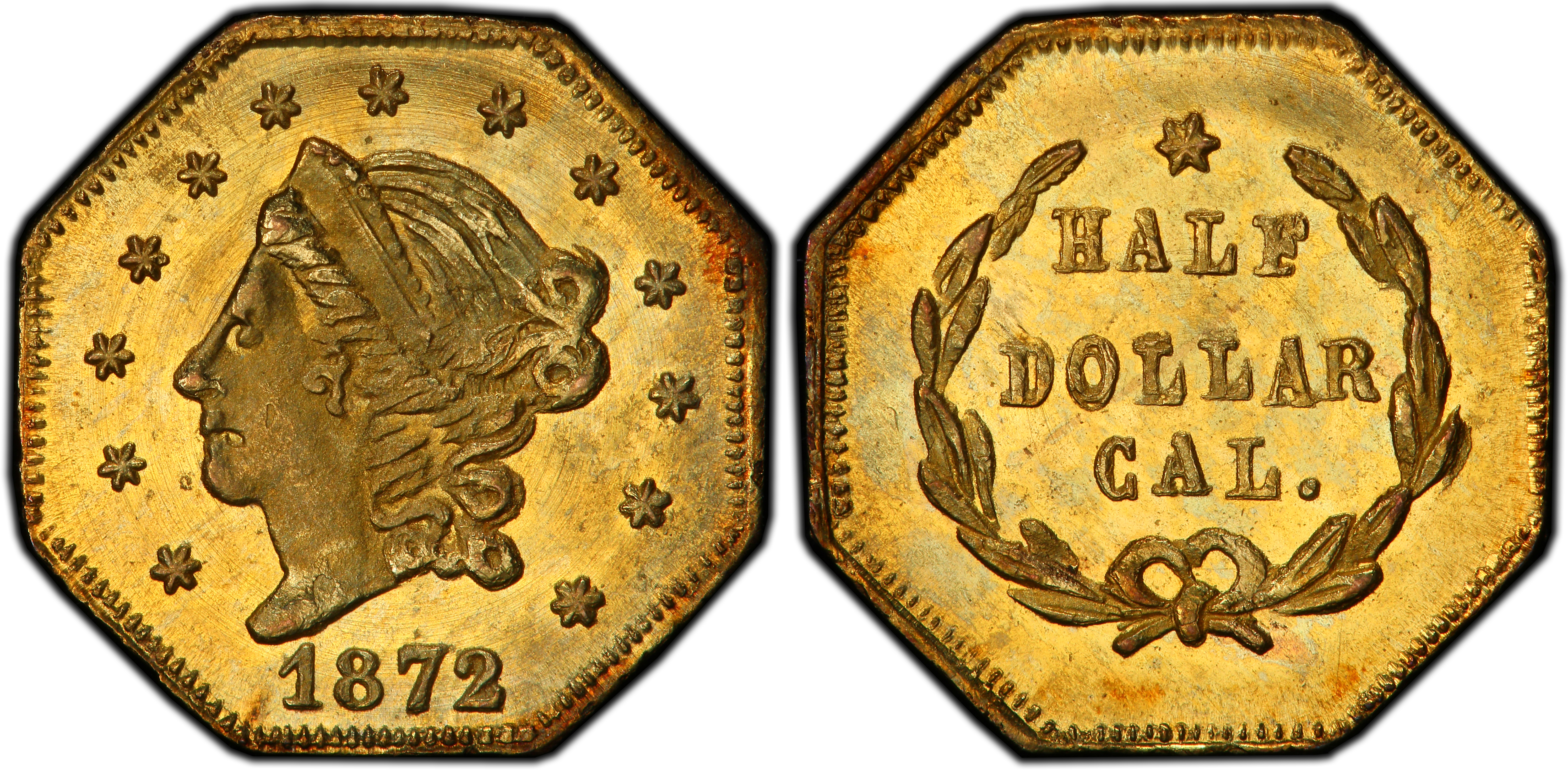
Obverse & Reverse
The 1872 BG-913 50 Cent piece is a quintessential example of a 'Period Two' California Fractional Gold coin. The history of these fascinating miniatures begins with the California Gold Rush. The initial influx of over 300,000 people created a vibrant, cash-intensive economy that was severely hampered by a chronic shortage of small-denomination coinage. In the early 1850s, 'Period One' fractional gold pieces were struck by private jewelers to genuinely fill this commercial void, representing a tangible solution to the problem of making change when a pinch of gold dust was the smallest unit of commerce. However, by the 1860s and 1870s, the economic landscape had changed. The San Francisco Mint, opened in 1854, was in full production, and federal coinage had become more plentiful. The need that birthed the first fractional gold had largely evaporated. The pieces struck from 1859-1882, classified as 'Period Two' issues, were created for a different reason: nostalgia and tourism. San Francisco had transformed from a chaotic boomtown into a major American city and a tourist destination. These later fractional gold pieces were manufactured primarily as souvenirs and keepsakes, mementos of the romanticized Gold Rush era. They were often underweight and of lower fineness compared to their Period One predecessors, not truly intended to pass as currency at face value. The Coinage Act of 1864 had made private coinage illegal, but lax enforcement allowed jewelers to continue production until a Secret Service crackdown in the early 1880s. The BG-913 was born in this souvenir era and is numismatically attributed to the California Jewelry Company, a firm run by the Levison Brothers, who had acquired the fractional gold interests of Robert B. Gray & Co. in 1871. These pieces represent a fascinating economic and cultural transition, from utilitarian necessity to commercialized nostalgia, capturing the enduring mythology of the California Gold Rush.
Associated EventPost-Gold Rush Economic Expansion & Tourism
Reason For MintingPrimarily struck as a souvenir or keepsake for the tourist trade, capitalizing on the romanticism of the earlier Gold Rush era.
Minter HistoryThe Levison Brothers founded their firm in 1859 and by 1871 operated the California Jewelry Company at 134 Sutter Street, San Francisco. It was a major enterprise, manufacturing and importing watches, diamonds, and fine jewelry. They entered the fractional gold business in 1871 by acquiring the coining operations of Robert B. Gray & Co., a jeweler who had been producing such pieces since circa 1859. The pieces produced by the California Jewelry Co. are typically well-made for the era, reflecting their professional manufacturing capabilities, though they were still part of the souvenir trade rather than intended for circulation.
Historical SignificanceThe BG-913 is significant not as a circulating coin, but as a tangible artifact of California's evolving identity in the late 19th century. It marks the shift from the raw necessity of the Gold Rush to a period of reflection and commercialization of that history. It represents the birth of California tourism and the marketing of the 'Golden State' narrative that continues to this day.
N/A
Denomination50 Cents
Minting Period1872
Assayer/MinterCalifornia Jewelry Company (Levison Brothers)
Geographic OriginSan Francisco, California
Obverse DescriptionA small head of Liberty facing left, her hair tied in a bun. She wears a coronet or diadem, but it is typically devoid of the inscription 'LIBERTY'. The portrait is encircled by 13 five-pointed stars, representing the original colonies.
Obverse Inscription Reverse DescriptionThe denomination '1/2' appears in the center, surrounded by a delicate wreath of leaves and berries. The date '1872' is positioned below the wreath, inside the octagonal border.
Reverse Inscription1/2
CompositionGold
Stated Fineness Actual FinenessVariable, often between .500 and .750 fine, as was common for Period Two issues.
EdgePlain
Unknown; mintage records for private issues were not kept.
Survival Estimate76-200 pieces
Rarity ScaleR-4
The BG-913 is popular with collectors due to its classic Liberty Head design, attractive octagonal shape, and its affordability relative to the rarer Period One issues. It serves as an excellent and historically rich example of the later souvenir phase of this unique private coinage series.
Key VarietiesThe BG-913 itself is a specific die marriage and does not have major recognized varieties from the period of issue. There are no known official patterns, trial pieces, or restrikes for this specific variety. The primary variations in the broader series relate to different die pairings (obverse and reverse designs) which are assigned unique Breen-Gillio (BG) numbers.
Authentication TipsGenuine examples are very small and thin. Counterfeits are often thicker, have a soapy or cast-like texture, and may exhibit incorrect design details, such as poorly formed stars or mushy wreath elements. The strike on genuine pieces can be uneven, but the details, where struck up, should be sharp. A key diagnostic is the precise arrangement and shape of the stars and wreath leaves, which should be compared against high-quality images of certified examples. Many fakes are merely gold-plated base metal.
Shopping ConsiderationsA premium quality BG-913 will exhibit a sharp, well-centered strike, particularly on the high points of Liberty's hair and the leaves of the reverse wreath. Seek out examples with bright, original mint luster, which can range from satiny to semi-prooflike. Original, uncleaned surfaces are paramount; many of these tiny coins were harshly cleaned or used as jewelry, leaving behind hairlines, polishing marks, or solder residue. Toning is not common, but a pleasing original reddish-gold 'skin' is highly desirable. Avoid pieces with significant planchet flaws, major distracting marks, or evidence of tooling or repairs.
A coin's grade is its condition, rated on a 1-70 scale. For rare coins, this is the most critical factor in determining value, as a tiny difference in preservation can mean a huge difference in price.
Relevant Grade TypesOriginal 1872 issues were business strikes, though they were sold as souvenirs and not intended for circulation. They are found in both Circulated (1-58) and, more commonly, Mint State (MS, 60-70) grades. No true Proofs of this variety were struck during the period of issue, and there are no known later-date Proof restrikes. Any piece described as 'Prooflike' (PL) is a business strike with exceptionally reflective surfaces from polished dies.
Mint State CharacteristicsIn Mint State, quality is defined by the sharpness of the strike and the quality of the luster. These were often struck with inconsistent pressure, so a fully struck example with complete details in Liberty's hair and the wreath is rare and desirable. The luster is typically bright and satiny. Due to their small size and handling as souvenirs, even high-grade uncirculated pieces often show minor contact marks or 'ticks.' A clean, mark-free surface commands a significant premium.
Circulated Wear PatternsThough not meant for heavy circulation, wear on circulated examples first appears on the highest points: Liberty's cheek, the hair above her eye and ear, and the knot of the bow on the reverse wreath. As wear progresses, the stars will begin to lose their sharp points and the finest details of the wreath leaves will merge. In lower grades, the date and denomination become faint.
Key Factors For ValueThe primary value drivers for an 1872 BG-913 are grade and surface quality. An uncirculated coin with brilliant, original luster is worth multiples of a circulated or cleaned example. Strike quality is the next key factor; a sharp strike can make a coin far more appealing than a weakly struck example of the same grade. Eye appeal is crucial; coins that are clean, lustrous, and well-struck will always be in the highest demand. Certification by a top-tier service like PCGS or NGC is essential for authenticity and liquidity, and a CAC sticker indicates premium quality for the grade, adding a further price premium.
PCGS Price Guide
| Grade | Price | Population |
|---|---|---|
| 53 | $265.00 | 1 |
| 53+ | $270.00 | N/A |
| 55 | $280.00 | 2 |
| 55+ | $285.00 | N/A |
| 58 | $300.00 | 3 |
| 58+ | $310.00 | N/A |
| 60 | $350.00 | N/A |
| 61 | $375.00 | 3 |
| 62 | $450.00 | 12 |
| 62+ | $470.00 | N/A |
| 63 | $550.00 | 16 |
| 63+ | $590.00 | N/A |
| 64 | $650.00 | 21 |
| 64+ | $775.00 | N/A |
| 65 | $900.00 | 17 |
| 65+ | $1,050.00 | N/A |
| 66 | $1,550.00 | 6 |
| 66+ | $2,000.00 | N/A |
| 67 | $2,850.00 | 1 |