1870 G50C BG-1022 (Regular Strike)
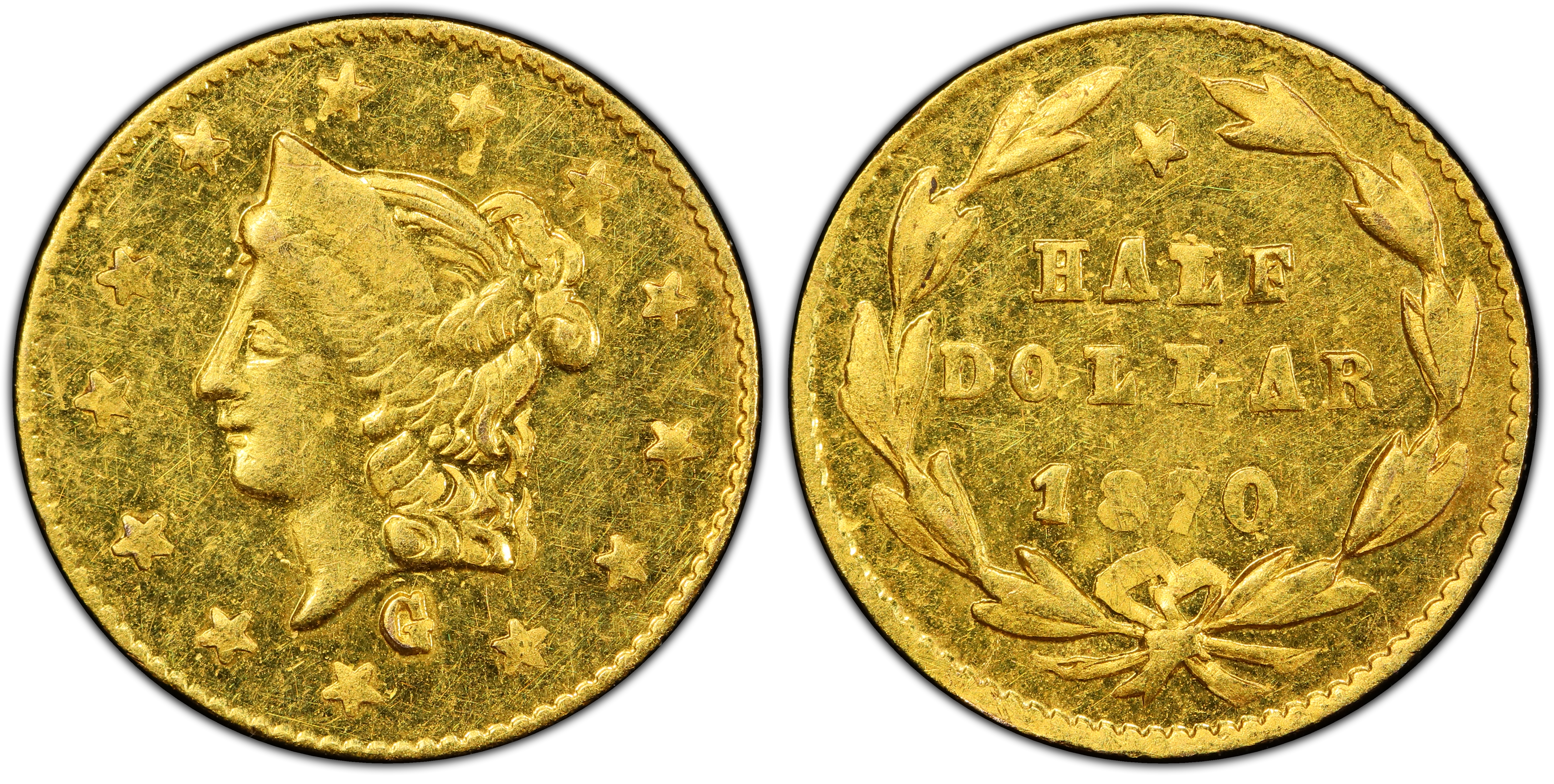
Obverse & Reverse
The 1870 G50C BG-1022 is a product of the second period of California Fractional Gold production (1859-1882), an era distinct from the initial fever-pitch of the Gold Rush. After the U.S. Mint in San Francisco began full-scale operations in 1854, the acute shortage of small change that prompted the first 'Period One' fractional gold pieces was largely alleviated. Consequently, the impetus for creating these tiny gold coins shifted. The 'Period Two' issues, including this 1870 piece by Robert B. Gray & Co., were primarily struck to satisfy the burgeoning jewelry trade and the souvenir market. San Francisco was becoming a major tourist destination, and romanticized relics of the Gold Rush were highly popular. These small gold pieces, often backdated or with dates from their year of issue, were incorporated into rings, pins, and watch fobs. Robert B. Gray, a jeweler, was a prolific producer during this time, and the 'G' mintmark on this coin signifies his firm's work. Unlike their Period One predecessors which were intended to and did circulate, these later issues were lighter, often of lower fineness than their stated value would imply, and were essentially novelty items. They were produced legally until the Coinage Act of 1864 made private coinage illegal, but the law was not strictly enforced against these small souvenir pieces until the early 1880s, allowing men like Gray to continue their manufacture. The BG-1022 variety is a tangible link to this later, more commercialized phase of the Gold Rush legacy, representing a transition from utilitarian necessity to nostalgic memorabilia.
Associated EventPost-Gold Rush Economic Expansion
Reason For MintingPrimarily produced to be used in jewelry and sold as souvenirs of the California Gold Rush to tourists and locals.
Minter HistoryRobert B. Gray & Co. was a San Francisco-based jewelry firm active in the mid-to-late 19th century. Gray took over the business of another fractional gold minter, Antoine Nouizillet, around 1859-60. He continued to use some of Nouizillet's dies but also created his own, marked with a distinctive 'G'. The firm was a key manufacturer during the 'Period Two' of California Fractional Gold, producing pieces more for the souvenir and jewelry trade than for monetary circulation. The business was eventually sold to the California Jewelry Co. in 1871.
Historical SignificanceThis coin is significant not as a circulating medium of exchange, but as a representation of the commercialization and mythologizing of the Gold Rush. It marks a shift from privately minted coins made out of necessity to tokens created to capitalize on the region's fame, serving the jewelry and souvenir trade.
N/A
Denomination50 Cents
Minting Period1870
Assayer/MinterRobert B. Gray & Co.
Geographic OriginSan Francisco, California
Obverse DescriptionA small Liberty Head facing left, modeled after the contemporary U.S. gold dollar, surrounded by thirteen stars. The portrait details are often softly struck due to the coin's minuscule size and the nature of hammer striking.
Obverse InscriptionLIBERTY (on diadem, often illegible)
Reverse DescriptionThe denomination '50 CENTS' is enclosed within a wreath of leaves and berries. The date '1870' appears below the wreath, and the letter 'G' (for Gray) is located above the wreath.
Reverse InscriptionG 50 CENTS 1870
CompositionGold
Stated Fineness Actual FinenessVariable, often lower than coinage standard gold.
Weight0.25 grams
Diameter10.00 mm
EdgePlain
Unknown
Survival EstimateFewer than 250
Rarity ScaleR-5
The BG-1022 appeals to specialists collecting California Fractional Gold by Breen-Gillio number, as well as those interested in the history of San Francisco jewelers and the souvenir trade of the 1870s. Its tiny size and direct connection to the Gold Rush era make it a fascinating and historically rich collectible.
Key VarietiesThe primary variety is the regular business strike. No proof or special collector issues are known from the period of minting. The Breen-Gillio catalog system for California Fractional Gold is built upon identifying minute die differences, so BG-1022 is itself a specific die variety. Collectors should be aware that countless non-denominated, gold-plated replicas and charms were made later; only genuine pieces with a denomination and attributable BG number are considered authentic period items.
Authentication TipsAuthentication is paramount. The primary reference is the Breen-Gillio work, 'California Pioneer Fractional Gold.' An unlisted variety should be viewed with extreme suspicion. Genuine pieces are very thin and were struck, not cast. Look for sharp, albeit sometimes weak, strike details. Many fakes are thicker, have mushy details, or feature a bear on the reverse (no genuine period fractionals have bears). The 'G' mintmark should be carefully compared to known genuine examples. Third-party certification by PCGS or NGC, with the BG-1022 attribution, is the safest way to purchase.
Shopping ConsiderationsA premium quality example for this issue is defined by a sharp strike, especially on Liberty's hair details and the date. Luster is a significant value driver; look for pieces with original, frosty or prooflike surfaces that have not been harshly cleaned or polished. Given their use in jewelry, check carefully for evidence of mounting, rim damage, or solder repairs, which would drastically reduce the value. Eye appeal is critical; a well-centered strike on a clean planchet will command a significant premium over a poorly centered or spotted example.
A coin's grade is its condition, rated on a 1-70 scale. For rare coins, this is the most critical factor in determining value, as a tiny difference in preservation can mean a huge difference in price.
Relevant Grade TypesOriginal period issues were business strikes, often crudely made and not intended for long-term circulation. They are found in Circulated (1-58) and Mint State (MS, 60-70) grades. Many surviving examples are in higher grades as they were often kept as souvenirs. No official Proofs (PR/PF) were struck during the original period of issue, though some specimens exhibit prooflike surfaces from being struck with polished dies.
Mint State CharacteristicsAn uncirculated BG-1022 will ideally show bright, frosty luster. However, strikes are notoriously variable. Many are weakly struck on the high points of Liberty's hair and the wreath on the reverse. A coin with a full, sharp strike is a rarity and commands a substantial premium. Small, planchet-related flaws or die cracks are common and not always considered major defects. Bag marks are less common than handling marks due to their use as keepsakes rather than circulating coins.
Circulated Wear PatternsFor circulated examples, wear first appears on the highest points: Liberty's cheek, hair details above the ear, and the leaves and bow of the wreath. On lower grade pieces, the stars on the obverse and the date on the reverse will begin to merge with the fields. Due to the softness of the gold and the coin's small size, significant wear can happen quickly.
Key Factors For ValueFor the BG-1022, the key value drivers are: 1) Surface preservation - an example with original, uncleaned surfaces and vibrant luster is paramount. 2) Strike quality - a sharply struck coin is far more desirable than a weakly detailed one. 3) Eye appeal - coins free of distracting spots, scratches, or evidence of jewelry mounting are prized. 4) Certification - a CAC sticker on a PCGS or NGC holder indicates premium quality for the grade and will add a significant premium, as it confirms the coin's quality against others of the same grade.
PCGS Price Guide
| Grade | Price | Population |
|---|---|---|
| 45 | $300.00 | 1 |
| 45+ | $310.00 | N/A |
| 50 | $325.00 | N/A |
| 50+ | $335.00 | N/A |
| 53 | $350.00 | 1 |
| 53+ | $370.00 | N/A |
| 55 | $400.00 | 1 |
| 55+ | $420.00 | N/A |
| 58 | $450.00 | 7 |
| 58+ | $500.00 | N/A |
| 60 | $600.00 | N/A |
| 61 | $675.00 | 1 |
| 62 | $850.00 | 2 |
| 62+ | $975.00 | N/A |
| 63 | $1,200.00 | 4 |
| 64 | N/A | N/A |