1871 G25C BG-860 (Regular Strike)
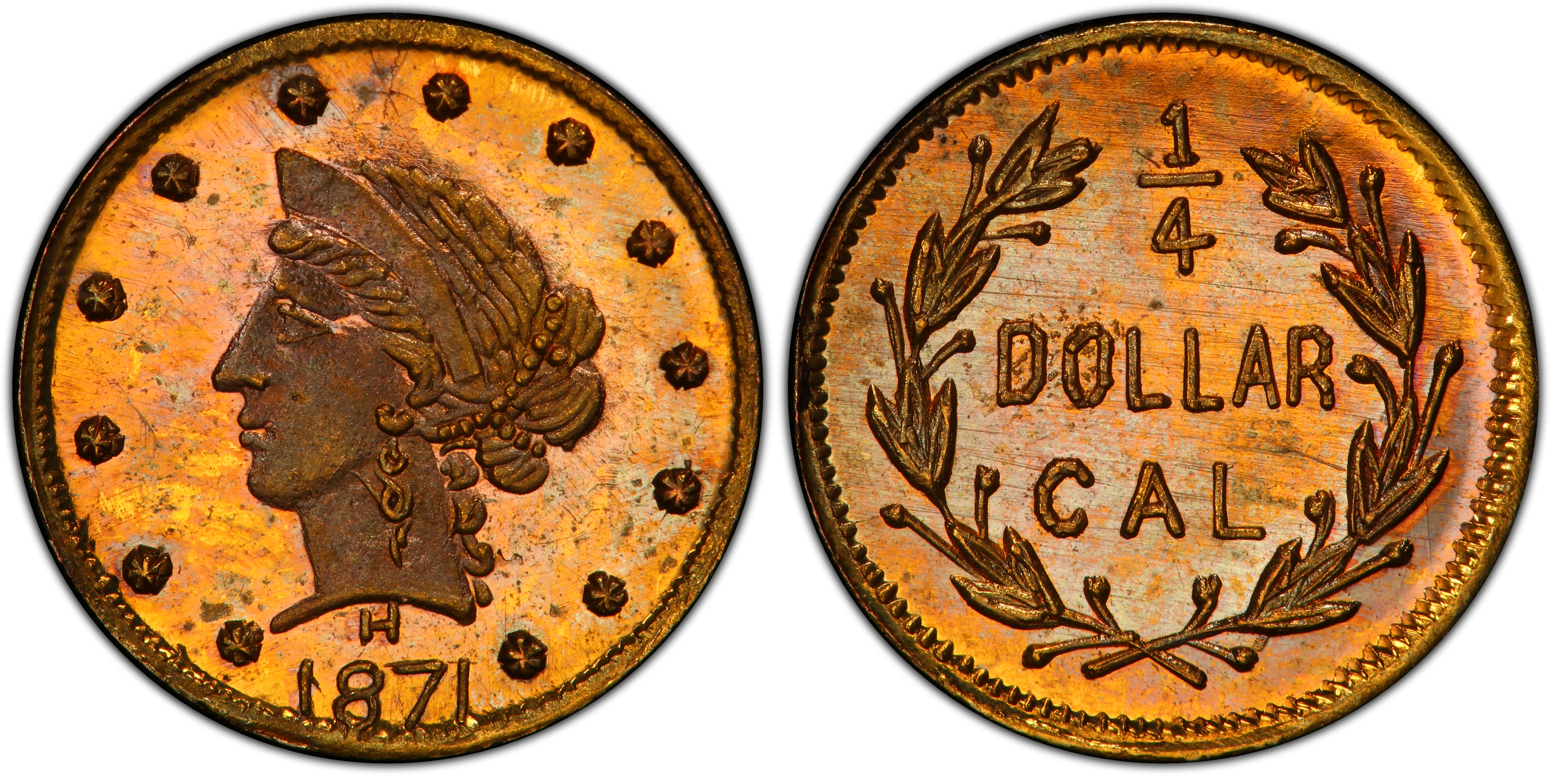
Obverse & Reverse
The 1871 G25C BG-860 is a product of the second phase of California Fractional Gold production, a fascinating and complex chapter in American numismatics. The initial period (Period One, 1852-1857) was born of necessity. The massive influx of population during the Gold Rush created a thriving economy, but the United States Mint in San Francisco, which opened in 1854, could not produce enough small denomination coinage to satisfy commercial demand. Local jewelers and metallurgists stepped into the void, striking quarter dollar, half dollar, and dollar pieces from native gold to facilitate everyday transactions. These early issues, while unofficial, were generally of good weight and served a genuine monetary purpose. By the 1860s, however, the San Francisco Mint had largely resolved the small-change crisis. The impetus for private gold coinage shifted from commerce to collectibility. This second era (Period Two, 1858-1882) saw jewelers creating these miniature gold pieces primarily as souvenirs and for use in jewelry. The 1871 BG-860 is a quintessential example of these 'jeweler's issues.' Struck by the firm of Robert B. Gray & Co. in San Francisco, it was intended for tourists and locals who wanted a memento of the Gold Rush, not for buying goods at the general store. The passage of the Private Coinage Act of 1864 had made such private issues illegal, but the law was not strictly enforced against these small, low-value tokens until the Secret Service cracked down in the early 1880s. This legal gray area allowed firms like Gray's to flourish. These Period Two pieces are often characterized by more fanciful designs and a greater variety of motifs compared to their utilitarian predecessors. Because they were sold as keepsakes, they were not subjected to the rigors of circulation, which is why a relatively high proportion of the surviving population exists in Mint State condition. The BG-860, with its classic Liberty Head design, represents a tangible link to the romantic memory of the Gold Rush, crafted decades after its peak for a new generation captivated by its lore.
Associated EventCalifornia Gold Rush (Post-Rush Souvenir Period)
Reason For MintingPrimarily struck for sale to tourists and residents as souvenirs and for use in jewelry rather than for monetary circulation.
Minter HistoryRobert B. Gray & Co. was a significant producer of 'Period Two' California Fractional Gold. Around 1859, Gray acquired the business of another prominent San Francisco jeweler and fractional gold minter, Antoine Louis Nouizillet. This purchase likely included dies, hubs, and punches, which gave Gray a significant advantage in production. Gray's own issues, sometimes bearing a 'G' hallmark (though not present on this variety), are noted in Breen and Gillio's work as being generally of higher weight and intrinsic value than many other Period Two pieces. The firm was active until 1871, the year this coin was struck, when Gray sold his interests to the California Jewelry Co. His output represents a critical transition in the fractional gold series, from functional currency to commercial keepsake.
Historical SignificanceThe BG-860 is historically significant not as a coin that financed Gold Rush commerce, but as an artifact of how the Gold Rush was remembered and commercialized. It represents the birth of a numismatic souvenir market in the American West and is a key component of the extensive and popular California Fractional Gold series.
N/A
Denomination25 Cents
Minting Period1871
Assayer/MinterRobert B. Gray & Co.
Geographic OriginSan Francisco, California
Obverse DescriptionA beaded border surrounds a right-facing portrait of a Liberty Head, similar in style to the contemporary U.S. gold coinage. Thirteen stars encircle the bust, representing the original colonies. The date '1871' is positioned below the truncation of the neck.
Obverse Inscription1871
Reverse DescriptionA beaded border surrounds a wreath composed of two branches tied with a bow at the bottom. Inside the wreath is the denomination '1/4 DOLLAR'.
Reverse Inscription1/4 DOLLAR
CompositionGold
Stated Fineness Actual FinenessVariable, typically 10k to 14k for Period Two issues, often from native California gold which contained silver.
Weight0.25 grams
Diameter10.00 mm
EdgePlain
Unknown, but very low.
Survival Estimate20-30 coins
Rarity ScaleR-6 (13-30 known)
This variety appeals to collectors due to its high rarity (R-6), its connection to the romantic lore of the California Gold Rush, and the challenge of collecting the extensive Breen-Gillio series. Its minuscule size and status as a 'jeweler's issue' make it a fascinating numismatic curiosity.
Key VarietiesThe primary variety is the regular business strike, as no proofs or special collector issues are known from the period of minting. There are no significant die varieties of BG-860 cataloged. The broader 1871 series includes issues from other jewelers, such as those marked with an 'H' for Hershfield & Mitchell, which are distinct varieties.
Authentication TipsGenuine Period Two pieces like the BG-860 must have a denomination (e.g., '1/4 DOLLAR' or '25 CENTS'). Pieces that say 'CAL GOLD' or 'CHARM' without a denomination are typically later tokens. The strike is often somewhat crude due to the hand-hammering process, so perfectly sharp, machine-made details can be a red flag. The luster should be original and not brassy, as many fakes are gold-plated base metal. Authenticate based on known die characteristics found in the Breen-Gillio reference and compare to high-resolution images of certified examples. Given the high rarity, third-party authentication is strongly recommended.
Shopping ConsiderationsA premium quality example of BG-860 will be in a high Mint State grade (MS-62 or better), as most survivors did not circulate. Look for a sharp strike, especially on Liberty's hair details and the numerals of the date. Original, undisturbed luster is paramount; avoid specimens that are cleaned, polished, or show evidence of having been mounted in jewelry (solder marks, scratches, rim damage). Eye appeal is critical; coins with a pleasing, reddish-gold original toning command significant premiums. Given the hand-made nature, some planchet roughness or minor striking flaws may be acceptable and part of the coin's character, but significant, distracting marks will lower the value.
A coin's grade is its condition, rated on a 1-70 scale. For rare coins, this is the most critical factor in determining value, as a tiny difference in preservation can mean a huge difference in price.
Relevant Grade TypesAll original BG-860 pieces are considered business strikes. As they were sold as souvenirs and not intended for commerce, they are rarely found in circulated grades (1-58). The vast majority of known examples are Mint State (MS, 60-70). No proofs were struck during the original minting period, and there are no known later-date restrikes.
Mint State CharacteristicsUncirculated examples of BG-860 often display a soft, satiny luster characteristic of privately minted gold. The strike can be uneven; it is common to see weakness on the stars or the wreath's finer details, a result of the hand-hammering process. Planchets may not be perfectly round and can exhibit minor natural imperfections. Contact marks, while possible, are less common than on circulating coinage, but any significant mark on Liberty's cheek or in the fields will detract from the grade.
Circulated Wear PatternsWhile extremely rare to find in worn condition, wear would first appear on the highest points: the hair above Liberty's eye and ear, her cheekbone, and the leaves and bow of the wreath on the reverse. In lower grades, the stars and date would begin to lose their sharpness and merge with the fields.
Key Factors For ValueFor the BG-860, value is driven by three primary factors: 1) Grade: A jump from MS-62 to MS-64 can double the coin's value. 2) Surface Quality: A coin with clean, original surfaces and minimal marks will always be prized over a similarly graded piece with distracting flaws. 3) Eye Appeal: Specimens with attractive original color and a relatively sharp strike for the issue command the highest premiums. A CAC sticker indicating premium quality for the grade will add a significant percentage to the coin's value.
PCGS Price Guide
| Grade | Price | Population |
|---|---|---|
| 58 | $280.00 | 1 |
| 58+ | $290.00 | N/A |
| 60 | $300.00 | N/A |
| 61 | $320.00 | 1 |
| 62 | $375.00 | N/A |
| 62+ | $395.00 | N/A |
| 63 | $525.00 | 12 |
| 63+ | $550.00 | N/A |
| 64 | $625.00 | 8 |
| 64+ | $750.00 | N/A |
| 65 | $1,250.00 | 3 |
| 66 | N/A | N/A |