1858 25C BG-800 (Regular Strike)
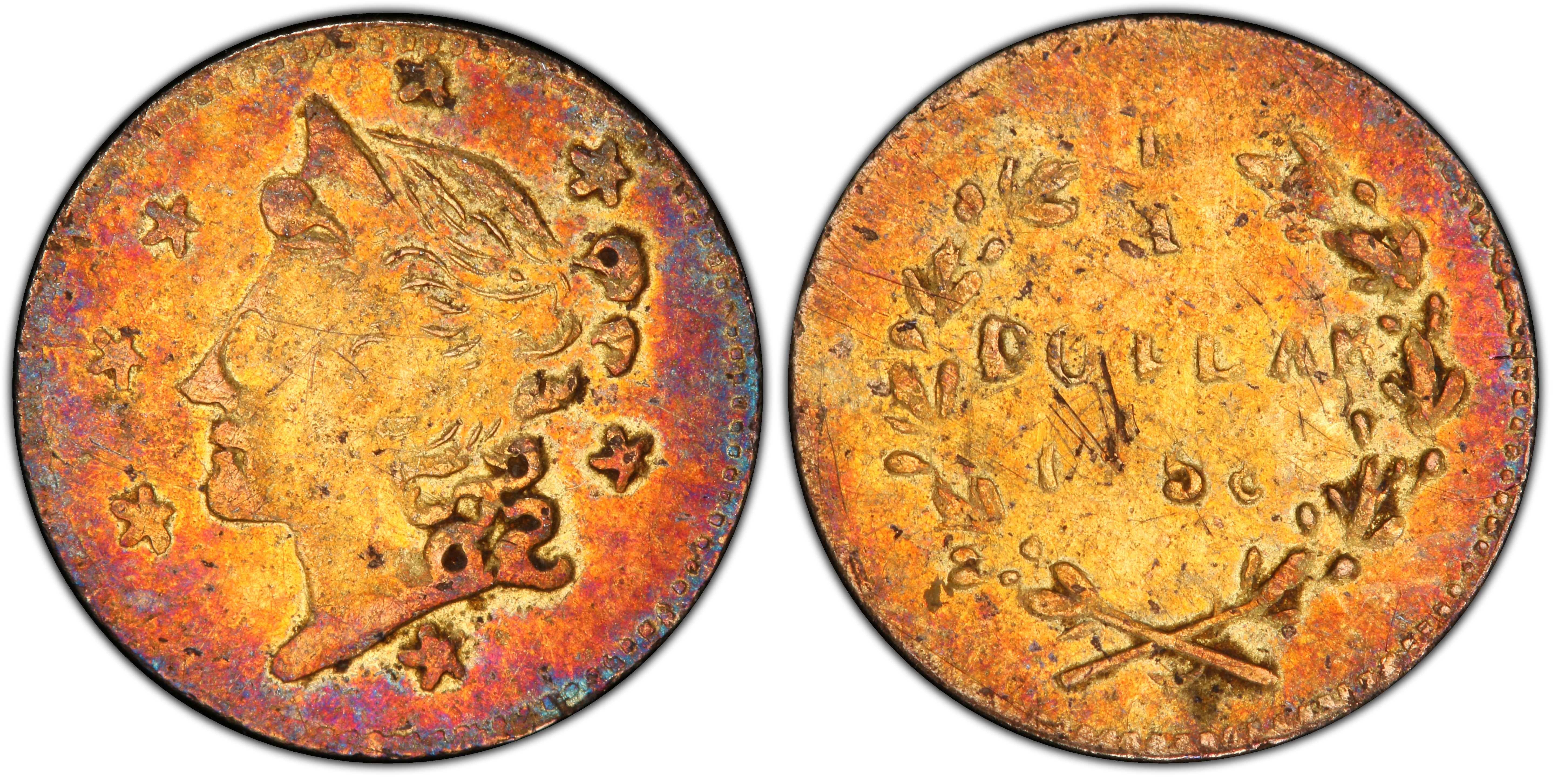
Obverse & Reverse
The 1858 25 Cents, cataloged as Breen-Gillio 800, is a product of the second phase of California Fractional Gold production, a fascinating and complex series born from the chaos and opportunity of the Gold Rush. The initial period, from 1852 to 1857, saw private minters strike tiny quarter, half-dollar, and dollar coins to alleviate a severe shortage of small change in the gold fields. These 'Period One' issues, though often underweight, were intended for and saw limited use in commerce. However, by 1858, the landscape had changed. The San Francisco Mint, which opened in 1854, was producing sufficient federal coinage to meet the region's needs, rendering the fractional gold pieces functionally obsolete. Instead of disappearing, they evolved. Enterprising jewelers recognized a burgeoning market for these miniature gold coins as souvenirs and keepsakes of the romantic Gold Rush era. This marked the beginning of 'Period Two' (1858-1882), often termed the 'Suppressed Jewelers' Issues.' The BG-800 is a quintessential example of this later period. These pieces were no longer struck with circulation in mind. Their production quality varied widely, and their gold content was often significantly less than their face value would imply, with fineness ranging from 14 to 22 karats. They were marketed to tourists, visiting merchants, and folks back East who were captivated by the allure of California. The Coinage Act of 1864 technically outlawed private coinage, but enforcement was lax, allowing these jewelers' issues to be produced for nearly two more decades until the Secret Service finally suppressed their manufacture in 1883. The BG-800 and its contemporaries thus occupy a unique numismatic space: they are not true coins intended for commerce, nor are they modern replicas. They are historical artifacts from a transitional period, representing the commercialization of the Gold Rush dream itself.
Associated EventCalifornia Gold Rush
Reason For MintingPrimarily created as a souvenir or keepsake for tourists and collectors, rather than to alleviate a coin shortage.
Minter HistoryThe specific minter for BG-800 is unknown, which is typical for many 'Period Two' California Fractional Gold issues. Most were produced by a variety of San Francisco-based jewelers and artisans who saw a commercial opportunity in creating miniature gold souvenirs. Prominent makers of the era included Antoine Louis Nouzillet and the firm of Frontier, Deviercy & Co., but attribution of many later varieties like BG-800 remains uncertain.
Historical SignificanceThe BG-800 is significant as a representative of the 'Period Two' jewelers' issues, illustrating the transition of fractional gold from a circulating medium of necessity to a commercial souvenir. It embodies the romanticism and lasting national fascination with the California Gold Rush, serving as a tangible, privately-struck memento of that transformative era long after the economic need for such pieces had passed.
BG-800
Denomination25C
Minting Period1858
Assayer/MinterUnknown Jeweler
Geographic OriginSan Francisco, California
Obverse DescriptionLiberty Head, facing left, likely surrounded by 13 stars, with the date 1858 below. The style of Period Two Liberty heads can vary significantly from the official U.S. Mint designs, often appearing more stylized or crudely engraved.
Obverse Inscription1858
Reverse DescriptionA wreath surrounds the denomination. The wreaths on Period Two issues are often fuller, with more berries and stylistic variations compared to Period One pieces.
Reverse Inscription1/4 DOLLAR CAL.
CompositionGold
Stated Fineness Actual FinenessVariable, typical for Period Two issues, often ranging from .500 to .900.
Weight0.25 grams
Diameter9.00 mm
EdgePlain
Unknown
Survival Estimate31-75 (Estimate based on R-5 rarity)
Rarity ScaleR-5
The BG-800 appeals to specialists in California Fractional Gold and collectors of Gold Rush-era material. As a dated 'Period Two' piece, it is more affordable than its rare 'Period One' circulating counterparts, offering a tangible link to the romantic history of the West. The miniature size and challenge of attribution add to its allure.
Key VarietiesNo major varieties of BG-800 are noted in standard references. California Fractional Gold as a series includes no official later-date restrikes or patterns in the traditional sense, as the entire series consists of privately-produced issues. However, collectors must distinguish authentic Period Two pieces like BG-800 from the plethora of modern, often gold-plated brass replicas made in the 20th century, which have no numismatic value.
Authentication TipsAuthentic Period Two pieces are struck in gold, though often of low fineness, and will not be magnetic. The strike can be crude but should show details consistent with 19th-century manufacturing, not the mushy, cast-like appearance of many modern fakes. The denomination is a key diagnostic; genuine pieces are denominated 'DOLLAR' or 'DOL.', whereas many fakes are marked 'CALIFORNIA GOLD' or 'CAL GOLD' without a denomination to evade counterfeiting laws.
Shopping ConsiderationsA premium quality example for its grade will exhibit a sharp strike for the issue, with clear definition in Liberty's hair and the wreath's details. Original, uncleaned surfaces with some remaining luster are highly desirable. Buyers should be wary of pieces that have been cleaned, polished, or previously used in jewelry, as evidenced by solder marks or excessive rim damage. Weakness on the highest points of the design is common, but exceptional pieces will show more complete detail. Eye appeal is paramount; coins with attractive, reddish-gold toning command significant premiums.
A coin's grade is its condition, rated on a 1-70 scale. For rare coins, this is the most critical factor in determining value, as a tiny difference in preservation can mean a huge difference in price.
Relevant Grade TypesOriginal period issues like BG-800 were business strikes. While Period One issues are found heavily circulated, Period Two pieces were sold as souvenirs and thus are more commonly found in high grades, from lightly Circulated (AU-50 to 58) to Mint State (MS, 60-70). No official Proofs were struck. Any piece described as 'Prooflike' (PL) refers to the reflectivity of the fields on a business strike, a desirable but unofficial characteristic.
Mint State CharacteristicsAn uncirculated BG-800 will be defined by its luster, strike, and surface preservation. Luster is typically satiny rather than deeply frosty. The strike is a critical variable; many were weakly struck, so examples with sharp details on Liberty's hair and the wreath command a premium. Due to the softness of the gold and primitive production, even high-grade uncirculated examples can exhibit planchet flaws, die cracks, or minor adjustment marks made before striking.
Circulated Wear PatternsAlthough not intended for heavy circulation, wear on a circulated example first appears on the highest points: Liberty's cheek, hair details above the ear, and the leaves and bow of the wreath on the reverse. In lower grades (VF and below), the stars and date will begin to lose their sharpness, and the legends will soften.
Key Factors For ValueValue is driven by three main factors: grade, surface quality, and eye appeal. A high numerical grade (e.g., MS-64 vs. MS-62) is the primary determinant. Beyond the number, the quality of the surfaces is key; an example with original, undisturbed luster and skin will be worth far more than a cleaned, hairlined, or polished coin of the same grade. Finally, exceptional eye appeal—created by a sharp strike, pleasing original color, and a lack of distracting marks—will always drive spirited bidding among knowledgeable collectors. A CAC sticker for this series confirms premium quality for the grade and adds a significant premium.
PCGS Price Guide
| Grade | Price | Population |
|---|---|---|
| 50 | $3,000.00 | 1 |
| 50+ | $3,200.00 | N/A |
| 53 | $3,500.00 | 1 |
| 53+ | $3,800.00 | N/A |
| 55 | $4,500.00 | 1 |