1872 G50C BG-1048 (Regular Strike)
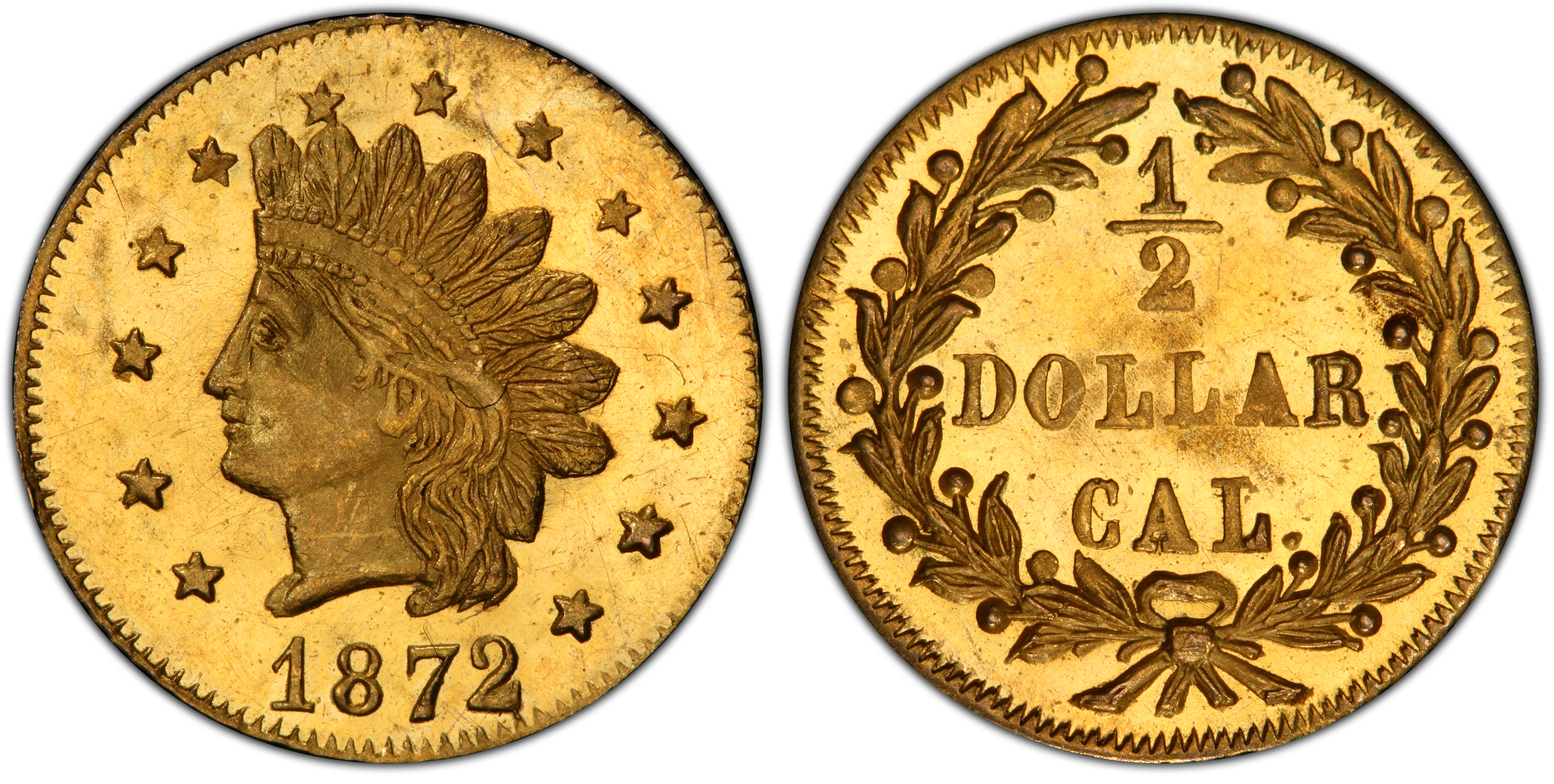
Obverse & Reverse
The 1872 BG-1048 fifty-cent piece is a quintessential example of a 'Period Two' California Fractional Gold coin, a series born from the acute shortage of small denomination currency that plagued California following the 1849 Gold Rush. In the initial boom years, commerce was crippled by a lack of circulating coinage, forcing transactions to be conducted with cumbersome gold dust, foreign coins of uncertain value, or large private gold ingots and coins ($5 and up). To fill this void, private jewelers and metallurgists in San Francisco began striking their own quarter, half, and one-dollar gold pieces starting in 1852. These initial 'Period One' (1852-1857) issues were generally of good weight and intended to circulate. However, by the time the BG-1048 was struck in 1872, the landscape had changed. The establishment and full-scale production of the U.S. Branch Mint in San Francisco in the mid-1850s had alleviated the coin shortage. The continued production of fractional gold pieces transitioned into a new phase. These 'Period Two' or 'Jeweler's Issues' (1859-1882) were typically underweight for their face value and served a dual purpose. While they may have seen limited use in small transactions, their primary market was as souvenirs, keepsakes, and jewelry items for tourists and locals alike, romanticizing the Gold Rush experience. The year 1872 was a period of significant production for these souvenir pieces. The minters, often skilled German or French jewelers like Christopher Mohrig, operated in a legal gray area. The Private Coinage Act of 1864 had made such issues illegal, but federal enforcement in California was lax until the Secret Service finally cracked down in the late 1870s and early 1880s, effectively ending the era. The BG-1048, with its popular Indian Head motif, represents this fascinating intersection of lingering monetary need and burgeoning commercial nostalgia.
Associated EventCalifornia Gold Rush Aftermath
Reason For MintingPrimarily created to serve a growing demand for Gold Rush souvenirs and jewelry, while potentially filling a minor, lingering need for small-denomination currency.
Minter HistoryAttribution for BG-1048 is uncertain, with numismatic scholarship pointing to two possible makers. One is Christopher Ferdinand Mohrig, a prolific San Francisco jeweler who is credited with striking numerous fractional gold varieties between 1872 and his arrest by the Secret Service in 1876. Another potential maker is Herman J. Brand, also a San Francisco jeweler, who is associated with several similar issues. The lack of a specific maker's mark on this variety is typical for many 'Jeweler's Issues,' as producers often operated without explicit branding to avoid legal trouble.
Historical SignificanceThe BG-1048 is historically significant not as a coin of necessity, but as a tangible artifact of how the California Gold Rush was memorialized and commercialized. It represents a transition from utilitarian private coinage to privately-minted souvenir tokens that capitalized on the mystique of the West, a practice that continued until suppressed by federal law enforcement.
BG-1048
Denomination50 Cents
Minting Period1872
Assayer/MinterAttributed to Christopher Ferdinand Mohrig or Herman J. Brand
Geographic OriginSan Francisco, California
Obverse DescriptionFeatures a stylized female head facing left, commonly referred to as an Indian Head, wearing a feathered headdress. The portrait is encircled by thirteen five-pointed stars, representing the original colonies. The date '1872' is below the bust.
Obverse Inscription1872
Reverse DescriptionThe central design element is the denomination '1/2' located within a wreath. The wreath is composed of two olive branches tied together at the bottom with a bow.
Reverse Inscription1/2
CompositionGold
Stated Fineness Actual FinenessVariable, but typically lower than the 0.900 standard of federal coinage.
Diameter11.10 mm
EdgePlain
Unknown
Survival Estimate50-75 known examples (based on R-5 rarity and NGC population data)
Rarity ScaleR-5
This variety appeals to collectors due to its classic Indian Head design, specific Breen-Gillio attribution, and its role as a key representative of the 'Period Two' souvenir era of fractional gold. The challenge of acquiring a sharply struck, high-grade example with prooflike surfaces adds to its allure.
Key VarietiesThe primary issue is the business strike intended for souvenir sales. No original proof strikings are known. However, die states and minor variations exist. One documented diagnostic is that on some examples the stars on the right side of the obverse appear much closer to the edge than those on the left. Die rotation is also common; one specimen is noted with a reverse rotated just over 90 degrees. These minor variations are collected by specialists but do not typically constitute separate BG numbers.
Authentication TipsGenuine examples must have a stated denomination ('1/2'). Replicas often replace the denomination with a bear emblem or phrases like 'CAL GOLD'. The strike on genuine pieces can be uneven, a result of the hammer-striking process, whereas modern fakes are often too perfectly struck. Look for the specific die characteristics, such as the relationship of the stars to the rim. The weight and diameter should be close to known standards for the series. Authentication by a major third-party grading service (PCGS or NGC) is highly recommended.
Shopping ConsiderationsA premium quality BG-1048 is defined by a sharp, well-centered strike, particularly on the high points of the Indian's headdress and the details of the wreath. Many examples were struck on polished planchets, and those with deep, flashy prooflike (PL) or deep prooflike (DPL) surfaces command significant premiums. Eye appeal is paramount; look for clean surfaces free of distracting marks, cleaning, or evidence of having been mounted in jewelry. Original, lustrous golden-orange or greenish-gold toning is highly desirable. Avoid examples with significant planchet flaws or weak strikes on the date and denomination.
A coin's grade is its condition, rated on a 1-70 scale. For rare coins, this is the most critical factor in determining value, as a tiny difference in preservation can mean a huge difference in price.
Relevant Grade TypesOriginal period issues were business strikes intended for souvenir sales, not circulation in the traditional sense, and are found in both Circulated (1-58) and Mint State (MS, 60-70) grades. No true Proofs (PR/PF) were struck during the original minting period. However, because many were struck on highly polished planchets, specimens can receive 'Prooflike' (PL) or 'Deep Prooflike' (DPL) designations from grading services, which are highly sought after and are distinct from true Proof coins.
Mint State CharacteristicsUncirculated examples are judged by the quality of their luster, the sharpness of the strike, and the absence of contact marks. A superior Mint State specimen of BG-1048 will exhibit vibrant, often prooflike luster across its fields. The strike is often weak in the center, so examples with full detail on the Indian's cheek and the wreath's bow are considered exceptional. Due to their small size and handling as souvenirs, even high-grade examples can have minor ticks or hairlines; the key is whether these marks are in prime focal areas.
Circulated Wear PatternsWear first appears on the highest points of the design. On the obverse, check the Indian's cheekbone and the highest feathers in the headdress. On the reverse, the highest leaves and the bow of the wreath will show the first signs of friction. In lower grades (VF and below), the stars on the obverse will begin to lose their sharp points and the finest details of the wreath will merge.
Key Factors For ValueThe most significant value drivers for an 1872 BG-1048 are grade, surface quality, and eye appeal. A high numerical grade (e.g., MS-64 vs. MS-62) is critical. The presence of a PL or DPL designation can dramatically increase value. Collectors pay strong premiums for sharply struck coins with clean, original surfaces and attractive, undisturbed luster. Conversely, coins that have been cleaned, polished, or removed from jewelry will trade at a significant discount. A CAC sticker, indicating premium quality for the grade, adds a further layer of value.
PCGS Price Guide
| Grade | Price | Population |
|---|---|---|
| 53 | $225.00 | 1 |
| 53+ | $230.00 | N/A |
| 55 | $235.00 | 2 |
| 55+ | $240.00 | N/A |
| 58 | $255.00 | 5 |
| 58+ | $270.00 | N/A |
| 60 | $285.00 | 4 |
| 61 | $325.00 | 6 |
| 62 | $435.00 | 31 |
| 62+ | $475.00 | N/A |
| 63 | $575.00 | 38 |
| 63+ | $725.00 | N/A |
| 64 | $875.00 | 27 |
| 64+ | $1,250.00 | N/A |
| 65 | $2,250.00 | 7 |
| 66 | N/A | N/A |
| 67 | N/A | N/A |