1871 G50C BG-926, PL (Regular Strike)
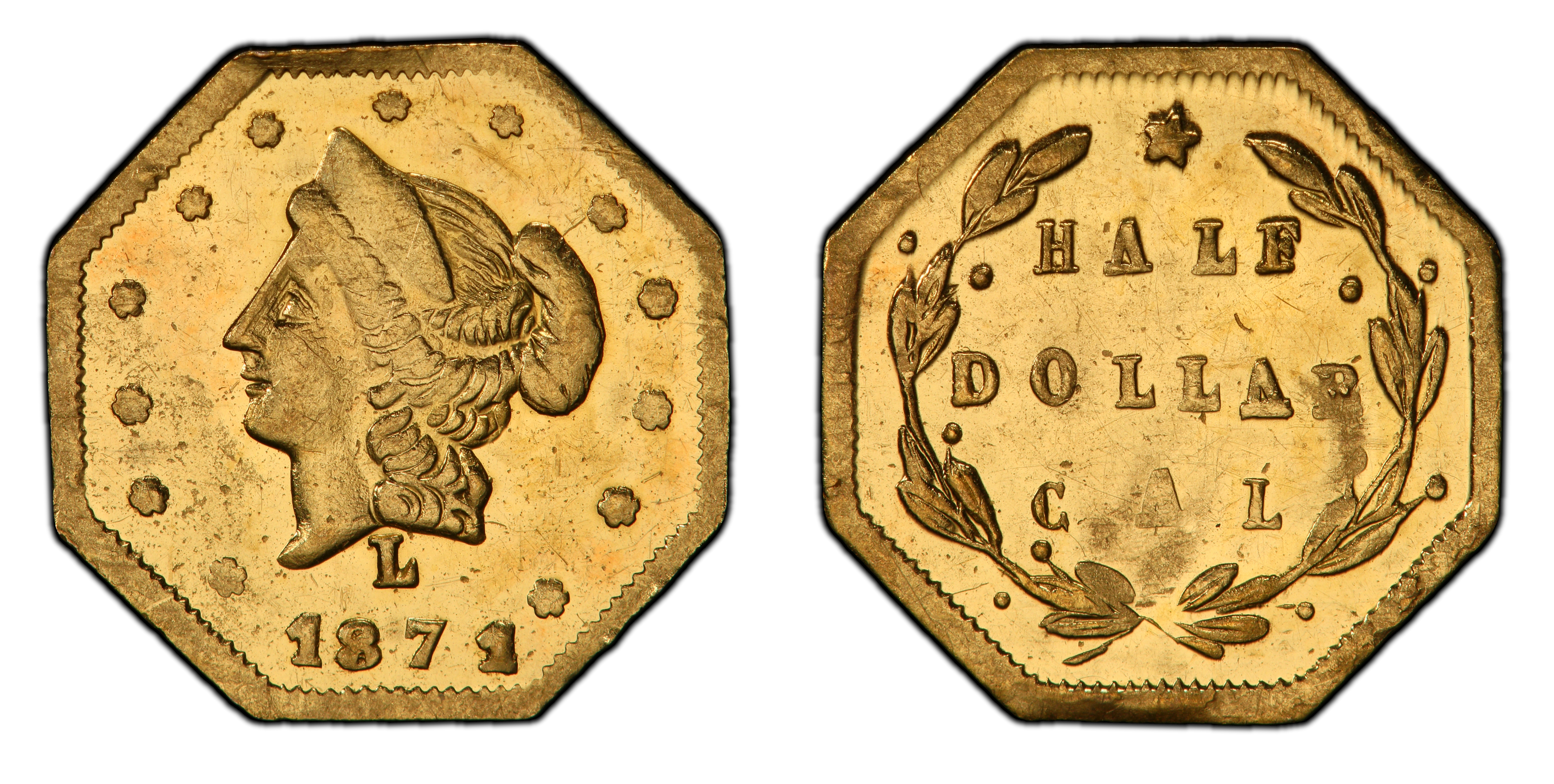
Obverse & Reverse
The 1871 Octagonal 50 Cents, cataloged as BG-926, is a product of the second period (1859-1882) of California Fractional Gold production. Unlike the 'Period One' issues struck out of commercial necessity to alleviate a severe shortage of small change during the initial Gold Rush, these 'Period Two' pieces, often termed 'jewelers' issues,' served a different purpose. By the 1870s, the acute coin shortage had eased, and the primary demand for these tiny gold pieces had shifted from commerce to souvenirs. Jewelers and private minters in San Francisco capitalized on this by producing a wide variety of attractive, miniature gold coins for tourists and for use in jewelry. This era was further complicated by the Coinage Act of April 22, 1864, which explicitly forbade private coinage. However, federal enforcement was lax in California for nearly two decades, allowing these 'suppressed jewelers' issues' to be produced with dated denominations, albeit often with deliberately low gold content relative to their face value. The minters of BG-926, like many of their contemporaries, operated in a legally gray area, creating what were essentially tokens that mimicked official coinage. These pieces were machine-struck, exhibiting greater technical refinement than the earliest hammered issues, but were often produced with less care regarding consistent weight or strike quality. The BG-926 is a tangible link to this fascinating later chapter of the Gold Rush saga, representing a transition from utilitarian necessity to commercial opportunism and nostalgia, a memento of the Wild West for those back East or travelers visiting the burgeoning city of San Francisco.
Associated EventPost-Gold Rush California Economy
Reason For MintingPrimarily created to satisfy the growing demand for souvenirs and jewelry items related to the California Gold Rush, rather than for circulation.
Minter HistoryThe specific minter or jeweler who produced the BG-926 variety is not definitively known, a common trait for 'Period Two' issues. Many producers operated anonymously or with ambiguous markings to avoid scrutiny from the U.S. Secret Service, which began to enforce the 1864 prohibition on private coinage more strictly in the late 1870s and early 1880s.
Historical SignificanceThe BG-926 is significant as a representative of the 'suppressed jewelers' issue' period of California Fractional Gold. It illustrates the evolution of private minting from a response to a currency crisis to a souvenir and novelty trade, existing in defiance of federal law for nearly two decades and reflecting the unique economic and social conditions of late 19th-century California.
BG-926
Denomination$0.50
Minting Period1871
Assayer/Minter Geographic OriginSan Francisco, California
Obverse DescriptionOctagonal coin featuring a Liberty Head design, facing left. The portrait is surrounded by stars and the date, 1871, is below the bust.
Obverse Inscription1871
Reverse DescriptionA wreath design with the denomination in the center.
Reverse Inscription1/2 DOLLAR
CompositionGold
Stated Fineness Actual Fineness EdgePlain
Unknown
Survival Estimate13-30
Rarity ScaleR-6+
The BG-926 is highly sought after due to its significant rarity (R-6+) and its connection to the romanticized post-Gold Rush era of California. As a 'Period Two' issue, it appeals to specialists who appreciate the diversity and challenges of collecting these later jewelers' pieces. Its octagonal shape is a classic and desirable feature of the series.
Key VarietiesThe primary variety is the regular business strike. The 'PL' (Prooflike) designation mentioned in the user input refers to a surface characteristic of a regular strike and not a separate issue; some examples are known with highly reflective, mirror-like fields. No special collector issues, patterns, or official restrikes are known for this variety.
Authentication TipsAuthentic examples will have a slightly soft, consistent luster, unlike modern replicas which are often brassy and overly brilliant. Examine the piece for die characteristics consistent with other known examples; counterfeits often have incorrect letter/numeral punches or crude details. The weight and diameter should be compared against established standards for the series, although slight variations exist. The edge should be plain, without any reeding or file marks.
Shopping ConsiderationsA premium quality example for its grade is defined by a sharp, well-centered strike, clean surfaces, and minimal distracting marks. As noted in auction records, this variety is often found 'somewhat softly struck,' so a piece with strong definition on Liberty's hair and the details of the reverse wreath commands a significant premium. Original, uncleaned surfaces with a hint of prooflike character are highly desirable. Avoid examples that have been used in jewelry, showing evidence of solder, harsh cleaning, or bending, as this severely impacts value.
A coin's grade is its condition, rated on a 1-70 scale. For rare coins, this is the most critical factor in determining value, as a tiny difference in preservation can mean a huge difference in price.
Relevant Grade TypesOriginal period issues were business strikes intended for the souvenir trade, found in Circulated (1-58) and Mint State (MS, 60-70) grades. No true Proofs were struck during the original minting period. While some business strikes exhibit Prooflike (PL) surfaces due to polished dies, these are not a separate striking method and are graded as MS-PL.
Mint State CharacteristicsUncirculated examples of BG-926 often exhibit a soft, satiny luster, though some possess desirable prooflike qualities. The strike is a key differentiator; many are somewhat soft, so sharply struck examples are rare. Look for full details in Liberty's coronet and hair strands. Due to the small size and minting process, minor planchet flaws or striations can be common and may not detract significantly unless they are severe.
Circulated Wear PatternsWear first appears on the high points of the obverse: Liberty's cheek, the hair above the ear, and the coronet. On the reverse, the highest points of the wreath's leaves and the bow will show the first signs of friction. In lower grades (VF and below), the finer details of the wreath will merge and the legends will begin to weaken.
Key Factors For ValueRarity is the primary driver of value for this R-6+ variety. Beyond that, the key factors are surface quality and strike. An example with original, lustrous 'skin' that has not been cleaned or polished is paramount. Given the tendency for soft strikes, a sharply detailed coin will command a large premium over a weakly struck one of the same numerical grade. Eye appeal is crucial; pieces with attractive original toning and problem-free surfaces are prized. A CAC sticker will add a significant premium, confirming quality for the grade.
PCGS Price Guide
| Grade | Price | Population |
|---|---|---|
| 62 | $1,300.00 | 1 |
| 62+ | $1,500.00 | N/A |
| 63 | $1,750.00 | N/A |