1871 G50C BG-1030 (Regular Strike)
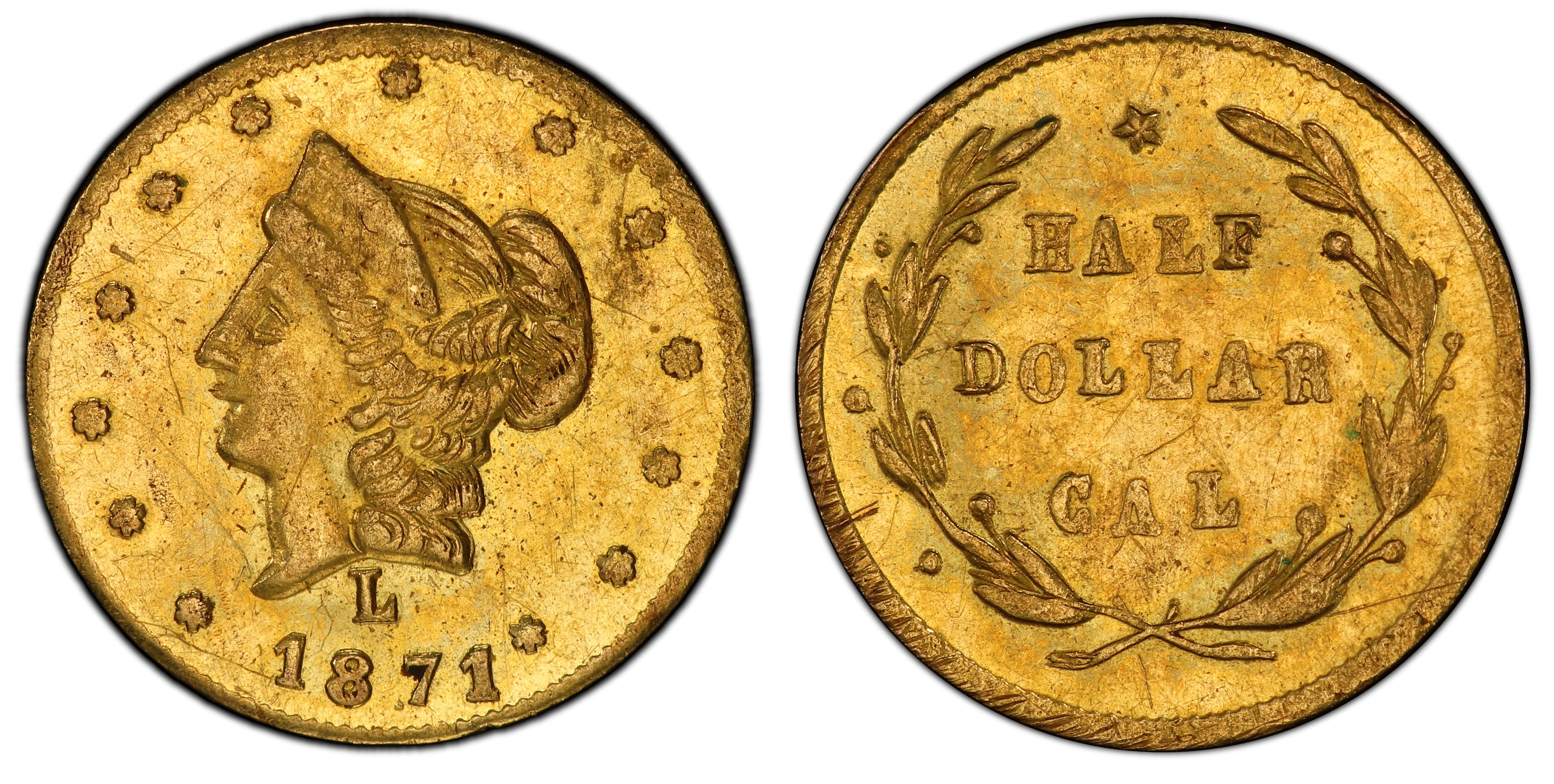
Obverse & Reverse
The 1871 G50C BG-1030 is a product of the second period of California Fractional Gold production (1859-1882), often dubbed the 'Jeweler's Period.' By this time, the acute coin shortage of the initial Gold Rush had subsided with the full operation of the San Francisco Mint. However, a local appetite for small-denomination gold pieces persisted, driven by a combination of regional pride, their utility in small transactions where silver was scarce, and a burgeoning tourist and souvenir market. These later-period fractionals were not minted to the same weight standards as the earlier 'Period One' issues and were often significantly lighter than their face value would imply in gold content. They were created by a variety of skilled jewelers and metalworkers in San Francisco who had the dies and presses necessary for such work. The Coinage Act of 1864 had technically made all private coinage illegal, but enforcement in the West was lax until the early 1880s, allowing this cottage industry to continue. These tiny gold coins, including the BG-1030 variety, served as pocket pieces, keepsakes, and a convenient way to carry small amounts of gold. Their production was often clandestine, and mintages were very small, intended for local circulation and sale. The BG-1030 itself was unknown to the numismatic community until 1970, highlighting the obscurity and limited production of many of these later-date varieties. Its discovery added another piece to the complex puzzle of private California coiners, representing the tail end of a uniquely Western American response to localized economic conditions.
Associated EventCalifornia Gold Rush Economic Aftermath
Reason For MintingTo satisfy continued local demand for small denomination gold for commerce and as souvenirs, despite federal laws prohibiting private coinage.
Minter HistoryThe specific minter or jeweler responsible for the BG-1030 variety is unknown, a common trait for many 'Period Two' California Fractional Gold pieces. Production during this era was decentralized among various San Francisco-based craftsmen. These individuals or small firms, often French jewelers, operated without prominent mintmarks, leaving behind a legacy of fascinating but largely anonymous coinage. Their work is characterized by skilled die work but often inconsistent striking quality, a result of manual screw press or hammer striking methods.
Historical SignificanceThe BG-1030, like other 'Period Two' fractionals, represents the persistence of a localized currency system long after the federal government had established its own mint in California. It is a tangible link to the jeweler-minters of post-Gold Rush San Francisco and serves as a prime example of a 'souvenir' or 'token' issue that still found limited use in commerce. Its high rarity underscores the small-scale, almost personal, nature of its production.
BG-1030
Denomination50 Cents
Minting Period1871
Assayer/MinterUnknown Private Minter
Geographic OriginSan Francisco, California
Obverse DescriptionA head of Liberty facing left, with 'LIBERTY' inscribed on her coronet. The portrait is encircled by thirteen six-pointed stars.
Obverse Inscription Reverse DescriptionThe denomination '50 CENTS' is enclosed within a wreath of two olive branches tied with a bow at the bottom. The date '1871' is located below the bow.
Reverse Inscription50 CENTS 1871
CompositionGold
Stated Fineness Actual FinenessVaries, but typically lower than federal issues of the period.
Diameter10.00 mm
EdgePlain
Extremely Low
Survival EstimateFewer than 15 known
Rarity ScaleR-7 (High R.7, possibly R.8)
The BG-1030 is highly sought after due to its extreme rarity and status as a late-discovery variety. As one of the rarest of all California Fractional Gold pieces, it appeals to advanced specialists attempting to complete variety sets. Its crude but charming aesthetic is representative of the later-period 'jeweler's issues.'
Key VarietiesThe BG-1030 is a single, distinct die pair variety. No major variations from the original minting period are known. Unlike some earlier territorial issues, there are no known patterns, trial pieces, or official restrikes associated with this privately produced coin.
Authentication TipsAuthenticity is paramount. Genuine examples often exhibit a slightly crude, hand-finished appearance. Look for characteristic die markers, such as specific relationships between the letters, stars, and date. Counterfeits may appear too perfect, have incorrect lettering fonts, or exhibit a soapy, cast-like surface. Weight and specific gravity tests can also be helpful, as many fakes are gold-plated base metal. Certification by a top-tier grading service (PCGS or NGC) is highly recommended.
Shopping ConsiderationsA premium quality example for this issue is defined primarily by its state of preservation and originality. Look for a bold strike, especially on Liberty's coronet and the wreath details, though some central weakness on the reverse is common. Original, uncleaned surfaces with some remaining luster are highly desirable. Many surviving examples are cleaned or have been mounted in jewelry, so problem-free coins command a significant premium. Pay close attention to any discoloration spots, scratches, or evidence of tooling. Given the coin's tiny size, magnification is essential to properly assess its quality.
A coin's grade is its condition, rated on a 1-70 scale. For rare coins, this is the most critical factor in determining value, as a tiny difference in preservation can mean a huge difference in price.
Relevant Grade TypesAll original BG-1030s are considered business strikes intended for limited circulation or sale as keepsakes. They are found in Circulated (1-58) and, more commonly, Mint State (MS, 60-70) grades, as many were saved as souvenirs. No true Proofs were struck during the original period of issue, though some high-grade, early-strike examples may exhibit prooflike, reflective surfaces.
Mint State CharacteristicsUncirculated examples of BG-1030 are characterized by their luster, which can range from satiny to semi-prooflike. Strike quality varies; the centers of the reverse are often softly struck. Due to the manual minting process, planchet quality can be inconsistent. Small, inherent planchet flaws or adjustment marks are not uncommon and may not detract significantly from the grade if they are not distracting. Contact marks, even small ones, can be prominent due to the coin's tiny size.
Circulated Wear PatternsWear first appears on the highest points of the design: Liberty's cheek, hair, and coronet on the obverse. On the reverse, the high points of the wreath's leaves and the bow will show the first signs of friction and flattening. In lower grades (VF and below), the word 'LIBERTY' on the coronet becomes indistinct and the finer details of the wreath merge.
Key Factors For ValueFor the BG-1030, rarity is the primary value driver. Beyond that, the key factors are grade and surface quality. A Mint State coin with original, lustrous surfaces and minimal contact marks will command a much higher price than a circulated or cleaned example. Eye appeal is crucial; coins with a pleasing, original orange-gold or reddish-gold toning are prized. A CAC sticker, indicating premium quality for the grade, adds a significant premium for this and other rare territorial issues.
PCGS Price Guide
| Grade | Price | Population |
|---|---|---|
| 45 | $250.00 | 2 |
| 45+ | $260.00 | N/A |
| 50 | $275.00 | 1 |
| 50+ | $285.00 | N/A |
| 53 | $300.00 | N/A |
| 53+ | $320.00 | N/A |
| 55 | $350.00 | 2 |
| 55+ | $370.00 | N/A |
| 58 | $400.00 | 4 |
| 58+ | $425.00 | N/A |
| 60 | $475.00 | 1 |
| 61 | $550.00 | 2 |
| 62 | $675.00 | 2 |
| 62+ | $750.00 | N/A |
| 63 | $950.00 | 3 |
| 63+ | $1,250.00 | N/A |
| 64 | $1,750.00 | N/A |
| 64+ | $3,500.00 | 1 |