1872/1 G25C BG-868, PL (Regular Strike)
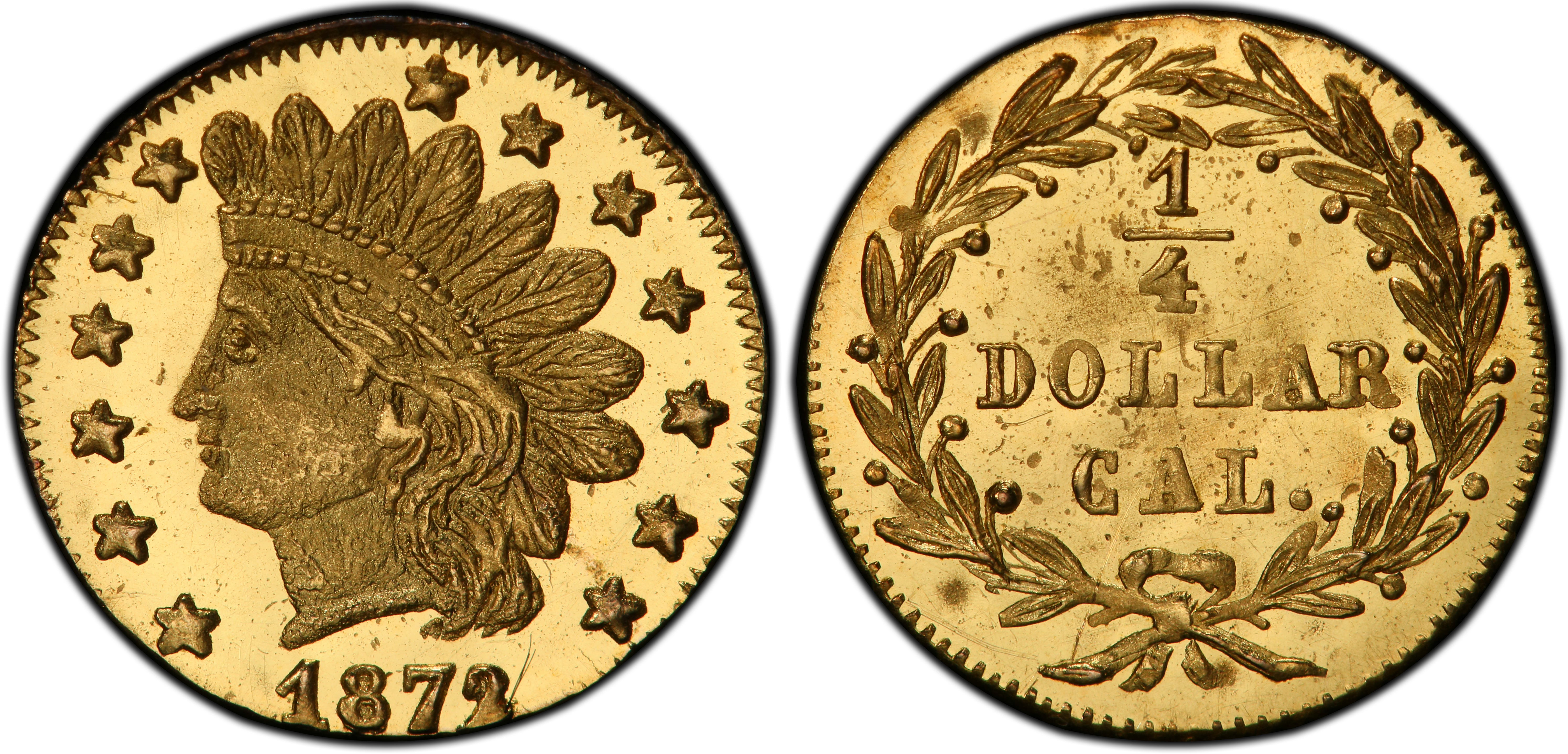
Obverse & Reverse
The 1872/1 G25C BG-868 is a quintessential example of a 'Period Two' California Fractional Gold piece. The story of these fascinating miniature coins is deeply entwined with the maturation of California society, a generation after the initial chaos of the Gold Rush. The first wave of fractional gold, 'Period One' (1852-1857), arose from a genuine and desperate need for small-denomination coinage to facilitate everyday commerce. However, by the late 1850s, the San Francisco Mint was in full operation, alleviating the acute coinage shortage. The rationale for producing these tiny gold pieces shifted dramatically. The completion of the First Transcontinental Railroad in 1869 was the pivotal event that transformed California from a remote frontier into a premier tourist destination. Wealthy Easterners and Europeans could now journey to the 'Golden State' in relative comfort, eager to experience the land of myth and riches they had read about. This influx of tourism created a robust market for keepsakes and souvenirs. San Francisco jewelers, many of whom were French immigrants and skilled artisans like Antoine Louis Nouizillet, astutely recognized this new demand. They began producing a second generation of fractional gold, not for circulation, but as charming mementos. These 'Period Two' issues (1859-1882) were often lighter and of lower fineness than their face value suggested, a fact of little concern to a tourist seeking a novel curiosity. Production flourished in the 1870s, with a wide variety of designs, including the popular Indian Head motif seen on BG-868, which mimicked contemporary federal coinage. The 1872/1 overdate is a classic numismatic feature, resulting from a die from the previous year being re-punched for use in the current year—a common cost-saving measure. Though the Coinage Act of 1864 made private minting illegal, the law was not strictly enforced against these popular trinkets until 1883, when the Secret Service, under Chief James J. Brooks, finally cracked down, bringing the era of denominated fractional gold to a close.
Associated EventPost-Transcontinental Railroad Tourism Boom
Reason For MintingPrimarily struck to be sold as popular souvenirs and curiosities for the burgeoning California tourism trade.
Minter HistoryWhile not definitively signed, the style and diagnostics of BG-868 are often attributed to the workshop of Robert B. Gray & Co. of San Francisco. Gray was a significant producer of Period Two fractionals. Around 1859, he purchased the business of Antoine Louis Nouizillet, a prominent French jeweler and one of the most important minters of Period One issues. Gray utilized some of Nouizillet's old dies before creating his own, often marked with a 'G'. Gray's operation was prolific through the 1860s and early 1870s, capitalizing on the souvenir market until he sold his interests to the California Jewelry Co. in 1871. The continued use of established dies and styles suggests the production of BG-868 was likely a continuation of his enterprise's work.
Historical SignificanceThis coin is a tangible artifact of California's economic and social transition from a frontier society defined by a gold rush to a sophisticated tourist destination. It represents a fascinating chapter in U.S. numismatics where private enterprise met public curiosity, creating a collectible that was treasured more for its novelty and connection to the 'Wild West' than for its intrinsic value or use in commerce.
N/A
Denomination25 Cents
Minting Period1872
Assayer/MinterProbably Robert B. Gray & Co.
Geographic OriginSan Francisco, California
Obverse DescriptionA stylized Indian Head facing left, a design evocative of the contemporary federal one-cent piece. The portrait is adorned with a feathered headdress. Thirteen stars encircle the portrait along the rim.
Obverse Inscription[No Inscription]
Reverse DescriptionThe denomination '1/4 DOLLAR' is centered within a wreath composed of two branches tied together with a bow at the bottom. The date '1872' appears above the wreath, directly below the upper rim. The '2' is clearly punched over a '1', indicating the overdate.
Reverse Inscription1/4 DOLLAR 1872
CompositionGold
Stated Fineness Actual FinenessVariable, often between .500 and .750 fine, but could range widely as these were sold as souvenirs, not bullion.
Weight0.25 grams
Diameter9.80 mm
EdgePlain
Unknown
Survival Estimate75-125 coins
Rarity ScaleHigh R-4 / Low R-5
The 1872/1 BG-868 is highly sought after for its clear overdate, attractive Indian Head design, and frequent prooflike (PL) surfaces. It combines a distinct and visible die variety with the charm and history inherent in all California Fractional Gold, making it a favorite among specialists.
Key VarietiesThe primary variety is the 1872/1 overdate itself. No contemporary Proof restrikes or special collector issues are known from the original minter. However, the entire field of California Fractional Gold is plagued by a vast number of crude, often gold-plated replicas made in the 20th century. These are not considered numismatic varieties and have negligible value. True 'Period Three' issues (post-1882) exist, but are backdated and clandestine productions, numismatically distinct from Period Two jeweler's issues like BG-868.
Authentication TipsGenuine Period Two pieces like BG-868 must have a denomination (e.g., 'DOLLAR' or 'CENTS'). Replicas often lack this, sometimes saying 'CAL GOLD' or featuring a bear on the reverse, which no genuine pieces have. Authentic examples are typically extremely thin, often the thickness of a business card. Many modern fakes are too thick and have a soapy or cast-like appearance. Look for sharp, albeit sometimes unevenly impressed, details consistent with a hammer strike, not the soft, uniform look of a modern copy.
Shopping ConsiderationsA premium quality example for this variety is defined by the strength of its prooflike surfaces. Look for coins with deeply mirrored fields and frosted devices, a combination that commands significant premiums. The strike is often weak on the central reverse, particularly the wreath's bow, so a sharply struck example is a condition rarity. As these were made for the jewelry trade, evidence of having been mounted (solder marks, tooling, harsh cleaning) is common and should be carefully looked for. A choice specimen will possess original, unmolested surfaces with attractive, often reddish-gold or greenish-gold toning. The visibility of the underlying '1' in the date is also a key factor for collectors.
A coin's grade is its condition, rated on a 1-70 scale. For rare coins, this is the most critical factor in determining value, as a tiny difference in preservation can mean a huge difference in price.
Relevant Grade TypesOriginal BG-868 coins were business strikes, although many were produced with polished dies to enhance their appeal as souvenirs. They are found in Circulated (1-58) and Mint State (MS, 60-70) grades. The 'PL' (Prooflike) designation is very relevant for this variety and significantly increases value. No true Proofs (PR/PF) were struck during the original minting period, as these were commercial ventures, not official mint products for collectors. Any piece described as a 'Proof' is likely a later replica or a misattribution of a Prooflike business strike.
Mint State CharacteristicsUncirculated examples of BG-868 are prized for their luster. High-grade specimens often exhibit pronounced prooflike characteristics, with deeply reflective, mirror-like fields contrasting with frosted design elements. The quality of the strike can be variable due to the manual hammer-striking process. While the portrait and stars may be sharp, a degree of softness in the center of the reverse wreath is typical and should not be mistaken for wear. Contact marks are common due to the soft nature of the gold, but a premium MS coin will have minimal and well-hidden marks.
Circulated Wear PatternsWear first appears on the high points of the design: the cheek and feathers of the Indian Head on the obverse, and the leaves and bow of the wreath on the reverse. On moderately worn examples, the finer details of the feathers will merge, and the individual leaves in the wreath will become indistinct. In lower grades (Fine and below), the stars on the obverse and the denomination on the reverse will begin to lose their sharpness.
Key Factors For ValueThe primary value driver for BG-868 is the quality and originality of its surfaces. A coin with deep, flashy prooflike fields can be worth several times more than a non-PL example in the same numerical grade. Eye appeal is paramount; coins with attractive, original toning and minimal distracting marks are highly prized. The sharpness of the overdate feature and the overall strike quality also play a significant role. Given the prevalence of altered and damaged pieces, a coin certified by a major grading service (PCGS or NGC), and especially one with a CAC sticker, provides confidence and carries a substantial market premium.
PCGS Price Guide
| Grade | Price | Population |
|---|---|---|
| 63 | N/A | N/A |
| 64 | N/A | 1 |
| 65 | $1,600.00 | 3 |
| 65+ | $1,900.00 | N/A |
| 66 | $2,750.00 | 1 |