1881 G25C BG-887, PL (Regular Strike)
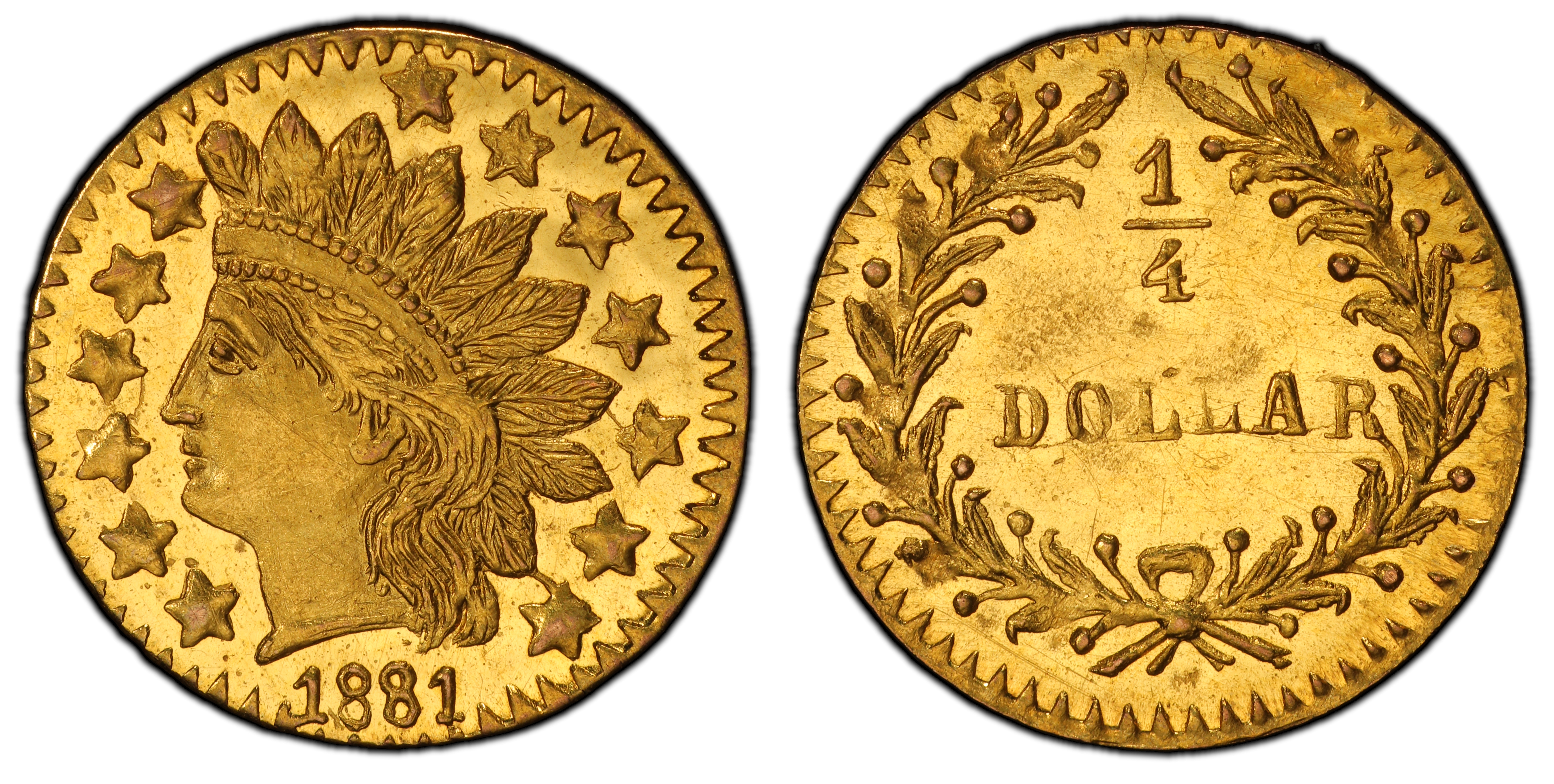
Obverse & Reverse
The 1881 BG-887 25-cent piece emerged from the second major phase of California's private gold coinage, a period numismatists designate as 'Period Two' (1859-1882). Unlike the earlier 'Period One' issues, which were struck with a genuine, if desperate, intent to alleviate the crippling shortage of small change during the initial Gold Rush, the coins of this later era served a dual purpose. By the 1870s and early 1880s, the California economy had matured, and the circulation of U.S. federal coinage had become more widespread. The acute need for private fractional gold had subsided, yet production continued, largely driven by jewelers in San Francisco. These pieces, often called 'jeweler's issues,' were lighter and often of lower fineness than their stated value, functioning more as tokens than true coinage. Their primary market had shifted from miners and merchants to tourists and the general public, who desired them as souvenirs and keepsakes of the romanticized Gold Rush era. The Coinage Act of 1864 had officially made private minting illegal, but enforcement was lax until the Secret Service cracked down around 1883. To circumvent the law, minters often used back-dated dies or, as with the 1881 issues, continued production knowing the risk was minimal. These small, intricate pieces were typically produced using the hammer method, where dies were struck by hand, leading to significant variations in strike quality. The BG-887, with its popular Indian Head motif, represents the final chapter of this fascinating numismatic tradition before federal enforcement ended the era of private U.S. gold coinage.
Associated EventPost-Gold Rush California Economy
Reason For MintingPrimarily struck to be sold as souvenirs and keepsakes to tourists, capitalizing on the romanticism of the Gold Rush.
Minter HistoryThe specific minter for BG-887 is not definitively known, a common trait for many Period Two issues. These pieces were generally produced by San Francisco-based jewelers who had the skills and equipment for such work. A notable contemporary producer of similar Indian Head types was Christopher Ferdinand Mohrig, a prominent die-sinker and jeweler of the era, though a direct link to this specific variety is unconfirmed. These craftsmen operated in a gray market, creating products that were legally questionable but immensely popular.
Historical SignificanceThe BG-887 is significant as a representative of the final phase of private gold minting in the United States. It marks the transition of fractional gold from a necessary circulating medium to a commercial souvenir, reflecting California's own transition from a raw frontier to a more settled and romanticized destination. Its existence highlights a period of lax federal oversight and the persistent entrepreneurial spirit that defined the American West.
N/A
Denomination25 Cents
Minting Period1881
Assayer/MinterUnknown, likely a San Francisco jeweler. Similar Indian Head motifs of the period are attributed to Christopher Ferdinand Mohrig.
Geographic OriginSan Francisco, California
Obverse DescriptionFeatures a stylized head of a Native American figure facing left, wearing a feathered war bonnet. The portrait is surrounded by thirteen six-pointed stars, representing the original colonies.
Obverse Inscription[No Inscription]
Reverse DescriptionA simple wreath of two olive branches tied with a ribbon at the bottom encircles the denomination. The date, 1881, is positioned below the wreath.
Reverse Inscription1/4
CompositionGold
Stated Fineness Actual FinenessVariable, often between 14 and 22 karats. Generally less than the intrinsic value of 25 cents.
Diameter9.50 mm
EdgePlain
Unknown
Survival Estimate100-150. Based on NGC and PCGS population reports which total over 100 graded examples, with an allowance for raw coins.
Rarity ScaleR-5 (Very Rare)
This variety is popular due to its classic Indian Head design, a motif beloved by American coin collectors. As a late-date issue, many were saved as souvenirs, meaning they often survive in high Mint State grades. The challenge of collecting the numerous Breen-Gillio varieties and the direct connection to the romantic lore of the Gold Rush add to their appeal.
Key VarietiesThe primary variety is the regular strike BG-887. No major die varieties from the original minting period are widely recognized. There are no known official restrikes. Collectors should be aware that the term 'PL' (Prooflike) or 'DPL' (Deep Prooflike) refers to the reflective quality of the surfaces on a business strike coin and does not indicate a separate Proof striking. These designations are assigned by third-party grading services and command significant premiums.
Authentication TipsAuthentic pieces exhibit sharp, albeit sometimes unevenly impressed, details from a hand-hammered strike. Look for a 'soft' appearance to the luster that differs from modern copies. Counterfeits, which are rampant, often have incorrect design details, a mushy or cast-like appearance, wrong weight or dimensions, or may feature a bear on the reverse, a design element never used on genuine fractional gold. Referencing the Breen-Gillio guide for die characteristics is the best authentication method.
Shopping ConsiderationsA premium quality example for this issue will be sharply struck, particularly on the details of the headdress and the wreath. Luster is a key factor; seek out coins with vibrant, frosty or deeply reflective (DPL) surfaces that have not been cleaned or polished. Original, unadulterated surfaces are paramount. Common problems include harsh cleanings, which strip the original skin and impart hairline scratches, and rim bumps due to the coin's small size and fragility. Given their status as souvenirs, many high-grade examples exist, but truly exceptional pieces with superb eye appeal and prooflike surfaces command the strongest prices.
A coin's grade is its condition, rated on a 1-70 scale. For rare coins, this is the most critical factor in determining value, as a tiny difference in preservation can mean a huge difference in price.
Relevant Grade TypesAll original 1881 BG-887 pieces were struck as business strikes for sale to the public, not for circulation in the traditional sense. Therefore, they are found in both Circulated grades (1-58, though rarely seen) and, most commonly, Mint State (MS, 60-70). No true Proofs were struck during the original period. The 'PL' (Prooflike) and 'DPL' (Deep Prooflike) designations are applied to business strikes that were made with highly polished dies, resulting in mirror-like surfaces, and are considered highly desirable.
Mint State CharacteristicsIn uncirculated grades, the BG-887 is characterized by a satiny, sometimes slightly reflective, luster. The strike can be inconsistent due to the manual hammering process; some examples will show weakness on the high points of the Indian's cheek or the tips of the feathers. The fields are prone to minute planchet flaws or contact marks, even on high-grade specimens. The highest quality pieces display a full, sharp strike and pristine, lustrous surfaces.
Circulated Wear PatternsOn circulated examples, wear first appears on the high points of the design. For the obverse, this would be the Indian's cheek, brow, and the upper feathers of the headdress. On the reverse, the highest points of the wreath leaves and the bow of the ribbon will show friction and loss of detail first. In lower grades, the stars and date will begin to merge with the fields.
Key Factors For ValueThe primary drivers of value for this coin are grade and surface quality. A high Mint State grade (MS-64 or better) is expected for a top-tier example. The presence of a Prooflike (PL) or Deep Prooflike (DPL) designation from a major grading service can easily double or triple the value. Original, undisturbed surfaces free of cleaning, scratches, or tooling are essential. Eye appeal, encompassing attractive original gold toning and a sharp strike, plays a significant role. A CAC sticker indicates premium quality for the grade and will add a substantial premium.
PCGS Price Guide
| Grade | Price | Population |
|---|---|---|
| 62 | N/A | N/A |
| 63 | N/A | 1 |
| 64 | $650.00 | 1 |
| 64+ | $775.00 | N/A |
| 65 | $900.00 | 1 |
| 65+ | $1,150.00 | N/A |
| 66 | $1,650.00 | 2 |
| 67 | N/A | N/A |
| 68 | N/A | N/A |