1870 G50C BG-936 (Regular Strike)
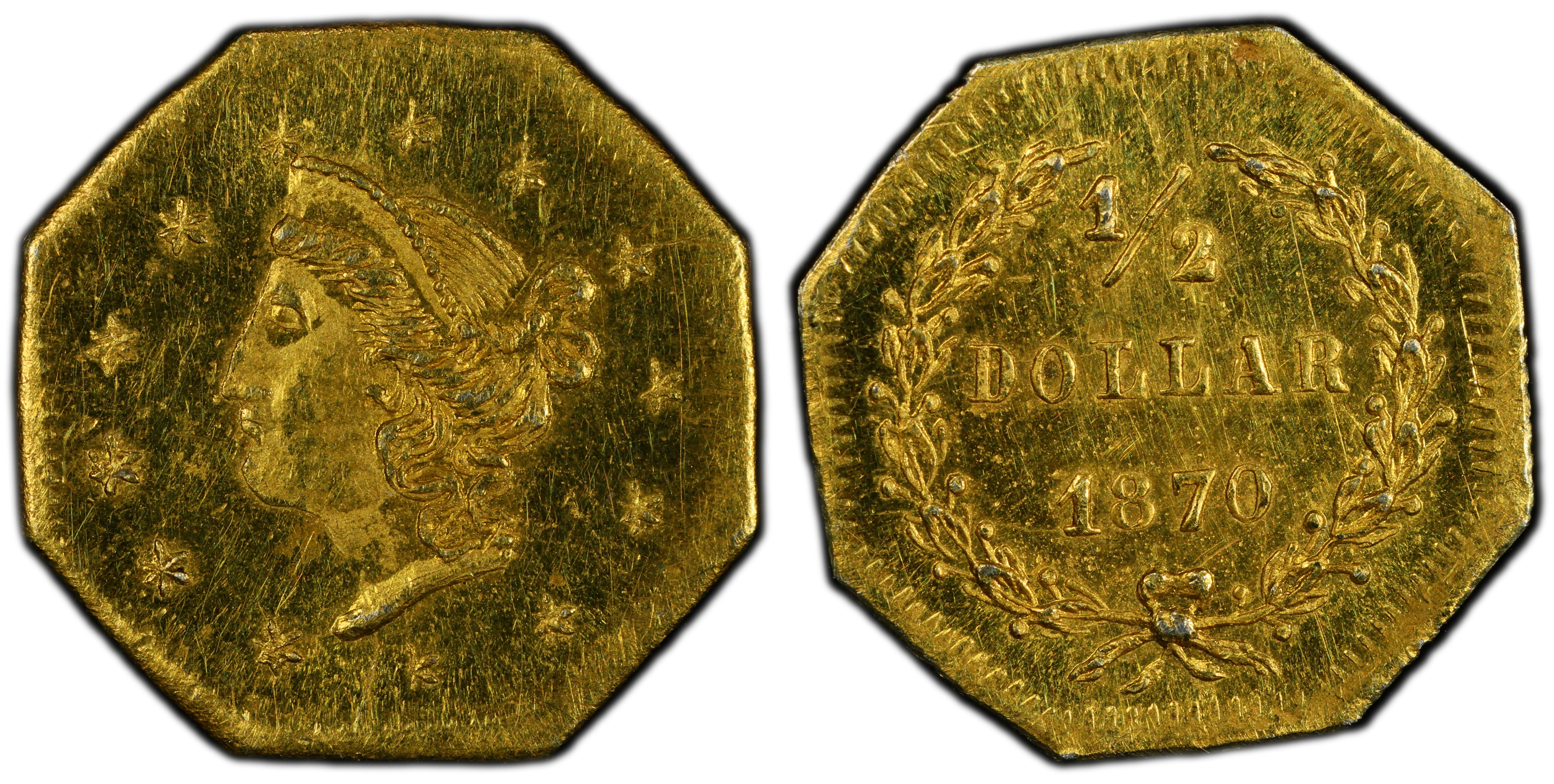
Obverse & Reverse
The 1870 BG-936 50 Cent piece emerges from the second major period of California Fractional Gold production (1859-1882), a fascinating and complex chapter in American numismatics. Following the initial Gold Rush boom, the acute shortage of small change persisted in California. While the first period of fractional gold (1852-1856) saw coins with a relatively high gold content meant to genuinely supplement circulating currency, the second period, to which the BG-936 belongs, is characterized by what are often termed 'jeweler's issues.' These pieces were produced by various jewelers and artisans in San Francisco, not strictly to alleviate a coin shortage, but more as souvenirs, keepsakes, and items for the jewelry trade. By 1870, the San Francisco Mint was producing ample federal coinage, yet the demand for these miniature gold novelties continued, fueled by tourism and a romantic association with the Gold Rush. These Period Two issues were notoriously underweight, containing gold value significantly less than their face value, a fact that was widely understood at the time. Their legality was dubious following the Private Coinage Act of 1864, but enforcement was lax, allowing production to continue. The BG-936 variety is notable for its crudely engraved obverse, which has earned it the collector nickname 'Goofy Head.' This style is emblematic of the less formal, mass-produced nature of jeweler's issues compared to the more refined Period One coins. These pieces were often struck using the 'hammer method,' where dies were struck by hand with a sledgehammer, resulting in inconsistent strike quality and frequent die breaks, adding to their individuality. Their journey was not one of extensive circulation but rather of private possession, often mounted into jewelry or kept in curio cabinets, which accounts for the relatively high proportion of survivors in uncirculated grades despite their low mintage.
Associated EventCalifornia Gold Rush Aftermath
Reason For MintingPrimarily struck to be sold as souvenirs and for use in the jewelry trade rather than to alleviate a general circulation coin shortage.
Minter HistoryThe specific minter of the BG-936 variety is unknown, which is common for Period Two fractional gold. These coins were produced by a number of competing jewelers and artisans in San Francisco who often did not place their own identifying marks on their products. Their primary business was jewelry and precious metal work, with the minting of these small tokens serving as a profitable sideline catering to tourists and local residents seeking mementos of California's gold heritage.
Historical SignificanceThe BG-936 is significant as a quintessential example of a 'jeweler's issue' from the later period of California Fractional Gold. It represents the transition of these pieces from functional currency substitutes to commercial novelties and souvenirs, reflecting the evolving economy and culture of post-Gold Rush San Francisco. The distinctive crude style provides insight into the manufacturing techniques and artistic standards of the period's private minting operations.
BG-936
Denomination50 Cents
Minting Period1870
Assayer/MinterUnknown Private Minter
Geographic OriginSan Francisco, California
Obverse DescriptionFeatures a crudely executed, right-facing bust of Liberty. The portrait is somewhat disproportionate, leading to the nickname 'Goofy Head'. Her hair is tied in a bun, and she wears a coronet. The field is surrounded by thirteen stars of varying quality.
Obverse Inscription1870
Reverse DescriptionA wreath composed of two branches tied with a ribbon at the bottom encircles the denomination. The design is simple and typical for the series.
Reverse Inscription50 CENTS
CompositionGold
Stated Fineness Actual FinenessVariable, but typically between .500 and .750 fine (12-18 karat gold); Period Two issues are known to be of lower fineness than their Period One counterparts.
Weight0.25 grams
Diameter11.20 mm
EdgePlain
Unknown, but very low.
Survival Estimate31-75
Rarity ScaleLow R-5
The BG-936 is highly sought after due to its distinctive and memorable 'Goofy Head' moniker, which adds a layer of personality and collectibility. As a key representative of the Period Two jeweler's issues, it appeals to specialists in California Fractional Gold. Its defined rarity as a Low R-5 variety ensures persistent demand from serious collectors aiming to complete variety sets.
Key VarietiesThe primary variety is the regular strike business issue of 1870. No known major variations, patterns, or official restrikes from the original period exist for the BG-936 die pair. As with all fractional gold, collectors should be aware of contemporary counterfeit and modern replica issues, which are not considered part of the original series.
Authentication TipsAuthentic examples will exhibit a specific die state and strike character. The 'Goofy Head' portrait has a distinctively crude, almost cartoonish appearance that should be matched against known genuine examples. Look for softness in some areas, which is typical of hammer-struck coins. The planchets are often thin and can show minor striking irregularities. Counterfeits may appear too sharp or too mushy, with incorrect lettering fonts or a soapy, cast-like surface texture. Weight and specific gravity tests can also help, as genuine pieces have a known density, whereas plated brass counterfeits will be significantly lighter or have the wrong metallic properties.
Shopping ConsiderationsA premium quality example for its grade will possess a sharp strike for the variety, particularly on the date and the central details of Liberty's portrait and the reverse wreath. Original, uncleaned surfaces with some remaining luster are highly desirable. Look for attractive, original 'old gold' toning, which can range from a light yellow-gold to a deeper reddish-orange hue. Common problems to avoid include harsh cleanings, which impart a bright, unnatural shine and hairlines; evidence of jewelry mounting, such as solder marks or edge tooling; and significant planchet flaws or laminations. Due to their low intrinsic value and frequent crude striking, eye appeal and surface preservation are paramount when assessing value.
A coin's grade is its condition, rated on a 1-70 scale. For rare coins, this is the most critical factor in determining value, as a tiny difference in preservation can mean a huge difference in price.
Relevant Grade TypesOriginal period issues were business strikes intended for souvenir sales and limited local use, and they are found in both Circulated (1-58) and Mint State (MS, 60-70) grades. A significant portion of the surviving population is in Mint State due to their nature as keepsakes rather than circulating currency. No proofs were struck during the original period of issue, and there are no known later-date Proof restrikes.
Mint State CharacteristicsUncirculated examples of BG-936 often exhibit a soft, satiny luster rather than a hard, frosty one. The strike is characteristically weak in areas, particularly on the stars and the highest points of Liberty's hair. Perfectly centered and sharply struck specimens are rare and command a significant premium. Small, inherent planchet flaws or light adjustment marks made before striking are common and should not be confused with post-strike damage. Bag marks are less common than on federal issues due to their distribution method, but small contact marks from handling are frequent.
Circulated Wear PatternsWear first appears on the highest points of the design. On the obverse, friction will be evident on Liberty's cheek, the coronet, and the hair above her ear. On the reverse, the high points of the wreath's leaves and the bow will show the first signs of rub. In lower circulated grades (Fine and below), the date and the individual letters in 'CENTS' will begin to weaken and merge with the fields.
Key Factors For ValueFor the BG-936, value is driven by rarity and condition. A sharply struck coin with minimal marks and original, lustrous surfaces will always command a premium. Eye appeal is crucial; examples with pleasing, undisturbed reddish-gold toning are highly prized over those that are bright from cleaning or dipping. The 'Goofy Head' nickname adds a premium, so coins where the crude details are sharpest are most desirable. Third-party certification by PCGS or NGC is standard for the market, and a CAC sticker indicating premium quality for the grade will add a significant premium, as it confirms the coin's superior eye appeal and originality.
PCGS Price Guide
| Grade | Price | Population |
|---|---|---|
| 40 | $275.00 | 2 |
| 45 | $285.00 | 1 |
| 45+ | $290.00 | N/A |
| 50 | $315.00 | 2 |
| 50+ | $330.00 | N/A |
| 53 | $345.00 | 3 |
| 53+ | $360.00 | N/A |
| 55 | $375.00 | 8 |
| 55+ | $390.00 | N/A |
| 58 | $425.00 | 12 |
| 58+ | $475.00 | N/A |
| 60 | $525.00 | 4 |
| 61 | $575.00 | 6 |
| 62 | $650.00 | 11 |
| 62+ | $750.00 | N/A |
| 63 | $900.00 | 8 |
| 63+ | $1,100.00 | N/A |
| 64 | $1,500.00 | 2 |
| 64+ | $1,750.00 | N/A |
| 65 | $2,250.00 | 1 |