1867 G50C BG-1018 (Regular Strike)
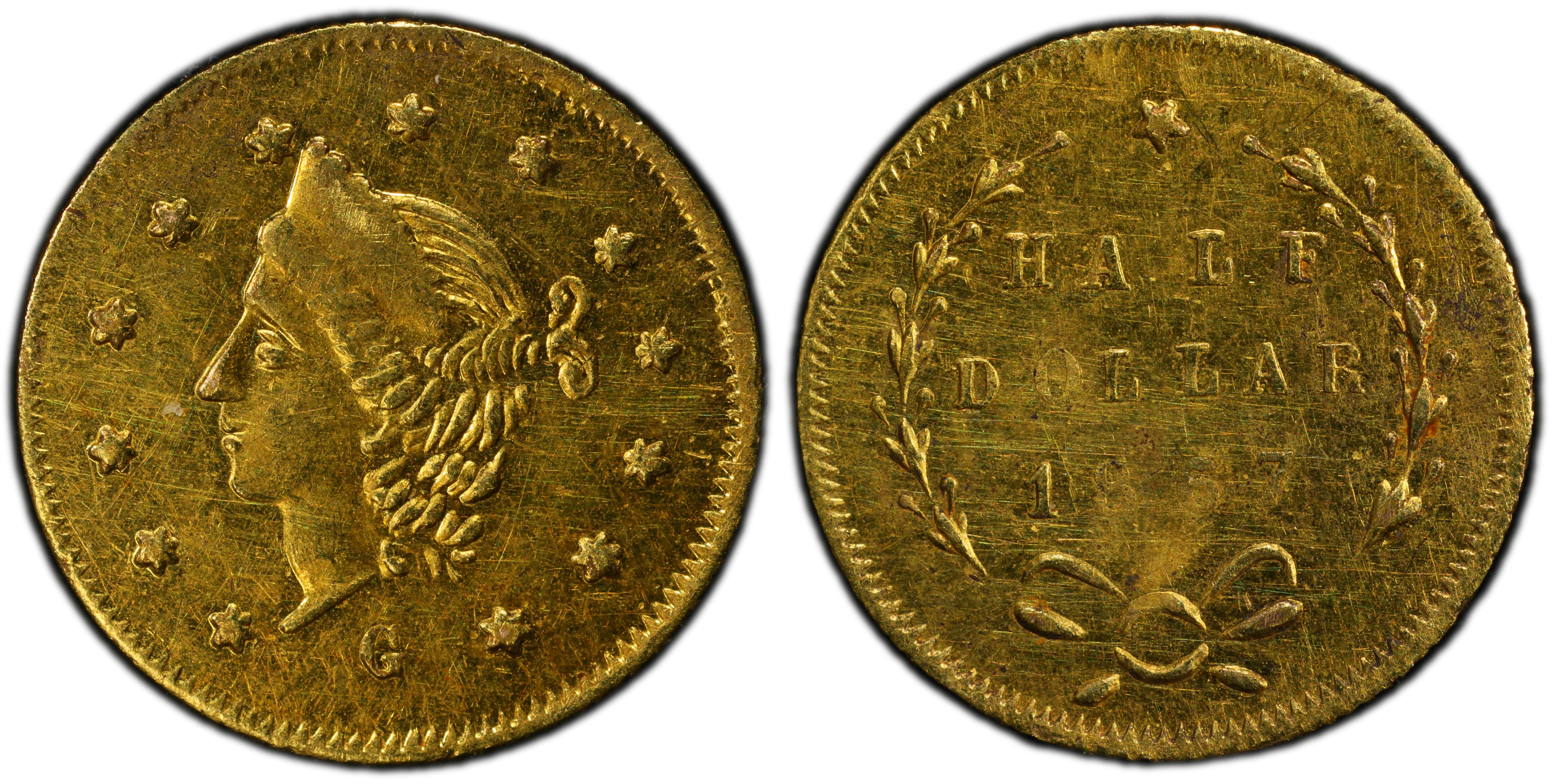
Obverse & Reverse
The 1867 G50C BG-1018 is a product of the second period (1859-1882) of California Fractional Gold production, a fascinating era that followed the initial frenzy of the Gold Rush. By the late 1860s, the California economy had matured, but the chronic shortage of small denomination federal coinage persisted, especially on the West Coast. Gold dust, a common medium of exchange in the early days, was impractical and prone to inaccuracies. The initial wave of private gold coins from 1852-1857 (Period One) helped, but this second wave emerged under different circumstances. The Coinage Act of April 22, 1864, had explicitly outlawed private coinage, making the continued production of these pieces a legally gray and audacious act. Many minters of this period were not assayers in the traditional sense, but rather jewelers and merchants who saw a continued commercial need and a market for numismatic souvenirs. These 'jeweler's issues' were often lighter and of more varied design than their predecessors. They circulated out of necessity, fulfilling a vital role in day-to-day transactions for small purchases where a $2.50 federal gold piece was far too large. The BG-1018, with its simple 'CALIFORNIA GOLD' reverse, is emblematic of this period. Struck in San Francisco, the hub of this activity, it represents the stubborn entrepreneurial spirit of the West, where local needs often trumped distant federal mandates. These tiny gold pieces were a practical solution to a persistent problem, and their existence is a tangible link to the unique economic conditions of post-Gold Rush California, where gold was plentiful but small change was not.
Associated EventPost-California Gold Rush Economic Development
Reason For MintingTo alleviate a severe and persistent shortage of small-denomination circulating coinage for daily commerce in California.
Minter HistoryThe specific minter for BG-1018 is unconfirmed, as was common for many Period Two 'jeweler's issues' to avoid potential legal trouble following the Private Coinage Act of 1864. However, numismatic scholarship, notably the research by Breen and Gillio, often attributes this and similar pieces to Robert H. Burnie, a San Francisco jeweler. Burnie and his contemporaries were skilled craftsmen who operated in a niche market, producing these small gold pieces for both local circulation and as popular keepsakes for tourists and residents alike, capitalizing on California's mystique as the 'Golden State'.
Historical SignificanceThis coin is a physical artifact of the persistent economic independence of the American West and the practical circumvention of federal laws to meet local commercial needs. It represents the transition of fractional gold from a purely circulating medium to a hybrid of currency and souvenir, reflecting the evolving economy and identity of California in the decades following the initial Gold Rush.
N/A
Denomination50 Cents
Minting Period1867
Assayer/MinterUnknown, possibly Robert H. Burnie
Geographic OriginSan Francisco, California
Obverse DescriptionA head of Liberty facing left, with thirteen stars encircling the bust. The portrait style is simple and typical of the 'jeweler's issues' of the period.
Obverse Inscription1867
Reverse DescriptionThe denomination '1/2' is prominently displayed in the center, surrounded by a wreath of leaves. The legend 'CALIFORNIA GOLD' is inscribed above the wreath.
Reverse InscriptionCALIFORNIA GOLD 1/2
CompositionGold
Stated Fineness Actual FinenessVaries, but typically between .500 and .800 fine gold.
Weight0.24 grams
Diameter10.10 mm
EdgePlain
Unknown
Survival Estimate200-300
Rarity ScaleR-4 (High)
The BG-1018 is popular as an affordable and historically significant example of a Period Two California Fractional Gold piece. Its classic 'Liberty Head' design, clear denomination, and the 'CALIFORNIA GOLD' legend make it a representative and appealing type coin for collectors exploring this fascinating and complex series.
Key VarietiesThe primary variety is the Regular Strike (Business Strike) intended for circulation. No original proof strikings from 1867 are known to exist. Collectors should be aware that the broader California Fractional Gold series is rife with contemporary counterfeits and later-made souvenir tokens, but the BG-1018 itself does not have major, recognized varieties from its period of issue. Distinctions primarily lie in die states and strike characteristics.
Authentication TipsGenuine examples have a specific die marker: a small die chip or lump on the right side of the '0' in the date '1867'. The lettering and stars, while sometimes softly struck, should not appear mushy or tooling-impaired as seen on many fakes. The gold alloy should have the correct color and weight; pieces that are brassy, underweight, or overweight are highly suspect. Compare the wreath details and font style to high-resolution images of certified examples.
Shopping ConsiderationsA premium quality example for its grade will exhibit a sharp strike, particularly on Liberty's hair details and the numerals of the fraction on the reverse. Seek out coins with minimal distracting contact marks—a challenge given their small size and circulation. Original, uncleaned surfaces are paramount; many have been harshly cleaned or polished over the years, which drastically reduces value and appeal. Look for a nice, consistent luster and original reddish-gold toning. Avoid examples with evidence of jewelry mounting, such as solder marks or rim damage.
A coin's grade is its condition, rated on a 1-70 scale. For rare coins, this is the most critical factor in determining value, as a tiny difference in preservation can mean a huge difference in price.
Relevant Grade TypesOriginal issues of BG-1018 were business strikes intended for circulation and are found in both Circulated (1-58) and Mint State (MS, 60-70) grades. No Proof (PR/PF) examples were struck during the original period of issue. Any piece described as a 'Proof' is almost certainly a later-date restrike or fantasy piece and should not be confused with an original 1867 coin.
Mint State CharacteristicsUncirculated examples of BG-1018 often show a soft, satiny luster rather than a deeply frosty one. The strike is a key determinant of quality; many were weakly struck, so examples with full details on Liberty's hair and the reverse wreath command significant premiums. Due to the softness of the gold and the minting process, even high-grade Mint State examples will typically show some minor planchet flaws or tiny contact marks that do not impede the grade.
Circulated Wear PatternsWear first appears on the highest points: Liberty's cheek, the hair above her eye, and the tips of the leaves in the wreath. On the reverse, the fraction '1/2' will show flattening. In lower grades (VF and below), the stars on the obverse will begin to merge with the field, and the date can become weak or partially obscured.
Key Factors For ValueThe primary drivers of value are grade and surface preservation. An example with original, uncleaned surfaces and attractive luster will always be worth more than a cleaned coin of the same grade. Strike quality is the next most important factor; a sharply struck coin is highly desirable. Eye appeal is crucial; coins with a pleasing, original color and minimal distracting marks are prized. For this series, a CAC sticker adds a significant premium, confirming the quality and originality of the surfaces for the assigned grade.
PCGS Price Guide
| Grade | Price | Population |
|---|---|---|
| 45 | $190.00 | 1 |
| 45+ | $195.00 | N/A |
| 50 | $200.00 | N/A |
| 50+ | $205.00 | N/A |
| 53 | $210.00 | N/A |
| 53+ | $215.00 | N/A |
| 55 | $230.00 | 8 |
| 55+ | $235.00 | N/A |
| 58 | $250.00 | 9 |
| 58+ | $265.00 | N/A |
| 60 | $285.00 | 3 |
| 61 | $300.00 | 12 |
| 62 | $400.00 | 28 |
| 62+ | $475.00 | N/A |
| 63 | $600.00 | 8 |
| 63+ | $800.00 | N/A |
| 64 | $1,250.00 | 1 |