1876/6876 G50C BG-935, PL (Regular Strike)
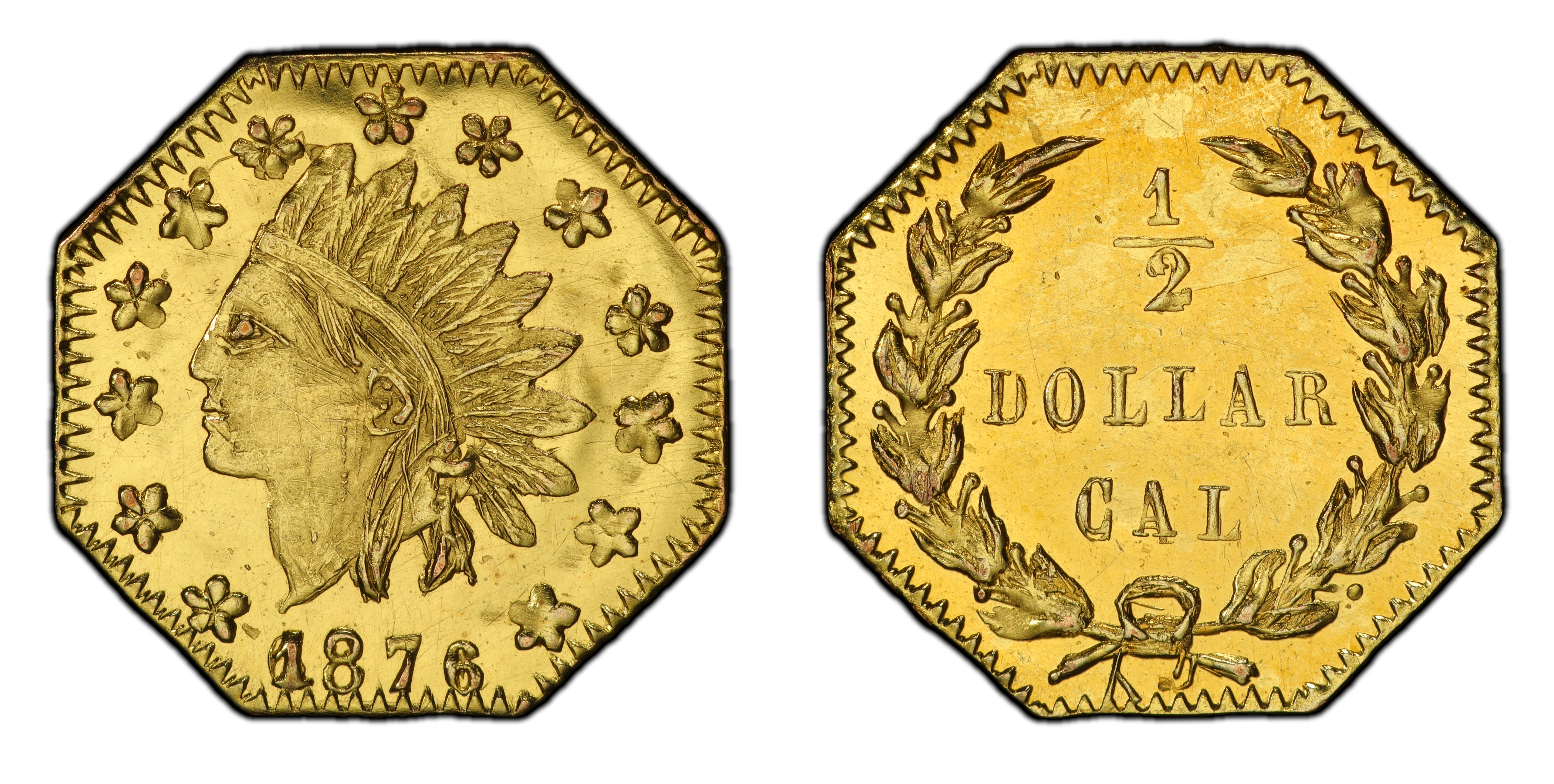
Obverse & Reverse
The 1876/6876 BG-935 is a fascinating artifact from the second period of California Fractional Gold production. The initial wave of these small-denomination gold pieces (1852-1856) arose from a genuine and pressing economic need. The influx of over 300,000 people during the Gold Rush created a vibrant economy, but the United States Mint was slow to provide sufficient small change, making everyday transactions with gold dust cumbersome and inaccurate. Private jewelers and assayers in San Francisco stepped into this void, producing quarter dollar, half dollar, and dollar pieces. However, by the 1860s, the initial purpose had shifted. The U.S. government began to supply more official coinage, and the fractional gold pieces transitioned from necessary currency to popular souvenirs and keepsakes. This evolution was codified by the Coinage Act of 1864, which explicitly outlawed private coinage. Enforcement was lax for nearly two decades, leading to a prolific 'Period Two' (1859-1882) of production. To circumvent the law, minters often used earlier, pre-Act dates on their dies, a practice that gives this period its distinctive character. The BG-935 is a prime example of this deceptive dating. The '1876' date is punched over a nonsensical '6876' on the die, a clear indicator of its post-1864 manufacture and a tactic to create an interesting variety for collectors. These pieces were no longer intended to be a primary medium of exchange; their gold content was significantly less than their face value, rendering them tokens. Instead, they were sold as mementos of the Gold Rush, tiny, glittering novelties for tourists or for locals to send back East. The fact that this variety is often found with prooflike surfaces ('PL') further cements its status as a specially made collector's item rather than a workhorse circulation coin.
Associated EventPost-Gold Rush Era / Centennial Exposition Period
Reason For MintingPrimarily created as a souvenir and collectible to circumvent the Coinage Act of 1864, which prohibited private coinage.
Minter HistoryThe specific minter for the BG-935 die pair is not definitively known, a common trait for Period Two fractionals. Production was often clandestine due to the questionable legality. San Francisco jewelers like Frontier, Deviercy & Co., and others are known to have produced many of the similar styles from this era. These firms operated in a competitive market, creating a wide variety of designs and employing techniques like overdating to appeal to the burgeoning collector and tourist markets. Their primary business was jewelry, but the production of these popular gold tokens was a lucrative sideline.
Historical SignificanceThe BG-935 epitomizes the evolution of California Fractional Gold from a necessary form of currency to a numismatic collectible. Its existence demonstrates the persistent demand for Gold Rush memorabilia and the clever methods minters used to continue production after the practice was outlawed. The overdate feature is a tangible link to the legal gray area these minters operated in, making it a story-rich piece for numismatists.
N/A
Denomination50 Cents
Minting Periodca. 1876
Assayer/MinterUnknown Private Minter (Possibly Frontier, Deviercy & Co. or another San Francisco jeweler)
Geographic OriginSan Francisco, California
Obverse DescriptionA stylized head of a Native American princess, facing left, wearing a feathered headdress. The portrait is surrounded by thirteen stars, representing the original colonies.
Obverse Inscription(No lettering, only the portrait and 13 surrounding stars)
Reverse DescriptionThe denomination '1/2' is centered, encircled by a wreath of leaves and berries. The inscription 'CALIFORNIA GOLD' appears above the wreath, and the date '1876' appears below. The overdate feature shows remnants of '6876' underneath '1876'. The coin is octagonal in shape.
Reverse InscriptionCALIFORNIA GOLD / 1/2 / 1876
CompositionGold
Stated Fineness Actual FinenessVaries, typically between .500 and .750 (12-18 karat gold)
Weight0.24 grams
Diameter10.00 mm
EdgePlain
Unknown
Survival Estimate16-30 pieces known
Rarity ScaleR-6 (Very Rare)
Sought for its high rarity (R-6), distinctive octagonal shape, Indian Head design, and the prominent, intriguing '1876/6876' overdate. The frequent prooflike quality adds significant eye appeal.
Key VarietiesThe primary variety is the BG-935 itself, defined by the specific die pairing and the clear overdate. No major sub-varieties, patterns, or official restrikes are known to exist for this specific die marriage. Collectors should be aware of the vast number of modern, worthless, gold-plated replicas of California Fractional Gold that are not from the original 1852-1882 period.
Authentication TipsGenuine examples have a sharp, albeit sometimes uneven, strike from hammered dies. The digits of the overdate should be clear under magnification. The gold color should be consistent with 14-18K alloys, not the brassy yellow of modern fakes. The weight should be very close to 0.24 grams. Compare the style of the Indian Head and the wreath to high-resolution images of certified examples, as counterfeit dies often have a crude, 'puffy' appearance.
Shopping ConsiderationsFor a premium quality BG-935, look for an example with a sharp, well-centered strike, as these were often misaligned. The 'PL' (prooflike) designation is highly desirable and signifies deeply mirrored fields, which should be free of excessive hairlines or contact marks. Check the high points of the headdress feathers and the wreath for the first signs of wear. Original, uncleaned surfaces with a hint of reddish-gold toning command a significant premium. Avoid pieces that have been harshly cleaned, which strips the original skin and imparts a dull or unnaturally bright look, or those that show evidence of being mounted in jewelry.
A coin's grade is its condition, rated on a 1-70 scale. For rare coins, this is the most critical factor in determining value, as a tiny difference in preservation can mean a huge difference in price.
Relevant Grade TypesOriginal period issues were business strikes, technically intended for commerce but by this late date primarily made for collectors. They are found in Circulated (1-58) and, more commonly, Mint State (MS, 60-70) grades. No true Proofs were struck during the original period of issue. However, many examples of BG-935 were struck on polished planchets with polished dies, resulting in a Prooflike (PL) or Deep Mirror Prooflike (DMPL) finish on a regular business strike. These are not a different type of coin but rather a special quality of the strike, and they are highly prized.
Mint State CharacteristicsUncirculated examples are defined by their luster. For BG-935, the ideal is a specimen with deep, watery, prooflike fields. Strike quality varies; many show weakness on the stars or the fine details of the wreath due to the handmade striking process. The presence of die cracks or other minor planchet flaws is common and not necessarily a major detriment. Contact marks, even small ones, can be distracting on the mirrored surfaces and will greatly affect the grade.
Circulated Wear PatternsOn circulated examples, wear first appears as a flattening of the high points of the feathers in the headdress and on the cheek of the Indian princess. On the reverse, the highest points of the wreath and the numerals of the fraction '1/2' will show friction first. In lower grades (VF and below), the stars on the obverse and the letters in 'CALIFORNIA GOLD' will begin to lose their sharpness.
Key Factors For ValueFor the BG-935, the most important value drivers are: 1) Surface Quality: The depth and cleanliness of the prooflike fields are paramount. An MS-64 PL with clean surfaces is far more valuable than a heavily abraded MS-65. 2) Strike: A full, sharp strike that brings up all the details of the design is rare and desirable. 3) Eye Appeal: Coins with original, attractive luster and minimal distracting marks are highly prized. 4) CAC Approval: A sticker from CAC (Certified Acceptance Corporation) indicates a premium quality coin for its assigned grade and can add a significant premium, especially for a series known for variable quality.
PCGS Price Guide
| Grade | Price | Population |
|---|---|---|
| 63 | $850.00 | 1 |