1871 G50C BG-927 (Regular Strike)
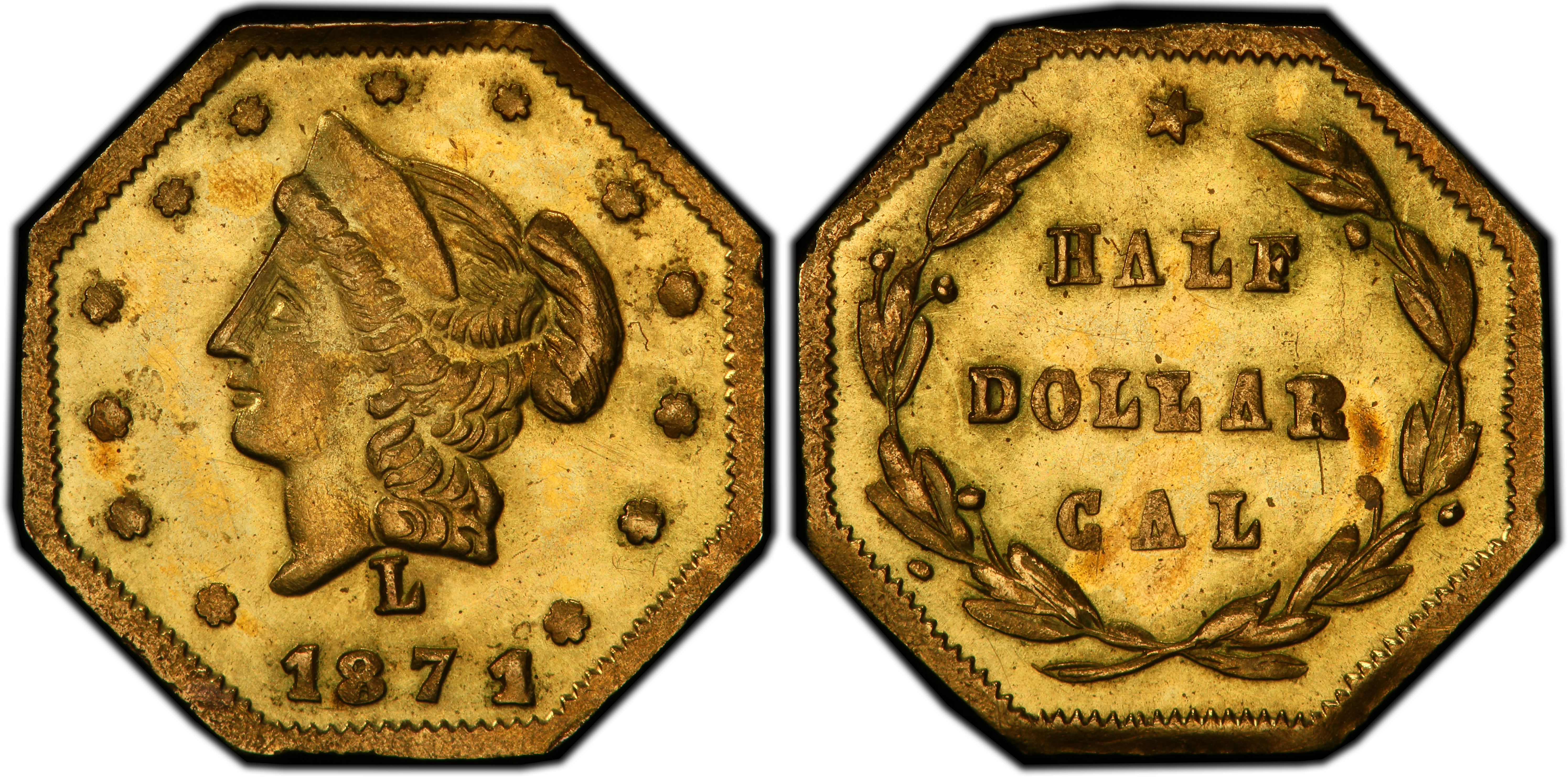
Obverse & Reverse
The 1871 G50C BG-927 is a product of the second period (1859-1882) of California Fractional Gold production, a fascinating and complex chapter in American numismatics. Following the initial Gold Rush boom, the acute shortage of small change that prompted the first wave of private gold coinage (Period One, 1852-1857) had largely been resolved by the output of the new San Francisco Mint. However, the allure of California gold and the romance of the '49ers had captured the nation's imagination. Enterprising jewelers, many of French origin in San Francisco, recognized a new market: not coins for circulation, but souvenirs and keepsakes for tourists and easterners fascinated by the West. These 'jeweler's issues,' as they are often called, were not intended to serve as a primary medium of exchange. They were typically underweight for their stated value and often made of lower-purity gold than their Period One predecessors. The production process remained rudimentary, often utilizing a sledgehammer to strike a top die, resulting in inconsistent strike quality. The Coinage Act of 1864 technically outlawed all private coinage, but enforcement was lax, and the popularity of these small gold tokens ensured their continued production into the early 1880s. The BG-927 variety, dated 1871, fits squarely into this era of peak souvenir production. Its existence speaks to a California that had matured from a raw frontier into a major economic and cultural center, one that was already mythologizing its own recent past. These tiny gold pieces were tangible links to the Gold Rush dream. It wasn't until a concerted crackdown by the U.S. Secret Service under Chief James J. Brooks in the early 1880s, citing concerns over potential fraud, that the production of these historic and popular items was finally halted.
Associated EventPost-Gold Rush California Tourism & Commerce
Reason For MintingPrimarily produced for sale as souvenirs, jewelry charms, and curiosities for tourists and collectors, rather than to alleviate a coin shortage.
Minter HistoryThe specific minter of BG-927 is unknown, which is common for Period Two issues. The dies were likely produced by one of the several San Francisco-based jewelers or die-sinkers active during the period, such as Robert B. Gray & Co. or their contemporaries. These firms capitalized on the demand for gold souvenirs, operating in a legally gray area after the Private Coinage Act of 1864.
Historical SignificanceThis coin is significant as an artifact of the 'souvenir phase' of private gold coinage in California. It represents the commercialization of the Gold Rush legacy and the transition of these pieces from quasi-currency to collectible memorabilia, a market that thrived for over two decades before federal authorities suppressed it.
Not applicable; Breen-Gillio is the standard reference.
DenominationG50C (50 Cents)
Minting Period1871
Assayer/MinterUnknown, attributed to San Francisco jewelers.
Geographic OriginSan Francisco, California
Obverse DescriptionA head of Liberty facing left, with loosely curled hair. She is surrounded by 13 six-pointed stars. The date '1871' is below the bust.
Obverse Inscription1871
Reverse DescriptionThe denomination '1/2' is within a wreath of two olive branches tied with a bow at the bottom. The legend 'CALIFORNIA GOLD' is inscribed in an arc above the wreath, sometimes with a small letter 'G' below the bow, though often absent or weakly struck.
Reverse InscriptionCALIFORNIA GOLD 1/2
CompositionGold
Stated Fineness Actual FinenessVariable, but generally lower than federal coinage, often ranging from 14 to 22 karats.
Weight0.25 grams
Diameter10.00 mm
EdgePlain
Unknown
Survival Estimate30-50
Rarity ScaleR-6 (Very Rare)
BG-927 is sought after by specialists in the extensive and popular California Fractional Gold series. Its appeal lies in its specific Breen-Gillio variety, octagonal shape, and its status as a relatively scarce R-6 issue from the heart of the souvenir period.
Key VarietiesThe primary catalog entry is BG-927. Within the broader 1871 G50C series, there are numerous other BG numbers representing different dies and manufacturers. No special collector issues like Proof restrikes are known for this specific variety; all known examples are considered business strikes, though some may exhibit prooflike surfaces from polished dies.
Authentication TipsAuthentic examples often have a slightly crude, hand-made feel. Look for sharp, well-defined stars and lettering, even if the central strike is weak. Counterfeits are common and often have a soapy, cast-like appearance with mushy details. Pay close attention to the style of the numerals in the date and the shape of the wreath's bow, comparing them to known genuine examples. Weight and dimensions should be very close to the standard.
Shopping ConsiderationsA premium quality example for its grade will possess a sharp strike, particularly on the date and Liberty's hair details. Look for clean, original surfaces that have not been harshly cleaned or polished, which is a common issue. Many exhibit prooflike or semi-prooflike fields from fresh dies, and these command a significant premium. Avoid examples with rim bumps, scratches, or evidence of having been mounted in jewelry, which was a common fate for these pieces.
A coin's grade is its condition, rated on a 1-70 scale. For rare coins, this is the most critical factor in determining value, as a tiny difference in preservation can mean a huge difference in price.
Relevant Grade TypesOriginal period issues were business strikes, although some were made with polished dies for souvenir sales, resulting in prooflike surfaces. These are found in Circulated (1-58) and Mint State (MS, 60-70) grades. True Proof (PR/PF) strikings from the original period of manufacture are not known to exist for this variety. Any later issues are considered replicas or tokens and are not genuine Period Two fractionals.
Mint State CharacteristicsUncirculated examples of BG-927 are defined by their luster. High-grade pieces often show flashy, prooflike fields, particularly around the devices. Strike can be variable; a fully struck central device (Liberty's hair and the wreath's bow) is rare and desirable. Due to the primitive minting process, even Mint State coins can show minor planchet flaws or striking weaknesses. Contact marks, though small, can be prominent on the high points of Liberty's cheek and hair.
Circulated Wear PatternsWear first appears on the highest points: Liberty's hair above the eye and ear, and on the cheek. On the reverse, the leaves and bow of the wreath will show the first signs of friction. In lower grades (VF and below), the stars will begin to lose their points and the date can become weak.
Key Factors For ValueFor the BG-927, value is driven by rarity (R-6) and grade. Surface quality is paramount; an example with original, lustrous surfaces will always be worth more than a cleaned or polished one of the same numerical grade. Strike sharpness is a major consideration, with premiums paid for well-defined details. Finally, eye appeal, including any attractive toning and the presence of prooflike fields, significantly enhances value. A CAC sticker confirms quality for the grade and typically results in a higher market price.
PCGS Price Guide
| Grade | Price | Population |
|---|---|---|
| 35 | $210.00 | 2 |
| 40 | $220.00 | 1 |
| 45 | $230.00 | N/A |
| 45+ | $235.00 | N/A |
| 50 | $245.00 | 2 |
| 50+ | $250.00 | N/A |
| 53 | $260.00 | N/A |
| 53+ | $265.00 | N/A |
| 55 | $270.00 | 7 |
| 55+ | $285.00 | N/A |
| 58 | $300.00 | 6 |
| 58+ | $310.00 | N/A |
| 60 | $335.00 | 5 |
| 61 | $400.00 | 11 |
| 62 | $500.00 | 12 |
| 62+ | $525.00 | N/A |
| 63 | $625.00 | 4 |
| 63+ | $750.00 | N/A |
| 64 | $1,250.00 | 1 |
| 64+ | $1,600.00 | N/A |
| 65 | $3,250.00 | N/A |