1870 G25C BG-808A (Regular Strike)
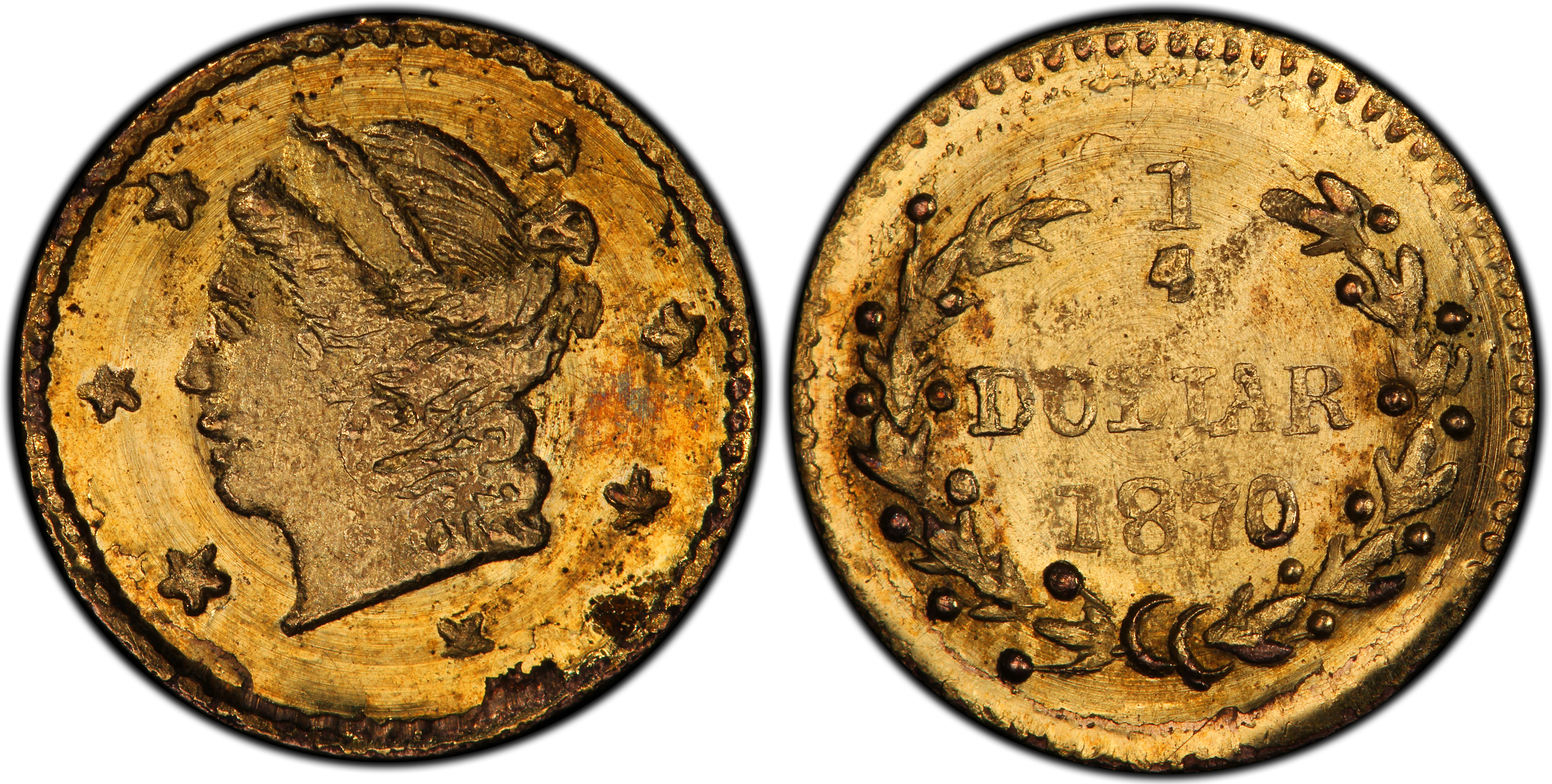
Obverse & Reverse
The 1870 G25C BG-808A is an almost mythical variety within the extensive and popular series of California Fractional Gold. These small-denomination gold pieces arose from a critical need for circulating coinage in the commerce-starved, gold-rich environment of California following the 1849 Gold Rush. While the U.S. Mint struggled to supply the West with sufficient federal coinage, private jewelers and metallurgists stepped in to fill the void. The first issues, now classified by numismatists as 'Period One' (1852-1857), were genuinely intended to alleviate the chronic shortage of small change and saw actual circulation. By the late 1850s, however, the landscape had changed. The San Francisco Mint was in full operation, and the acute need for private issues had subsided. The pieces struck from 1858-1882, known as 'Period Two' issues, including this 1870 specimen, served a different purpose. They were primarily created as souvenirs, keepsakes, and novelty items for locals, tourists, and merchants to send back East, capitalizing on the romantic allure of the Gold Rush. These later issues were often lighter and of less consistent fineness than their Period One predecessors. Many were produced by anonymous but skilled jewelers in San Francisco. The BG-808A is a die variety of the more common BG-808, and its status as a unique, single-known specimen suggests it may have been a trial or transitional striking, or perhaps part of an infinitesimally small batch whose dies failed quickly. Its survival is a remarkable fluke of history, a silent testament to a once-thriving industry of private gold coinage that catered to a nation fascinated by California's golden promise.
Associated EventPost-Gold Rush California Commerce
Reason For MintingPrimarily struck as souvenirs and jewelry items for a public fascinated with the Gold Rush, rather than for general circulation.
Minter HistoryThe minter of BG-808A is unknown, which is common for many 'Period Two' California Fractional Gold pieces. These were often produced by various San Francisco jewelers and artisans, such as Robert B. Gray & Co. or R.J. Galiotte, who did not consistently apply identifiable maker's marks. They operated in a competitive environment, creating a wide array of distinctive designs to appeal to the souvenir and gift market.
Historical SignificanceAs a 'Period Two' jeweler's issue, its significance lies not in its role as circulating money, but as a cultural artifact of the post-Gold Rush era. It represents the commodification of the Gold Rush dream and the demand for tangible mementos from the romanticized West. The BG-808A variety's extreme rarity makes it a numismatic prize, highlighting the minute variations and ephemeral nature of these private productions.
BG-808A
Denomination25 Cents
Minting Period1870
Assayer/MinterUnknown
Geographic OriginSan Francisco, California
Obverse DescriptionFeatures a small, left-facing Liberty Head, similar in style to contemporary federal gold coinage. She is surrounded by thirteen stars. The specific die characteristics that distinguish BG-808A from BG-808, such as the precise positioning of the head, stars, or date, are defined in the Breen-Gillio reference but are not widely published due to the coin's rarity.
Obverse Inscription1870
Reverse DescriptionA wreath composed of two branches tied with a ribbon at the bottom encircles the denomination. The specific diagnostics of the BG-808A reverse die, likely involving berry placement, leaf shapes, or the style of the fraction, are what set it apart from BG-808.
Reverse Inscription1/4
CompositionGold
Stated Fineness Actual FinenessVaries, typical for Period Two issues, often between .500 and .800 fine.
Weight0.24 grams
Diameter9.90 mm
EdgePlain
Extremely low, likely less than 10.
Survival Estimate1 known specimen.
Rarity ScaleR-8 (Unique or Nearly So)
The BG-808A is the ultimate prize for the advanced specialist in California Fractional Gold. Its appeal is based entirely on its status as a unique, cataloged die variety. Owning this coin means owning the single finest and only known example of its kind, representing the pinnacle of rarity in an already popular collecting field.
Key VarietiesThe primary variety is the regular BG-808. The BG-808A is a distinct die marriage of which only one example is currently confirmed to exist. No later-date restrikes or special collector issues are known.
Authentication TipsAuthentication requires comparison against the known genuine specimen. Any prospective example would need to be verified by leading experts and grading services. Characteristics to scrutinize include die markers, planchet thickness (genuine pieces are very thin), strike character, and surface texture. Counterfeits of California fractionals are extremely common; they often have a soapy, cast-like appearance, incorrect weight, or designs that do not match known Breen-Gillio varieties. Any piece not bearing the denomination (e.g., '1/4 DOLLAR' or '25 CENTS') or featuring a bear is a 20th-century token, not a genuine fractional.
Shopping ConsiderationsAs a unique coin, the only 'shopping' consideration is being able to acquire it should the single known piece ever come to market. For the broader BG-808 type, a premium quality example would exhibit a sharp strike on the Liberty Head's details and the wreath's leaves. Surfaces should be free of the distracting marks, scratches, or evidence of jewelry mounting that plague these tiny issues. Original, lustrous surfaces with a pleasing reddish-gold patina are highly desirable. Avoid examples that have been harshly cleaned, polished, or show tooling in the fields.
A coin's grade is its condition, rated on a 1-70 scale. For rare coins, this is the most critical factor in determining value, as a tiny difference in preservation can mean a huge difference in price.
Relevant Grade TypesOriginal period issues were business strikes intended for sale as souvenirs, not circulation. They are found in Circulated (1-58, though rare for Period Two issues) and primarily Mint State (MS, 60-70) grades. The single known BG-808A is graded MS-62 by NGC. No Proof (PR/PF) examples were struck during the original period of issue, and no later restrikes are known.
Mint State CharacteristicsFor this issue, a Mint State coin's quality is defined by strike and surface preservation. These were often crudely struck, so a well-centered and sharp strike is a major value driver. Luster is typically satiny and can sometimes be prooflike. Due to their small size and handling as novelties, even uncirculated examples are expected to have some minor ticks or hairlines. The sole known BG-808A is noted to have a typical strike for the series.
Circulated Wear PatternsWhile the known example is Mint State, if a circulated piece were to surface, wear would first appear on the high points of Liberty's hair, cheek, and the highest leaves and bow of the wreath on the reverse. The delicate stars on the obverse would be among the first elements to lose their sharpness.
Key Factors For ValueFor the unique BG-808A, the overwhelming factor for value is its status as the only one known. Its grade of MS-62 establishes a baseline, but its uniqueness transcends a simple grade-based valuation. For the more available BG-808 variety, key factors are sharpness of strike, minimal contact marks, and original, uncleaned surfaces. Eye appeal is paramount; a coin with attractive original color and luster will always command a significant premium over a washed-out or heavily marked specimen of the same grade. A CAC sticker would confirm premium quality for the grade and add a further premium.
PCGS Price Guide
| Grade | Price | Population |
|---|---|---|
| 62 | $3,150.00 | 1 |
| 62+ | $3,650.00 | N/A |
| 63 | $4,250.00 | 1 |
| 63+ | $5,500.00 | N/A |
| 64 | $8,500.00 | 2 |