1873 G50C BG-1031 (Regular Strike)
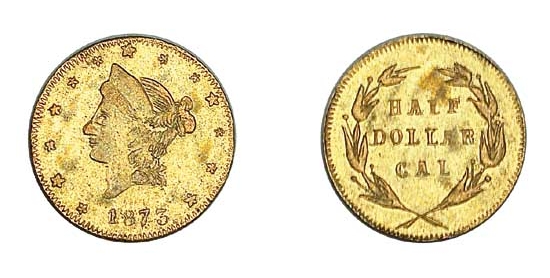
Obverse & Reverse
The 1873 G50C BG-1031 is a product of the second phase of California's fascinating fractional gold series. Unlike the earlier 'Period One' (1852-1857) issues, which were struck out of genuine commercial necessity to alleviate a severe shortage of small change during the initial chaos of the Gold Rush, the 'Period Two' (1858-1882) pieces were created for a different purpose. By the 1870s, the U.S. Mint in San Francisco was in full operation, supplying ample federal coinage for daily transactions. The need for private fractional gold had vanished. Instead, local jewelers and artisans capitalized on the romantic allure of the Gold Rush, producing these miniature gold coins primarily as souvenirs and collectible keepsakes. They were popular with tourists and locals who wanted a small, affordable piece of 'gold country' memorabilia. These later issues, often called 'jeweler's issues,' were not intended to and did not circulate as money. Their production was technically a violation of the Private Coinage Act of 1864, but the law was not strictly enforced against these small, low-value tokens until the Secret Service cracked down in 1883. The BG-1031, dated 1873, represents this era perfectly. It was likely struck in a small San Francisco workshop, using hand-operated presses, which accounts for the variability in strike quality seen among surviving examples. While their intrinsic gold value was minimal even at the time, their connection to the enduring legacy of the Gold Rush gives them a historical significance far exceeding their metallic worth. They are tangible links to a post-Gold Rush California, an economy transitioning from frontier chaos to established commerce, yet still deeply proud of its gold-fueled origins. The high rarity of this specific variety today suggests it was produced in very limited quantities, even for a souvenir.
Associated EventPost-Gold Rush California Commerce
Reason For MintingPrimarily struck as a souvenir or collectible keepsake of the California Gold Rush era, not for monetary circulation.
Minter HistoryThe specific minter for BG-1031, like many 'Period Two' California fractional gold pieces, is unrecorded. These coins were typically produced by anonymous or small-time jewelers in San Francisco who capitalized on the souvenir market. They were not large, organized minting operations like their Period One predecessors but rather artisans with the skills to work in gold and create dies for these miniature pieces.
Historical SignificanceRepresents the evolution of California fractional gold from necessary currency to nostalgic souvenirs. It is a tangible artifact of how the Gold Rush was memorialized and commercialized in the decades following the initial boom, embodying the romanticism of the era for a new generation of Californians and tourists.
N/A
Denomination50 Cents
Minting Period1873
Assayer/MinterUnknown Jeweler
Geographic OriginSan Francisco, California
Obverse DescriptionThe obverse features a small, classic Liberty Head facing left, similar in style to the contemporary federal gold coinage but often of a cruder, more stylized execution. The head is typically surrounded by 13 six-pointed stars arranged along the upper border.
Obverse Inscription Reverse DescriptionThe reverse is dominated by a wreath composed of two branches tied with a ribbon at the bottom. Inside the wreath is the denomination '50 CENTS'. The date '1873' is located below the wreath, near the rim.
Reverse Inscription50 CENTS 1873
CompositionGold
Stated Fineness Actual FinenessTypically varied from 10k to 14k, containing significantly less than their face value in gold.
Weight0.25 grams
Diameter10.00 mm
EdgePlain
Unknown, but extremely small.
Survival Estimate10-15 coins. Based on combined PCGS and NGC population reports (a total of 11 graded examples as of late 2025) and accounting for a few potential raw examples.
Rarity ScaleHigh R-6 (13-30 known)
The BG-1031 is highly sought after due to its extreme rarity as a 'High R-6' variety. As a 'Period Two' issue, it appeals to specialists who appreciate the charm and history of these souvenir pieces. Its tiny size and delicate features make it a fascinating example of numismatic artistry on a miniature scale.
Key VarietiesThere are no major varieties of the BG-1031 itself. As a 'Regular Strike,' all known examples were produced for collectors and tourists in 1873. No proof or special presentation strikings from the period of issue are known to exist for this variety. The primary variations among surviving examples are in strike quality and planchet characteristics, which are artifacts of the manual minting process.
Authentication TipsAuthentication requires expert examination. Look for the correct die markers for BG-1031 if available through specialized resources. Genuine pieces have a 'mushy' but consistent strike from a hand press, unlike modern cast or die-struck counterfeits which may be unnaturally sharp or have casting bubbles. The gold should have the correct color and luster for a 19th-century alloy. Many crude, modern replicas exist, often made of brass or thinly plated gold; these typically have incorrect design details, weights, and surface characteristics. Third-party grading is highly recommended.
Shopping ConsiderationsFor a premium quality BG-1031, look for a well-centered and reasonably sharp strike, especially on the word CENTS and the date, which can be weak. Original, uncleaned surfaces are paramount; many of these pieces were handled, cleaned, or used in jewelry, so finding one with undisturbed luster is a major prize. Look for pleasing, original reddish-gold or orange-peel toning. Avoid examples with evidence of solder, harsh cleaning (indicated by hairlines), bending, or significant rim bumps, as these tiny coins damage easily. Due to the rarity, any example without major problems is considered desirable, but one with superior eye appeal and a strong strike will command a significant premium.
A coin's grade is its condition, rated on a 1-70 scale. For rare coins, this is the most critical factor in determining value, as a tiny difference in preservation can mean a huge difference in price.
Relevant Grade TypesOriginal issues of this variety are considered business strikes, although they were made for collectors and not circulation. They are found in both Circulated (AU-55 to AU-58 are the most common circulated grades for this series, though lower grades are possible) and Mint State (MS, 60-70) grades. No true Proofs were struck during the original period. Any piece described as 'Proof-Like' (PL) simply refers to a business strike made with polished dies on a polished planchet, a common characteristic for these souvenir issues.
Mint State CharacteristicsIn Mint State, quality is defined by the strike and surface preservation. A typical BG-1031 may show some central weakness in the strike, particularly on Liberty's hair and the leaves of the wreath. Luster is typically satiny and can sometimes be proof-like. As these were made from relatively soft gold and handled as novelties, even uncirculated examples are expected to have some minor ticks or contact marks. A premium MS example would display a sharp strike for the issue, vibrant luster, and minimal, well-hidden marks.
Circulated Wear PatternsAlthough not intended for circulation, some pieces did become pocket pieces. Wear first appears on the highest points: Liberty's cheek, the hair above her ear, and the highest leaves in the wreath. On the reverse, the numerals of the date and the letters in 'CENTS' will show flattening. In lower grades (VF and below), the stars on the obverse will begin to lose their definition and merge with the field.
Key Factors For ValueRarity is the primary driver of value for BG-1031. After that, grade and surface quality are key. An example with original, uncleaned surfaces commands a massive premium over one that has been polished or had jewelry mounts removed. Sharpness of strike is also critical; a coin with a fully struck-up date and legends is far more desirable than a weakly struck example, even in the same numerical grade. Eye appeal, including attractive original toning, plays a significant role. A CAC sticker on a PCGS or NGC holder provides a strong endorsement of quality and often results in a higher market price.
PCGS Price Guide
| Grade | Price | Population |
|---|---|---|
| 50 | $450.00 | 1 |
| 50+ | $465.00 | N/A |
| 53 | $490.00 | N/A |
| 53+ | $510.00 | N/A |
| 55 | $525.00 | N/A |
| 55+ | $540.00 | N/A |
| 58 | $565.00 | 2 |
| 58+ | $625.00 | N/A |
| 60 | $800.00 | 2 |
| 61 | $975.00 | 3 |
| 62 | $1,200.00 | 2 |
| 62+ | $1,450.00 | N/A |
| 63 | $2,000.00 | 1 |