1873/2 G50C BG-941 (Regular Strike)
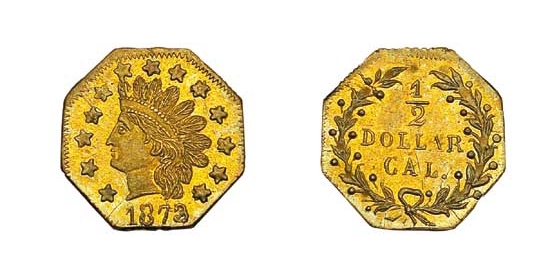
Obverse & Reverse
The 1873/2 50 Cents, cataloged as Breen-Gillio 941, is a quintessential example of a 'Period Two' California Fractional Gold piece. These small-denomination coins were born of the chaos and opportunity of the California Gold Rush. In the early 1850s ('Period One'), a severe shortage of circulating small change prompted private minters to strike quarter, half, and one-dollar gold pieces to facilitate everyday commerce. These early issues were generally of good weight and intended for circulation. However, by the 1860s and 1870s, the landscape had changed. The San Francisco Mint was producing ample federal coinage, and the initial necessity for private issues had waned. The fractional gold pieces of this second period (1859-1882) transitioned from utilitarian currency to popular souvenirs and jewelry items. They were produced by various jewelers in San Francisco, often with less gold content relative to their face value than their Period One predecessors. Their manufacture was a crude but effective process, typically involving dies struck by a sledgehammer, which resulted in significant variations in strike quality. The Coinage Act of 1864 made private coinage illegal, but the law was not strictly enforced against these small tokens until the Secret Service, under Chief James J. Brooks, cracked down in 1883, bringing the era of circulating private gold to a close. The BG-941, with its prominent Indian Head design and tell-tale 1873/2 overdate, is a fascinating artifact from this later period. It represents a time when the memory of the Gold Rush was a powerful marketing tool, and these tiny gold pieces served as tangible, affordable mementos of the great Western adventure for tourists and residents alike.
Associated EventCalifornia Gold Rush Aftermath
Reason For MintingPrimarily created to be sold as souvenirs and keepsakes to tourists and locals in post-Gold Rush San Francisco.
Minter HistoryThe specific maker of BG-941 is unrecorded, a common trait for many 'Period Two' varieties which lack a maker's initial. Prominent jewelers of the era, such as Robert B. Gray & Co. (who sold his firm in 1871) and the successor California Jewelry Co. (Levison Brothers), were major producers of fractional gold. It is highly probable that this coin emerged from one of the many workshops of skilled, and often anonymous, jewelers operating in San Francisco during the 1870s.
Historical SignificanceThis coin is a physical relic of the commercial transition of fractional gold from necessary currency to popular souvenir. The overdate feature also provides a small window into the pragmatic manufacturing processes of private minters, who would re-punch a die with a new date to extend its useful life.
N/A
Denomination50 Cents
Minting Period1873
Assayer/MinterUnknown San Francisco Jeweler
Geographic OriginSan Francisco, California
Obverse DescriptionAn Indian Head profile facing left, wearing a feathered headdress. The portrait is surrounded by 13 five-pointed stars. The date, with a clear '3' punched over a '2', is below the bust.
Obverse Inscription1873
Reverse DescriptionThe denomination '50 CENTS' is enclosed within a wreath of two olive branches. The wreath is open at the top and tied with a bow at the bottom. A small dot is centered below the bow.
Reverse Inscription50 CENTS
CompositionGold
Stated Fineness Actual FinenessVaries, typically 14 to 22 karats for Period Two issues.
Weight0.25 grams
Diameter11.00 mm
EdgePlain
Unknown
Survival Estimate31-75 coins known
Rarity ScaleR-5+
Sought after for its distinct Indian Head design, octagonal shape, and the visually interesting 1873/2 overdate, which makes it a specific and desirable variety. It appeals to collectors of California history, fractional gold specialists, and those who appreciate overdates.
Key VarietiesThe primary variety is the BG-941 1873/2 overdate itself. There are no known major sub-varieties or special collector restrikes from the period. All known examples are considered business strikes, although some may exhibit prooflike surfaces from being struck with polished dies.
Authentication TipsThe key diagnostic is the clear remnant of the underlying digit '2' visible beneath and within the loops of the final '3' in the date. Genuine pieces have a specific die state and fabric; they were hammer-struck, often resulting in slightly uneven surfaces or minor unstruck areas. Be wary of modern replicas, which are often gold-plated, have a soapy or cast-like appearance, incorrect weight, and often feature designs never used on originals, such as bears. All genuine Period Two fractionals are denominated (e.g., 'CENTS' or 'DOLLAR'); pieces marked 'CAL GOLD CHARM' are later tokens.
Shopping ConsiderationsA premium quality example for its grade will exhibit a sharp, well-centered strike, particularly on the details of the headdress feathers and the digits of the date. The overdate should be clear and unambiguous under magnification. Original, lustrous surfaces are highly desirable and command significant premiums; many examples have been cleaned or used as jewelry, so look for original 'skin' and avoid pieces with harsh cleaning lines, scratches, or evidence of solder removal. Given the crude manufacturing, minor planchet flaws or striations are common and can be acceptable, but large, distracting marks will detract from the value.
A coin's grade is its condition, rated on a 1-70 scale. For rare coins, this is the most critical factor in determining value, as a tiny difference in preservation can mean a huge difference in price.
Relevant Grade TypesOriginal period issues were business strikes intended for sale, not circulation in the traditional sense. They are found in Circulated (1-58) grades, often from being handled or used as jewelry, and Mint State (MS, 60-70) grades. No true Proofs were struck during the original period of issue. Some MS examples may be designated as 'Prooflike' (PL) if struck with highly polished dies, but these are still considered business strikes and are not separate Proof issues.
Mint State CharacteristicsAn uncirculated BG-941 is defined by the absence of wear. Quality is determined by the strike, surface preservation, and luster. Strikes can be inconsistent due to the hammer-striking process; a sharp strike with full feather details and strong legends is rare and desirable. Luster is typically vibrant and satiny. Small planchet flaws, laminations, or adjustment marks from the manufacturing process are common and do not preclude a Mint State grade, though they may affect eye appeal. Contact marks are the primary detractors from grade.
Circulated Wear PatternsWear first appears on the highest points of the design. On the obverse, look for flattening on the cheek, the eyebrow, and the upper feathers of the headdress. On the reverse, the high points of the leaves in the wreath and the bow will show the first signs of friction. In lower grades (VF and below), the finer details of the feathers will merge and the legends will begin to soften.
Key Factors For ValueBeyond the numerical grade, value is driven by three main factors. First is surface quality: an example with original, undisturbed luster and attractive golden toning is worth far more than a cleaned or polished coin of the same grade. Second is the strike: a sharply struck coin with full details, especially a clear overdate, is highly prized. Third is overall eye appeal; coins that are well-centered and free of distracting marks or planchet flaws are always in demand. A CAC sticker for this issue indicates premium quality for the grade and will typically result in a significant price premium.
PCGS Price Guide
| Grade | Price | Population |
|---|---|---|
| 55 | $230.00 | 1 |
| 55+ | $240.00 | N/A |
| 58 | $250.00 | 2 |
| 58+ | $265.00 | N/A |
| 60 | $300.00 | N/A |
| 61 | $350.00 | 1 |
| 62 | $400.00 | 6 |
| 62+ | $420.00 | N/A |
| 63 | $500.00 | 6 |
| 63+ | $540.00 | N/A |
| 64 | $700.00 | 9 |
| 64+ | $850.00 | N/A |
| 65 | $1,250.00 | 2 |
| 65+ | $1,750.00 | N/A |
| 66 | $2,750.00 | N/A |