1876 G50C BG-949, PL (Regular Strike)
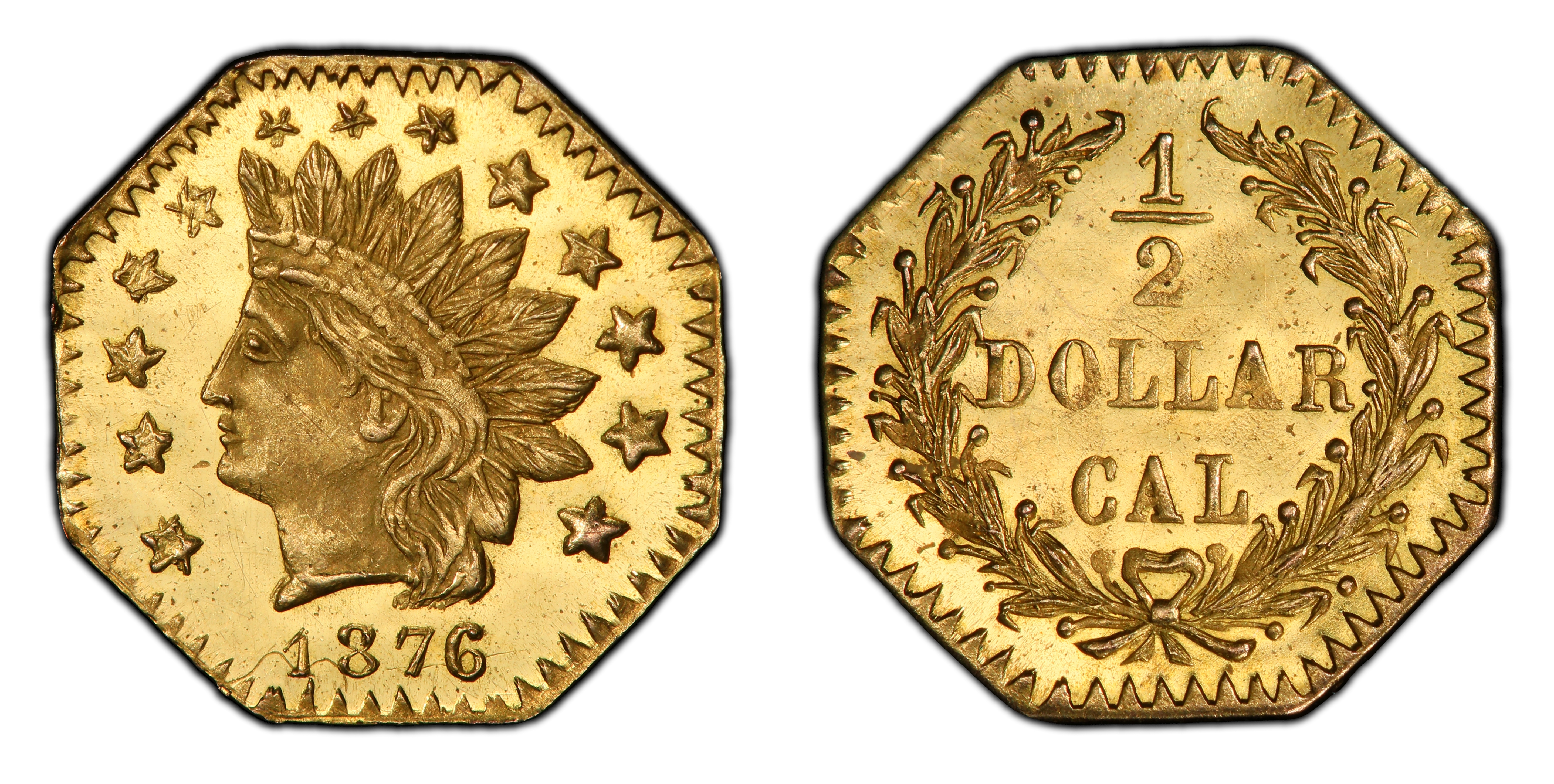
Obverse & Reverse
The 1876 BG-949 50 Cents is a quintessential example of 'Period Two' California Fractional Gold. By the mid-1870s, the initial impetus for these tiny gold coins—a severe shortage of small-denomination federal coinage during the Gold Rush—had long since passed. The San Francisco Mint, operating since 1854, was producing ample quantities of silver and minor coins, obviating any commercial need for private fractional gold. Instead, the production of these pieces had shifted entirely to serve the burgeoning tourist and souvenir market. Jewelers in San Francisco and other locales recognized the romantic appeal of the Gold Rush and began manufacturing these miniature gold pieces as mementos and keepsakes for visitors. Unlike the 'Period One' issues (1852-1857), which were generally of high gold content and intended for circulation, Period Two pieces were often underweight, of lower fineness, or even just gold-plated base metal, reflecting their non-monetary purpose. The Act of 1864 had explicitly forbidden private coinage, but enforcement was lax until the early 1880s, allowing this souvenir trade to flourish. The makers of BG-949, like most Period Two minters, remain anonymous. They were likely jewelers who usedcrude but effective coining methods, such as the 'hammer method,' where a top die was struck with a sledgehammer onto a planchet resting on a bottom die, often resulting in inconsistent strike quality. The 'PL' (Prooflike) designation indicates that some examples were struck using polished dies on polished planchets, creating a mirrored finish designed to enhance their visual appeal for collectors and tourists. These pieces were never intended to circulate as money but were sold as charming reminders of California's golden heritage, a practice that continued until the Secret Service finally cracked down on all private issues in 1882.
Associated EventCalifornia Gold Rush Tourist & Souvenir Trade
Reason For MintingPrimarily created for sale as souvenirs and curiosities to tourists, not for monetary circulation.
Minter HistoryThe specific minter for BG-949 is unknown, a common characteristic for many 'Period Two' (1859-1882) California Fractional Gold pieces. During this era, production was dominated by various San Francisco jewelers who created the coins for the souvenir market. Unlike some earlier Period One minters who occasionally used initials, these later manufacturers typically left their products unmarked to avoid potential legal issues stemming from the 1864 law prohibiting private coinage.
Historical SignificanceThe BG-949 represents the evolution of California Fractional Gold from a necessary circulating medium to a commercial souvenir. Its existence highlights the enduring romanticism of the Gold Rush and the entrepreneurial spirit of California jewelers who capitalized on this appeal. Numismatically, it is part of a complex and highly specialized collecting field, with the Breen-Gillio catalog providing the essential framework for its study.
N/A
Denomination50 Cents (G50C)
Minting Period1876
Assayer/MinterUnknown, likely San Francisco-based jewelers.
Geographic OriginSan Francisco, California
Obverse DescriptionAn Indian Head motif, facing left, surrounded by thirteen stars representing the original colonies. The date '1876' is positioned below the bust.
Obverse Inscription1876
Reverse DescriptionThe reverse features the denomination '1/2' and the word 'DOLLAR' within a wreath of leaves and berries. The 'CALIFORNIA GOLD' legend is typically absent from this variety.
Reverse Inscription1/2 DOLLAR
CompositionGold
Stated Fineness Actual FinenessVariable, as is common for Period Two issues, but generally made of gold.
Weight0.25 grams
Diameter10.00 mm
EdgePlain
Unknown
Survival EstimateModerately scarce; likely a few hundred known across all grades.
Rarity ScaleR-4 to R-6
This variety is popular due to its classic Indian Head design, octagonal shape, and the frequent availability of attractive, prooflike examples. It offers a tangible connection to the post-Gold Rush era souvenir trade and is a key variety for collectors of 'Period Two' fractional gold.
Key VarietiesThe primary variety is the BG-949 itself. Within this, collectors distinguish between regular strikes and those with Prooflike (PL) or Deep Mirror Prooflike (DMPL) surfaces. No original-period proof strikings or restrikes are known. The Breen-Gillio reference is the definitive guide to the numerous die marriages and subtle variations across the entire California Fractional Gold series.
Authentication TipsGenuine pieces are very thin and light. Look for sharp details on well-struck examples, though weak strikes are also common. The surfaces, especially on PL examples, should have a mirrored, flashy appearance, not a modern, overly brilliant one. Counterfeits are often thicker, have a 'soapy' or cast appearance, incorrect weight, and may feature incorrect design details or legends. Authentication by a major third-party grading service like PCGS or NGC is highly recommended.
Shopping ConsiderationsFor a premium quality example, seek out a well-centered, sharp strike with reflective, prooflike fields. Eye appeal is paramount. Look for coins with clean surfaces, free of distracting marks, scratches, or evidence of cleaning. Original, undisturbed surfaces command a significant premium. Given their small size, these coins are prone to being bent or damaged; inspect the planchet carefully for flatness. A specimen with a CAC sticker would confirm premium quality for the assigned grade.
A coin's grade is its condition, rated on a 1-70 scale. For rare coins, this is the most critical factor in determining value, as a tiny difference in preservation can mean a huge difference in price.
Relevant Grade TypesAll original examples of BG-949 were struck as business strikes, although many were produced with special care for the souvenir market. They are found in Circulated (1-58) grades, though this is less common, and Mint State (MS, 60-70) grades. The Prooflike (PL) and Deep Mirror Prooflike (DMPL) designations are applicable and highly desirable for this issue. There were no true Proofs struck during the original period of issue, and there are no known later-date restrikes.
Mint State CharacteristicsUncirculated examples are defined by their luster. For BG-949, high-grade specimens often exhibit flashy, prooflike fields due to the use of polished dies. Strike quality can vary; a sharp strike will show full detail in the Indian's hair and the leaves of the wreath. Due to the softness of the gold, even high-grade pieces may show tiny planchet flaws or minuscule contact marks acquired during production and handling by the jewelers who made them.
Circulated Wear PatternsWear first appears on the high points of the design: the cheek and feathers of the Indian Head on the obverse, and the numerals '1/2' and the bow on the reverse wreath. On lower-grade circulated examples, the stars and lettering will begin to merge with the fields.
Key Factors For ValueThe most significant value driver is the surface quality, specifically the reflectivity. A coin with deep, watery, prooflike fields will command a substantial premium over a standard mint state example. Sharpness of strike is the next key factor, followed by overall eye appeal—coins that are clean, mark-free, and possess attractive original gold toning are prized. A CAC sticker, verifying the quality for the grade, adds a strong premium for this and other California Fractional Gold issues.
PCGS Price Guide
| Grade | Price | Population |
|---|---|---|
| 64 | $850.00 | N/A |
| 64+ | $1,000.00 | N/A |
| 65 | $1,600.00 | 1 |
| 65+ | $1,750.00 | N/A |
| 66 | $2,000.00 | 1 |
| 67 | N/A | N/A |