1854 G50C BG-306, PL (Regular Strike)
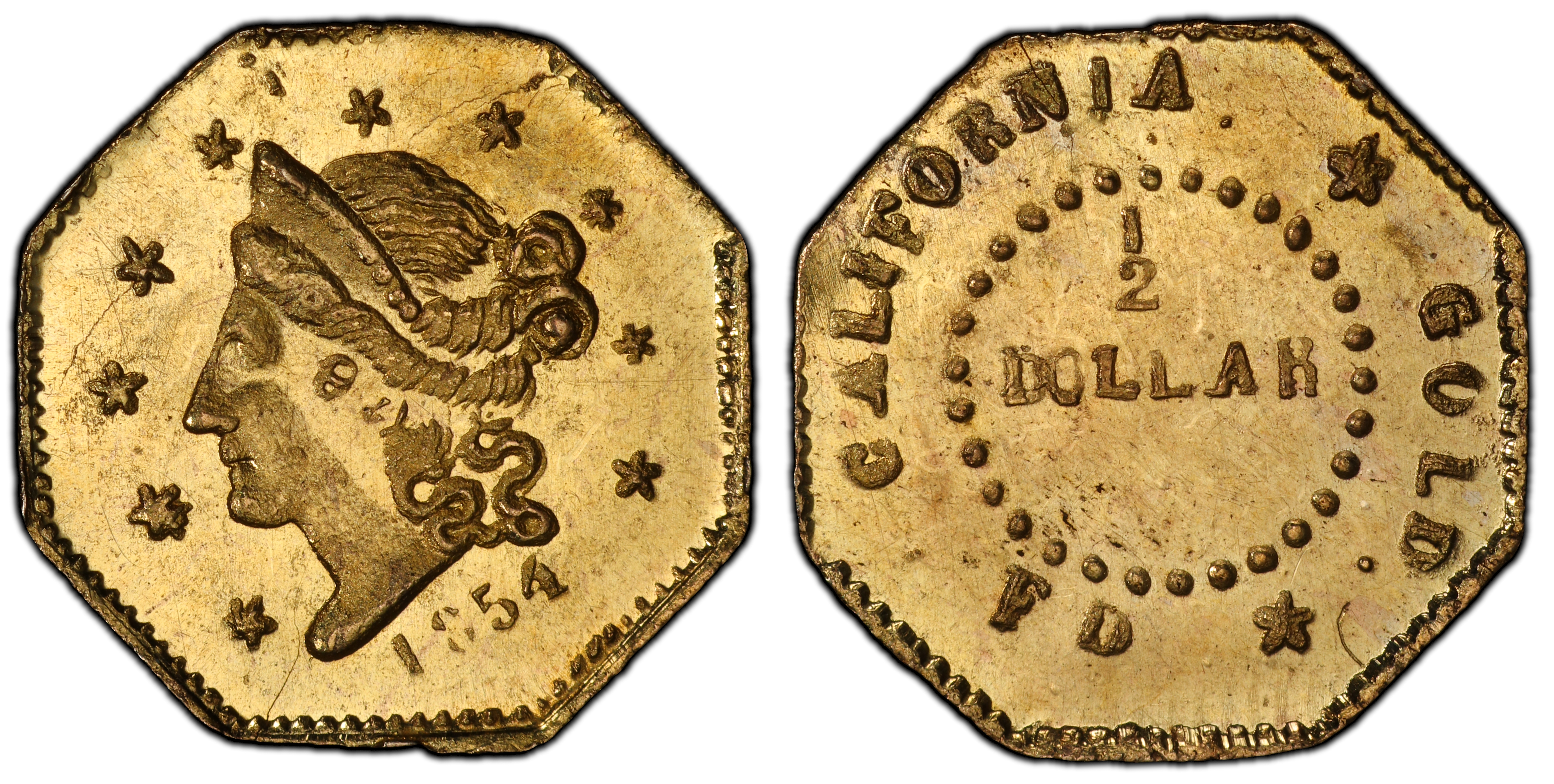
Obverse & Reverse
The 1854 BG-306 octagonal half dollar is a quintessential artifact from the first period (1852-1857) of California Fractional Gold production, a fascinating and complex chapter in American numismatics. Born from the acute shortage of small denomination coinage in the aftermath of the 1848 gold discovery, these miniature gold pieces attempted to fill a critical void in daily commerce. Following the massive influx of 'Forty-Niners,' California was awash in gold dust and large private and federal gold coins, but lacked the subsidiary silver coinage necessary for minor transactions. Gold dust was an imprecise and cumbersome medium of exchange, leading jewelers, assayers, and businessmen to take matters into their own hands. Beginning in 1852, these private minters began striking quarter, half, and one-dollar gold pieces. The BG-306 was produced by Frontier, Deviercy & Co., San Francisco-based jewelers and watchmakers, active during this vibrant era. These 'Period One' issues were genuinely intended to circulate, though their acceptance was not universal and their intrinsic value was often significantly less than their face value. As early as 1853, their novelty and small size made them popular as souvenirs to be sent back East, a trend that quickly overtook their commercial function. The underweight nature of most fractional gold was a constant source of controversy, but in the chaotic and isolated economy of Gold Rush California, they served a purpose, however flawed. The Coinage Act of 1864 would eventually outlaw private coinage, but the law was not strictly enforced in the West until 1883, leading to later periods of production that were almost exclusively for souvenir purposes. The BG-306, as a product of 1854, stands as a genuine relic of the time when these pieces were an integral, if unofficial, part of California's currency.
Associated EventCalifornia Gold Rush
Reason For MintingTo alleviate a severe shortage of small-denomination coinage for everyday commercial transactions in Gold Rush-era California.
Minter HistoryFrontier, Deviercy & Co. were San Francisco-based jewelers and watchmakers active during the mid-1850s. Like many jewelers of the period, they possessed the necessary skills and equipment to strike small gold coins. They are credited with producing several varieties of California Fractional Gold, including the BG-306, contributing to the diverse and unofficial money supply of the region before the establishment of a prolific federal branch mint.
Historical SignificanceThe BG-306 is a tangible link to the chaotic, formative economy of Gold Rush California. It represents a private, entrepreneurial solution to a government failure—the inability to supply adequate coinage to a rapidly expanding frontier economy. As a 'Period One' issue, it holds greater historical weight than later souvenir pieces, representing a genuine attempt to create a circulating medium of exchange.
BG-306
Denomination50 Cents
Minting Period1854
Assayer/MinterFrontier, Deviercy & Co.
Geographic OriginSan Francisco, California
Obverse DescriptionA Liberty Head, facing left, with thirteen stars surrounding the portrait. The date '1854' is positioned below the bust, often appearing at a distinct angle parallel to the neck truncation rather than following the beaded border. The portrait style is typical of the crude but charming engraving of the period.
Obverse Inscription1854
Reverse DescriptionThe denomination '50 CENTS' is enclosed within a wreath of leaves and berries. The wreath is open at the top.
Reverse Inscription50 CENTS
CompositionGold
Stated Fineness Actual FinenessVariable, but generally well below the .900 standard of federal coinage; Period One issues were notoriously underweight and of inconsistent purity.
EdgePlain
Unknown
Survival EstimateModerately scarce; likely a few hundred pieces exist across all grades.
Rarity ScaleR-4 (61-125 known)
This variety appeals to collectors of Gold Rush history, territorial gold, and early private coinage. Its octagonal shape, early date, and association with a known San Francisco firm make it highly desirable. As a Period One issue intended for circulation, it carries more historical significance than later souvenir pieces.
Key VarietiesThe primary variety is the BG-306 itself. There are no known major variations from the original minting period for this specific die marriage. Later restrikes or souvenir pieces were common for the series but are not specifically associated with the BG-306 dies. The key distinction for collectors is between Period One issues (1852-1857) like this one, and later period issues which were made purely for collectors and tourists.
Authentication TipsAuthentic pieces exhibit die characteristics consistent with known examples, such as the specific angle of the date. The strike is often somewhat crude, but the details should not be mushy or indistinct as seen on many modern replicas. Weight and specific gravity tests are useful, as originals are gold, though often of low fineness. Many fakes and modern souvenir tokens exist; collectors should be wary of pieces with bears on the reverse, as this is a common feature of non-contemporary tokens. Authentication by a major grading service (PCGS or NGC) is highly recommended.
Shopping ConsiderationsA premium quality example for its grade will exhibit a sharp strike, particularly on the stars, Liberty's hair, and the details of the wreath. Many survivors are weakly struck or were made with worn dies. Look for original, undisturbed surfaces with some remaining luster; prooflike (PL) or semi-prooflike fields are sometimes seen and command a premium. Avoid examples that have been harshly cleaned, polished, or used as jewelry, which is a common fate for these small gold pieces. The angled date is a key diagnostic for this variety and should be clearly visible. A CAC sticker for this issue indicates superior quality and eye appeal for the grade.
A coin's grade is its condition, rated on a 1-70 scale. For rare coins, this is the most critical factor in determining value, as a tiny difference in preservation can mean a huge difference in price.
Relevant Grade TypesOriginal period issues like the BG-306 were business strikes intended for circulation, and are found in Circulated (1-58) and Mint State (MS, 60-70) grades. No proofs were struck during the original period of issue. Any piece described as a 'Proof' would be a later special striking or a modern replica and should not be confused with the original 1854 issue.
Mint State CharacteristicsAn uncirculated BG-306 will show no evidence of wear. Luster is a key determinant of quality, often appearing as satiny or, more rarely, deeply prooflike and reflective. The strike can be inconsistent; a well-struck example with full central details and sharp stars is rare and desirable. Due to the small size and minting process, even Mint State examples may have minor planchet flaws or die polishing lines, which are considered characteristic for the issue.
Circulated Wear PatternsWear first appears on the high points of the design. On the obverse, this includes Liberty's cheek, the hair above the ear, and the eyebrow. On the reverse, the high points of the wreath's leaves and the numerals of the denomination will show the first signs of friction. In lower grades (VG and below), the stars will become faint and the date and legends may be partially worn away.
Key Factors For ValueFor the BG-306, value is driven by three main factors: grade, surface quality, and eye appeal. A high-grade Mint State coin (e.g., MS-64 or higher) is exponentially more valuable than a circulated example. Surface quality is paramount; an example with clean, original surfaces free of harsh cleaning, scratches, or jewelry mounts will always be preferred. Finally, eye appeal, which includes a sharp strike, pleasing original color, and sometimes prooflike fields, can add a significant premium. A CAC sticker confirms the quality for the assigned grade and adds to the coin's market value.
PCGS Price Guide
| Grade | Price | Population |
|---|---|---|
| 62 | N/A | N/A |
| 65+ | $3,250.00 | 1 |