(1856) G50C BG-915A (Regular Strike)
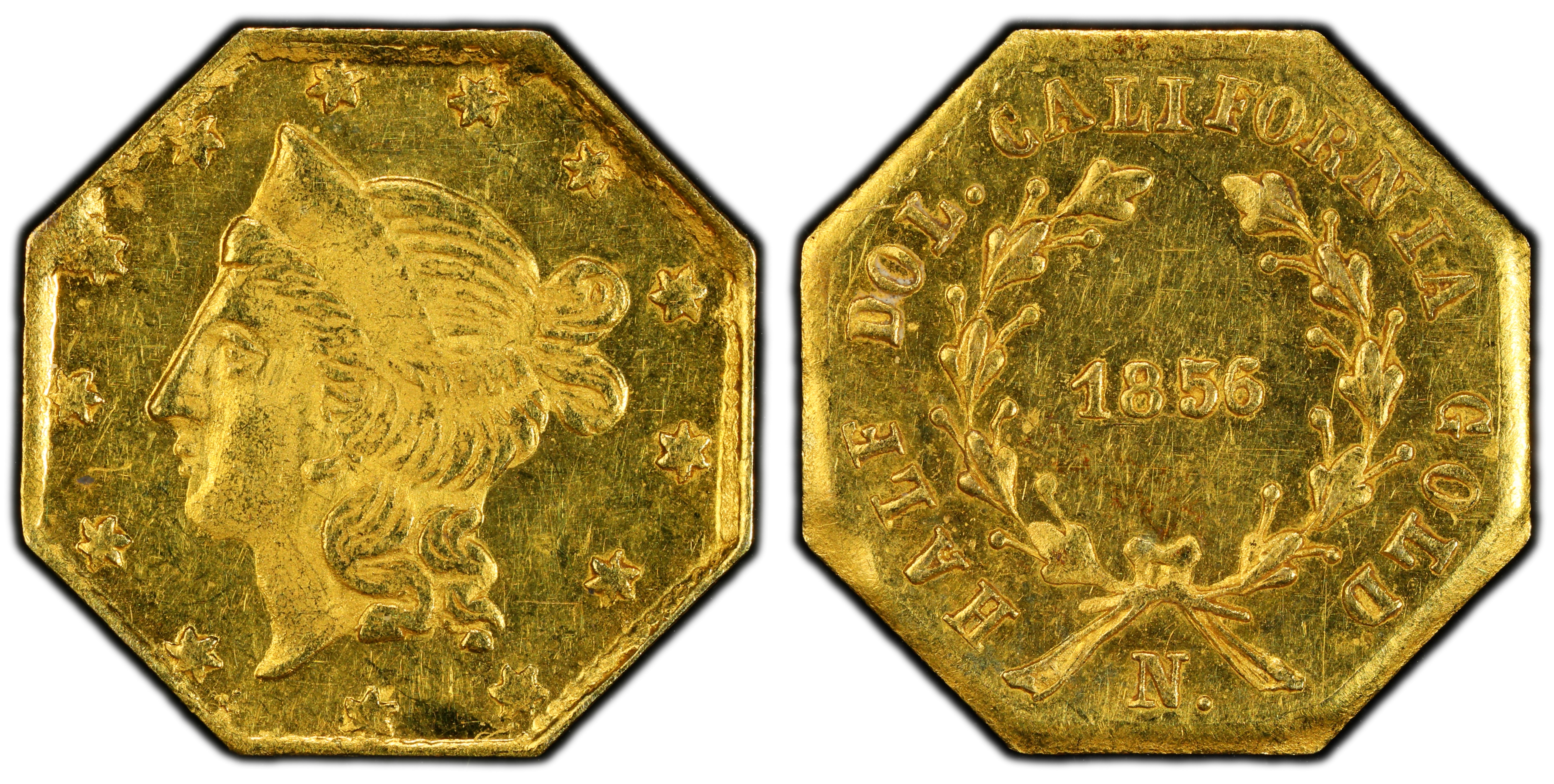
Obverse & Reverse
The story of the BG-915A is a fascinating microcosm of the evolution of California Fractional Gold, bridging the transition from utilitarian currency to collectible souvenir. Its origins lie in the original BG-311 half dollar, a 'Period One' (1852-1857) issue struck to alleviate a critical shortage of small-denomination coinage during the zenith of the California Gold Rush. In the chaotic, gold-dust-fueled economy of San Francisco, transactions for everyday goods were cumbersome, and the federal government's supply of coins was woefully inadequate. Private minters and jewelers, such as the prolific Antoine Louis Nouizillet, stepped into this void, producing fractional gold pieces that, while often underweight, served as an essential medium of exchange. The original 1856-dated BG-311 half dollars were part of this wave of necessary, privately-issued money. However, by the late 1850s, the San Francisco Mint was in full production, and the pressing need for private issues waned. The character of fractional gold began to change. Around 1859-1860, Robert B. Gray & Co., another San Francisco jeweler, acquired the business of Antoine Nouizillet, including his stock of dies, hubs, and punches. Gray, recognizing a different kind of market, began using these older, dated dies to produce restrikes aimed at the growing national fascination with the Wild West and the Gold Rush. These 'Period Two' (1858-1882) pieces were not intended for the grimy pouches of miners but for the cabinets of collectors and the pockets of tourists as souvenirs. The BG-915A is the product of this second phase. Struck by Gray & Co. around 1860 from Nouizillet's original 1856-dated BG-311 dies, it is a numismatic ghost—a coin bearing a date from the height of the circulation era but produced years later for an entirely different purpose. This is further evidenced by its physical characteristics; unlike the solid gold originals, research indicates BG-915A was struck on debased or gold-plated planchets, a clear sign it was meant as a memento rather than a monetary instrument. Its extreme rarity today suggests it was produced in very small numbers, perhaps only as a trial or to satisfy a few specific requests, securing its status as one of the most elusive and intriguing varieties in the entire series.
Associated EventCalifornia Gold Rush
Reason For MintingStruck as a numismatic collectible or souvenir using earlier, dated dies after the primary period of circulation had ended.
Minter HistoryRobert B. Gray & Co. was a San Francisco jewelry firm active in the mid-19th century. Around 1859, the company purchased the business and equipment of Antoine Louis Nouizillet, one of the most significant 'Period One' minters of fractional gold. While Nouizillet's issues were primarily for circulation, Gray & Co. repurposed his dies to create restrikes and new varieties, often bearing a 'G' hallmark, catering to the emerging collector and souvenir market. They were a key producer of 'Period Two' fractional gold until the early 1870s.
Historical SignificanceThe BG-915A is numismatically significant as a definitive 'transitional' piece, illustrating the shift in the purpose of fractional gold from circulating currency to souvenir items. It demonstrates the common 19th-century practice of reusing old dies and highlights the business acumen of jewelers like Robert B. Gray, who capitalized on the romantic appeal of the Gold Rush for a new audience of collectors. Its status as a restrike from an earlier period's dies makes it a complex and highly coveted rarity.
K-Unlisted
Denomination50 Cents
Minting Periodc. 1860 (Restrike from 1856-dated dies)
Assayer/MinterRobert B. Gray & Co. (using dies of Antoine Louis Nouizillet)
Geographic OriginSan Francisco, California
Obverse DescriptionA Liberty Head, facing left, with a coronet inscribed LIBERTY. Thirteen stars encircle the bust, representing the original colonies. The date, 1856, appears below the truncation of the neck.
Obverse InscriptionLIBERTY 1856
Reverse DescriptionThe denomination '50 CENTS' is enclosed within a wreath of leaves and berries, tied at the bottom with a bow. The octagonal planchet has a plain, non-denticled border.
Reverse Inscription50 CENTS
CompositionGold-plated alloy or debased gold. Unlike the original BG-311, this variety is not solid gold of a consistent fineness.
Stated Fineness Actual FinenessVariable and significantly below standard due to being a plated or debased issue.
EdgePlain
Extremely low; likely less than 10.
Survival Estimate3-4 known specimens.
Rarity ScaleHigh R-7
This is a paramount rarity for the advanced specialist in California Fractional Gold. Its appeal lies in its extreme scarcity, its unique status as a restrike by a different minter using original dies, and the story it tells about the evolution of the series. Acquiring a BG-915A is considered a pinnacle achievement in forming a comprehensive collection.
Key VarietiesBG-915A is itself a key variety, being a restrike of the BG-311. The primary distinction is that BG-311 is the original 'Period One' striking (c. 1856) on a solid gold planchet intended for circulation. BG-915A is the 'Period Two' restrike (c. 1860) by Robert B. Gray & Co. from the same dies, distinguished by its plain edge and its composition on a gold-plated or debased planchet. No other significant varieties or special collector issues of BG-915A are known due to its extreme rarity.
Authentication TipsAuthentication is critical. Look for the specific die markers of the BG-311/915A dies: a small cud (die break) on the rim adjacent to the 7th star (at approximately 2 o'clock) and a faint horizontal die crack through the coronet. The planchet's surface and composition are key; it should not appear to be solid, high-purity gold and may have a slightly different color or surface texture than Period One originals. The plain edge is a defining characteristic. Given the multitude of modern replicas, professional authentication by a top-tier grading service (PCGS or NGC) that recognizes the Breen-Gillio variety is mandatory.
Shopping ConsiderationsFor the few examples known, 'premium quality' is defined primarily by existence and certifiability. A potential buyer should prioritize a specimen with clear die markers and minimal damage. Given the crude, hammered striking process, some weakness, particularly on the peripheries (stars and wreath details), is expected and accepted. Focus on the quality of the central devices. The surfaces should be carefully examined for evidence of tooling or significant cleaning, which would be highly detrimental. An example with some remaining original luster, even if semi-prooflike as noted in auction descriptions, would command a significant premium. Given only 3-4 specimens exist, any opportunity to acquire one is a major event, and bidding competition will be fierce regardless of minor imperfections.
A coin's grade is its condition, rated on a 1-70 scale. For rare coins, this is the most critical factor in determining value, as a tiny difference in preservation can mean a huge difference in price.
Relevant Grade TypesAll known examples are considered business strikes, though as souvenir issues they did not circulate. They are found in Circulated (AU) and Mint State (MS) grades. No original Proofs were struck. As a later jeweler's issue, some specimens may exhibit reflective or semi-prooflike surfaces from polished dies, but they are not true Proofs. These restrikes are a distinct numismatic item, separate from the original 1856-dated BG-311 business strikes.
Mint State CharacteristicsAn uncirculated BG-915A will likely show evidence of a weak or uneven strike, characteristic of hammered coinage; the peripheral stars and wreath details are often soft. Luster can be subdued or, on some examples, semi-prooflike. The centers, particularly the Liberty head and the denomination, should be sharp. Because these were made for collectors, they are less likely to have the heavy contact marks of their circulating counterparts, but small planchet flaws or striking imperfections related to the debased composition are to be expected.
Circulated Wear PatternsWhile not intended for circulation, any wear would first appear on the highest points: Liberty's cheek, hair details above the ear, and the coronet. On the reverse, the leaves and berries of the wreath and the numerals of the denomination would show the first signs of friction. In AU grades, much of the original luster will be gone from the fields.
Key Factors For ValueFor a great rarity like BG-915A, the primary value driver is simply its existence and authenticity. Beyond that, a sharper strike, particularly on the central devices and date, adds significant value. Surface quality is paramount; an example free of impairments like scratches, cleaning, or repairs will be prized. Eye appeal, including any attractive toning over original surfaces, can further enhance its desirability. A CAC sticker on an already graded coin would provide an additional layer of confirmation of quality and would command a strong premium in the specialist market.
PCGS Price Guide
| Grade | Price | Population |
|---|---|---|
| 58 | $6,500.00 | 1 |
| 58+ | $7,000.00 | N/A |
| 60 | $8,250.00 | N/A |
| 61 | $9,250.00 | 1 |
| 62 | N/A | 1 |
| 63 | N/A | 1 |