1860 G$1 BG-1102 (Regular Strike)
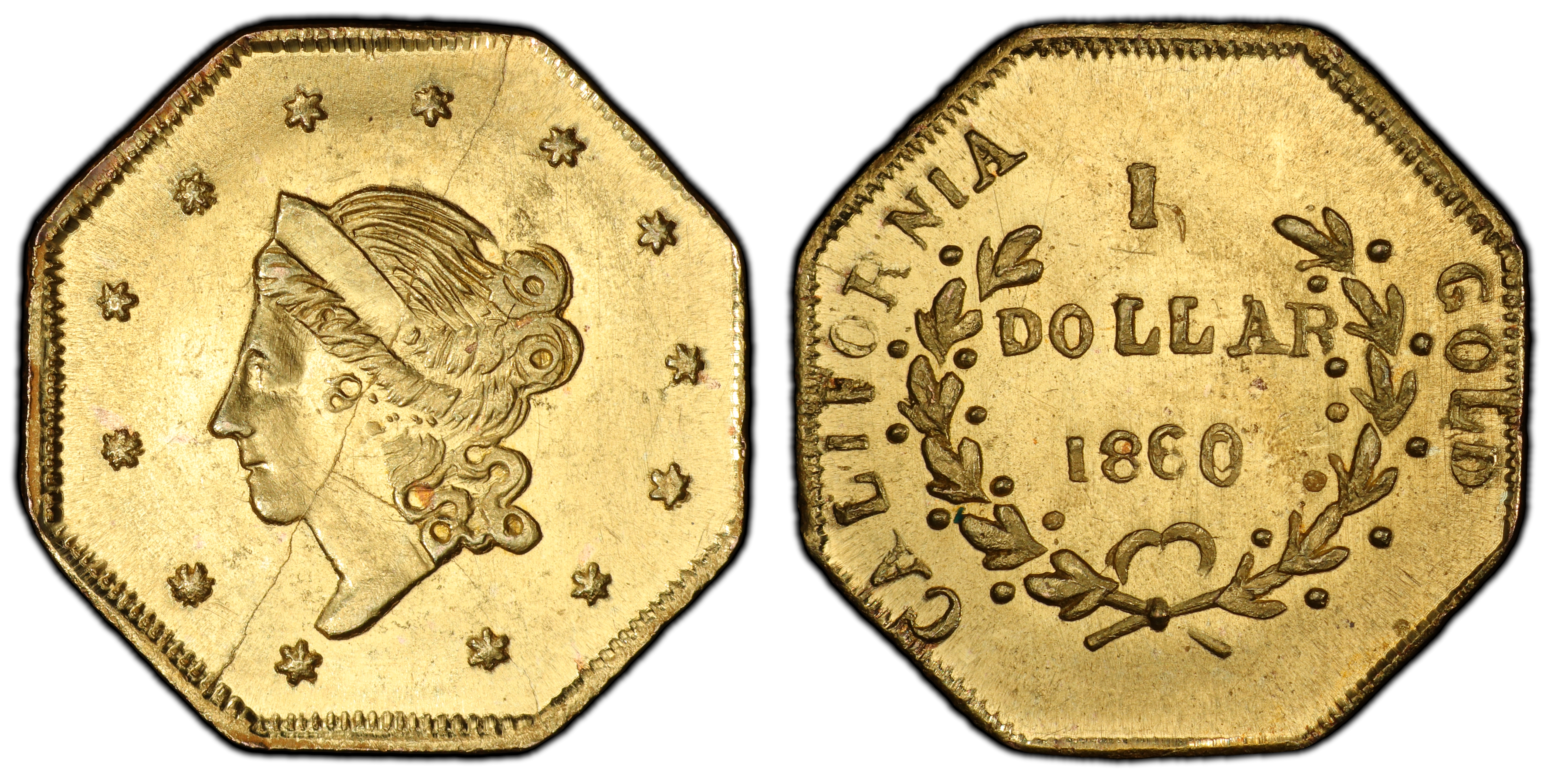
Obverse & Reverse
The 1860 BG-1102 Gold Dollar emerges from the second phase of California Fractional Gold production (1859-1882), an era distinct from the initial period of necessity-driven coinage. The first wave of fractional gold (1852-1856) arose directly from the California Gold Rush's acute shortage of small-denomination federal coinage. Jewelers and assayers in San Francisco struck quarter, half, and dollar gold pieces to facilitate everyday commerce. By 1860, the economic landscape had shifted. The San Francisco Mint was in full operation, and the pressing need for private coinage had subsided. However, the allure of California gold had not faded. A thriving tourist and souvenir trade developed, creating a new market for these miniature gold coins. Jewelers, many of whom were the original minters, recognized this opportunity and continued production. These 'Period Two' issues, including the BG-1102, were primarily created not as currency, but as mementos and for use in jewelry. This shift in purpose is reflected in their design and composition; artistry often took precedence over intrinsic value, and many pieces were of a lower fineness than their Period One counterparts. The coins were typically struck by hand, using a hammer and anvil method, which resulted in significant variations in strike quality. The passage of the Coinage Act of 1864, which prohibited private coinage, marked the beginning of the end for these pieces. While the law was not strictly enforced until the early 1880s, it cast a legal shadow over the enterprise. The BG-1102 stands as a fascinating artifact from this transitional period, representing the intersection of lingering Gold Rush fever, the rise of San Francisco as a tourist destination, and the final chapter of legal private coinage in the United States.
Associated EventCalifornia Gold Rush
Reason For MintingPrimarily struck for the souvenir and jewelry trade that flourished in San Francisco after the initial coin shortage had eased.
Minter HistoryWhile attribution for many fractional gold varieties is challenging, the BG-1102 is stylistically similar to other pieces from this era attributed to Robert B. Gray & Co. of San Francisco. Gray, often working with various partners, was a prominent jeweler and a prolific producer of fractional gold pieces during Period Two. His firm acquired dies from earlier minters like Antoine Nouizillet and also created their own. These jeweler-minters operated in a competitive and legally ambiguous environment, producing coins that catered to public fascination with the Gold Rush, long after its peak had passed.
Historical SignificanceThe BG-1102 is a prime example of a 'souvenir' or 'jeweler's' issue of California Fractional Gold. Its historical importance lies not in its role as a circulating medium, but as a tangible link to the romanticism of the Gold Rush era and the economy it spawned. It showcases how private minters adapted from fulfilling a crucial monetary need to serving a burgeoning collectibles and tourist market.
BG-1102
DenominationG$1
Minting Period1860
Assayer/MinterProbably Robert B. Gray & Co.
Geographic OriginSan Francisco, California
Obverse DescriptionA fairly crude rendering of a Liberty Head, facing left. She wears a coronet, and her hair is tied in the back. The portrait is encircled by 13 stars, with the date 1860 below.
Obverse Inscription1860
Reverse DescriptionA heraldic eagle with outstretched wings, clutching an olive branch and arrows in its talons. A shield is on its breast. The inscription CALIFORNIA GOLD is above, and the denomination is below.
Reverse InscriptionCALIFORNIA GOLD / 1 DOLLAR
CompositionGold
Stated Fineness Actual FinenessVariable, but often lower than federal standards for the era. Period Two pieces were sometimes debased with excess silver or copper, a common practice as their primary purpose shifted from currency to souvenirs.
Weight0.50 grams
Diameter11.50 mm
EdgePlain
Unknown
Survival Estimate76-150 known
Rarity ScaleR-4
The BG-1102 appeals to collectors for its direct connection to the Gold Rush era, its distinctive octagonal shape, and its status as a privately-minted gold piece. As a Period Two issue, it is more available in high grades than its circulating Period One counterparts, making it an accessible entry point into the series.
Key VarietiesA notable die state exists known as 'Die State II,' which is characterized by a prominent, bisecting die crack across the obverse. This variety is specifically sought by specialists. No original-period proof strikings or authorized restrikes are known to exist for this variety.
Authentication TipsAuthentication is critical for this series. Genuine BG-1102 pieces will have the denomination '1 DOLLAR' clearly on the reverse; many contemporary replicas or tokens omit the denomination. Compare the piece to high-resolution photos in the Breen-Gillio reference work or online archives. Look for characteristic die markers, like the specific star and letter placement. Counterfeits may appear soapy or have incorrect details. Genuine pieces were struck, not cast, so tool marks around the design elements and a generally sharp, if sometimes uneven, strike are expected.
Shopping ConsiderationsWhen acquiring an 1860 BG-1102, prioritize sharpness of strike and pristine, original surfaces. A premium quality example will show strong detail on Liberty's hair and the eagle's feathers. Luster is a key value determinant; many surviving examples are mint state and should exhibit bright, satiny or semi-prooflike luster. Because these were often kept as souvenirs, circulation wear is less of a concern than handling marks, cleaning, or damage from jewelry use (e.g., solder marks, evidence of mounting, or piercing). A coin with original, unmolested 'skin' and attractive reddish-gold toning will always command a significant premium.
A coin's grade is its condition, rated on a 1-70 scale. For rare coins, this is the most critical factor in determining value, as a tiny difference in preservation can mean a huge difference in price.
Relevant Grade TypesOriginal issues of BG-1102 are business strikes. Because they were created primarily as souvenirs rather than for circulation, a large proportion of the surviving population is found in Mint State (MS, 60-70) grades. A small number may exist in circulated grades (1-58), but this is atypical. No Proof (PR/PF) examples were struck during the original period of issue, and there are no known later-date collector restrikes.
Mint State CharacteristicsIn uncirculated grades, the quality of BG-1102 is judged by strike, luster, and marks. The strike can be uneven due to the manual minting process; well-centered and sharply struck specimens are desirable. Luster is typically bright and satiny. The gold is soft, so even high-grade examples may show minor contact marks from handling or storage over the decades. The presence of the bisecting obverse die crack of Die State II does not detract from the grade and is considered a collectible feature.
Circulated Wear PatternsOn the rare examples that saw circulation, wear will first appear on the highest points of the design. For the obverse, this includes Liberty's cheek, the coronet, and the hair above the ear. On the reverse, the eagle's head, the upper portions of the wings, and the shield's high points will show the first signs of friction and flatness.
Key Factors For ValueThe primary drivers of value for an 1860 BG-1102 dollar are grade and eye appeal. A sharply struck coin with brilliant, unimpaired luster will always be worth more than a softly struck or dull example of the same grade. Surface preservation is paramount; coins that are free of harsh cleaning, scratches, or evidence of jewelry use are highly sought. An example with attractive original color and a CAC sticker, indicating premium quality for the grade, will realize a substantial premium in the market.
PCGS Price Guide
| Grade | Price | Population |
|---|---|---|
| 45 | $635.00 | 1 |
| 45+ | $640.00 | N/A |
| 50 | $650.00 | 2 |
| 50+ | $660.00 | N/A |
| 53 | $675.00 | N/A |
| 53+ | $685.00 | N/A |
| 55 | $700.00 | 2 |
| 55+ | $715.00 | N/A |
| 58 | $775.00 | 8 |
| 58+ | $850.00 | N/A |
| 60 | $950.00 | 4 |
| 61 | $1,100.00 | 5 |
| 62 | $1,400.00 | 28 |
| 62+ | $1,500.00 | N/A |
| 63 | $1,650.00 | 22 |
| 63+ | $1,800.00 | N/A |
| 64 | $2,100.00 | 8 |
| 64+ | $2,250.00 | N/A |
| 65 | $3,000.00 | 6 |
| 65+ | $3,500.00 | 1 |
| 66 | $4,750.00 | 3 |