(1863) G50C BG-1305, H. Kroll & Co. (Regular Strike)
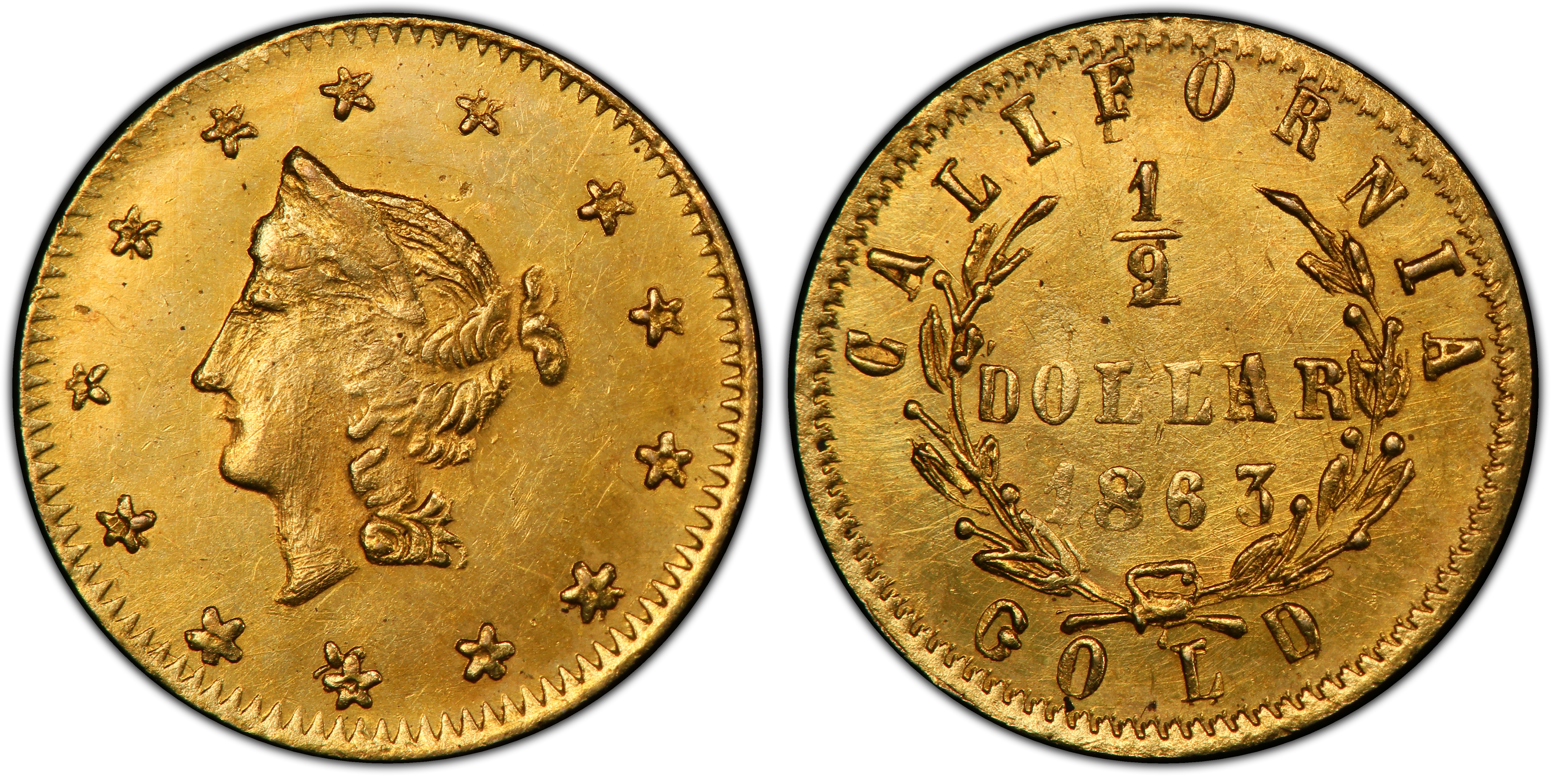
Obverse & Reverse
The (1863) G50C BG-1305 is a product of the second period (1859-1882) of California Fractional Gold production, a fascinating and complex chapter in American numismatics. Unlike the earlier 'Period One' issues, which were struck out of genuine commercial necessity to alleviate a severe shortage of small-denomination coinage during the initial frenzy of the Gold Rush, the Period Two pieces are generally considered to have been made primarily as souvenirs and for the jewelry trade. By 1863, San Francisco was no longer a chaotic frontier town; it was a burgeoning metropolis and an increasingly popular tourist destination. The U.S. Branch Mint, established in 1854, was producing ample federal coinage, largely eliminating the practical need for privately issued currency. Jewelers and engravers, however, recognized a continuing market for these miniature gold coins as mementos of the California adventure. These later pieces were often underweight and of lower fineness compared to their stated value, a fact that was of little concern to those purchasing them as keepsakes rather than for circulation. The Coinage Act of April 22, 1864, would soon make the private minting of currency illegal, but the practice continued covertly for years, with many pieces being backdated to pre-Act years to avoid legal trouble. The BG-1305, struck by the firm of H. Kroll & Co., is a quintessential example of this 'souvenir' period. Its design, featuring a classic Liberty head, was intended to evoke the appearance of official U.S. coinage, thereby increasing its appeal. These coins capture a moment of transition in California's history, from the raw necessity of the Gold Rush to a more civilized era where the Rush itself was becoming a romanticized memory worth commemorating.
Associated EventCalifornia Gold Rush Aftermath
Reason For MintingPrimarily struck to be sold as souvenirs and used in jewelry for tourists and locals in San Francisco, rather than to fill a circulating coinage need.
Minter HistoryHerman J. Kroll was a prominent San Francisco jeweler and watchmaker. He is listed in city directories of the era with a shop located at 318 Montgomery Street. Like many jewelers of the time, he capitalized on the public's fascination with gold by producing these small, privately issued tokens. His firm was one of several that created a wide variety of these Period Two fractional gold pieces, often characterized by more stylized and sometimes cruder engraving than the earlier, necessity-driven issues. Kroll's productions are part of the broader category of 'jeweler's issues' that define this later period of fractional gold.
Historical SignificanceThe BG-1305 represents the commercial evolution of California Fractional Gold from utilitarian currency to collectible souvenirs. It is a tangible artifact of San Francisco's development into a major city and tourist center, reflecting a time when the memory of the Gold Rush was a marketable commodity. These Period Two issues are a key component of the overall fractional gold series, illustrating the shift in their purpose and production after federal coinage became widely available.
N/A
Denomination50 Cents
Minting Period1863
Assayer/MinterHerman J. Kroll & Co.
Geographic OriginSan Francisco, California
Obverse DescriptionA head of Liberty facing right, her hair tied in a bun. She is surrounded by thirteen stars, representing the original colonies. The date '1863' appears below the truncation of the neck.
Obverse Inscription1863
Reverse DescriptionThe denomination '50 CENTS' is enclosed within a wreath of two olive branches tied with a bow at the bottom. The legend 'CALIFORNIA GOLD' appears above the wreath, arching along the upper rim. There is a small ornament or dot between 'CALIFORNIA' and 'GOLD'.
Reverse InscriptionCALIFORNIA GOLD 50 CENTS
CompositionGold
Stated Fineness Actual FinenessVaries, often lower than official U.S. coinage of the era.
Diameter11.00 mm
EdgePlain
Unknown
Survival EstimateScarce
Rarity ScaleR-5
This coin appeals to collectors of California history, Gold Rush memorabilia, and private territorial coinage. Its small size, gold composition, and direct connection to a famous San Francisco jeweler make it a popular and historically rich collectible. The clear date and attribution to H. Kroll & Co. add to its desirability.
Key VarietiesThe primary variety is the regular business strike. As a Period Two issue, the concept of 'restrikes' can be complex, as many pieces were made on demand for years. However, the Breen-Gillio reference work on California Fractional Gold is the definitive guide to cataloged die marriages and varieties. There are no known major, officially sanctioned restrikes in the manner of Chapman restrikes for federal coinage. Collectors should focus on acquiring a piece with a clear, well-attributed Breen-Gillio number like BG-1305.
Authentication TipsGenuine BG-1305 coins will exhibit die characteristics consistent with known examples cataloged in the Breen-Gillio reference. Pay close attention to the style of the numerals in the date and the lettering. Many modern replicas and fantasy pieces exist; authentic pieces are typically thin and sharply, if sometimes crudely, struck. Replicas are often thicker, have a soapy or cast-like appearance, and may feature designs (like bears) not found on genuine period issues. The standard reference, 'California Pioneer Fractional Gold' by Breen and Gillio, is an essential tool for authentication. Third-party certification by PCGS or NGC is highly recommended.
Shopping ConsiderationsA premium quality example of BG-1305 will exhibit a sharp strike, particularly on Liberty's hair details and the leaves of the reverse wreath. Look for coins with minimal contact marks and original, undisturbed luster. Surfaces should be clean and free of tooling, harsh cleaning, or evidence of having been mounted in jewelry, which is a common impairment for these pieces. Eye appeal is paramount; coins with a pleasing, original reddish-gold hue are highly sought after. Given the prevalence of counterfeits, purchasing a certified example from a reputable dealer is the safest approach.
A coin's grade is its condition, rated on a 1-70 scale. For rare coins, this is the most critical factor in determining value, as a tiny difference in preservation can mean a huge difference in price.
Relevant Grade TypesOriginal period issues like the BG-1305 were business strikes. While likely intended for sale as souvenirs rather than circulation, they are graded on the same scale as circulating coins. They can be found in Circulated grades (AG-3 to AU-58) and Mint State grades (MS-60 to MS-70). Because they were collectibles from the start, a higher proportion survive in Mint State compared to Period One issues. No proofs were struck during the original period of issue, and there are no known later-date, officially sanctioned proof restrikes.
Mint State CharacteristicsAn uncirculated BG-1305 will display full, unbroken mint luster, which can range from satiny to slightly reflective. Strike quality varies; a superior example will show strong detail on the highest points, such as the hair above Liberty's eye and the bow on the reverse wreath. Because the planchets were small and thin, some inherent weakness in the strike is common and should be expected. Contact marks, even small ones, are common and will affect the grade, but a choice specimen should be relatively free of distracting abrasions in prime focal areas.
Circulated Wear PatternsWear first appears on the highest points of the design. On the obverse, this includes Liberty's cheek, the hair bun, and the eyebrow. On the reverse, the highest points of the leaves in the wreath and the bow will show the first signs of friction. In lower circulated grades (VF and below), the finer details of the hair will merge and the legends will begin to soften.
Key Factors For ValueThe primary drivers of value for a BG-1305 are its grade and surface quality. An example with sharp details and brilliant, original luster will command a significant premium over a weakly struck or dull specimen. Eye appeal is crucial; collectors pay more for coins with attractive, original surfaces that have not been cleaned, polished, or otherwise impaired. Authentication and grading by a top-tier service (PCGS or NGC) is essential for marketability. A CAC sticker, indicating premium quality for the grade, adds a further layer of value and desirability for this issue.
PCGS Price Guide
| Grade | Price | Population |
|---|---|---|
| 62 | N/A | 1 |