1876/5 G$1 BG-1128 (Regular Strike)
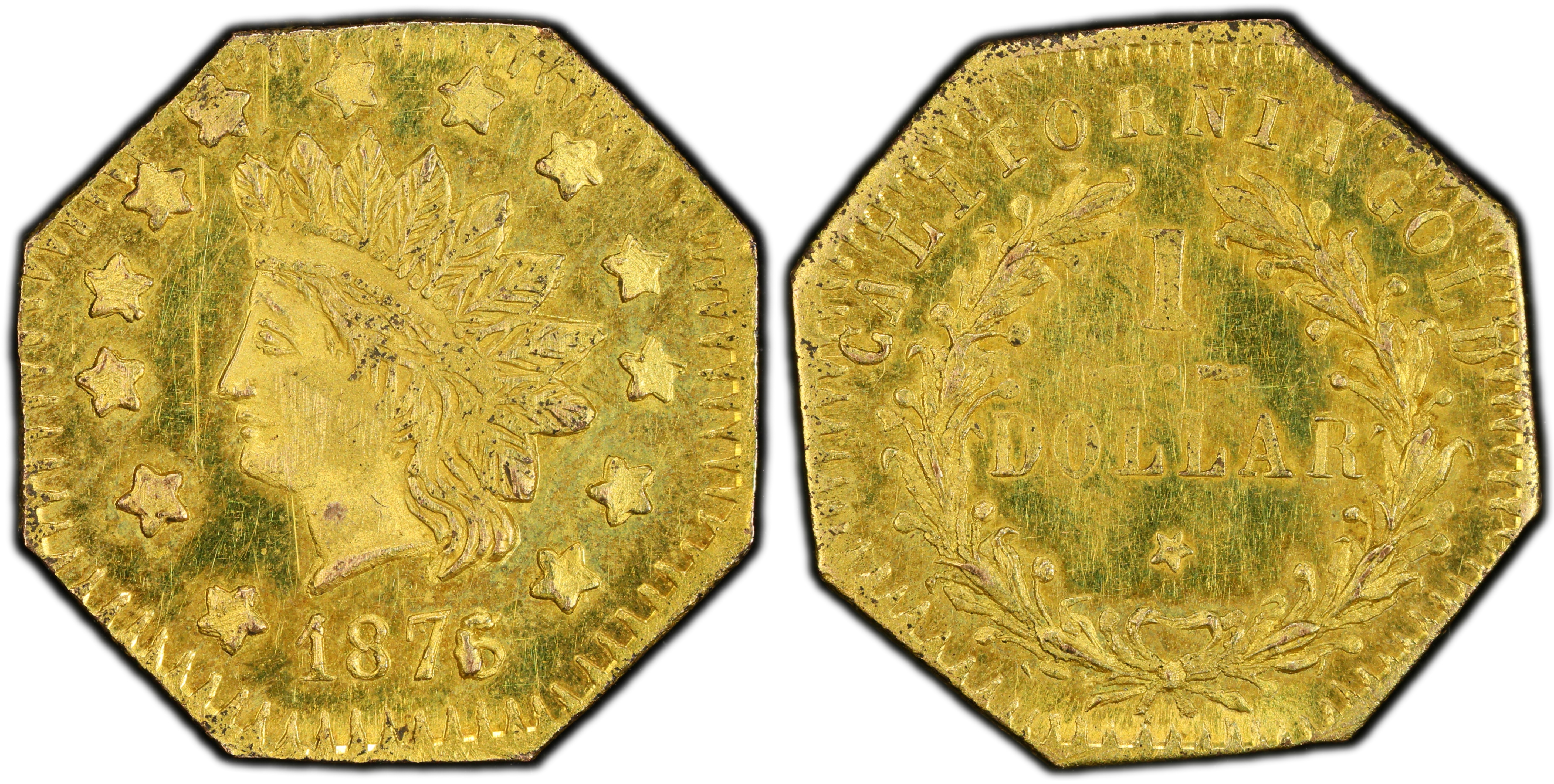
Obverse & Reverse
The 1876/5 G$1 BG-1128 is a product of the second period of California Fractional Gold production (1859-1882). Unlike the 'Period One' issues, which were struck out of genuine commercial necessity to alleviate a shortage of small change during the initial Gold Rush, these later 'Jeweler's Issues' served a different purpose. By the mid-1870s, the San Francisco Mint was in full operation and the acute need for private coinage had vanished. Instead, these small gold pieces were primarily manufactured as souvenirs, keepsakes, and jewelry items for tourists and locals nostalgic for the Gold Rush era. The year 1876 was particularly fraught for the producers of these technically illegal coins. The Coinage Act of 1864 had explicitly forbidden private individuals from issuing coinage, but the law was weakly enforced for over a decade. This laxity ended in 1876 when U.S. Secret Service Chief James J. Brooks initiated a crackdown. On August 10, 1876, agents arrested Christopher Ferdinand Mohrig, one of San Francisco's most prolific fractional gold minters, confiscating his dies and inventory. This event sent a chill through the remaining anonymous jewelers, forcing them further into the shadows. Many Period Two issues, including this one, are unattributed as the makers deliberately avoided hallmarks to escape prosecution. The 1876/5 overdate is a fascinating feature, indicating the re-use of an older 1875 die, a common cost-saving measure for these private ventures. These pieces were typically underweight and of variable fineness, never intended to meet federal standards, but rather to be sold at a premium over their minimal gold content. Their survival in relatively high grades is a direct result of their status as novelties rather than circulating currency.
Associated EventU.S. Secret Service crackdown on private coinage in California.
Reason For MintingPrimarily produced as a souvenir or novelty item for the jewelry trade, not to fill a circulating coinage need.
Minter HistoryThe specific minter for BG-1128 is unknown. Many 'Period Two' jewelers operated anonymously to avoid prosecution under the Coinage Act of 1864. Production was centered among various jewelers in San Francisco who found a ready market for these Gold Rush mementos. Prominent makers of other varieties during this era included Robert B. Gray & Co. and Christopher Ferdinand Mohrig, but no definitive link has been made between them and the BG-1128 dies.
Historical SignificanceThis coin is a tangible artifact from the final chapter of private gold coinage in California, representing a transition from functional currency to commercial souvenir. Its issuance in 1876, the very year of the federal crackdown, highlights the defiance and ultimate demise of this uniquely American enterprise. The overdate feature also offers a glimpse into the frugal and practical methods of the private minters.
Not Applicable, Breen-Gillio is the standard.
Denomination$1
Minting Period1876
Assayer/MinterUnknown/Unattributed Jeweler
Geographic OriginSan Francisco, California
Obverse DescriptionAn Indian Head (representing Liberty) facing left, wearing a feathered headdress. Thirteen stars encircle the portrait, representing the original colonies. The date '1876' with a clear '6' punched over a '5' is located below the bust.
Obverse Inscription1876/5
Reverse DescriptionThe denomination '1 DOLLAR' is inscribed in two lines within a wreath. The wreath is composed of two branches tied with a bow at the bottom.
Reverse Inscription1 DOLLAR
CompositionGold
Stated Fineness Actual FinenessVariable, but typically lower than the .900 standard of federal coinage.
Weight0.50 grams
Diameter12.50 mm
EdgePlain
Unknown; mintage records for private issues were not kept.
Survival Estimate31-75 (The R-5 Rarity rating in the Breen-Gillio reference implies this range)
Rarity ScaleR-5
Sought for its status as a scarce R-5 overdate, its connection to the final year of widespread fractional gold production, and the historical intrigue of the Secret Service crackdown. The octagonal shape and classic Indian Head design add to its popularity.
Key VarietiesThe primary variety is the 1876/5 overdate business strike. No proof or special collector issues are known from the period of original manufacture. Later souvenir tokens and replicas exist, but are not considered part of the Breen-Gillio cataloging system and have nominal value.
Authentication TipsAuthentication requires careful examination. The 1876/5 overdate should show clear remnants of the '5' under the '6', particularly at the top and bottom curves. Consult high-resolution images of certified examples to match die characteristics. Genuine pieces have a soft, lustrous quality, while many contemporary counterfeits appear brassy or have a soapy finish. Transfer-die fakes may show repeating depressions or raised tool marks not consistent with genuine planchet flaws or strike characteristics. The weight and specific gravity should be reasonably close to other authenticated Period Two dollars.
Shopping ConsiderationsA premium quality example will exhibit a sharp strike, especially on the fine details of the headdress feathers and the leaves of the reverse wreath, which are often weakly impressed. Original, undisturbed luster is paramount; avoid specimens that are cleaned, polished, or show evidence of being mounted in jewelry (solder marks, rim damage). Attractive, original toning, often a reddish or greenish-gold hue, is highly desirable. The visibility and clarity of the overdate are key value drivers; a bold overdate will command a significant premium over a weaker one.
A coin's grade is its condition, rated on a 1-70 scale. For rare coins, this is the most critical factor in determining value, as a tiny difference in preservation can mean a huge difference in price.
Relevant Grade TypesOriginal issues were business strikes intended for sale as souvenirs, not circulation. They are found in Circulated (1-58) and, more commonly, Mint State (MS, 60-70) grades due to their nature as collectibles. No Proof (PR/PF) examples were struck during the original minting period, though some high-grade Mint State examples may have prooflike (PL) surfaces from being struck with polished dies.
Mint State CharacteristicsUncirculated examples often display a soft, satiny luster rather than the hard, frosty luster of federal issues. The strike is a key differentiator; many are softly struck in the centers, with weakness on the highest points of the Indian's cheek and the wreath. Planchet quality can be variable, with minor original striations or flaws being common. Contact marks, while present, are often light, as these pieces did not see rough commercial use.
Circulated Wear PatternsWear first appears on the highest points of the design. On the obverse, check the cheekbone, the eyebrow, and the details of the feathers in the headdress. On the reverse, the highest leaves and the knot of the bow are the first areas to show friction and lose detail. In lower grades (VF and below), the stars and legends will begin to soften.
Key Factors For ValueThe primary drivers of value are grade and surface preservation. An example with original, uncleaned surfaces and strong luster will always be prized. The sharpness of the strike is critical; a well-struck coin with full details is worth significantly more than a weakly struck counterpart of the same grade. The boldness and clarity of the 1876/5 overdate are also major factors. Finally, eye appeal, including attractive original toning, plays a significant role, and a CAC sticker will add a strong premium, confirming the quality for the grade.
PCGS Price Guide
| Grade | Price | Population |
|---|---|---|
| 55 | $775.00 | 4 |
| 55+ | $800.00 | N/A |
| 58 | $850.00 | 9 |
| 58+ | $900.00 | N/A |
| 60 | $1,000.00 | 1 |
| 61 | $1,150.00 | 4 |
| 62 | $1,500.00 | 8 |
| 62+ | $1,650.00 | N/A |
| 63 | $2,000.00 | 7 |
| 63+ | $2,250.00 | N/A |
| 64 | $2,600.00 | 5 |
| 64+ | $3,150.00 | N/A |
| 65 | $4,000.00 | 1 |