1874 G$1 BG-1124 (Regular Strike)
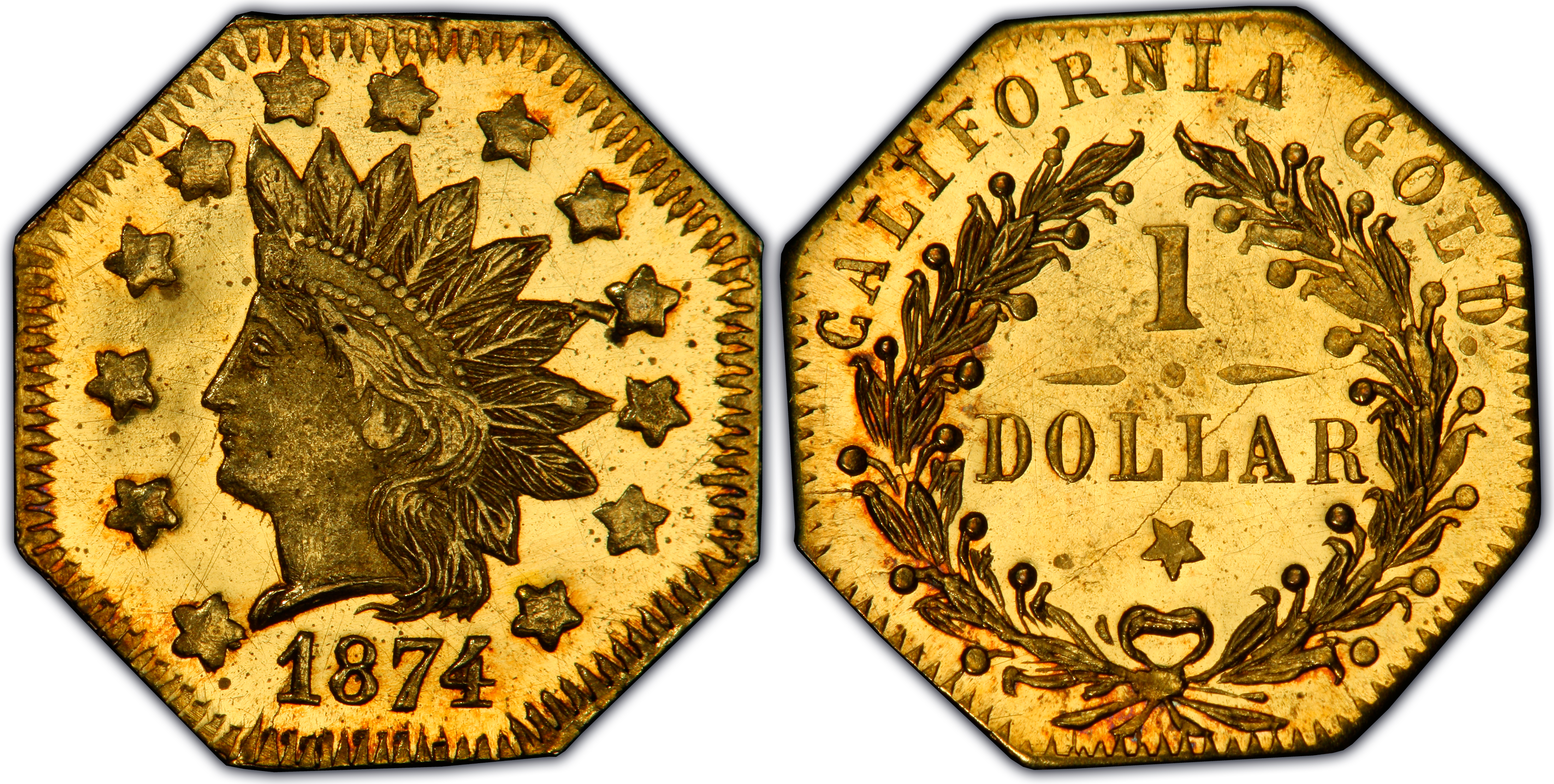
Obverse & Reverse
The 1874 G$1 BG-1124 is a fascinating artifact from the second phase of California's private gold coining era, known to numismatists as 'Period Two' (1859-1882). Unlike the 'Period One' issues, which were struck out of necessity to alleviate a severe shortage of circulating small change during the initial Gold Rush, Period Two pieces were created primarily as souvenirs and keepsakes. By the 1870s, the United States Mint in San Francisco was in full operation, and the acute need for private coinage had subsided. However, the romance of the Gold Rush was still a potent cultural force, and local jewelers capitalized on this by producing miniature gold 'coins' for tourists, locals, and merchants to use as novelty items, jewelry, or gifts. These pieces, including the BG-1124, were not intended for widespread circulation in the same manner as their predecessors. The Coinage Act of April 22, 1864, had made private coinage illegal, but this law was not strictly enforced by the Secret Service until 1883. This legal gray area allowed for the continued production of denominated tokens like the BG-1124. They were typically struck in small quantities, often with less refined techniques than federal coinage, using hand-operated presses. The gold used was often of a lower fineness than official U.S. coinage, sometimes alloyed with copper, which gives many surviving examples a distinct reddish or coppery hue. The BG-1124's Indian Head motif was a popular design choice of the era, echoing the designs of federal cents and gold dollars, making them recognizable and appealing to the public. As souvenirs, they were often handled less than circulating currency, which accounts for the relatively high proportion of survivors in Mint State grades, yet their softness and small size made them susceptible to damage and loss, ensuring their ultimate rarity.
Associated EventPost-Gold Rush California Economy
Reason For MintingPrimarily struck to be sold as souvenirs, jewelry, and novelty items during a period when the California Gold Rush was still a strong cultural memory.
Minter HistoryThe specific minter of BG-1124 is unknown, which is characteristic of many Period Two California Fractional Gold pieces. They were produced by various manufacturing jewelers in San Francisco who had the equipment to strike small gold tokens. These operations were typically small-scale and did not place identifying marks on their products, thus their identities are lost to history.
Historical SignificanceThe BG-1124 represents the transition of California private gold from a necessary medium of exchange to a commercial souvenir. It is a tangible link to the robust jewelry and novelty trade of 1870s San Francisco and reflects the enduring popular fascination with the Gold Rush, decades after its peak.
BG-1124
DenominationG$1
Minting Period1874
Assayer/MinterUnknown San Francisco Jeweler
Geographic OriginSan Francisco, California
Obverse DescriptionA stylized head of Liberty facing left, wearing a Native American feathered headdress. The word 'LIBERTY' is not inscribed on the headband. The portrait is surrounded by 13 six-pointed stars, representing the original colonies.
Obverse Inscription Reverse DescriptionThe denomination '1' and the word 'DOLLAR' are enclosed within a wreath of two olive branches tied with a bow at the bottom. The date '1874' is positioned below the bow.
Reverse Inscription1 DOLLAR 1874
CompositionGold
Stated Fineness Actual FinenessVariable, often lower than the .900 standard of federal coinage, frequently alloyed with copper.
Diameter13.00 mm
EdgePlain
Unknown
Survival Estimate46-60 known
Rarity ScaleR-5
This octagonal one-dollar variety is highly sought after for its classic Indian Head design, distinctive shape, and its status as a scarce representative of the romantic 'souvenir' era of California gold. Its high R-5 rarity ensures persistent demand from specialists.
Key VarietiesThere are no major varieties of BG-1124 from the original minting period. Unlike some territorial issues, there are no known patterns, trial pieces, or official later-date restrikes associated with this variety.
Authentication TipsAuthentic examples must have a clearly stated denomination ('DOLLAR'). Most fakes or modern replicas will lack a denomination to comply with current laws, often saying 'CAL GOLD' or featuring a bear on the reverse. The strike on genuine pieces is often somewhat soft in areas, particularly on the stars or wreath details. Look for die characteristics consistent with known genuine examples; reference high-quality images from major auction archives. Modern counterfeits may appear too sharp or have a soapy, cast-like surface texture. The specific reddish-gold color from copper alloying is also a common, though not universal, characteristic of genuine pieces.
Shopping ConsiderationsA premium quality example for its grade will exhibit a sharp strike on the central devices, particularly on the details of the headdress and the numerals of the date. Seek out coins with original, uncleaned surfaces; a smooth, semi-prooflike or satiny luster is highly desirable. Many examples have been cleaned or used in jewelry, so careful inspection for hairlines, rim damage, or evidence of mounting is crucial. Toning is not a primary value factor, but attractive, original reddish or greenish-gold surface coloration is prized and commands a premium over harshly cleaned or artificially toned specimens.
A coin's grade is its condition, rated on a 1-70 scale. For rare coins, this is the most critical factor in determining value, as a tiny difference in preservation can mean a huge difference in price.
Relevant Grade TypesOriginal issues were business strikes, although not intended for vigorous circulation, and are found in both Circulated (AU-50 to AU-58 are most common for circulated examples) and Mint State (MS, 60-70) grades. No true Proofs were struck during the original period of issue. Some Mint State examples exhibit reflective, prooflike (PL) surfaces from being struck with polished dies, but these are not true Proofs and are designated as such on the grading label.
Mint State CharacteristicsUncirculated examples are defined by their luster. The quality of the strike is a key differentiator; many were not struck with full pressure, so a well-struck coin with sharp details on the feathers and wreath is rare. Luster is typically satiny and can sometimes be semi-prooflike. Due to the soft gold and storage in jewelers' boxes or drawers, small, light contact marks are common and expected, even on high-grade specimens. Examples with exceptionally clean fields and sharp strikes command significant premiums.
Circulated Wear PatternsWear first appears on the highest points of the design. On the obverse, check for flatness on the cheek, the brow, and the feathers of the headdress. On the reverse, the high points of the wreath's leaves and the bow will show initial friction and loss of detail. On lower-grade circulated examples, the stars and the date will begin to lose their sharpness.
Key Factors For ValueBeyond the numerical grade, value is driven by three main factors: 1) Surface Quality: An example with original, undisturbed luster and skin will always be worth more than a cleaned, polished, or damaged coin of the same grade. 2) Strike: A sharply struck coin is far more desirable than a softly struck one, as it presents the design with maximum detail. 3) Eye Appeal: Coins with attractive, original coloration and minimal distracting marks are highly prized. A CAC sticker for this issue indicates superior quality for the grade and will result in a significant price premium.
PCGS Price Guide
| Grade | Price | Population |
|---|---|---|
| 50 | $550.00 | 4 |
| 50+ | $600.00 | N/A |
| 53 | $675.00 | 3 |
| 53+ | $725.00 | N/A |
| 55 | $775.00 | 3 |
| 55+ | $825.00 | N/A |
| 58 | $875.00 | 17 |
| 58+ | $925.00 | N/A |
| 60 | $975.00 | 3 |
| 61 | $1,050.00 | 11 |
| 62 | $1,200.00 | 19 |
| 62+ | $1,350.00 | N/A |
| 63 | $1,650.00 | 13 |
| 63+ | $2,000.00 | N/A |
| 64 | $2,750.00 | 9 |
| 64+ | $3,500.00 | N/A |
| 65 | $5,500.00 | 2 |
| 66 | N/A | N/A |