1876 G$1 BG-1113 (Regular Strike)
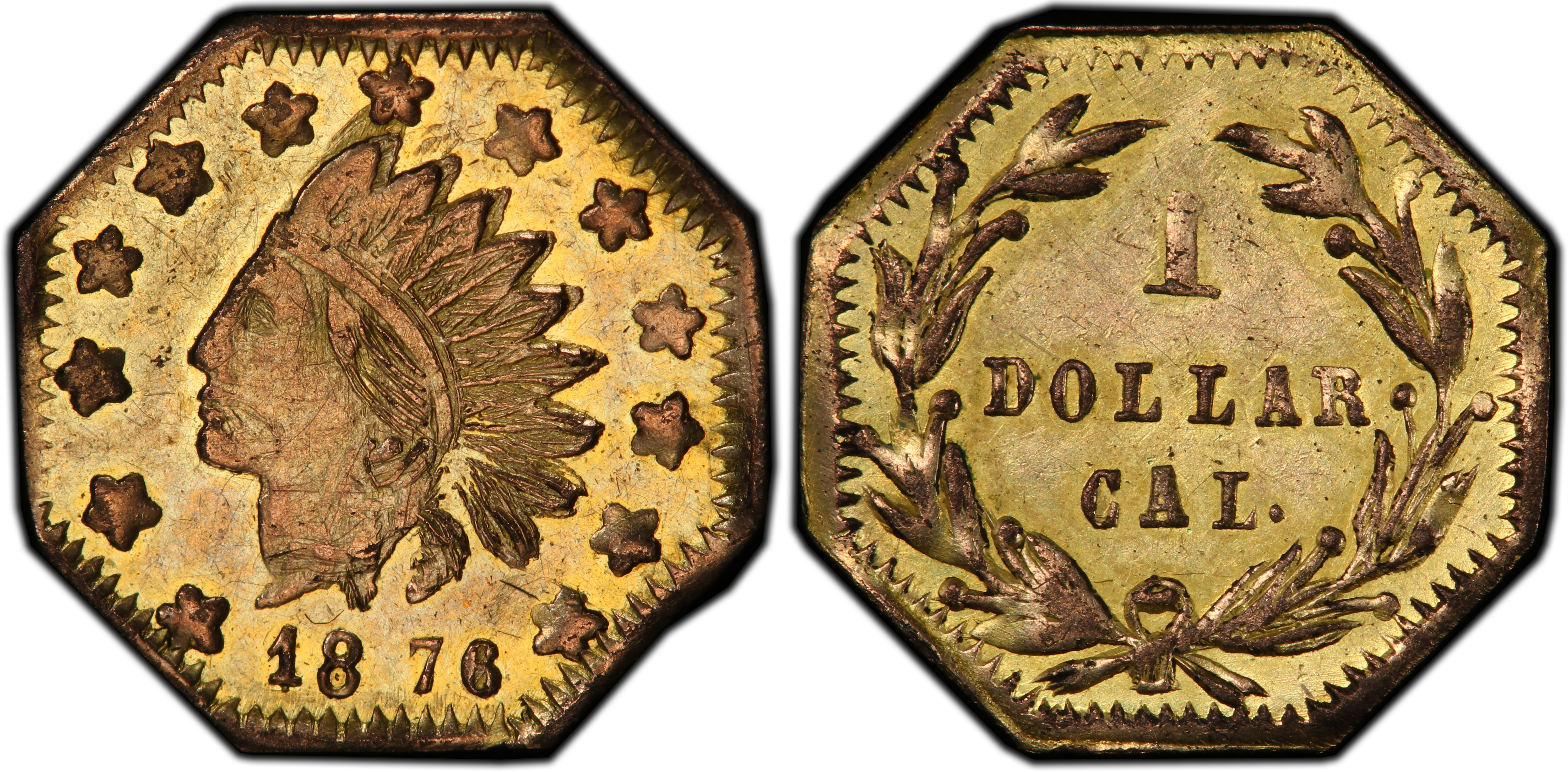
Obverse & Reverse
The 1876 G$1 BG-1113 is a product of the second period (1859-1882) of California Fractional Gold production, a fascinating and complex chapter in American numismatics. Following the initial Gold Rush boom, the acute shortage of small change was largely alleviated by the full-scale operations of the San Francisco Mint by the late 1850s. The 'Period One' fractional gold pieces, struck from 1852-1857, were created out of genuine commercial necessity and often contained a high proportion of their face value in gold. The context for the BG-1113 is entirely different. By the 1870s, these small gold pieces were no longer essential for commerce. Instead, they had transitioned into a popular souvenir and jewelry trade, catering to tourists, merchants, and citizens who desired a tangible, affordable memento of California's gold identity. These 'Period Two' issues, often termed 'jeweler's issues,' were produced by a variety of private minters, many of whom were anonymous jewelers in San Francisco. Unlike their predecessors, these coins were intentionally and significantly underweight, containing far less than a dollar's worth of gold. Their purpose was novelty, not circulation. The Coinage Act of 1864 had technically prohibited private coinage, but enforcement was lax until the Secret Service cracked down in the early 1880s. The BG-1113 was thus struck in this gray legal area. The use of an Indian Head motif, rather than the traditional Liberty Head, reflects a design trend of the era that was popular on federal coinage, likely making the piece more appealing as a souvenir. The octagonal shape was a nostalgic nod to the famous $50 'slugs' of the Assay Office, further enhancing its appeal as a quintessentially Californian item. The extreme rarity of the BG-1113 today suggests a very small original production, likely made to order or as part of a small batch for a specific jeweler's inventory. Its numismatic significance lies not in its economic impact, but in its cultural role as a keepsake from a post-Gold Rush California that was beginning to romanticize and commercialize its own recent history.
Associated EventCalifornia Gold Rush Aftermath & Souvenir Trade
Reason For MintingPrimarily created to satisfy the demand for tourist souvenirs and jewelry items, not for general circulation.
Minter HistoryThe minter of BG-1113 is unknown, which is characteristic of many 'Period Two' California Fractional Gold pieces. Production was decentralized among various San Francisco jewelers who created these small tokens for the souvenir trade. They operated without the formal structure of the earlier private mints, hence the lack of identifying marks or records for many varieties.
Historical SignificanceThis coin is a prime example of a 'Period Two' or 'jeweler's issue' of California Fractional Gold. Its significance is rooted in its function as a cultural artifact, representing the transition of fractional gold from a circulating medium of exchange to a popular souvenir item. The extreme rarity of the BG-1113, rated R-7, makes it a key variety for specialists. A specific specimen of this variety holds the prestigious honor of being the plate coin in the second edition of the authoritative Breen-Gillio reference work, 'California Pioneer Fractional Gold,' cementing its importance in numismatic literature.
N/A
DenominationG$1
Minting Period1876
Assayer/MinterUnknown private minter
Geographic OriginSan Francisco, California
Obverse DescriptionAn Indian Head portrait faces left, adorned with a feathered headdress. The date '1876' appears below the bust. The design is simple and somewhat crudely executed, typical of many jeweler's issues.
Obverse Inscription1876
Reverse DescriptionThe reverse features the denomination '1 DOLLAR' enclosed within a wreath. The legend 'CALIFORNIA GOLD' encircles the wreath along the octagonal border.
Reverse InscriptionCALIFORNIA GOLD / 1 DOLLAR
CompositionGold
Stated Fineness Actual FinenessVariable and typically of low fineness, significantly below the standard for federal coinage.
EdgePlain
Extremely Low
Survival Estimate4-12 pieces known
Rarity ScaleR-7
The 1876 G$1 BG-1113 is a highly coveted numismatic rarity. Its appeal stems from its R-7 rating, its desirable Indian Head design, the classic octagonal shape, and its status as a plate coin in the Breen-Gillio reference. It is a trophy coin for the advanced specialist in California Fractional Gold.
Key VarietiesThere are no major varieties of BG-1113 itself. As a 'Period Two' regular business strike, it was not officially issued with any special collector finishes. No known patterns, trial pieces, or restrikes of this specific variety are recorded.
Authentication TipsAuthentication requires comparison to known genuine examples, particularly the Breen-Gillio plate coin image. Look for the correct die markers, such as the specific positioning of the date digits relative to the bust and the letter shapes in the legends. The strike is often somewhat soft in areas, a characteristic of genuine, hastily-made jeweler's pieces. Counterfeits are rampant in this series; many are cast and will have a soapy appearance and lack sharp detail. Others may be struck from modern dies and will appear too perfect or have incorrect design details. Be wary of any piece with a bear on it, as this is a hallmark of modern replicas. Genuine pieces must have a denomination (e.g., 'DOLLAR').
Shopping ConsiderationsFor a coin of this rarity, any example is a major acquisition. A 'premium quality' specimen would be one that is well-centered and shows as much of the intended design as possible, as strikes are often uneven. Look for original, uncleaned surfaces, which may exhibit a slightly reddish or coppery-gold toning. Avoid examples that are heavily cleaned, polished, or show evidence of being mounted in jewelry (solder marks, excessive rim damage), as this drastically reduces value. Hairlines from past cleanings are common, and their severity should be considered. An example with a documented provenance, such as the ex-Jay Roe Collection specimen, carries a significant premium.
A coin's grade is its condition, rated on a 1-70 scale. For rare coins, this is the most critical factor in determining value, as a tiny difference in preservation can mean a huge difference in price.
Relevant Grade TypesOriginal examples of BG-1113 were business strikes intended for sale as souvenirs, not circulation. They are found in both Circulated (1-58) and Mint State (MS, 60-70) grades, though few, if any, genuinely circulated. Due to their purpose, many survivors are in high grades. No Proof (PR/PF) examples were struck during the original period of issue, and no later-date Proof restrikes are known to exist.
Mint State CharacteristicsUncirculated examples of BG-1113 often exhibit a soft, satiny luster rather than a hard, frosty one. The strike is a key determinant of quality; many pieces are weakly struck on the high points of the Indian's headdress and the central parts of the wreath on the reverse. A coin with a sharp, bold strike is highly desirable. Small planchet flaws or adjustment marks made prior to striking are not uncommon and should be evaluated for their impact on eye appeal. Contact marks can be present, even on high-grade examples, due to the softness of the gold.
Circulated Wear PatternsAlthough these coins did not circulate widely, wear from handling would first appear on the highest points of the design. On the obverse, look for flattening on the cheekbone and the feathers of the headdress. On the reverse, the highest leaves and the bow of the wreath would show the first signs of friction. In lower grades (e.g., VF/XF), the finer details of the feathers and leaves would merge, and the legends would start to appear soft.
Key Factors For ValueRarity is the primary value driver for the BG-1113. Beyond that, the key factors are surface preservation and strike. An example with clean, original surfaces free of distracting marks, hairlines, or evidence of cleaning will command a substantial premium. Strike quality is paramount; a sharply struck coin is far more valuable than a weakly struck one of the same grade. Eye appeal, including attractive original toning, is also a significant factor. Given the prevalence of counterfeits and the nuances of this series, certification by a top-tier grading service (PCGS or NGC) is virtually mandatory for any transaction, and a CAC sticker would denote premium quality for the assigned grade.
PCGS Price Guide
| Grade | Price | Population |
|---|---|---|
| 40 | $3,500.00 | N/A |
| 45 | $4,000.00 | N/A |
| 45+ | $4,200.00 | N/A |
| 50 | $4,500.00 | N/A |
| 50+ | $4,700.00 | N/A |
| 53 | $5,000.00 | N/A |
| 53+ | $5,500.00 | N/A |
| 55 | $6,250.00 | 3 |