1873/2 25C BG-792, PL (Regular Strike)
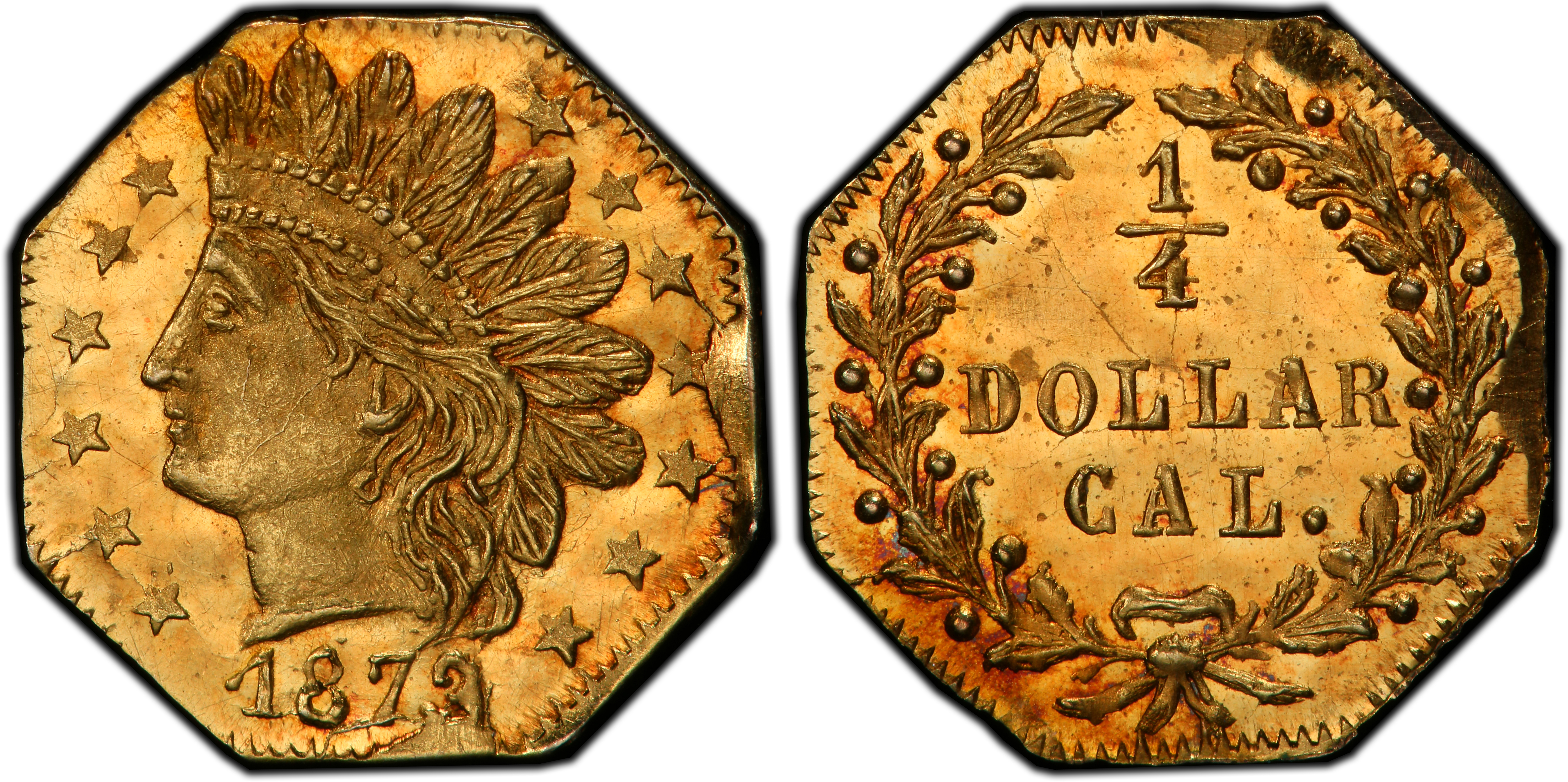
Obverse & Reverse
The 1873/2 25C BG-792 is a fascinating relic from the 'Period Two' (1858-1882) of California Fractional Gold production. Unlike the earlier 'Period One' issues which were struck out of genuine commercial necessity to alleviate a severe shortage of small change during the initial Gold Rush, the Period Two pieces were primarily created as souvenirs and novelty items for tourists and collectors. By the 1870s, the San Francisco Mint was in full operation, producing ample federal coinage for the region. The persistent demand for tiny gold coins was now driven by nostalgia for the '49er days and the desire for unique keepsakes from the Golden State. Jewelers in San Francisco, many of whom remain anonymous, continued to strike these miniature gold tokens, often with fanciful designs like Indian Heads, which were more exotic than the standard Liberty Head motifs that mimicked federal coinage. These jewelers' issues were typically made with less gold content than their face value would imply, functioning as tokens rather than true currency. The Coinage Act of 1864 had made private coinage illegal, but the law was not strictly enforced against these small, privately-issued tokens until 1883. This legal gray area allowed for a prolific output of hundreds of distinct varieties throughout the 1860s and 1870s. The BG-792, with its clear overdate (a '3' punched over a '2'), is a testament to the ad-hoc nature of this production. Dies were often re-used and re-purposed from year to year to save on costs, leading to numerous mules and overdates that are highly prized by specialists today. As an octagonal piece with an Indian Head motif, the BG-792 captures the quintessential aesthetic of the later souvenir period of fractional gold, representing a tangible link to the romanticized memory of the California Gold Rush.
Associated EventCalifornia Gold Rush aftermath and tourism boom.
Reason For MintingPrimarily struck as souvenirs and collectible novelties for a public fascinated with the Gold Rush, rather than for circulation.
Minter HistoryThe specific minter or jeweler who created the dies for BG-792 is unknown, as is common for many 'Period Two' issues. These pieces were often produced anonymously by various San Francisco jewelers who capitalized on the souvenir market. They operated small-scale minting operations, using hand-cut dies and manual screw presses or even simple hammer striking methods to produce the coins. While prominent makers like Robert B. Gray & Co. were active during this period, definitive attribution for this specific variety is not currently established.
Historical SignificanceThe BG-792 is significant not as a circulating coin, but as a cultural artifact representing the commercialization of the Gold Rush legacy. It showcases the evolution of fractional gold from a necessity of commerce to a popular souvenir, and the 1873/2 overdate provides insight into the pragmatic and cost-saving practices of the private firms that produced them. Its extreme rarity today underscores the limited, on-demand production and low survival rate of these delicate gold tokens.
BG-792
Denomination25C
Minting Period1873
Assayer/MinterUnknown Private Minter
Geographic OriginSan Francisco, California
Obverse DescriptionAn Indian Head portrait facing left, surrounded by thirteen stars. The date, 1873/2, is below the bust. The '3' is clearly punched over the underlying '2'. The portrait style is typical of the period's romanticized depictions of Native Americans.
Obverse Inscription1873/2
Reverse DescriptionA wreath composed of two branches tied with a bow at the bottom encircles the denomination. The legend CALIFORNIA GOLD is outside the wreath at the top.
Reverse InscriptionCALIFORNIA GOLD 1/4
CompositionGold
Stated Fineness Actual FinenessTypically varied from 14 to 22 karats for Period Two issues.
Weight0.25 grams
Diameter9.60 mm
EdgePlain
Unknown, but certainly very small.
Survival EstimateFewer than 12 known examples.
Rarity ScaleR-7 (Very Rare)
The BG-792 is highly sought after due to its extreme rarity (R-7), desirable Indian Head design, octagonal shape, and the visually interesting 1873/2 overdate. It combines several popular collecting themes into one miniature package, making it a trophy coin for advanced specialists in the California Fractional Gold series.
Key VarietiesThe primary variety is the 1873/2 overdate regular strike. No other significant varieties, patterns, or restrikes are known to exist for the BG-792 die pair. The 'PL' (Prooflike) designation is not a separate variety but rather a descriptor for examples with exceptionally reflective surfaces from a polished die, and these command a significant premium.
Authentication TipsAuthenticity is paramount. Genuine examples will exhibit sharp, albeit sometimes unevenly struck, details from dies, not the soft, mushy look of casts. The overdate should be clear, showing distinct remnants of the '2' under the '3'. The gold should have a natural, slightly alloyed color; brassy-looking pieces are suspect. The weight and diameter should be close to the established norms for the type. Many crude modern replicas exist, often with incorrect designs or a suspicious surface texture. Compare against high-resolution images of certified examples from major auction archives.
Shopping ConsiderationsFor a premium quality example, look for a sharp strike, particularly on the details of the Indian's headdress and the wreath on the reverse. Centering is also key, as these were often misaligned during striking. The ideal specimen will possess original, lustrous surfaces without evidence of cleaning, tooling, or having been mounted in jewelry. The visibility and clarity of the overdate are critical value factors. Given the coin's rarity, any example is significant, but one with superior eye appeal and minimal distracting marks, preferably certified by a top-tier grading service, will command the highest premium.
A coin's grade is its condition, rated on a 1-70 scale. For rare coins, this is the most critical factor in determining value, as a tiny difference in preservation can mean a huge difference in price.
Relevant Grade TypesOriginal issues were business strikes, although many were sold directly to collectors and tourists and never circulated. They are found in both Circulated (1-58) and Mint State (MS, 60-70) grades. No true Proofs were struck during the original period of issue. However, some examples were struck from highly polished dies and exhibit reflective, mirror-like surfaces; these are designated as Prooflike (PL) and are considered a special category of business strike, not separate Proof coins.
Mint State CharacteristicsAn uncirculated BG-792 is defined by the quality of its luster, which is typically satiny rather than deeply frosty. The strike is often uneven due to the manual minting process; a well-struck example will show full feather details and a sharp date. Contact marks are common due to the softness of the gold and rudimentary handling, but premium examples will have clean fields and a mark-free portrait.
Circulated Wear PatternsWear first appears on the high points of the design: the cheek and feathers of the Indian Head on the obverse, and the leaves and bow of the wreath on the reverse. On lower-grade examples, the stars and legends will begin to merge with the fields, and the fine details of the date will become indistinct.
Key Factors For ValueThe primary value drivers are rarity and grade. Beyond the numerical grade, eye appeal is crucial. Examples with a sharp, well-centered strike and clean, original surfaces command significant premiums. The strength and clarity of the 1873/2 overdate are paramount. Any evidence of cleaning, damage, or removal from jewelry will drastically reduce the value. A CAC sticker for this issue would be a strong endorsement of quality for the grade and add a substantial premium.
PCGS Price Guide
| Grade | Price | Population |
|---|---|---|
| 65 | $5,250.00 | 1 |