1881 G25C BG-799Z (Regular Strike)
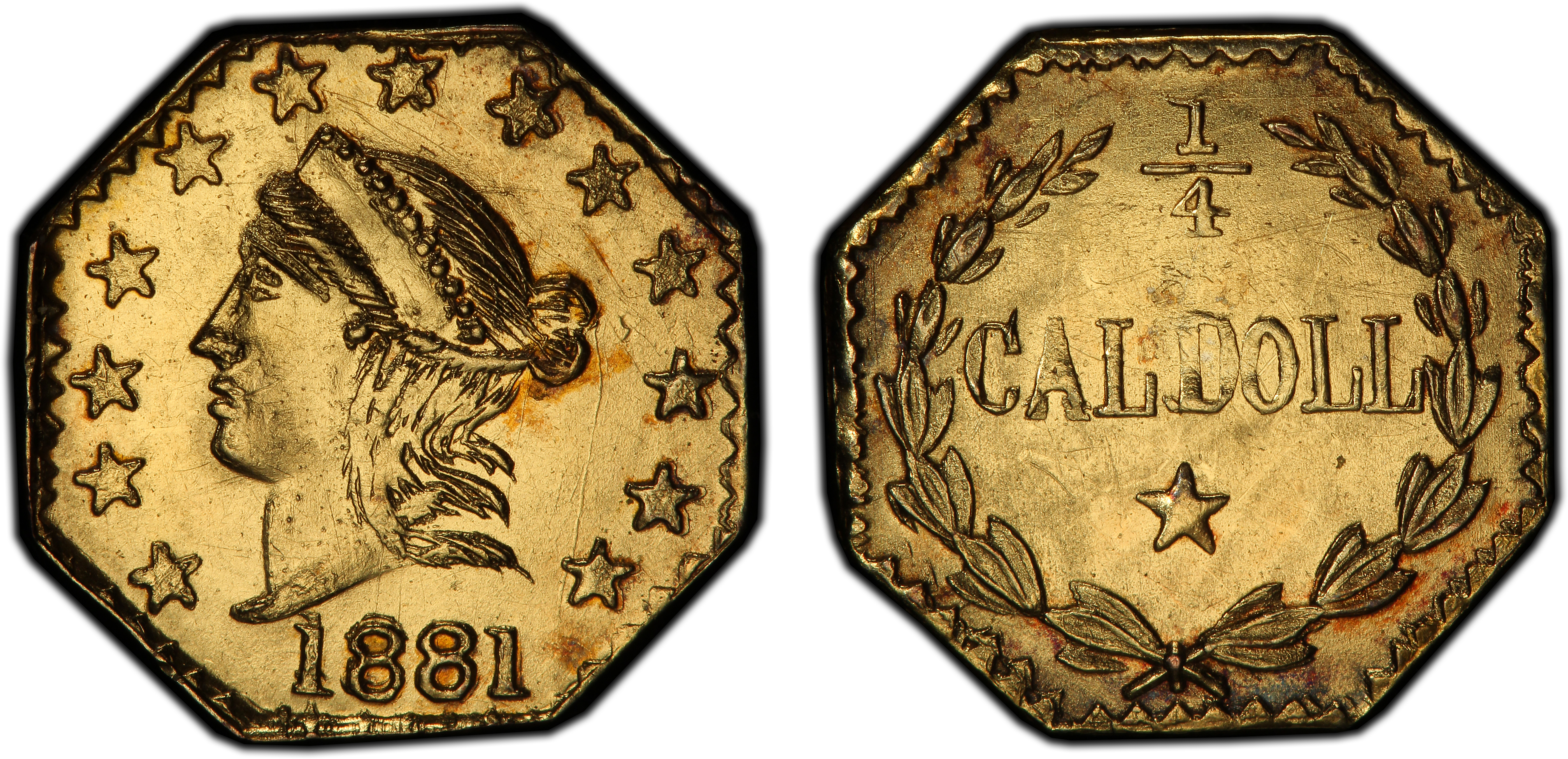
Obverse & Reverse
The 1881 BG-799Z 25 Cent piece emerged from the final chapter of California's fascinating fractional gold series. These diminutive coins are classified as 'Period Two' issues (1858-1882), a time when the initial, urgent need for circulating small change had largely subsided with the robust output of the San Francisco Mint. The motivation for minting had shifted from commerce to collectibles. San Francisco jewelers, leveraging the romantic allure of the Gold Rush that still captivated the nation, began producing these small gold pieces primarily as souvenirs and keepsakes. Unlike their 'Period One' predecessors, which genuinely filled a vacuum in local trade, these later issues were commercial products in a different sense—they were mementos of the wild West, popular with tourists and locals alike. The legal environment was murky; the Private Coinage Act of 1864 had prohibited private minting, but enforcement by the Secret Service was lax and inconsistent. It wasn't until a crackdown in 1883 that production was finally halted. The 1881-dated pieces represent some of the very last of their kind, produced just before the federal government decisively ended the era of private gold coinage. The minter of the BG-799Z is not known with absolute certainty, but numismatic scholarship, particularly the work of Breen and Gillio, often attributes many of these late-date Indian and Liberty head types to Christopher Ferdinand Mohrig, a prominent San Francisco jeweler and engraver. These pieces were typically struck with hammer presses, a relatively crude method that resulted in inconsistent strike quality. The gold content was also not standardized and was intentionally less than the face value, making them profitable tokens rather than true coinage. Today, the BG-799Z is a profound numismatic rarity, a tangible link to the closing days of a uniquely Californian numismatic tradition.
Associated EventPost-Gold Rush California Economy
Reason For MintingPrimarily struck as souvenirs and collectible novelties for the tourist trade, not for general circulation.
Minter HistoryWhile not definitively signed, the BG-799Z is often attributed to Christopher Ferdinand Mohrig. Mohrig was a German-born die sinker and jeweler who operated in San Francisco from the 1870s until the early 20th century. He was one of the most prolific producers of 'Period Two' California fractional gold, known for creating numerous Liberty and Indian head varieties. His operation, like others of the era, walked a fine line with federal laws, producing denominated pieces until the Secret Service crackdown in 1883 forced a shift to non-denominated 'charms' and tokens.
Historical SignificanceThe BG-799Z represents the twilight of private gold coinage in the United States. As a 'Period Two' issue, its significance lies not in its utility as currency, but in its role as a cultural artifact and souvenir, reflecting the enduring national fascination with the California Gold Rush long after its peak. Its extreme rarity underscores the small-scale, artisanal nature of its production at the very end of an era.
N/A
Denomination25 Cents
Minting Period1881
Assayer/MinterUnknown, attributed to Christopher Ferdinand Mohrig
Geographic OriginSan Francisco, California
Obverse DescriptionFeatures a Liberty Head facing left, her hair tied in a bun. She is surrounded by thirteen stars, representing the original colonies. The date '1881' is positioned below the bust.
Obverse Inscription1881
Reverse DescriptionA simple wreath surrounds the denomination. The design is characteristic of the souvenir-era pieces, often lacking the finesse of earlier, circulation-focused issues. The specific die characteristics for the Z-variety are unpublished and require direct comparison with known examples or the Breen-Gillio plates for definitive attribution.
Reverse Inscription1/4 DOLL
CompositionGold
Stated Fineness Actual FinenessVariable, typically low fineness gold alloyed with copper.
Weight0.25 grams
Diameter10.00 mm
EdgePlain
Unknown; extremely small.
Survival EstimateFewer than 10; likely in the 2-4 range.
Rarity ScaleR-7 (High R-7)
This coin's allure comes from its extreme rarity as a specific, recognized Breen-Gillio variety from the final years of fractional gold production. It is a target for advanced specialists of the series who seek to complete die marriage collections. Its status as a 'ghost'—with auction appearances being exceptionally infrequent—adds to its mystique.
Key VarietiesThe BG-799 designation covers a family of related die marriages dated 1881. The 'Z' suffix denotes a specific and unique combination of obverse and reverse dies. No proofs or special collector restrikes are known to exist for this specific variety; all known examples are business strikes.
Authentication TipsAuthentication requires expert analysis. Key factors include correct weight, diameter, and octagonal shape. The style of the Liberty head and the reverse wreath must match known genuine examples from Mohrig's workshop. Look for a naturally soft strike, as is common for hammered issues. Modern counterfeits are often overweight, have a soapy or cast appearance, and may exhibit incorrect design details or unnaturally sharp, tool-made lettering. Comparison to the plates in the Breen-Gillio reference is essential.
Shopping ConsiderationsAcquiring a BG-799Z is a matter of opportunity, not choice, given its rarity. Any available specimen should be certified by a top-tier grading service (PCGS or NGC). For a coin of this nature, 'premium quality' is defined by being problem-free. Look for an example without holes, significant scratches, or evidence of having been mounted in jewelry. Strike weakness is expected, but a coin with a clearer-than-average date and legends would command a significant premium. Original, uncleaned surfaces with a hint of reddish-gold toning are highly desirable. Given the low population, any certified example that becomes available is a major event for specialists.
A coin's grade is its condition, rated on a 1-70 scale. For rare coins, this is the most critical factor in determining value, as a tiny difference in preservation can mean a huge difference in price.
Relevant Grade TypesAll original 1881 BG-799Z pieces were struck as business strikes for sale as souvenirs and are found in Circulated (1-58) and, more commonly for this later period, Mint State (MS, 60-70) grades. No Proof (PR/PF) examples were struck during the original period of issue, and no later-date restrikes are known.
Mint State CharacteristicsUncirculated examples of this issue are defined by their luster, which is typically somewhat subdued and satiny due to the low-karat gold and hammered striking process. The strike is almost invariably weak in areas, particularly on the highest points of Liberty's hair and the details of the wreath. Small planchet flaws or adjustment marks are common and not considered major defects unless they are severe. Contact marks from handling are expected, but large, distracting marks will limit the grade.
Circulated Wear PatternsOn circulated examples, wear first appears on the high points of Liberty's cheek and the hair above her ear. On the reverse, the bow of the wreath and the highest leaves will show friction first. In lower grades (VF and below), the stars on the obverse and the letters in the denomination will begin to merge with the fields.
Key Factors For ValueFor the BG-799Z, rarity is the dominant value factor; any example is a treasure. Beyond its mere existence, value is determined by surface preservation and eye appeal. An example with clean, original surfaces that have not been stripped by harsh cleaning will be prized. Strike sharpness, while not expected to be perfect, adds a premium if it is above average for the issue. Finally, certification by PCGS or NGC is non-negotiable for a coin of this caliber, with a CAC sticker adding a significant premium for confirming quality within the assigned grade.
PCGS Price Guide
| Grade | Price | Population |
|---|---|---|
| 62 | $2,500.00 | 3 |
| 62+ | $2,750.00 | N/A |
| 63 | $3,000.00 | 2 |
| 63+ | $3,250.00 | N/A |
| 64 | $3,750.00 | 1 |