1880 G25C BG-799Y (Regular Strike)
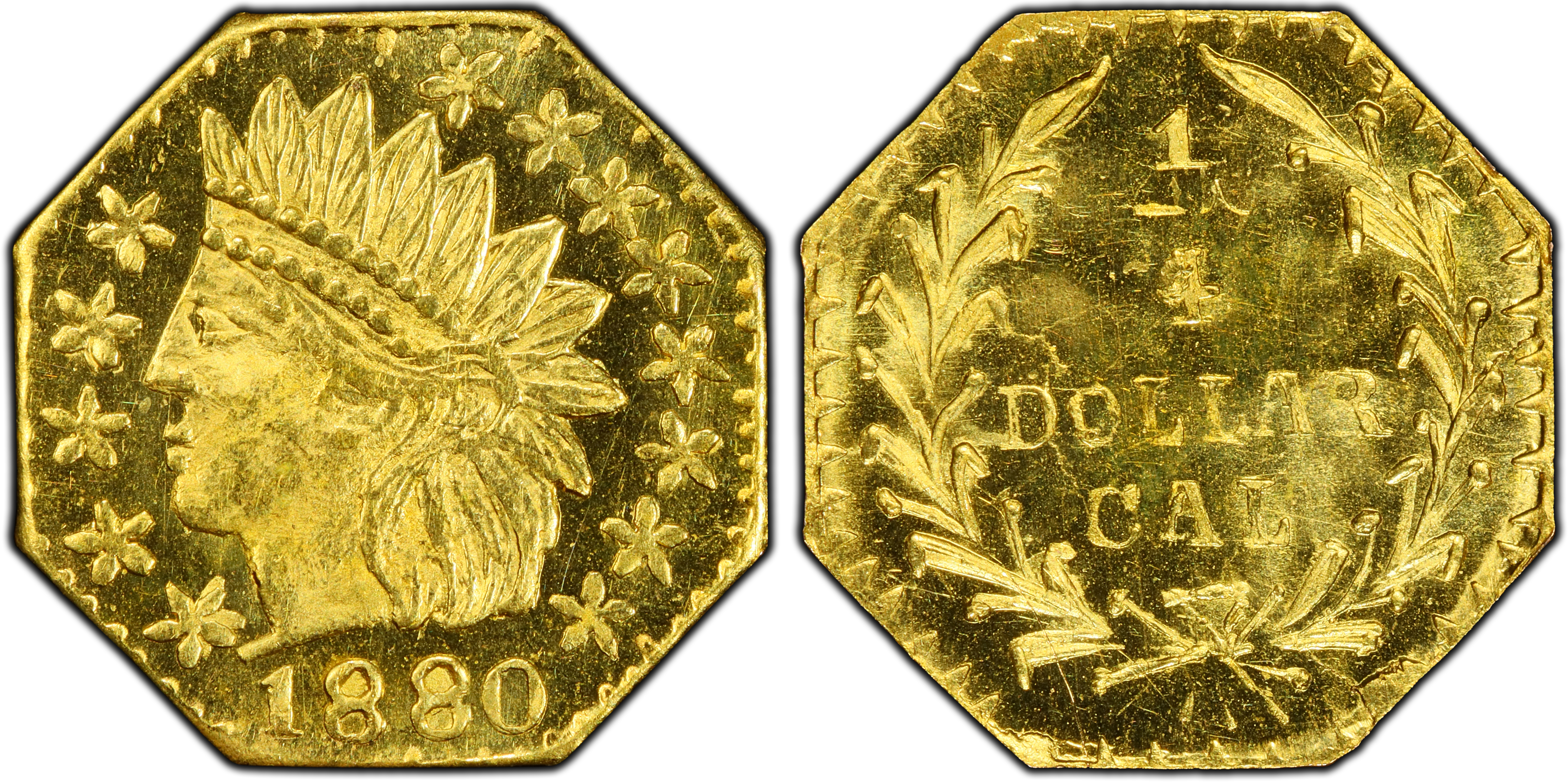
Obverse & Reverse
The 1880 G25C BG-799Y is a quintessential example of a 'Period Two' California Fractional Gold piece. The story of these fascinating miniature coins begins decades earlier, in the crucible of the California Gold Rush. The massive influx of population following the 1848 discovery of gold at Sutter's Mill created a chaotic and vibrant economy, but one critically short of small-denomination coinage for daily transactions. Initially, pinches of gold dust served as a crude medium of exchange. To bring order and convenience, private jewelers and assayers began striking their own coins in 1852. These early 'Period One' (1852-1857) pieces were intended to, and did, circulate, filling a vital monetary niche before the San Francisco Mint could produce sufficient federal coinage. By the late 1850s, the monetary landscape had changed. The San Francisco Mint was in full operation, and the acute shortage of small change had abated. However, the allure of California and its gold was now a national phenomenon. Jewelers astutely recognized a new market: souvenirs. Thus began 'Period Two' (1858-1882), during which fractional gold pieces were produced not as currency, but as mementos and keepsakes for tourists and those back East fascinated by the romantic image of the Golden State. The passage of the Coinage Act of 1864, which prohibited private coinage, cast a legal shadow over these operations. To circumvent prosecution by the Secret Service, which began enforcing the law more strictly over time, minters often used ambiguous designs, omitted their own identifying marks, and frequently employed backdating. The 1880 date on the BG-799Y is therefore representative of this era of clandestine production. These pieces were underweight and not intended to contain their full face value in gold, functioning purely as tokens. Their existence speaks to the enduring legacy of the Gold Rush and the entrepreneurial spirit of the jewelers who adapted their products from necessity to novelty, creating a unique and highly collectible chapter in American numismatic history.
Associated EventCalifornia Gold Rush Aftermath
Reason For MintingProduced as a souvenir or token for the tourist and jewelry trade, capitalizing on the romanticism of the California Gold Rush.
Minter HistoryThe minters of most 'Period Two' fractional gold, including the BG-799Y, remain anonymous by design. Following the Coinage Act of 1864, private minters, typically jewelers located in San Francisco, deliberately left their identifying marks off their products to avoid legal repercussions from the U.S. government. They operated semi-covertly, producing these souvenir tokens which were technically illegal but widely tolerated until federal enforcement ramped up in 1883, effectively ending the era.
Historical SignificanceThe BG-799Y represents the transition of fractional gold from a circulating medium of necessity to a commercial souvenir. It is a tangible link to the post-Gold Rush California economy and the clever circumvention of federal coinage laws by private manufacturers. Its existence highlights the lasting cultural and economic impact of the Gold Rush.
N/A
Denomination25 Cents
Minting Period1880
Assayer/MinterUnknown Private Jeweler
Geographic OriginSan Francisco, California
Obverse DescriptionOctagonal planchet. Features a stylized portrait of a Native American chief facing left, wearing a feathered headdress. The portrait is surrounded by 13 stars, representing the original colonies.
Obverse InscriptionNo inscription, only the portrait and stars.
Reverse DescriptionA wreath of leaves and berries, open at the top, encircles the denomination. A bow with loops is typically present at the bottom, tying the wreath together.
Reverse Inscription1/4 / CAL
CompositionGold
Stated Fineness Actual FinenessVaries, often lower than circulating coinage of the era.
EdgePlain
Unknown
Survival EstimateScarce; Likely a few hundred known. The combined PCGS and NGC population reports show several dozen graded examples, suggesting a wider population of raw and unsubmitted coins.
Rarity ScaleR-4 (Scarce)
This coin is popular for its direct connection to the California Gold Rush era, its charming miniature design, octagonal shape, and its status as an affordable entry point into the fascinating and complex world of private and territorial gold.
Key VarietiesThe BG-799 designation refers to a group of dies used in the 1870s and 1880s. The 'Y' suffix denotes this specific die pairing. Collectors should be aware of other BG-799 varieties with different letters, which may have subtle differences in die state or design. No special collector issues, such as proofs or restrikes from the original period, are known for this variety.
Authentication TipsGenuine 'Period Two' fractionals like the BG-799Y are characteristically thin. Modern replicas are often thicker and have a more prooflike, glassy finish. Look for a natural, slightly subdued luster. The strike can be uneven, with areas of weakness, particularly around the periphery; a perfectly struck coin should be viewed with suspicion. Many fakes are gold-plated base metal. Any piece featuring a bear on the reverse is a modern souvenir or fantasy piece, not a genuine historical fractional.
Shopping ConsiderationsA premium quality example for its grade will exhibit a sharp strike on the high points of the Indian's headdress and the details within the wreath. Original, uncleaned surfaces with a hint of reddish-gold toning are highly desirable. Check carefully for evidence of having been mounted in jewelry, such as rim damage, solder marks, or excessive polishing. Prooflike (PL) examples command a significant premium and are sought after for their superior eye appeal. Given their small size, even high-grade examples can have minor, detracting marks, so prioritize overall eye appeal.
A coin's grade is its condition, rated on a 1-70 scale. For rare coins, this is the most critical factor in determining value, as a tiny difference in preservation can mean a huge difference in price.
Relevant Grade TypesOriginal issues were business strikes. As they were produced as souvenirs and not intended for circulation, most surviving examples are found in Mint State (MS, 60-70) grades. Circulated examples (1-58) are uncommon but do exist. No true Proofs (PR/PF) were struck during the original period of issue. The term 'Prooflike' (PL) is a designation added to high-grade business strikes that exhibit mirrored fields, and these are highly valued.
Mint State CharacteristicsUncirculated examples often exhibit a soft, satiny luster. The strike quality varies significantly; many pieces show weakness on the stars or the wreath's leaves due to the challenges of striking such small coins. A sharp strike on the central Indian portrait is a key indicator of quality. Minor planchet flaws or adjustment marks are not uncommon and are generally accepted by collectors of this series. Contact marks, even small ones, can be distracting on such a tiny canvas.
Circulated Wear PatternsOn circulated specimens, wear first appears on the high points of the Indian's cheek, the feathers of the headdress, and the highest leaves and bow of the reverse wreath. As wear progresses, the stars will begin to lose their definition and merge with the fields. In lower grades, the date and denomination become faint.
Key Factors For ValueThe primary value driver is the certified grade. Beyond the grade, sharpness of the strike is critical; a well-struck coin is always preferred. Surface quality is paramount: examples with original, lustrous, and uncleaned 'skin' are prized over those that are bright and shiny from cleaning or polishing. Eye appeal, including attractive toning and the presence of prooflike surfaces, can add a substantial premium. A CAC sticker for this issue indicates premium quality for the grade and will increase its value.
PCGS Price Guide
| Grade | Price | Population |
|---|---|---|
| 55 | $220.00 | 1 |
| 55+ | $230.00 | N/A |
| 58 | $255.00 | 4 |
| 58+ | $275.00 | N/A |
| 60 | $300.00 | 2 |
| 61 | $350.00 | 3 |
| 62 | $375.00 | 18 |
| 62+ | $425.00 | N/A |
| 63 | $500.00 | 29 |
| 63+ | $550.00 | N/A |
| 64 | $600.00 | 23 |
| 64+ | $650.00 | N/A |
| 65 | $750.00 | 3 |
| 65+ | $1,025.00 | N/A |
| 66 | $1,550.00 | 1 |
| 66+ | $2,000.00 | N/A |
| 67 | $2,750.00 | 1 |