1878/6 25C BG-799G (Regular Strike)
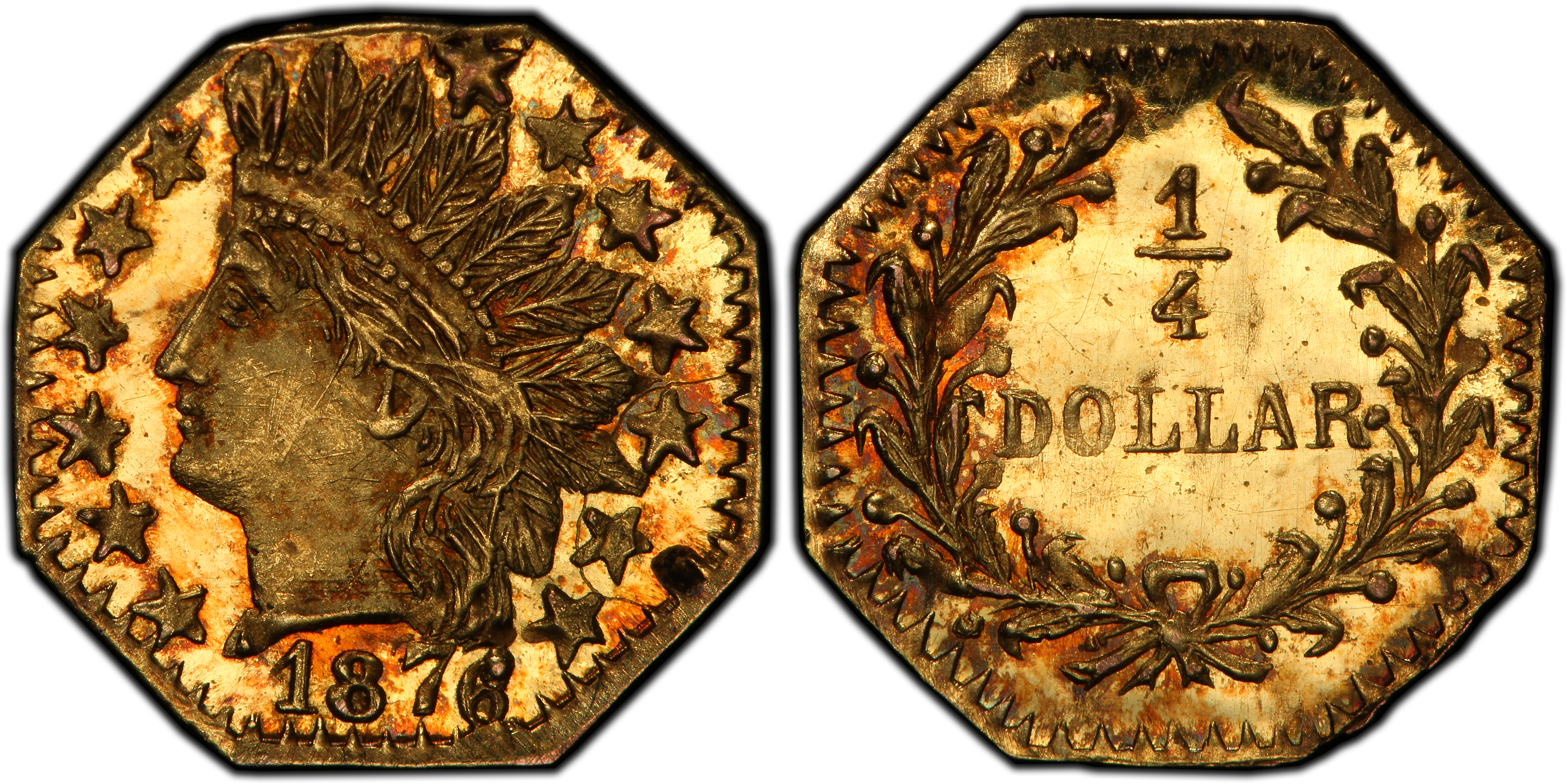
Obverse & Reverse
The 1878/6 25C BG-799G is a classic representative of the 'Period Two' (1859-1882) California Fractional Gold series, a fascinating chapter in American numismatics born from pragmatism and entrepreneurial spirit. Unlike the earlier 'Period One' issues, which were struck with a genuine, albeit underweight, intent to alleviate the chronic shortage of small change during the initial Gold Rush, the Period Two pieces were primarily products of manufacturing jewelers catering to a burgeoning souvenir and gift market. By the late 1870s, the initial, desperate need for circulating small denomination gold had been largely met by the output of the San Francisco Mint. However, the romance of the Gold Rush was a powerful marketing tool. Jewelers in San Francisco realized that tiny gold 'coins,' emblematic of the western frontier, were immensely popular as keepsakes, watch fobs, and jewelry items for both locals and tourists. The legal environment for these pieces was ambiguous. The Private Coinage Act of 1864 had made such private issues illegal, but the law was not aggressively enforced by the Secret Service until 1883. This permissive atmosphere allowed jewelers to continue production, often with denominated values, skirting the edge of the law. The BG-799G variety, with its prominent 1878/6 overdate, is a testament to the thrifty and expedient methods of these private minters. Rather than create an entirely new obverse die for 1878, a jeweler simply took a leftover die from 1876 (used to strike BG-799F) and crudely re-engraved the '6' into an '8'. This practice of reusing and altering dies was common and resulted in a plethora of die states and varieties that are eagerly studied by specialists today. These pieces were not intended to and did not meaningfully circulate as currency, but they stand as tangible artifacts of a post-Gold Rush California, where the legend of the '49ers was being packaged and sold.
Associated EventCalifornia Gold Rush (Later Souvenir Period)
Reason For MintingPrimarily struck to be sold as souvenirs and keepsakes, capitalizing on the romanticism of the Gold Rush, rather than to serve as circulating currency.
Minter HistoryThe specific minter or jeweler who produced the BG-799 series, including the 1878/6 BG-799G variety, is not definitively known. Many Period Two fractional gold pieces were made anonymously to avoid potential legal issues with the federal government. San Francisco jewelers such as Robert B. Gray & Co. and the Levison Brothers were active during this period, but a direct attribution for this specific die pair has not been established in numismatic literature.
Historical SignificanceThis coin is significant not as a medium of exchange, but as a cultural and economic artifact of late 19th-century California. It represents the transition of fractional gold from a necessary form of currency to a commercialized souvenir, reflecting how the memory and mythology of the Gold Rush were monetized long after the initial fever had passed. The overdate feature provides direct physical evidence of the production shortcuts used by the private jewelers of the era.
N/A
Denomination25 Cents
Minting Period1878
Assayer/MinterUnknown
Geographic OriginSan Francisco, California
Obverse DescriptionAn Indian Head motif facing left, closely modeled after the contemporary U.S. Indian Head cents. The portrait is surrounded by 13 stars, representing the original colonies. The date, 1878, is below the bust, with the '8' clearly punched over a '6'.
Obverse Inscription1878
Reverse DescriptionThe denomination '1/4 DOLLAR' is enclosed within a wreath of leaves and berries. The wreath is open at the top.
Reverse Inscription1/4 DOLLAR
CompositionGold
Stated Fineness Actual Fineness EdgePlain
Unknown
Survival Estimate31-75
Rarity ScaleR-5
The 1878/6 BG-799G is highly sought after for its dramatic and easily visible overdate, a feature that always excites collectors. As a 'Period Two' jeweler's issue, it is part of a complex and historically rich series. Its octagonal shape and classic Indian Head design add to its aesthetic appeal. The R-5 rarity ensures that it is scarce enough to be challenging to acquire but not so rare as to be unobtainable.
Key VarietiesThe primary variety is the 1878/6 overdate itself. This variety was struck from the same obverse die as the 1876-dated BG-799F, but after the date was altered. The reverse is known as Reverse B, which can be identified by a berry located near the 'R' of DOLLAR. No proof or special collector restrikes from a later period are known to exist for this specific variety.
Authentication TipsAuthentic examples must exhibit a clear 1878/6 overdate, with remnants of the '6' visible beneath and within the '8'. The reverse must match the known die characteristics of Reverse B, particularly the berry placement. Genuine pieces from this era were struck, not cast, so surfaces should exhibit flow lines and sharp details, not a porous or soapy texture. Counterfeits of fractional gold are rampant; many are brass or gold-plated and often feature incorrect designs, such as a bear on the reverse, which no authentic 19th-century pieces have. The weight and fineness should be consistent with other genuine jeweler's issues of the period, which are typically very light.
Shopping ConsiderationsA premium quality example for this grade will show a bold and complete overdate. The strike is often uneven on these pieces; look for examples with sharp details on the high points of the Indian's headdress and the lettering and details of the wreath. Original, lustrous surfaces are highly desirable and command a significant premium. Many surviving examples have been cleaned or used in jewelry, so finding one with original 'skin' is a prize. Check carefully for evidence of cleaning (hairlines), tooling, or repairs, especially around the rim where a piece may have been removed from a bezel. Attractive, original reddish-gold toning adds to the eye appeal.
A coin's grade is its condition, rated on a 1-70 scale. For rare coins, this is the most critical factor in determining value, as a tiny difference in preservation can mean a huge difference in price.
Relevant Grade TypesAll original examples of BG-799G were struck as business strikes, intended for sale as souvenirs rather than circulation. They are found in Circulated grades (1-58), though this wear is more likely from handling or use in jewelry, and Mint State (MS, 60-70) grades. No proofs were struck during the original period of issue, and no later-date proof restrikes are known.
Mint State CharacteristicsAn uncirculated BG-799G is defined by the presence of original mint luster. The quality of this luster can range from satiny to semi-prooflike with flashy fields. The strike is a key determinant of quality; many are softly struck on the central devices, so a sharply detailed headdress and wreath are desirable. Due to the rudimentary minting process and soft gold, even high-grade Mint State examples will typically show small planchet flaws or light contact marks from handling and storage with other pieces.
Circulated Wear PatternsWear first appears on the highest points of the design. On the obverse, this includes the cheek of the Indian Princess and the details of the feathers in her headdress. On the reverse, the high points of the leaves and bow of the wreath will show friction and flattening first. On lower-grade examples, the stars and legends will begin to weaken and merge with the fields.
Key Factors For ValueThe primary value drivers for an 1878/6 25C are grade and surface quality. An example with original, undisturbed luster will be worth significantly more than a cleaned one of the same grade. The sharpness and clarity of the overdate are critical; a bold, unambiguous overdate is more desirable than a weak or muddled one. Eye appeal, encompassing attractive toning and a strong strike, plays a major role. Finally, certification by a top-tier grading service (PCGS or NGC) is essential for market acceptance, and a CAC sticker indicating premium quality for the grade will add a substantial premium.
PCGS Price Guide
| Grade | Price | Population |
|---|---|---|
| 62 | N/A | N/A |
| 63 | $525.00 | 6 |
| 63+ | $600.00 | N/A |
| 64 | $800.00 | 17 |
| 64+ | $925.00 | N/A |
| 65 | $1,350.00 | 9 |
| 67 | N/A | N/A |